Prevalence and mutation patterns of HIV-1 drug resistance among children living with HIV-1 at a tertiary children´s hospital in Zambia
Mushe Kabika Limata, John Nzobokela, Benjamin Mubemba, Samuel Munalula Munjita
Corresponding author: John Nzobokela, Department of Cardiovascular Science and Metabolic Diseases, Livingstone Center for Prevention and Translational Science, Livingstone 10101, Zambia 
Received: 12 Mar 2026 - Accepted: 20 Apr 2026 - Published: 18 Aug 2026
Domain: Molecular Biology,Virology,HIV epidemiology
Keywords: HIV drug resistance, children living with HIV, antiretroviral therapy, resistance mutations, adherence
Funding: This work received no specific grant from any funding agency in the public, commercial, or non-profit sectors.
©Mushe Kabika Limata et al. Pan African Medical Journal (ISSN: 1937-8688). This is an Open Access article distributed under the terms of the Creative Commons Attribution International 4.0 License (https://creativecommons.org/licenses/by/4.0/), which permits unrestricted use, distribution, and reproduction in any medium, provided the original work is properly cited.
Cite this article: Mushe Kabika Limata et al. Prevalence and mutation patterns of HIV-1 drug resistance among children living with HIV-1 at a tertiary children´s hospital in Zambia. Pan African Medical Journal. 2026;54:128. [doi: 10.11604/pamj.2026.54.128.52147]
Available online at: https://www.panafrican-med-journal.com//content/article/54/128/full
 PDF in process
 Research 

Prevalence and mutation patterns of HIV-1 drug resistance among children living with HIV-1 at a tertiary children´s hospital in Zambia
Prevalence and mutation patterns of HIV-1 drug resistance among children living with HIV-1 at a tertiary children's hospital in Zambia
 Mushe Kabika Limata1,&, John Nzobokela2, Benjamin Mubemba3, Samuel Munalula Munjita1
&Corresponding author
Introduction: HIV drug resistance (HIVDR) threatens the long-term effectiveness of antiretroviral therapy (ART), particularly among children who require lifelong treatment. Despite expanded ART coverage in Zambia, data on HIV drug resistance among children remain limited. This study determined the prevalence, mutation patterns, and associated risk factors of HIV drug resistance among children with virologic failure at Arthur Davison Children's Hospital in Ndola, Zambia.
Methods: a cross-sectional study was conducted among 151 children living with HIV-1 aged 6 months to 14 years receiving ART. Virologic failure was defined as a viral load ≥1000 copies/mL. Sociodemographic and clinical data were collected using structured questionnaires and medical record reviews. Viral genotypic resistance testing was performed by extracting viral RNA from plasma using the QIAamp Viral RNA Mini Kit, followed by reverse transcription and nested PCR amplification of the HIV-1 pol gene. Amplified products were sequenced using Sanger sequencing on the ABI 3500 Genetic Analyzer, and resistance mutations were interpreted using the Stanford HIV Drug Resistance Database. Descriptive statistics summarized mutation frequencies, while bivariate and multivariate logistic regression analyses identified factors associated with HIV drug resistance.
Results: the overall prevalence of HIV drug resistance was 37.7% (57/151; 95% CI: 30.0-45.9%). Among children with resistance, NNRTI resistance alone occurred in 31.6% (18/57), followed by NRTI resistance (10.5%, 6/57) and integrase strand transfer inhibitor (INSTI) resistance (5.3%, 3/57). Dual-class resistance involving NNRTI + NRTI was the most common pattern (35.1%; 20/57), while triple-class resistance (NNRTI + NRTI + INSTI) occurred in 7.0% (4/57). The most frequently detected mutations were M184V (42.1%), K103N (29.8%), Y181C (17.5%), V106A (15.9%), and K65R (14.0%). The integrase mutation G118R was detected in 7.0% (4/57) of the participants. In multivariate analysis, poor ART adherence (aOR = 10.36; 95% CI: 3.78-28.42; p < 0.001) and higher viral load (aOR = 2.25; 95% CI: 1.37-3.70; p = 0.01) were independently associated with HIV drug resistance, while age, sex, and duration on ART were not significant predictors (p > 0.05).
Conclusion: more than one-third of children with virologic failure harboured drug-resistant HIV strains, predominantly involving NNRTI and NRTI mutations, reflecting the historical use of NNRTI-based first-line regimens. Although integrase inhibitor resistance remains relatively low, the detection of mutations such as G118R highlights the need for continued surveillance as dolutegravir-based regimens are increasingly scaled up in Zambia. Strengthening adherence support, routine viral load monitoring, and timely regimen switching is essential to preserve long-term treatment effectiveness among children living with HIV.

Human immunodeficiency virus (HIV) remains a major global public health challenge, particularly among children who require lifelong treatment. In 2023, an estimated 1.7 million children under 15 years of age were living with HIV worldwide, with the majority residing in sub-Saharan Africa [1]. The scale-up of antiretroviral therapy (ART) has substantially improved survival, reduced HIV-related morbidity and mortality, and enhanced quality of life among children living with HIV. In addition, ART has played a critical role in preventing mother-to-child transmission of HIV [2].
Despite these advances, the long-term effectiveness of ART is increasingly threatened by the emergence of HIV drug resistance (HIVDR). HIV drug resistance arises from genetic mutations in the viral genome that reduce susceptibility to antiretroviral drugs, resulting in treatment failure and limiting future therapeutic options [3,4]. Children are particularly vulnerable to the development of HIVDR due to early exposure to antiretrovirals through prevention of mother-to-child transmission programs, challenges with long-term adherence, and dependence on caregivers for medication administration [5,6]. Studies in sub-Saharan Africa have reported high levels of resistance to non-nucleoside reverse transcriptase inhibitors (NNRTIs) and nucleoside reverse transcriptase inhibitors (NRTIs) among children with virologic failure [7].
In Zambia, virologic failure among children receiving ART has been reported at approximately 22%, with evidence of associated NNRTI and NRTI resistance mutations [8]. However, data on the prevalence and mutation patterns of HIV drug resistance among children remain limited. Therefore, this study investigated the prevalence and mutation patterns of HIV drug resistance among children living with HIV receiving antiretroviral therapy at Arthur Davison Children's Hospital in Ndola, Zambia.

Study design: this cross-sectional study was conducted between October 2025 and January 2026 to determine the prevalence of HIV drug resistance, identify resistance mutation patterns, and assess associated risk factors among children living with HIV receiving ART.
Study site: the study was conducted at Arthur Davison Children's Hospital, the largest specialized pediatric referral hospital in Zambia. The hospital provides healthcare services to children aged 0-14 years from across the Copperbelt Province and surrounding regions. It serves as a major center for pediatric HIV care and management. Previous reports indicate that the hospital attends to approximately 35 children living with HIV daily and manages more than 2,600 children receiving HIV care annually, highlighting its high clinical workload and strategic importance for investigating HIV drug resistance patterns [9].
Study population: the study population consisted of children aged 6 months to 14 years attending the ART clinic at Arthur Davison Children's Hospital. Eligible participants were identified from clinic appointment registers and medical records during the study period.
Inclusion and exclusion criteria: children were eligible if they were aged 6 months to 14 years, had been receiving ART for at least six months, and had a confirmed HIV viral load ≥1000 copies/mL. Developmentally able children were also asked to provide assent. Written informed consent from parents or legal guardians was required for all participants to ensure ethical compliance. Children were excluded if they had chronic comorbidities that could affect ART outcomes (cardiometabolic, renal, hepatic, or pulmonary diseases), incomplete medical records, prior HIV drug resistance testing, or complex ART histories. Children without proper parental/guardian consent or, where appropriate, their own assent were also excluded to maintain ethical standards and data reliability.
Operational definitions: HIV drug resistance assessment: HIV drug resistance was determined using the Stanford HIVdb algorithm, which assigns a penalty score to each mutation based on its impact on antiretroviral drug susceptibility [10]. Scores of 0-9 indicate no resistance, 10-14 indicate potential low-level resistance, 15-29 indicate low-level resistance, 30-59 indicate intermediate resistance, and ≥60 indicate high-level resistance. In this study, a score ≥15 was used to classify a mutation as resistant. Participants with at least one resistant mutation to any ART drug were categorized as having HIVDR. ART adherence: Adherence was classified based on caregiver reports and medical records. Missing fewer than two doses in the past two weeks was considered good adherence, while missing two or more doses in the past two weeks was considered poor adherence [11].
Data collection: clinical and demographic data, including age, sex, ART history, and viral load results, were collected using structured questionnaires and review of medical records. Viral load data confirmed virological failure (≥1000 copies/mL) [11]. Blood samples from eligible children were collected during routine clinic visits and analyzed to determine HIV-1 genotypic resistance. Resistance mutations were interpreted using the Stanford HIV Drug Resistance Database, linking mutation profiles to ART regimens and potential risk factors. CD4 counts were not included due to equipment unavailability during the study period.
Laboratory procedures: approximately 3 to 4 mL of venous blood was collected into EDTA tubes, and plasma was separated within 6 hours. Viral RNA was extracted from at least 1.5 mL of plasma using the QIAamp Viral RNA Mini Kit, following manufacturer protocols. Samples with low viral loads (<5000 copies/mL) were concentrated by high-speed centrifugation. Positive and negative controls were included in each extraction batch. Purified RNA was stored at -70°C until further analysis. HIV-1 genotyping targeted the protease (PR), reverse transcriptase (RT), and integrase (IN) regions to identify mutations associated with resistance to NRTIs, NNRTIs, PIs, and INSTIs [12]. Complementary DNA (cDNA) was synthesized via reverse transcription PCR, followed by nested PCR amplification. Amplified products were verified by agarose gel electrophoresis and purified using ExoSAP-IT. Sequencing was performed using multiple primers and capillary electrophoresis on the ABI 3500 Genetic Analyzer. Consensus sequences were analyzed using Sequencher/RECall software and interpreted for drug resistance using the Stanford HIV Drug Resistance Database [13]. Raw sequencing files, FASTA sequences, and resistance interpretation reports were systematically stored with unique patient IDs. Laboratory quality assurance measures included SOP adherence, training and competency assessments for personnel, inclusion of positive and negative controls, duplicate testing of 10% of samples, and regular equipment calibration and audits. These measures ensured the accuracy and reproducibility of resistance detection and minimized the need for repeat blood collection.
Data analysis: statistical analysis was performed using SPSS version 22 (IBM Corp., Armonk, NY, USA). The normality of continuous variables (age, ART duration, viral load) was assessed using the Shapiro-Wilk test. Continuous variables were summarized as medians with interquartile ranges (IQR), and categorical variables (sex, ART regimen, ART adherence, HIVDR status) were presented as frequencies and percentages. Associations between independent variables and HIV drug resistance were evaluated using Chi-square tests, Mann-Whitney U tests, and bivariable logistic regression. Variables with p≤0.2 in bivariable analysis, along with age and sex as potential confounders, were included in the multivariable logistic regression model. Results are presented as adjusted odds ratios (aOR) with 95% confidence intervals (CI), and variables with p ≤ 0.05 were considered statistically significant.
Ethical considerations: ethical approval was obtained from the University of Zambia Health Sciences Research Ethics Committee (Protocol ID: 2023270462) and the National Health Research Authority (NHRA-2766/02/10/2025). Authorization to conduct the study was granted by Arthur Davison Children's Hospital. Written informed consent was obtained from parents or guardians, and assent was obtained from children aged ≥7 years. All data were de-identified to ensure confidentiality. The study was conducted in accordance with the Declaration of Helsinki and Good Clinical Practice guidelines.
Demographic characteristics of Children with HIV-1: a total of 151 children living with HIV-1 were included in the study. 48.3% (n = 73) were aged 11-14 years, 34.4% (n = 52) were aged 5-10 years, and 17.2% (n = 26) were aged 1-4 years. Overall, 51.7% (n = 78) were female, and 48.3% (n = 73) were male. Most children were receiving first-line ART (149/151, 98.7%), while only two were on second-line regimens (2/151, 1.3%). Adherence to ART in the cohort was 90.4% of children without resistance vs 57.9% with resistance p < 0.001). Median viral load was higher among children with resistance (4.56 log10; IQR: 3.83-5.15) than those without resistance (4.13 log10; IQR: 3.43-4.71, p = 0.006) (Table 1). The overall prevalence of HIV drug resistance in the study population was 37.7% (57/151).
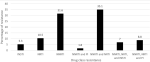
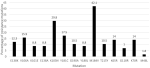
HIV drug resistance mutation patterns: among the 57 children with HIV drug resistance, analysis by drug class showed that NNRTI resistance alone was observed in 18 children (31.6%), NRTI resistance alone in 6 children (10.5%), and INSTI resistance alone in 3 children (5.3%). Combinations of drug class resistance were also identified: NNRTI + NRTI (20/57; 35.1%), NNRTI + NRTI + INSTI (4/57; 7.0%), NNRTI + NRTI + PI (5/57; 8.8%), and NNRTI + PI (1/57; 1.8%) (Figure 1). The most frequent resistance mutations were M184V (42.1%) and K103N (29.8%), followed by Y181C (17.5%), V106A (15.9%), K65R (14.0%), and E138K (12.3%). Less common mutations included T215Y, G190A, K70R, K101E, E138A, Y188L, G118R, and M46L (≤10.5%) (Figure 2). Among the 57 children with HIV drug resistance, the most frequently observed mutation was M184V, present in 24 children (42.1%), followed by K103N in 17 children (29.8%), Y181C in 10 children (17.5%), V106A in 9 children (15.9%), K65R in 8 children (14.0%), and K70R in 6 children (14.0%). Other notable mutations included T215Y and G190A, each observed in 6 children (10.5%), and E138K in 7 children (12.3%). Mutations affecting the NNRTI class such as K101E, E138A, and Y188L were detected in 5 children each (8.8%), while the INSTI-associated mutation G118R was present in 4 children (7.0%). The least frequent mutation, M46L, was observed in only 1 child (1.8%).
Factors associated with HIV drug resistance in children with HIV-1: bivariable logistic regression showed that age, ART duration, poor adherence, and viral load were associated with HIV drug resistance among children living with HIV-1. Children aged 11-14 years had higher odds of resistance than those aged 1-4 years (OR: 3.66; 95% CI: 1.24-10.76; p = 0.018), while the 5-10 years group showed a non-significant increase. Male sex was not associated with resistance. Poor ART adherence (OR: 6.86; 95% CI: 2.89-16.31; p < 0.001) and higher viral load (OR: 1.92; 95% CI: 1.24-2.96; p = 0.003) were significantly associated with resistance. In multivariable analysis, only poor adherence (OR: 10.36; 95% CI: 3.78-28.42; p < 0.001) and higher viral load (OR: 2.25; 95% CI: 1.37-3.70; p = 0.01) remained independent predictors (Table 2).
This study demonstrates that HIVDR remains a significant challenge among children receiving ART, with an overall prevalence of 37.7% (57/151). While lower than global pooled estimates exceeding 70% among treatment-experienced paediatric populations [4], this prevalence underscores ongoing vulnerability in paediatric HIV care, particularly in settings with limited access to routine resistance testing and delayed detection of virologic failure [14]. Regional evidence from Zambia and sub-Saharan Africa similarly highlights high HIVDR burdens in children failing first-line NNRTI- or NRTI-based regimens, often driven by delayed viral load monitoring, prolonged exposure to ineffective regimens, and early ART exposure through Prevention of Mother-to-Child Transmission programmes [15,16].
The mutation patterns observed in this cohort reflect these programmatic challenges. Nucleoside reverse transcriptase inhibitors mutations, particularly M184V (42.1%), were most common, followed by K65R (14.0%) and thymidine analogue mutations such as T215Y (10.5%), consistent with prolonged lamivudine/emtricitabine exposure during treatment failure. Non-nucleoside reverse transcriptase inhibitors mutations, including K103N (29.8%), Y181C (17.5%), and V106A (15.9%), were also prevalent, reflecting historic reliance on NNRTI-based regimens and suboptimal adherence. INSTI resistance was less frequent (G118R, 7.0%), while protease inhibitor (PI) mutations were rare (M46L, 1.8%), consistent with the higher genetic barrier associated with boosted PI regimens. Combined NNRTI and NRTI resistance was the most frequent pattern (35.1%), indicating compromise of standard first-line therapy, while multiclass resistance remained less common but clinically concerning. These findings mirror patterns reported across sub-Saharan Africa and highlight the cumulative impact of prolonged exposure to failing regimens and delayed treatment adjustments [6,17].
Analysis of factors associated with HIVDR revealed that poor ART adherence and higher viral load were the strongest independent predictors. Children with poor adherence had over ten-fold higher odds of resistance (AOR 10.36; 95% CI: 3.78-28.42), while each log increase in viral load increased odds by more than two-fold (AOR 2.25; 95% CI: 1.37-3.70). These findings are consistent with biological and programmatic evidence: sub-therapeutic drug exposure allows ongoing viral replication under selective pressure, facilitating the emergence and accumulation of resistance mutations [11,18]. Age and ART duration were associated with resistance in bivariable analysis but did not remain independently significant, suggesting that their effects are mediated through adherence and cumulative drug exposure. This highlights the importance of behavioural and social determinants, such as disclosure challenges, stigma, and caregiver support, in shaping paediatric ART outcomes [19].
The study findings underscore the need for strengthening paediatric HIV care through routine viral load monitoring, early detection of treatment failure, and timely switching to more effective regimens, including integrase inhibitor-based therapy. In parallel, adherence interventions targeting both children and caregivers such as structured counselling, disclosure support, and adherence monitoring are critical to prevent the accumulation of resistance mutations and preserve the long-term effectiveness of ART.
Strengths and limitations: this study provides current, locally relevant data on HIV drug resistance among children receiving ART, with detailed characterization of mutation patterns across multiple drug classes. Key strengths include integration of viral load and adherence data, which allowed identification of independent predictors of resistance. However, the study has some limitations: it was conducted at a single centre, which may limit generalizability, and CD4 count data were not available for all participants, preventing assessment of immunologic status in relation to resistance. Additionally, adherence was assessed using caregiver reports, which may be subject to recall bias.
HIV drug resistance remains a significant challenge among children receiving ART in Zambia, with a prevalence of 37.7% and a predominance of NNRTI and NRTI mutations. Poor ART adherence and higher viral load were identified as the strongest independent predictors of resistance, highlighting the critical role of adherence support and routine viral load monitoring in paediatric HIV care. These findings emphasize the need for early detection of treatment failure, timely transition to more effective regimens including integrase inhibitor-based therapy and structured adherence interventions for children and caregivers. Strengthening these programmatic measures is essential to preserve the long-term effectiveness of ART and improve treatment outcomes among children living with HIV in Zambia.
What is known about this topic
- HIV drug resistance is a growing challenge in paediatric populations, particularly in sub-Saharan Africa, where delayed detection of virologic failure and reliance on NNRTI-based regimens contribute to high resistance rates;
- Non-nucleoside reverse transcriptase inhibitors and nucleoside reverse transcriptase inhibitor mutations, such as K103N and M184V, are commonly reported among children failing first-line ART;
- Poor adherence and high viral load are established risk factors for the development of HIVDR.
What this study adds
- The prevalence of HIVDR among children with virologic failure in this Zambian cohort was 37.7%, with NNRTI + NRTI resistance being the most common pattern;
- Poor adherence and higher viral load were independently associated with HIVDR, reinforcing the critical role of adherence support and routine viral load monitoring;
- The study provides updated local data on mutation patterns, highlighting the importance of transitioning children to integrase inhibitor-based regimens and strengthening early detection of treatment failure.
The authors declare no competing interests.
Conceptualization, data curation, formal analysis, investigation, methodology, resources, writing - original draft: Mushe Kabika Limata. Methodology, visualisation, writing - review and editing: John Nzobokela. Visualisation, writing - review and editing: Benjamin Mubemba. Supervision; methodology, validation, data analysis, writing - review and editing: Samuel Munalula Munjita. All the authors have read and approved the final version of this manuscript.
The authors would like to express their sincere gratitude to the management of Arthur Davison Children's Hospital for granting them permission to conduct this study at the institution. Their support and cooperation made it possible for this research to be successfully undertaken.
Table 1: demographic and clinical characteristics of children living with HIV-1 receiving ART at the ART Clinic of Arthur Davison Children's Hospital, Zambia, in a cross-sectional study conducted from October 2025 to January 2026 (N=151)
Table 2: factors associated with HIV drug resistance in children with HIV-1 in logistic regression
Figure 1: drug class resistance patterns among children living with HIV-1 on antiretroviral therapy (N = 57); NNRTI: non-nucleoside reverse transcriptase inhibitor, NRTI: nucleoside reverse transcriptase inhibitor, INSTI: integrase strand transfer inhibitor, PI: protease inhibitor, N: number of participants
Figure 2: frequency of individual HIV drug resistance mutations among children living with HIV-1 receiving antiretroviral therapy (N = 57 with HIV drug resistance)
- Labhardt ND. Another step towards closing the paediatric treatment gap. Lancet HIV. 2025 May;12(5):e314-e315. PubMed | Google Scholar
- Nimwesiga C, Taremwa IM, Nakanjako D, Nasuuna E. Factors Associated with Retention in HIV Care Among HIV-Positive Adolescents in Public Antiretroviral Therapy Clinics in Ibanda District, Rural South Western Uganda. HIV AIDS (Auckl). 2023 Mar 4;15:71-81. PubMed | Google Scholar
- Anderson K, van Zyl G, Hsiao NY, Claassen M, Mudaly V, Voget J et al. HIV Drug Resistance in Newly Diagnosed Young Children in the Western Cape, South Africa. Pediatr Infect Dis J. 2024 Oct 1;43(10):970-976. PubMed | Google Scholar
- Ge L, Luo Y, Li X, Hu Y, Sun L, Bu F et al. Global, regional, and national prevalence of HIV-1 drug resistance in treatment-naive and treatment-experienced children and adolescents: a systematic review and meta-analysis. EClinicalMedicine. 2024 Oct 4;77:102859. PubMed | Google Scholar
- Zeh C, Weidle PJ, Nafisa L, Lwamba HM, Okonji J, Anyango E et al. HIV-1 drug resistance emergence among breastfeeding infants born to HIV-infected mothers during a single-arm trial of triple-antiretroviral prophylaxis for prevention of mother-to-child transmission: A secondary analysis. PLoS Med. 2011 Mar;8(3):e1000430. PubMed | Google Scholar
- Fokam J, Ka'e AC, Yagai B, Santoro MM, Otieno JK, Rakhmanina N et al. HIV-1 Drug Resistance in Children and Implications for Pediatric Treatment Strategies: A Systematic Review and Meta-analysis. Open Forum Infect Dis. 2025 Jun 26;12(7):ofaf378. PubMed | Google Scholar
- Hunt GM, Yousif M, Levin L, Ledwaba J, Steegen K, Kufa T et al. Resistance is common in paediatric patients failing ART in South Africa. J Antimicrob Chemother. 2023 May 3;78(5):1160-1167. PubMed | Google Scholar
- Phiri L. Determinants of Virologic Failure and Prevalence of Resistance Mutation among HIV Infected Children on Antiretroviral Therapy at University Teaching Hospital, Lusaka, Zambia. Int J Sci Res IJSR. 2021 Aug 15;10(8,):191-6.
- Gwasupika J, Hamer DH, Daka V, Chikwanda E, Mwakazanga D, Mfune RL et al. Antibiotic prescription patterns and associated symptoms in children living with HIV at Arthur Davison Children's Hospital in Ndola, Zambia. PLoS One. 2025 Mar 5;20(3):e0316735. PubMed | Google Scholar
- Stanford University, HIV Drug Resistance Database. HIVdb Program: Mutations Analysis. Accessed in Mar 12, 2026.
- Nzobokela J, Muchaili L, Kamvuma K, Mweene BC, Liweleya S, Mulamfu S et al. Pro-inflammation and clinical correlates of unsuppressed HIV-viral load in children living with perinatally-acquired HIV 1 in Zambia. PLoS One. 2025 Oct 9;20(10):e0334109. PubMed | Google Scholar
- Van den Eede P, Van Wesenbeeck L, Verlinden Y, Feyaerts M, Smits V, Verheyen A et al. HIV-1 Genotyping of the Protease-Reverse Transcriptase and Integrase Genes to Detect Mutations That Confer Antiretroviral Resistance. Methods Mol Biol. 2013;1030:37-55. PubMed | Google Scholar
- Stanford University, HIV Drug Resistance Database. HIVdb Program: Sequence Analysis. Accessed in August 17, 2026.
- Siriruchatanon M, Liu S, Carlucci J, Enns E, Duarte H. Addressing Pediatric HIV Pretreatment Drug Resistance and Virologic Failure in Sub-Saharan Africa: A Cost-Effectiveness Analysis of Diagnostic-Based Strategies in Children ≥3 Years Old. Diagnostics (Basel). 2021 Mar 21;11(3):567. PubMed | Google Scholar
- Inzaule SC, Kroeze S, Kityo CM, Siwale M, Akanmu S, Wellington M et al. Long-term HIV treatment outcomes and associated factors in sub-Saharan Africa: multicountry longitudinal cohort analysis. AIDS. 2022 Aug 1;36(10):1437-1447. PubMed | Google Scholar
- Poppe LK, Chunda-Liyoka C, Kwon EH, Gondwe C, West JT, Kankasa C et al. HIV drug resistance in infants increases with changing prevention of mother-to-child transmission regimens. AIDS. 2017 Aug 24;31(13):1885-1889. PubMed | Google Scholar
- Dagba Gbessin EH, Tchiakpe E, Keke RK, Vidal N, Gomgnimbou MK, Sina H et al. HIV-1 resistance mutations and genetic diversity among children failing antiretroviral treatment in five healthcare facilities in Benin, West Africa. PLoS One. 2025 Jan 29;20(1):e0317882. PubMed | Google Scholar
- Cutrell J, Jodlowski T, Bedimo R. The management of treatment-experienced HIV patients (including virologic failure and switches). Ther Adv Infect Dis. 2020 Jan 20;7:2049936120901395. PubMed | Google Scholar
- Haberer JE, Cook A, Walker AS, Ngambi M, Ferrier A, Mulenga V et al. Excellent Adherence to Antiretrovirals in HIV+ Zambian Children Is Compromised by Disrupted Routine, HIV Nondisclosure, and Paradoxical Income Effects. PLoS One. 2011 Apr 21;6(4):e18505. PubMed | Google Scholar
Search
This article authors
On Pubmed
On Google Scholar
Citation [Download]
Navigate this article
Similar articles in
Key words
Tables and figures

Article metrics
Recently from the PAMJ


Authors´ services