
Assessment of the causes and outcomes of hospitalization in children with sickle cell disease at Jaramogi Oginga Odinga Teaching and Referral Hospital: a descriptive cross-sectional study
O´Neil Wamukota Kosasia, Bernard Brian Onyango Awuonda, Ricky Felix Kwayi, Cynthia Moraa Morema, Jackline Wanjiku Githinji
Corresponding author: O´Neil Wamukota Kosasia, Faculty of Medicine, Maseno University, Maseno, Kenya 
Received: 16 Jan 2025 - Accepted: 04 Sep 2026 - Published: 07 Oct 2026
Domain: Pediatric hematology
Keywords: Sickle cell disease, hospitalization, vaso-occlusive crisis, infections, acute anemia, Jaramogi Oginga Odinga Teaching and Referral Hospital
Funding: This work was supported by the Health Professional Education Partnership Initiative (HEPI), Kenya, [R25TW011212]. The funding body had no role in this manuscript's intellectual content and writing.
©O´Neil Wamukota Kosasia et al. Pan African Medical Journal (ISSN: 1937-8688). This is an Open Access article distributed under the terms of the Creative Commons Attribution International 4.0 License (https://creativecommons.org/licenses/by/4.0/), which permits unrestricted use, distribution, and reproduction in any medium, provided the original work is properly cited.
Cite this article: O´Neil Wamukota Kosasia et al. Assessment of the causes and outcomes of hospitalization in children with sickle cell disease at Jaramogi Oginga Odinga Teaching and Referral Hospital: a descriptive cross-sectional study. Pan African Medical Journal. 2026;55:64. [doi: 10.11604/pamj.2026.55.64.46584]
Available online at: https://www.panafrican-med-journal.com//content/article/55/64/full
 PDF in process
 Research 

Assessment of the causes and outcomes of hospitalization in children with sickle cell disease at Jaramogi Oginga Odinga Teaching and Referral Hospital: a descriptive cross-sectional study
Assessment of the causes and outcomes of hospitalization in children with sickle cell disease at Jaramogi Oginga Odinga Teaching and Referral Hospital: a descriptive cross-sectional study
 O'Neil Wamukota Kosasia1,&, Bernard Brian Onyango Awuonda1, Ricky Felix Kwayi1, Cynthia Moraa Morema1, Jackline Wanjiku Githinji1
&Corresponding author
Introduction: sub-Saharan Africa bears 75% of the global burden of sickle cell disease (SCD), contributing to significant childhood morbidity and mortality in the region. Despite high mortality and hospitalization rates in Kenya, particularly in the western region, there is a lack of studies investigating the specific causes and outcomes of hospitalization in children with SCD at Jaramogi Oginga Odinga Teaching and Referral Hospital (JOOTRH). This study aimed to assess the causes and outcomes of hospitalization in children with SCD at JOOTRH in Kenya.
Methods: this descriptive cross-sectional study reviewed medical records of children with SCD admitted to JOOTRH's pediatric ward from January to December 2021. A sample of 139 patient files was selected using purposive, then random sampling. Data were collected using a paper abstraction form and analyzed with SPSS version 22.0. The Chi-square test was used to assess the associations between causes and outcomes of hospitalization at a significance level of 0.05.
Results: vaso-occlusive crisis (VOC) was the most common cause of hospitalization (39%), followed by infections (31.5%) and acute anemia (12.3%). The median length of hospitalization was five days, and the case fatality rate was 33.6%. The causes of hospitalization were significantly associated with both the length of hospitalization (p = 0.009) and clinical outcomes (p < 0.001).
Conclusion: vaso-occlusive crisis, infections, and acute anemia are the leading causes of hospitalization for children with SCD at JOOTRH. These findings underscore the need for targeted interventions, such as improved pain management and infection prevention, to reduce hospital stays and improve outcomes for children with SCD.

Sickle cell disease (SCD) remains one of the commonest hemoglobinopathies worldwide [1]. Sub-Saharan Africa bears the global burden of SCD as it accounts for about 75% of children born with SCD worldwide [2]. The prognosis of children born with SCD in sub-Saharan Africa is relatively poor compared to other regions. About 50% to 90% of children born with SCD in this region die before five years [2,3]. Those that survive develop life-threatening complications such as vaso-occlusive crisis (VOC), infections, acute chest syndrome (ACS), acute anemia, and stroke that often require hospitalization [4-8]. Kenya records high mortality and hospitalization rates in children with SCD [9,10]. Western Kenya is among the most affected regions, with about 4.5% of children born annually having SCD [11]. Hospitalization has psychological, and emotional implications on children. Children with SCD who have been repeatedly hospitalized develop emotional reactivity, social withdrawal, anxiety, depression, sleep problems, aggressive behavior, and internalizing and externalizing symptoms [12]. Hospitalization also has financial implications, with the average cost of hospitalization in a child with SCD in Africa estimated at USD 148 [13].
The common causes of hospitalization in children with SCD vary from one country to another. They include VOC, infections, ACS, acute anemia, and stroke [14-21]. Infections are a major cause of hospitalization and mortality in patients with SCD in low and middle-income countries [14]. The length of hospitalization and risk of mortality in children with SCD vary depending on the cause of hospitalization and age of the child. Children with ACS, septicemia, acute osteomyelitis, stroke and avascular necrosis of the femoral head are at an increased risk of prolonged admission [4,15,16]. The common causes of death in hospitalized children with SCD include stroke and adverse reaction to blood transfusion [4]. Infants have a significantly higher mortality rate than other age groups [17].
There are no studies conducted in Jaramogi Oginga Odinga Teaching and Referral Hospital (JOOTRH) or any other hospital in Kenya to investigate the causes and outcomes of hospitalization in children with SCD. The primary objective of this study was to assess the common causes and outcomes of hospitalization in children with SCD at JOOTRH. The secondary objective was to explore the association between the causes and outcomes of hospitalization in children with SCD at JOOTRH. By identifying the common causes and outcomes of hospitalization in children with SCD at JOOTRH, this study will highlight the areas to be prioritized by SCD intervention programs in JOOTRH. This will possibly reduce the frequency of hospitalization, thereby alleviating the associated financial costs, improving the quality of life of children with SCD, and enabling them to lead normal lives free from interruptions caused by hospitalization.

Study design: the study was a descriptive cross-sectional study that made use of secondary data obtained from electronic databases, diagnostic test results, and notes from health service providers. This design was preferred because it was the most practical approach given time and resource considerations.
Setting: the study setting was the Pediatric Ward at JOOTRH which is a level 6 hospital located in Kisumu City, the headquarters of Kisumu County in Western Kenya. It is the major referral health facility in Western Kenya, serving county, sub-county, and private hospitals in more than ten counties in the Western Kenya region with a population of more than 5 million. We chose JOOTRH as our study area because it is one of the major referral facilities in Western Kenya, the region with the highest prevalence of SCD in the country [11]. The Pediatric Ward houses children between 0 and 14 years and admits approximately 3000 children annually. It has a bed capacity of approximately 100 beds and staffing of approximately 7 pediatricians, 4 registrars, 3 medical officers, 3 medical officer interns and 10 nurses. The study period was January 2021 to December 2021. We chose this study period because hospital anecdotal records indicated that the highest number of SCD admissions was recorded in 2021.
Participants: he study population was the medical records of children with SCD admitted into the Pediatric Ward of JOOTRH during the study period. The patient files of children with SCD admitted into the Pediatric Ward of JOOTRH from January 2021 to December 2021 were included in the study. The patient files of children without SCD, those not admitted during the study period and those with incomplete data were excluded from the study. The study received ethical approval from the Maseno University Scientific and Ethics Review Committee (MUSERC) reference number MSU/DRPI/MUSERC/01108/22. Parents or guardians consent to the use of their children's medical records for research on admission in the JOOTRH Pediatric Ward. Therefore, no new consent was sought.
Variables: the independent variable was the causes of hospitalization while the dependent variables were the length of hospitalization and clinical outcomes of hospitalization. The confounding variables were age, gender, severity of SCD, and comorbid conditions.
Data sources: data was collected from the patient files using a paper data abstraction form developed based on data from similar studies [15,20,22]. Readmissions were recorded on separate forms regardless of the time elapsed between them as long as they were within the study period. The abstraction form captured the sociodemographic data of the children, date of admission, chief complaints and physical examination findings at admission, laboratory findings, primary diagnosis, and discharge/death summary. A pilot test was conducted on the medical records of 14 patients to ensure the terminology and data formats of the forms were consistent with those found in the records. These medical records were randomly selected and did not form part of the sample.
Bias: the following measures were taken to avoid bias and increase inter-and intra-observer reliability: a) The abstractors were different individuals from the researchers; b) the abstractors were blinded to the study hypothesis; c) the researchers trained the abstractors on extracting data from the medical records; d) the researchers created an abstraction manual to further guide the abstractors in data extraction; e) two abstractors reviewed the medical records of each patient, and the researchers reconciled any differing responses; f) the abstractors were informed before the beginning of data collection that their work was going to be checked for accuracy; g) the researchers checked the reliability of the abstracted data in random samples before analysis.
Study size: the sample size was determined using the Cochran formula for finite populations [23] as seen in the equation below. Using this formula with a 95% confidence level, a margin of error of 5%, 50% proportion of the population, and a population of 217, the sample size was 139 patient files. Purposive sampling was used to retrieve the medical files of children with SCD admitted into the Pediatric Ward at JOOTRH from January 2021 to December 2021. The retrieved patient files were then selected randomly until 139 files were obtained.
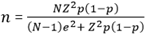
Where: n = sample size; N = population size; Z = Z statistic for the level of confidence; p = proportion of the population; e = margin of error (percentage).
Quantitative variables: after collection, data was cleaned, checked for normality and completeness, and fed into Statistical Package for the Social Sciences (SPSS) version 22.0.
Statistical methods: descriptive statistics were used to summarize the findings as frequencies, mean and median with corresponding standard deviations. The Chi-square test was used to test for the association between the causes and outcomes of hospitalization at a significance level of 0.05 (95% CI).
Participants: during the study period, a total of 2201 children were hospitalized in the Pediatric Ward at JOOTRH out of which 217 had SCD. This represents 9.9% of the total admissions. The medical files of 161 children hospitalized with SCD during the study period were reviewed. Of these, 22 were excluded due to incomplete data.
Descriptive data: of the 139 patients whose medical files were included in the study, 69 (49.6%) were male, and 70 (50.4%) were female. Their ages ranged from 1 month to 12 years, with a mean age (±SD) of 4.2 ±3.2 years. The majority of them 88 (63.3%) were <5 years. Ninety seven (66.4%) were from Kisumu county while forty-nine (33.6%) were from outside Kisumu county. Table 1 shows the sociodemographic characteristics of children hospitalized with SCD at JOOTRH.
Of the 139 patients whose medical files were included in the study, 7 of them were hospitalized twice during the study period resulting in 146 hospitalization events. VOC was the most common cause of hospitalization with 57 (39%) hospitalization events, followed by infections with 46 (31.5%) hospitalization events, and acute anemia with 18 (12.3%) hospitalization events. Malaria was the most common infection causing hospitalization with 18 (12.3%) hospitalization events, followed by sepsis with 14 (9.6%) hospitalization events. Table 2 shows the causes of hospitalization in children with SCD at JOOTRH.
Outcome data: majority of the respondents (66.4%) were discharged whereas a few of them (33.6%) died in the course of hospitalization. The length of hospitalization ranged from 1 to 35 days, with a median length of hospitalization of 5 days. The majority of the respondents (63.7%) were hospitalized for less than 7 days while the remainder (36.3%) were hospitalized for 7 days or more. Table 2 shows the outcomes of hospitalization in children with SCD at JOOTRH.
Other analyses: the length of hospitalization was associated with the causes of hospitalization (p = 0.009). The clinical outcomes were also associated with the causes of hospitalization (p<0.001). Table 3 shows the association between the causes and outcomes of hospitalization in children with SCD at JOOTRH.
The primary aim of this study was to investigate the causes and outcomes of hospitalization in children with SCD at JOOTRH. The secondary aim was to explore the association between the causes and outcomes of hospitalization in children with SCD at JOOTRH. VOC emerged as the most prevalent cause of hospitalization accounting for 39% of hospitalizations. This is consistent with findings in the US where VOC accounted for about 95% of hospitalizations in individuals with SCD [18]. Similar findings were reported in Kuwait, Iraq, and Saudi Arabia [15,16,19]. Risk factors for VOC include hypoxia, infection, fever, acidosis, dehydration, and obstructive sleep apnea.
Infections emerged as the second most common cause of hospitalization, representing 31.5% of hospitalizations. This finding aligns with findings in Saudi Arabia and Nigeria where infections were identified as a common cause of hospitalizations among children with SCD [4,5,15,20]. SCD patients are particularly vulnerable to infections due to splenic dysfunction, leading to defects in the opsonization of encapsulated organisms and impaired adaptive immunity [14,21]. Malaria was the most common infectious cause of hospitalization in this study reflecting the impact of parasitic infections on children with SCD, particularly in developing countries. This aligns with findings in Nigeria where malaria was found to be a common parasitic infection in hospitalized children with SCD [5]. Bacterial infections, including pneumonia and septicemia, were also common infectious causes of hospitalization in this study, similar to what was observed in Saudi Arabia and Nigeria [4,5,24]. Acute anemia was the third most common cause of hospitalization in this study accounting for 12.3% of hospitalizations. This is consistent with findings in Saudi Arabia where acute anemia was among the most common causes of hospitalization in children with SCD [22]. In low and middle-income countries where hydroxyurea therapy is still not widely used, acute anemia remains a major cause of morbidity and mortality [25].
The median length of hospitalization in our study was 5 days. It is longer than the median length of stay reported in Saudi Arabia which was 4 days and the US which was 3 days [15,17]. However, it is shorter than the median length of stay reported in Nigeria which was 8 days [4]. This difference could be due to differences in the causes of hospitalization. Causes of prolonged hospitalization in children with SCD include septicemia, acute osteomyelitis, cerebrovascular accidents, avascular necrosis of the femoral head, ACS, and infections [4,15,16]. Few children in our study were hospitalized due to these causes.
Our study found a high case fatality rate of 33.6% among children hospitalized with SCD. It is higher than the case fatality rate reported in Nigeria which was 1.9% [4]. This difference could be due to the age differences in the sample. Infants hospitalized with SCD have a significantly higher mortality rate than other age groups [17]. Majority of the children in our study were under 5 years. The difference could also be due to differences in causes of hospitalizations. Stroke and adverse reaction to blood transfusion increase the risk of mortality in children hospitalized with SCD [4]. In our study, hospitalizations due to acute anemia and stroke accounted for 16.4% of the total hospitalizations. Lastly, the difference could be due to sample size differences. Our study had a smaller sample size which could have led to a higher observed case fatality rate.
Our study revealed that the clinical outcomes of hospitalization of children hospitalized with SCD were dependent on the causes of hospitalization. This finding is consistent with findings by Pompeo et al. [26] where anemia, hemolysis, liver disease and heart failure were found to be significantly associated with death in patients with SCD. Different causes of hospitalization have different clinical features which may reflect in the laboratory findings as low Hb, high reticulocytes, increased bilirubin. Some of these findings such as low Hb are poor prognostic factors in children hospitalized with SCD [27]. However, we cannot ignore role of SCD genotype and levels of HbF in determining disease severity and therefore clinical outcomes [28]. Our study also revealed that the length of hospitalization of children hospitalized with SCD was dependent on the causes of hospitalization. This finding is consistent with findings in Iraq where patients with ACS had a significantly longer hospital stay than patients with acute splenic sequestration crisis [16]. It is also consistent with findings in Saudi Arabia where a significant percentage of children hospitalized for more than 4 days had infections or ACS [15]. Different causes of hospitalization have varying severity and require different interventions. Causes that require surgical procedures or specialized treatments such as septicemia, acute osteomyelitis, stroke, avascular necrosis of the femoral head, and ACS may result in longer hospital stays [4,15,16]. However, it should be noted that each child with SCD may have unique factors that affect their length of hospitalization such as overall health, response to treatment, and the presence of comorbid conditions [29].
Limitations: this study has several limitations. First, it relied on secondary data from patients' medical records, which may be prone to recall bias by healthcare providers. Second, the findings of the study cannot be generalized to other hospitals because the study was conducted in a single hospital (JOOTRH). Third, the findings of the study cannot be used to identify trends in SCD hospitalization over time because data from only one year was collected. Lastly, it does not include follow-up data after discharge, thus limiting the ability to assess long-term outcomes.
This study assessed the causes and outcomes of hospitalization in children with SCD at JOOTRH and the association between them. The results indicate that SCD is a prevalent condition among children hospitalized at JOOTRH. VOC, infections, and acute anemia are the most common causes of hospitalization in children with SCD at JOOTRH. Most children hospitalized with SCD at JOOTRH have a short length of hospitalization but the fatality rate is high. The length of hospitalization and clinical outcomes of children hospitalized with SCD at JOOTRH are dependent on the causes of hospitalization. Understanding that a significant proportion of pediatric admissions are due to SCD will help JOOTRH management allocate resources more effectively by increasing the availability of SCD-specific treatments, improving diagnostic facilities, and training healthcare providers in SCD management. The findings on the common causes of hospitalization will also help the hospital management to prioritize interventions. For instance, the high prevalence of VOC, infections, and acute anemia suggests a need to prioritize pain management, infection prevention, hydroxyurea therapy and blood-transfusion. This is the first study looking into the causes and outcomes of hospitalization in children with SCD at JOOTRH. It provides empirical data on the prevalence of SCD among hospitalized children at JOOTRH, which contributes to the body of evidence on the burden of SCD in the western region. By identifying the most common causes of hospitalization in children hospitalized with SCD, the study adds to the theoretical framework on the clinical manifestations and complications of SCD. The association between the causes and outcomes of hospitalization provides theoretical insights into the prognostic factors for children with SCD. Future studies should be longitudinal to track the long-term outcomes of children with SCD. They should also include multiple hospitals to compare the prevalence, causes, and outcomes of hospitalization for SCD in diverse settings. Lastly, studies should be conducted to assess the effectiveness of specific treatments for SCD, such as hydroxyurea therapy, blood transfusion, and infection prevention measures.
What is known about this topic
- Sickle cell disease (SCD) significantly contributes to pediatric mortality and morbidity in sub-Saharan Africa, with high hospitalization rates due to complications like vaso-occlusive crisis (VOC), infections, and acute anemia;
- Children with SCD are at increased risk of prolonged hospital stays and mortality, particularly in resource-limited settings where access to specialized care and treatments such as hydroxyurea therapy is limited.
What this study adds
- It provides empirical data on the prevalence of SCD among hospitalized children at JOOTRH, which contributes to the body of evidence on the burden of SCD in the western region;
- It adds to the theoretical framework on the clinical manifestations and complications of SCD by identifying the most common causes of hospitalization in children hospitalized with SCD;
- The association between the causes and outcomes of hospitalization provides theoretical insights into the prognostic factors for children with SCD.
The authors declare no competing interests.
All authors conceptualized and designed the study and drafted the initial manuscript; O'Neil Wamukota Kosasia made valuable contributions in the analysis, and interpretation of data and provided critical revisions of the manuscript. All the authors carefully reviewed, read and approved the final version of this manuscript.
Table 1: sociodemographic characteristics of children hospitalized with sickle cell disease in Jaramogi Oginga Odinga Teaching and Referral Hospital from January 2021 to December 2021 (N=139)
Table 2: causes and outcomes of hospitalization in children hospitalized with sickle cell disease in Jaramogi Oginga Odinga Teaching and Referral Hospital from January 2021 to December 2021 (N=146)
Table 3: association between causes and outcomes of hospitalization in children hospitalized with sickle cell disease in Jaramogi Oginga Odinga Teaching and Referral Hospital from January 2021 to December 2021 (N=146)
- Modell B, Darlison M. Global epidemiology of haemoglobin disorders and derived service indicators. Bull World Health Organ. 2008 Jun;86(6):480-7. PubMed | Google Scholar
- Makani J, Ofori-Acquah SF, Nnodu O, Wonkam A, Ohene-Frempong K. Sickle cell disease: new opportunities and challenges in Africa. ScientificWorldJournal. 2013;2013:193252. PubMed | Google Scholar
- Grosse SD, Odame I, Atrash HK, Amendah DD, Piel FB, Williams TN. Sickle cell disease in Africa: a neglected cause of early childhood mortality. Am J Prev Med. 2011 Dec;41(6 Suppl 4):S398-405. PubMed | Google Scholar
- Brown BJ, Jacob NE, Lagunju IA, Jarrett OO. Morbidity and mortality pattern in hospitalized children with sickle cell disorders at the University College Hospital, Ibadan, Nigeria. Nigerian Journal of Paediatrics. 2013;40(1):34-9. Google Scholar
- Ikefuna AN, Emodi IJ. Hospital admission of patients with sickle cell anaemia pattern and outcome in Enugu area of Nigeria. Niger J Clin Pract. 2007 Mar;10(1):24-9. PubMed | Google Scholar
- Marks LJ, Munube D, Kasirye P, Mupere E, Jin Z, LaRussa P et al. Stroke Prevalence in Children With Sickle Cell Disease in Sub-Saharan Africa: A Systematic Review and Meta-Analysis. Glob Pediatr Health. 2018 May 14;5:2333794X18774970. PubMed | Google Scholar
- Munube D, Katabira E, Ndeezi G, Joloba M, Lhatoo S, Sajatovic M et al. Prevalence of stroke in children admitted with sickle cell anaemia to Mulago Hospital. BMC Neurol. 2016 Sep 17;16:175. PubMed | Google Scholar
- Nansseu JR, Alima Yanda AN, Chelo D, Tatah SA, Mbassi Awa HD, Seungue J et al. The Acute Chest Syndrome in Cameroonian children living with sickle cell disease. BMC Pediatr. 2015 Sep 21;15:131. PubMed | Google Scholar
- Macharia AW, Mochamah G, Uyoga S, Ndila CM, Nyutu G, Makale J et al. The clinical epidemiology of sickle cell anemia In Africa. Am J Hematol. 2018 Mar;93(3):363-370. PubMed | Google Scholar
- Uyoga S, Macharia AW, Mochamah G, Ndila CM, Nyutu G, Makale J et al. The epidemiology of sickle cell disease in children recruited in infancy in Kilifi, Kenya: a prospective cohort study. Lancet Glob Health. 2019 Oct;7(10):e1458-e1466. PubMed | Google Scholar
- Wanjiku CM, Njuguna F, Chite Asirwa F, Mbunya S, Githinji C, Roberson C et al. Establishing care for sickle cell disease in western Kenya: achievements and challenges. Blood Adv. 2019 Dec 6;3(Suppl 1):8-10. PubMed | Google Scholar
- Bakri MH, Ismail EA, Elsedfy GO, Amr MA, Ibrahim A. Behavioral impact of sickle cell disease in young children with repeated hospitalization. Saudi J Anaesth. 2014 Oct;8(4):504-9. PubMed | Google Scholar
- Ogamba CF, Akinsete AM, Mbaso HS, Adesina OA. Health insurance and the financial implications of sickle cell disease among parents of affected children attending a tertiary facility in Lagos, south-west Nigeria. The Pan African Medical Journal. 2020 Jul 29;36:227. PubMed | Google Scholar
- Cannas G, Merazga S, Virot E. Sickle Cell Disease and Infections in High- and Low-Income Countries. Mediterr J Hematol Infect Dis. 2019 Jul 1;11(1):e2019042. PubMed | Google Scholar
- Abd El-Ghany SM, Tabbakh AT, Nur KI, Abdelrahman RY, Etarji SM, Almuzaini BY. Analysis of Causes of Hospitalization Among Children with Sickle Cell Disease in a Group of Private Hospitals in Jeddah, Saudi Arabia. J Blood Med. 2021 Aug 11;12:733-740. PubMed | Google Scholar
- Salman ZA, Hassan MK. Hospitalization Events among Children and Adolescents with Sickle Cell Disease in Basra, Iraq. Anemia. 2015;2015:195469. PubMed | Google Scholar
- Bou-Maroun LM, Meta F, Hanba CJ, Campbell AD, Yanik GA. An analysis of inpatient pediatric sickle cell disease: Incidence, costs, and outcomes. Pediatr Blood Cancer. 2018 Jan;65(1). PubMed | Google Scholar
- Darbari DS, Sheehan VA, Ballas SK. The vaso-occlusive pain crisis in sickle cell disease: Definition, pathophysiology, and management. Eur J Haematol. 2020 Sep;105(3):237-246. PubMed | Google Scholar
- Akar NA, Adekile A. Ten-year review of hospital admissions among children with sickle cell disease in Kuwait. Med Princ Pract. 2008;17(5):404-8. PubMed | Google Scholar
- Alkot M, Almaghrabi WA, Najdi NA, Otaibi MA, Shatla M, Abdelbaki H. Prevalence of Complications of Sickle Cell Disease at Makkah Al-Mukaramah, Saudi Arabia, 2017. Ann Clin Lab Res. 2018;06(01).
- Ochocinski D, Dalal M, Black LV, Carr S, Lew J, Sullivan K et al. Life-Threatening Infectious Complications in Sickle Cell Disease: A Concise Narrative Review. Front Pediatr. 2020 Feb 20;8:38. PubMed | Google Scholar
- Abd Elmoneim AA, Al Hawsawi ZM, Mahmoud BZ, Bukhari AA, Almulla AA, Sonbol AM et al. Causes of hospitalization in sickle cell diseased children in western region of Saudi Arabia. A single center study. Saudi Med J. 2019 Apr;40(4):401-404. PubMed | Google Scholar
- Ahmed SK. How to choose a sampling technique and determine sample size for research: A simplified guide for researchers. Oral Oncology Reports. 2024;12:100662. Google Scholar
- Alsaif MA, Abdulbaqi M, Al Noaim K, Aghbari M, Alabdulqader M, Robinson JL. Prevalence of Serious Bacterial Infections in Children with Sickle Cell Disease at King Abdulaziz Hospital, Al Ahsa. Mediterr J Hematol Infect Dis. 2021 Jan 1;13(1):e2021002. PubMed | Google Scholar
- Bello-Manga H, DeBaun MR, Kassim AA. Epidemiology and treatment of relative anemia in children with sickle cell disease in sub-Saharan Africa. Expert Rev Hematol. 2016 Nov;9(11):1031-1042. PubMed | Google Scholar
- Pompeo CM, Cardoso AI, Souza MD, Ferraz MB, Ferreira Júnior MA, Ivo ML. Risk factors for mortality in patients with sickle cell disease: an integrative review. Escola Anna Nery. 2020;24:e20190194. Google Scholar
- Yuan P, Yao H, Feng W, Wang Y. Prognostic factors of preterm neonates with gastrointestinal perforation: a retrospective cohort study from a tertiary neonatal center's 13-year experience in China. J Trop Pediatr. 2024 Dec 5;71(1):fmae045. PubMed | Google Scholar
- Rees DC, Brousse VAM, Brewin JN. Determinants of severity in sickle cell disease. Blood Rev. 2022 Nov;56:100983. PubMed | Google Scholar
- Rokach A. Psychological, emotional and physical experiences of hospitalized children. Clin Case Rep Rev. 2016;2(4).
Search
This article authors
On Pubmed
On Google Scholar
Citation [Download]
Navigate this article
Similar articles in
Key words
Tables and figures

Article metrics
Recently from the PAMJ




Authors´ services
