
Epidemiology and outcomes of road traffic injuries at Buea Regional Hospital, Cameroon: a retrospective study
Agbor Nathan Emeh, Isaac Obeng-Gyasi, Maxwell Kofi Danso, Nnoko Sona Akwo, Tah Aldof Yoah, Njukang Ernest Nkem, Jin Evolate Ngoh, Mbah Philemon Ngoh, Nomesi Frederick Ndende, Fai Bafon Theophile, Philip Obiri Ankomah, Susan Onumanyiwa Nyanteh, Bibiana Frans-Amah, Alberta Dede Mensah, Abigail Obeng Gyasi
Corresponding author: Agbor Nathan Emeh, Faculty of Medicine and Biomedical Sciences, University of Garoua, Garoua, Cameroon 
Received: 19 May 2026 - Accepted: 09 Sep 2026 - Published: 07 Oct 2026
Domain: Epidemiology, Health Emergencies, Emergency medicine
Keywords: Epidemiology, road traffic injuries, frequency, characterization, clinical outcome
Funding: This work received no specific grant from any funding agency in the public, commercial, or non-profit sectors.
©Agbor Nathan Emeh et al. Pan African Medical Journal (ISSN: 1937-8688). This is an Open Access article distributed under the terms of the Creative Commons Attribution International 4.0 License (https://creativecommons.org/licenses/by/4.0/), which permits unrestricted use, distribution, and reproduction in any medium, provided the original work is properly cited.
Cite this article: Agbor Nathan Emeh et al. Epidemiology and outcomes of road traffic injuries at Buea Regional Hospital, Cameroon: a retrospective study. Pan African Medical Journal. 2026;55:63. [doi: 10.11604/pamj.2026.55.63.53185]
Available online at: https://www.panafrican-med-journal.com//content/article/55/63/full
 PDF in process
 Research 

Epidemiology and outcomes of road traffic injuries at Buea Regional Hospital, Cameroon: a retrospective study
Epidemiology and outcomes of road traffic injuries at Buea Regional Hospital, Cameroon: a retrospective study
 Agbor Nathan Emeh1,&, Isaac Obeng-Gyasi2, Maxwell Kofi Danso3, Nnoko Sona Akwo4, Tah Aldof Yoah5, Njukang Ernest Nkem5, Jin Evolate Ngoh6, Mbah Philemon Ngoh7, Nomesi Frederick Ndende6, Fai Bafon Theophile8, Philip Obiri Ankomah9, Susan Onumanyiwa Nyanteh10, Bibiana Frans-Amah11, Alberta Dede Mensah12, Abigail Obeng Gyasi13
&Corresponding author
Introduction: road traffic injuries (RTIs) are a leading cause of death globally, disproportionately affecting young people in low- and middle-income countries. In Cameroon, RTIs contribute substantially to trauma burden, though hospital-based data remain limited. This study aimed to describe the epidemiology, clinical characteristics, and outcomes of RTIs at the Buea Regional Hospital (BRH), Cameroon, in 2022.
Methods: we conducted a retrospective review of RTI patients managed at the BRH from January to December 2022. Data were extracted using a standardized tool and analysed using descriptive statistics and multivariable logistic regression to identify predictors of mortality.
Results: a total of 140 RTI cases were analyzed, with the highest monthly volume recorded in December (n=30, 21.4%). Young adults aged 25-34 years (45/140, 32.1%) and students (39/140, 27.9%) were most affected. Passengers (47/140, 33.6%) and pedestrians (40/140, 28.6%) were the predominant road users. Overall, 75.0% (105/140) of patients required high dependency care admission and 6.4% (9/140) presented unconscious. Head/neck trauma (71/140, 50.7%) and lower limb (56/140, 30.0%) were most common. Management was largely conservative, though 19.3% (27/140) required surgery. The case fatality rate was 12.9% (18/140), with the highest monthly proportion of deaths observed in September (n=2/5, 40%), although the monthly case count was small. Mean hospital stay was 9 days (range 1-90). Mortality was independently associated with age <15 years (aOR 5.10, 95% CI 3.54-9.56), unconsciousness at presentation (aOR 3.01, 95% CI 1.90-7.20), and head injury/coma (aOR 2.73, 95% CI 1.08-5.44).
Conclusion: RTIs impose substantial morbidity and mortality at BRH. Strengthened trauma care systems and targeted prevention strategies are urgently needed in Cameroon.

Road traffic crashes (RTCs) represent a major global public health concern due to their increasing occurrence, related fatalities, long-term disabilities, and severe socio-economic consequences [1]. The World Health Organization (WHO) estimates that road traffic injuries (RTIs) [2] claim approximately 1.19 million lives annually, with an additional 20 to 50 million people sustaining non-fatal injuries [3]. Low- and middle-income countries, which house more than half (60%) of the world’s motor vehicles, bear more than 90% of RTI deaths and associated morbidities [4].
Without rapid, evidence-based scale-up of trauma systems and road safety enforcement, RTIs pose a major threat to achieving Sustainable Development Goal (SDG) Target 3.6, which aims to halve global road traffic deaths and injuries [5]. This remains a major challenge because, without effective interventions, RTIs are estimated to increase by 67% and will become the fifth leading cause of death globally by 2030 [1].
In sub-Saharan Africa, RTIs have increased from 41 to 93 per 100,000 population over a fifteen-year period up to 2015 and currently account for one third of trauma cases admitted to health facilities [6,7]. RTI case fatality rates for the African region in 2020 were estimated at 27 per 100,000 population [1]. Survivors of RTI are additionally burdened with physical disabilities and psychological disorders, especially affecting young adults, and the consequences of RTI also extend beyond the victims to the families and the associated communities. This high burden of RTI and associated deaths is due to a number of factors, including inadequate or weakly enforced road safety legislation or ignorance of this legislation by road users, bad road infrastructure, irregular or non-existent vehicle maintenance, and poor access to good quality health care [8].
Various studies in Africa have reported on RTI mortality rates ranging from 0.3 to 41% and occurring among car drivers, passengers, pedestrians, cyclists, or users of motorcycles, with victims being predominantly males and in the age group of 20 to 44 years [6]. In Nigeria, the most populated country on the continent, the trend in RTI has been reported to be increasing, and RTI represents the leading cause of injury-related deaths and the most common cause of disability in the country [9]. Recently in Ethiopia, similar findings reported that only one third of RTI victims received urgent/immediate surgical intervention before admission to hospital [10].
In Cameroon, road traffic crashes present an escalating health system challenge. National administrative estimates report over 16,000 traffic accidents annually, resulting in more than 1,000 officially recorded deaths and over 6,000 estimated fatalities according to WHO metrics [4]. High-profile mass-casualty crashes along major inter-urban transit corridors periodically highlight this burden. However, official aggregate statistics fail to capture the granular clinical profiles, emergency unit care pathways, or determinants of patient survival within local health facilities [5]. These figures may increase during certain peak periods such as the 39 victims of Ndikinimeki on December 27, 2020, and most recently the 55 victims of the Santchou-Dschang cliff on January 27, 2021 [11]. In line with other countries in the region, RTI have also been reported to be increasing in recent years [12], with RTI-related death rates estimated at 10-20 per 100,000 population [13].
A critical gap in the existing literature is the heavy focus on tertiary academic referral centers located in major metropolitan hubs such as Yaoundé and Douala. These tertiary studies do not reflect the operational reality, referral dynamics, or triage burden of secondary-level regional hospitals. Secondary health facilities serve as the primary critical node for emergency stabilization, surgical triage, and initial trauma resuscitation for victims of roadside crashes across suburban and inter-city transport networks. Buea, the capital of the Southwest Region of Cameroon, represents a vital urban transition zone characterized by high vehicular density, steep terrain, rapid urbanization, and a significant influx of internally displaced persons (IDPs). The Buea Regional Hospital (BRH) functions as the principal secondary-level regional referral center for the Buea Health District and surrounding peri-urban communities. Despite its pivotal position in handling emergency trauma admissions, empirical evidence detailing the clinical presentation, emergency management, and predictors of in-hospital mortality at BRH remains non-existent. To address this evidence gap, this study evaluated hospital-based RTI registry data at the Buea Regional Hospital. Specifically, the study aimed therefore to describe the epidemiology and clinical patterns of RTIs presenting to BRH and to explore factors associated with in-hospital mortality.

Research design: we conducted a hospital-based retrospective cohort study, reviewing medical records of road traffic injury (RTI) victims managed at the Buea Regional Hospital (BRH) between January 1, 2022, and December 31, 2022.
Study setting: Buea Regional Hospital, a government-owned secondary-level healthcare facility situated in Buea, the administrative capital of the Southwest Region of Cameroon. It serves as the primary secondary trauma referral facility for the Buea Health District and surrounding peri-urban communities, providing health services for medical management, surgical intervention, obstetric and gynaecological management, antenatal care, paediatric, and other essential services for a large number of people.
Study population and eligibility criteria: this study included all records of patients presenting with acute road traffic injuries (RTIs) to the Emergency Unit of the Buea Regional Hospital (BRH).
Inclusion criteria: all RTI patients presenting to the emergency within 24 hours of injury, including patients transferred from primary health facilities and those admitted to inpatient wards or the intensive care unit (ICU).
Exclusion criteria: patient declared dead-on-arrival (DOA) to the emergency unit, medical records with unresolvable missing clinical outcome data, and repeat follow-up visits for pre-existing injuries. A total population sampling strategy was used, reviewing all identified eligible medical records.
Operational variable definitions: 1) Intensive care unit (ICU) admission: patient transfer to and treatment within the hospital’s specialized ICU following initial emergency stabilization; 2) head injury/coma: documented clinical diagnosis of traumatic brain injury, skull fracture, or alteration of consciousness meeting clinical criteria for coma; 3) unconsciousness: documented baseline Glasgow Coma Scale (GCS) score <9 or clinical state of unresponsiveness lasting ≥1 hour upon presentation; 4) road-user type and occupation: grouped into mutually exclusive standard categories (passengers, pedestrians, drivers, motorcyclists) and primary occupational activities (students, sellers, farmers, drivers, employees, housewives).
Pre-testing: a sample of the data capture sheet was first tested on files in the Limbe Regional Hospital. No major errors were found, and the data collection tool was not considered burdensome because the items were straightforward and easy to understand. The pre-testing helped to validate the data capture sheet.
Data collection tools: data were extracted using a standardized abstraction form adapted from the WHO Injury Surveillance Guidelines. The data capture sheet was made up of 5 sections: section A: sociodemographic characteristics of victims of RTIs; section B: clinical characteristics of victims of RTIs; section C: frequency of RTIs; section D: characterization of victims of RTIs; section E: clinical outcomes of victims of RTIs.
Data management: data were extracted from patient records using a structured data collection form and entered into Microsoft Excel (2019) for cleaning and coding. The dataset was subsequently exported to STATA version 13 for statistical analysis. Data quality checks were performed to ensure completeness and consistency prior to analysis. All data were de-identified before analysis and stored in a secure, password-protected electronic database accessible only to the research team.
Statistical analysis: data were processed and analyzed using STATA version 13 (StataCorp, College Station, TX, USA). Categorical variables were summarized using frequencies and percentages, while continuous variables were presented as means with standard deviations or medians with interquartile ranges. Bivariate analyses using Pearson’s Chi-square (χ2) test (or Fisher’s exact test where cell counts were expected to be small) were conducted to evaluate associations between clinical baseline variables (ICU admission, injury type, anatomical injury site, level of consciousness, and mortality outcome) and patient age group (< 15 years vs ≥ 15 years). To explore potential factors associated with in-hospital mortality, variables displaying a p-value < 0.20 in initial candidate screening were entered into a multivariable logistic regression model. Given the small number of outcome events (n= 18 deaths), this multivariable model was considered strictly exploratory. Adjusted odds ratios (aOR) along with their corresponding 95% confidence intervals (CI) and exact p-values were reported. Model parameters are presented as preliminary exploratory associations rather than definitive mortality predictors. Statistical significance for all tests was set at p<0.05.
Ethical considerations: ethical clearance for this study was obtained from the FHS-IRB of the University of Buea (Ref. N°2022/0145/UB/SG/IRB/FHS). Administrative authorizations and approvals were obtained from the Regional Delegation of Public Health and the director of the BRH. Patient confidentiality was maintained by fully de-identifying data prior to analysis.
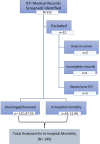
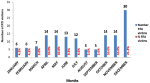
Study population flow and temporal variation RTIs: a total of 152 road traffic injury (RTI) medical records were identified and screened at the Emergency Unit of the Buea Regional Hospital (BRH) between January and December 2022. Of these, 12 records were excluded: 5 patients were dead-on-arrival (DOA), 4 records had unresolvable missing clinical outcome data, and 3 records represented repeat follow-up visits. Consequently, a final sample of 140 unique RTI patients was included and analysed for in-hospital mortality (Figure 1). Among the 140 analysed cases, monthly presentations varied across the year, with the highest monthly volume recorded in December (n= 30/140, 21.4%) and the lowest recorded in August (n= 5/140, 3.6%) and September (n= 5/140, 3.6%) (Figure 2).
Sociodemographic characteristics of RTI victims: the mean age of RTI victims recorded in the Buea Regional Hospital was 29.2 ± 2.9 years. The most affected age group was 25-34-year-old 45 (45/140, 32.1%), followed by 15-24 years (27/140; 19.3%). Females accounted for 50.7% (71/140) of victims and males accounted for 49.3% (69/140). There was no significant gender difference among RTI cases recorded in the Buea Regional Hospital. By occupation, students (39/140, 27.9%) and sellers (30/140, 21.4%) represented the largest proportions. The most affected categories of road users were passengers (36.6%) and pedestrians (40/140, 28.6%) (Table 1).
Clinical characteristics of RTI victims: the clinical profile of RTI victims admitted at the Buea Regional Hospital in 2022, stratified by age group, revealed some important patterns. Overall, 75.0% (105/140) of the patients required admission to the intensive care unit, among whom 20 were <15 years (19.1%) and 85 were older patients (80.9%), while 17.1% (6) of those not admitted were < 15 years and 29 were older patients (82.9%) (χ2 = 0.06, p = 0.80) (Table 2).
Regarding the type of injury, soft tissue injuries predominated across all age groups (125/140, 89.3%), with 19.2% occurring in children (24/125) and 80.8% in older patients (101/125). Fractures were less frequent: closed fractures accounted for 7 cases (2 children and 5 older patients), while open (6/140, 4.3%) and mixed fractures (2/140, 1.4%) occurred only among older victims (χ2 = 2.32, p = 0.51).
The anatomical sites of injury most commonly affected were the head and neck (71 cases, 21.1% in children, 78.9% in older patients) and the lower limbs (56 cases, 17.9% in children, 82.1% in older patients). Injuries to the upper limbs (21 cases), chest (2 cases), and abdominal-lumbar region (39 cases) were less frequent, with no statistically significant differences across age groups (χ2 = 1.91, p = 0.75). In terms of state of consciousness, nearly all victims were conscious at admission (131 cases, 93.6%), including 26 children (19.8%) and 105 older patients (80.2%). All nine unconscious cases occurred among patients aged ≥ (χ2 = 2.19, p = 0.14).
Finally, the mortality outcome showed that 18 victims (12.9%) died, including 3 children (16.7%) and 15 older patients (83.3%), while 122 victims (87.1%) were discharged home. In bivariate analysis, age group was not significantly associated with mortality (χ2 = 0.08, p = 0.782). However, in the multivariable logistic regression model, age <15 years emerged as an independent predictor of mortality. Overall, the table shows that although children under 15 years were represented among admissions and injury categories, age group was not significantly associated with ICU admission, type of injury, anatomical site, level of consciousness, or mortality in the bivariate analysis. This suggests that, at the unadjusted level, clinical characteristics and outcomes appeared broadly similar across age groups.
Medical and surgical interventions on RTI victims: among RTI victims admitted to BRH in 2022, management was predominantly conservative. Skin cleansing was the most common intervention, performed in 65 patients (46.4%), followed by simple bandaging in 40 patients (28.6%). Surgical intervention was required in 27 patients (19.3%), the majority of which were minor procedures (25/27, 17.8%), with only 2 cases (1.4%) classified as complex. Fracture reduction or fixation was undertaken in 6 patients (4.3%), while blood transfusion was administered in 2 patients (1.4%). No patients required neurosurgical intervention.
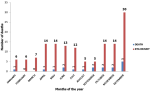
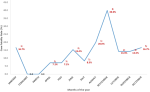
The mean duration of hospital stays for RTI victims admitted to the BRH in 2022 was 9 days (range = 1-90 days). Overall, 12.9% of all RTI victims admitted to the Buea Regional Hospital died. Major fluctuations in mortality were observed, rising from 16.7% in January to 40.0% in September, before declining again to 16.7% in December (Figure 3, Figure 4).
Predictors of mortality in RTC victims in the BRH in 2022: a multivariable logistic regression was used to identify the predictors of mortality. The baseline risk factors for mortality among RTI victim after hospital admission are presented in Table 3. Factors associated with death were being a child under 15years (p = 0.001), having head injury or coma (p = 0.020) and being unconscious for at least an hour (p = 0.001). Mortality was 5.10 (95% CI: 3.54-9.56) times higher among RTI victims aged less than 15 years old compared to their older counterparts. Death rate was 3.01 (95% CI: 1.90-7.20) times higher among unconscious victims compared to conscious victims. Mortality was also about 2.73 times (95% CI: 1.08-5.44) higher among victims with head injuries compared to those without head injuries (Table 3). In exploratory multivariable analysis, age <15 years was independently associated with higher odds of mortality (aOR 5.10, 95% CI 3.54-9.56, p = 0.001), despite showing no significant crude association at the bivariate level (χ2 = 0.08, p = 0.782). This shift reflects statistical adjustment for confounding baseline severity markers, such as presentation unconsciousness, which were concentrated among older patients.
This study provides an updated evaluation of the burden, clinical profile, and acute outcomes of road traffic injury (RTI) victims managed at a secondary-level regional referral hospital in Southwest Cameroon. The primary findings demonstrate that young adults (25-34 years) and students constitute the main affected demographic, head/neck trauma represents the predominant injury pattern, and in-hospital mortality remains nontrivial at 12.9%. Previous studies have identified young adults as predominant victims affected by road traffic accidents [10,14]. Furthermore, exploratory analyses identified potential baseline associations with mortality, including young age (<15 years), unconsciousness at presentation, and head injury/coma.
The relatively high number of RTI admissions in Buea may be partly explained by an influx of internally displaced persons (IDPs). This, coupled with poor road infrastructure, may contribute to a higher incidence of RTIs in the municipality. Our findings are consistent with studies conducted in Guinea, Ethiopia, and Gambia, which reported comparable rates of hospital admissions and mortality due to RTIs [14,15]. Students and sellers were among the most affected occupational groups, reflecting their high exposure to road environments.
While variations in monthly case volume were observed, the highest number of presentations was recorded in December (n = 30) and a high relative mortality proportion in September (2/5, 40.0%). September corresponds to the back-to-school period, which is associated with increased population mobility. These findings are consistent with a study conducted in Guinea, where September and December recorded the highest proportions of RTI cases (25.8%) and deaths (44.2%) [15]. These trends reflect monthly variations within a single calendar year rather than established seasonal patterns. Single-year retrospective observations cannot robustly establish seasonality. Moreover, because traffic volume, holiday travel metrics, and road exposure parameters were not formally measured in this registry, observed monthly fluctuations should be interpreted cautiously as baseline clinical throughput rather than definitive travel-related surges. Young adults are generally more active road users and may have relatively less driving experience, as noted by Box et al. [16]. In addition, higher exposure (mileage), along with behavioural factors such as sensation seeking, peer influence, and driving under the influence of alcohol, places this group at higher risk of road traffic injuries [17]. These findings highlight the need for targeted prevention strategies focusing on vulnerable groups such as youths, students, and informal sector workers.
In terms of injury patterns, head and limb injuries, as well as soft tissue trauma, were the most commonly observed, consistent with findings from studies conducted in The Gambia and similar settings [14]. The predominance of head and lower limb injuries underscores the need for improved trauma care capacity, particularly in the management of head injuries and fractures. Hospitals in similar settings should therefore be adequately equipped and staffed to manage RTI cases effectively. The high proportion of RTI victims requiring hospital admission observed in this study contrasts with findings from some studies reporting higher RTI-related morbidity and mortality [17]. This pattern may reflect differences in injury severity or healthcare-seeking behavior. Nevertheless, the high admission rate likely increases the clinical burden on hospital services, necessitating adequate resource allocation and workforce planning. However, our findings are consistent with studies conducted in Ethiopia and The Gambia, which reported relatively lower rates of hospital admission and mortality [10].
The overall case fatality rate of 12.9% observed in this study may be overestimated, as less severe RTI cases are often managed in secondary level healthcare facilities and may not be captured in hospital-based data. Additionally, outcomes of patients referred to other facilities were not documented, which may further influence mortality estimates. Despite this, the observed case fatality rate is comparable to findings reported in Ethiopia (13.1%) and The Gambia (12.8%) [10]. Existing evidence suggests that many RTI-related deaths occur at the scene of the crash or within the first 24 hours, highlighting the critical importance of prehospital care and early intervention.
A notable statistical finding in our exploratory regression model was the strong association between paediatric age (< 15 years) and in-hospital mortality (aOR 5.10) despite an absence of significance in crude bivariate testing. This discrepancy suggests classic statistical suppression. Bivariate analysis was confounded by the distribution of acute anatomical and neurological severity; older patients presented with higher absolute frequencies of severe trauma indicators like unconsciousness. Once the multivariable model adjusted for baseline consciousness and head injury severity, the underlying physiological vulnerability of pediatric trauma victims became apparent. Children have lower physiological reserves, distinct pediatric airway dynamics, and elevated risks of rapid decompensation in emergency settings where specialized pediatric trauma resuscitation infrastructure is limited. These findings are consistent with previous studies that have identified younger age, severe head injury, and altered consciousness as important predictors of poor outcomes following RTIs [8]. However, given the small number of overall deaths (n = 18), this finding must be interpreted cautiously as an exploratory association requiring validation in larger prospective cohorts.
Overall, these findings underscore the urgent need for strengthened road safety interventions in Buea and similar settings. This includes improved enforcement of traffic regulations, enhancement of road infrastructure, and implementation of continuous public education programs targeting high-risk groups. Particular attention should be given to high-risk periods such as the festive season in December, during which the burden of RTIs appears to be highest.
Limitations: several methodological limitations should be considered when interpreting these findings. First, the single-centre, hospital-based design limits generalizability and misses prehospital fatalities occurring at the crash scene as well as minor injuries treated at primary care facilities. Second, reliance on retrospective paper medical records introduces documentation bias, while the necessary exclusion of files with unresolvable outcome gaps and variable-level missingness in secondary parameters risks selection and estimation bias. Third, with only 18 recorded in-hospital deaths, multivariable regression modelling is constrained by low statistical power and potential overfitting, meaning identified mortality factors must be viewed as preliminary exploratory associations rather than definitive predictive models. Finally, a single year of observation is insufficient to establish true epidemiological seasonality, capturing only basic monthly variations without corresponding traffic volume or holiday exposure metrics.
Road traffic injuries represent a substantial acute healthcare burden at the Buea Regional Hospital, predominantly affecting young adults, students, and vulnerable road users such as passengers and pedestrians. Head and neck injuries constitute the major anatomical site of trauma, and in-hospital mortality remains nontrivial at 12.9%. While monthly variations in case volume and mortality proportions were observed across the year, multi-year surveillance is required to evaluate potential seasonal patterns. Factors such as young age (<15 years), baseline unconsciousness, and head injury/coma were preliminarily associated with in-hospital death in exploratory analyses. Strengthening emergency triage, improving initial resuscitation protocols for traumatic brain injury, and establishing standardized electronic trauma registries are essential steps to optimize acute trauma care outcomes in secondary-level regional referral hospitals in Cameroon.
What is known about this topic
- Road traffic injuries (RTIs) are a leading cause of death and disability worldwide, with low- and middle-income countries bearing over 90% of the burden;
- In sub-Saharan Africa, RTIs account for nearly one third of trauma admissions, with young adults disproportionately affected;
- In Cameroon, official and WHO estimates highlight thousands of RTI-related deaths annually, but hospital-based epidemiological data remain scarce.
What this study adds
- Provides baseline hospital-level data on RTIs in Buea, Cameroon, documenting 140 cases in 2022 with a case fatality rate of 12.9%;
- Identifies independent predictors of mortality, including age under 15 years, unconsciousness at presentation, and head injury/coma;
- Highlights seasonal high variations in RTI morbidity and mortality (September and December), underscoring the need for targeted prevention and trauma care strengthening.
The authors declare no competing interests.
Isaac Obeng-Gyasi, Agbor Nathan Emeh, Tah Aldof Yoah, and Nnoko Sona Akwo: conceptualization, data curation, formal analysis, investigation, methodology, project administration, resources, software, validation, visualization, writing- original draft, writing- review and editing; Maxwell Kofi Danso and Njukang Ernest Nkem: conceptualization, investigation, methodology, resources, writing- original draft, writing- review and editing. Jin Evolate Ngoh and Mbah Philemon Ngoh: data curation, formal analysis, funding acquisition, investigation, methodology, software, writing- original draft, writing- review and editing; Nomesi Frederick Ndende, Fai Bafon Theophile, Philip Obiri Ankomah, Susan Onumanyiwa Nyanteh, Bibiana Frans-Amah, Alberta Dede Mensah, and Abigail Obeng Gyasi: conceptualization, data curation, investigation, methodology, project administration, supervision, validation, writing- original draft, writing- review and editing. All the authors read and approved the final version of this manuscript.
We sincerely acknowledge the administration of the Buea Regional Hospital for granting access to the data required for this study. We are equally grateful to the dedicated team of data collectors whose efforts made this research possible.
Table 1: sociodemographic characteristics of road traffic injury victims admitted to the Emergency Unit of Buea Regional Hospital, Cameroon, from January to December 2022 (N=140)
Table 2: clinical profile of road traffic injury victims stratified by age group (<15 years vs ≥15 years), admitted to the Emergency Unit of Buea Regional Hospital, Cameroon, in 2022 (N=140)
Table 3: predictors of mortality among road traffic injury victims admitted to the Emergency Unit of Buea Regional Hospital, Cameroon, from January to December 2022 (N=140)
Figure 1: road traffic injury patient record selection flow chart
Figure 2: monthly distribution of road traffic injury victims admitted to the Emergency Unit of Buea Regional Hospital, Cameroon, from January to December 2022 (N=140)
Figure 3: seasonal variation in the number of deaths among road traffic injury victims admitted to the Emergency Unit of Buea Regional Hospital, Cameroon, in 2022 (N=18)
Figure 2: seasonal variation in case fatality rates (%) among road traffic injury victims admitted to the Emergency Unit of Buea Regional Hospital, Cameroon, from January to December 2022 (N=140)
- World Health Organization. Global status report on road safety 2015: Supporting a decade of action. World Heal Organ. 2015;1:318.
- GBD 2020 Causes of Death Collaborators. Global, regional, and national age-sex specific mortality for 264 causes of death, 1980-2016: a systematic analysis for the Global Burden of Disease Study 2016. Lancet. 2017 Sep 16;390(10100):1151-1210. PubMed | Google Scholar
- World Bank. Publication: The High Toll of Traffic Injuries: Unacceptable and Preventable . 2017. Accessed 27th May, 2020.
- Road safety. Accessed 27th May, 2019.
- UN General Assembly (UNGA). Transforming our world: the 2030 Agenda for Sustainable Development. 2015. Google Scholar
- Adeloye D, Thompson JY, Akanbi MA, Azuh D, Samuel V, Omoregbe N et al. The burden of road traffic crashes, injuries and deaths in Africa: a systematic review and meta-analysis. Bull World Health Organ. 2016 Jul 1;94(7):510-521A. PubMed | Google Scholar
- Vissoci JRN, Shogilev DJ, Krebs E, Andrade L, Vieira IF, Toomey N et al. Road traffic injury in sub-Saharan African countries: A systematic review and summary of observational studies. Traffic Inj Prev. 2017 Oct 3;18(7):767-773. PubMed | Google Scholar
- Juillard C, Labinjo M, Kobusingye O, Hyder AA. Socioeconomic impact of road traffic injuries in West Africa: exploratory data from Nigeria. Inj Prev. 2010 Dec;16(6):389-92. PubMed | Google Scholar
- Onyemaechi N, Ofoma UR. The Public Health Threat of Road Traffic Accidents in Nigeria: A Call to Action. Ann Med Health Sci Res. 2016 Jul-Aug;6(4):199-204. PubMed | Google Scholar
- Getachew S, Ali E, Tayler-Smith K, Hedt-Gauthier B, Silkondez W, Abebe D et al. The burden of road traffic injuries in an emergency department in Addis Ababa, Ethiopia. Public Health Action. 2016 Jun 21;6(2):66-71. PubMed | Google Scholar
- Dozens killed in bus crash in western Cameroon. 2021. Accessed 13th May, 2026.
- United Nations Economic Commission for Europe (UNECE). Road Safety: Cameroon Must Redouble Its Efforts and Strengthen Coordination. Accessed 13th May, 2026.
- Mamady K, Zou B, Mafoule S, Qin J, Hawa K, Lamine KF et al. Fatality from road traffic accident in Guinea: a retrospective descriptive analysis. Open J Prev Med. 2014 Dec 17;4(11):809-21. Google Scholar
- Sanyang E, Peek-Asa C, Bass P, Young TL, Daffeh B, Fuortes LJ. Risk Factors for Road Traffic Injuries among Different Road Users in the Gambia. J Environ Public Health. 2017;2017:8612953. PubMed | Google Scholar
- Kourouma K, Delamou A, Lamah L, Camara BS, Kolie D, Sidibé S et al. Frequency, characteristics and hospital outcomes of road traffic accidents and their victims in Guinea: a three-year retrospective study from 2015 to 2017. BMC Public Health. 2019 Jul 31;19(1):1022. PubMed | Google Scholar
- Box E, Wengraf I. Young driver safety: solutions to an age-old problem. 2013. Google Scholar
- Bachoo S, Bhagwanjee A, Govender K. The influence of anger, impulsivity, sensation seeking and driver attitudes on risky driving behaviour among post-graduate university students in Durban, South Africa. Accid Anal Prev. 2013 Jun;55:67-76. PubMed | Google Scholar
Search
This article authors
On Pubmed
On Google Scholar
Citation [Download]
Navigate this article
Similar articles in
Key words
Tables and figures

Article metrics
Recently from the PAMJ




Authors´ services
