Socio-demographic and clinical profile of adolescent pregnancies in the Baney Health District, Equatorial Guinea: a retrospective cross-sectional study (2017-2021)
Ange Donatien Ngouyombo, Yannick Goumeni Kouemaha, Jess Saint Saba Antaon, Teodora Alene Nfa Nchama, Eliane Likassi Botsondo, Pierre Marie Tebeu
Corresponding author: Ange Donatien Ngouyombo, Center for Research, Studies and Documentation Applied to Public Health, located in Brazzaville, Brazzaville, Republic of the Congo 
Received: 23 May 2026 - Accepted: 15 Jun 2026 - Published: 10 Jul 2026
Domain: Adolescent health, Reproductive Health
Keywords: Adolescent Pregnancy , Prenatal Care , Equatorial Guinea
Funding: This work received no specific grant from any funding agency in the public, commercial, or non-profit sectors.
©Ange Donatien Ngouyombo et al. Pan African Medical Journal (ISSN: 1937-8688). This is an Open Access article distributed under the terms of the Creative Commons Attribution International 4.0 License (https://creativecommons.org/licenses/by/4.0/), which permits unrestricted use, distribution, and reproduction in any medium, provided the original work is properly cited.
Cite this article: Ange Donatien Ngouyombo et al. Socio-demographic and clinical profile of adolescent pregnancies in the Baney Health District, Equatorial Guinea: a retrospective cross-sectional study (2017-2021). Pan African Medical Journal. 2026;54:83. [doi: 10.11604/pamj.2026.54.83.53552]
Available online at: https://www.panafrican-med-journal.com//content/article/54/83/full
 PDF in process
 Research 

Socio-demographic and clinical profile of adolescent pregnancies in the Baney Health District, Equatorial Guinea: a retrospective cross-sectional study (2017-2021)
Socio-demographic and clinical profile of adolescent pregnancies in the Baney Health District, Equatorial Guinea: a retrospective cross-sectional study (2017-2021)
 Ange Donatien Ngouyombo1,2,&, Yannick Goumeni Kouemaha1,2, Jess Saint Saba Antaon1,2, Teodora Alene Nfa Nchama2, Eliane Likassi Botsondo1,2, Pierre Marie Tebeu1,2,3
&Corresponding author
Introduction: adolescent pregnancy remains a major public health concern in sub-Saharan Africa, where it is associated with increased maternal and neonatal morbidity, as well as long-term social and educational consequences. In Equatorial Guinea, data on the socio-demographic and clinical characteristics of adolescent pregnancies are scarce, particularly at the peripheral health-system level. This study aimed to describe the socio-demographic profile and pregnancy-related morbidities among adolescent girls in the Baney Health District.
Methods: a descriptive cross-sectional study with retrospective data collection was conducted in six public health facilities (one district hospital and five health centres) of the Baney Health District. Medical records of pregnant girls aged 10-19 years who received prenatal care between January 2017 and December 2021 were reviewed. An exhaustive non-probability sampling method was used. socio-demographic variables and pregnancy-related morbidities were analysed using Excel 2016 and Epi Info version 7.2.2.
Results: of the 8,713 pregnancies recorded during the study period, 593 complete medical records of adolescent pregnancies were retained, representing 6.8% of all pregnancies. The mean age was 17.47 ± 1.35 years, with most pregnancies occurring among adolescents aged 16-19 years (91.9%). The majority were single (74.9%), lived in urban areas (75.0%), and were attending school (61.4%), although 30.0% had dropped out of school. Clinically, 58.9% of adolescents had no documented morbidity during pregnancy. Among those with pregnancy-related conditions, anaemia (36%) and malaria (27%) were the most frequent, followed by sexually transmitted infections (18%), hypertension (6%), and mental health disorders (3%).
Conclusion: adolescent pregnancies in the Baney Health District predominantly affect older, urban-dwelling adolescents, many of whom are still enrolled in school. Although documented morbidity was relatively low, infectious and nutritional conditions remain common. These findings highlight the need to strengthen adolescent-friendly sexual and reproductive health services, preventive strategies for common pregnancy-related conditions, and systematic mental health screening in prenatal care.

Teenage pregnancy, defined by the WHO as any pregnancy occurring between the ages of 10 and 19, affects approximately 21 million girls aged 15 to 19 in developing countries each year, with nearly half of these pregnancies being unplanned. These unwanted pregnancies result in approximately 12 million births, exposing adolescent girls to increased risks of medical and social complications [1]. In 2023, the birth rate for girls aged 10 to 14 was estimated at 1.5 per 1,000, with higher rates in sub-Saharan Africa (4.4 per 1,000) and Latin America and the Caribbean (2.3 per 1,000) [2].
In sub-Saharan Africa, the prevalence of adolescent pregnancy remains high, with significant health, social, and economic consequences. These pregnancies are often associated with an increased risk of obstetric complications such as preeclampsia, anaemia, and sexually transmitted infections (STIs), as well as higher maternal and neonatal mortality [3,4]. They also lead to major social repercussions: stigmatisation, marginalisation, interruption of education, and perpetuation of gender inequalities and poverty [5].
In Equatorial Guinea, early birth rates remain a concern, with a rate of 176 births per 1,000 girls aged 15 to 19 [6]. Faced with this alarming situation, the Baney health district, considered a pilot district for the operationalisation of health care, constitutes a relevant framework for the study of the epidemiology of teenage pregnancies. This study aimed to describe the socio-demographic and clinical profile of adolescent pregnancies in the Baney Health District and to examine the distribution of pregnancy-related morbidities.
The study was guided by the following research questions: What are the socio-demographic characteristics of adolescent pregnancies in the Baney Health District? What are the most common pregnancy-related morbidities among adolescent girls?

Type and duration of the study: this was a descriptive cross-sectional study with retrospective data collection covering the period from 2017 to 2021. The study was conducted over three months, from 1st September to 30th November 2022.
Study framework: the Baney Health District, located in the continental region of Equatorial Guinea, covers several localities with a semi-urban and rural profile. It includes 11 health facilities (HFC), including 1 district hospital, 5 health centres, and 5 health posts. These structures offer services according to their level of provision: Minimum Package of Activities (MPA) for health posts and centres, and Complete Package of Activities (CPA) for the district hospital. Six public health facilities were identified by reasoned choice. These health facilities that perform deliveries. These were the Baney District Hospital and five health centres.
Duration of study: the study was conducted from 1st September to 30th November 2022.
Study period: the study period was retrospective over 5 years, from 1st January 2017 to 31st December 2021.
Study population: the study population comprised the medical records of pregnant women followed in public health facilities of the Baney health district, including one district hospital and five health centres.
Inclusion criteria: all medical records of pregnant girls aged 10 to 19 years who received prenatal care in public health facilities of the Baney health district between 2017 and 2021 were included in the study.
Exclusion criteria: the medical records of pregnant adolescents considered incomplete or unusable, as well as those lacking information on age, were excluded from the study.
Sampling: a no-probability exhaustive sampling method was used. All medical records meeting the inclusion criteria were retained without random selection.
Sample size: through purposive sampling, six public health facilities were selected, including one district hospital and five health centres. Consequently, the sample size corresponded to all complete medical records of pregnant girls aged 10 to 19 years who were followed in the six selected public health facilities of the Baney health district during the study period, resulting in a total of 593 records included.
Data source and variables
Variables: The variables collected concerned the socio-demographic characteristics of pregnant adolescents and the pathologies occurring during pregnancy. These variables and characteristics involved: age; level of education; place of residence; and marital status, malaria, anaemia, sexually transmitted infections, hypertension, depression and other mental health disorders, respectively.
Data source: data were extracted using standardised document review forms from patient records at the health facilities selected for this study.
Data entry and analysis: data were entered using Microsoft Excel 2016 and analysed using Epi Info version 7.2.2. To address the first research question on socio-demographic characteristics, descriptive statistics were performed, including frequencies and percentages for categorical variables and means with standard deviations for continuous variables such as age. To address the second research question on pregnancy-related morbidities, we calculated the prevalence of each condition among adolescent pregnancies. All analyses were descriptive and aimed at characterising the distribution of variables in accordance with the study objectives. Considering the strictly descriptive nature of our study and its objectives, no inferential statistical analyses such as logistic regression were conducted.
Ethical considerations: the study was conducted in accordance with the ethical principles of the Declaration of Helsinki. Ethical approval for this study was obtained from the Scientific and Ethics Committee for Research at the Inter-State Center for Higher Education in Public Health of Central Africa (CSERC/CIESPAC), under reference number 008/CSERC/CIESPAC/2022.
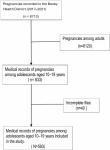
Distribution of pregnancies recorded in the Baney Health District: between 2017 and 2021, a total of 8713 pregnancies were recorded in public health facilities in the Baney Health District. Of these, 8120 pregnancies (93.2%) involved adult women, while 633 cases (7.3%) occurred among adolescents aged 10-19 years. After review of the medical records related to adolescent pregnancies, 40 files were excluded due to incomplete data. Consequently, 593 complete medical records of pregnancies among adolescents aged 10-19 years, representing 6.8% of all recorded pregnancies, were retained for analysis and constituted the final study sample (Figure 1).
socio-demographic characteristics of pregnant adolescents: among the 593 adolescent girls with early pregnancies included in the study, the mean age was 17.47 ± 1.35 years, with ages ranging from 13 to 19 years. The majority of pregnancies occurred among adolescents aged 16-19 years, accounting for 91.9% (n = 545) of cases. Early pregnancies were less frequent among those aged 14-15 years (7.1%; n = 42) and 10-13 years (1.0%; n = 6). Regarding marital status, the majority of pregnant adolescents were single (74.9%; n = 444). In addition, 20.1% (n = 119) were cohabiting, while 5.1% (n = 30) were married. Regarding educational level, more than half of the adolescents were attending school (61.4%; n = 364). In addition, 30.0% (n = 178) had dropped out of school, while 8.6% (n = 51) had never attended school. In terms of place of residence, the majority of adolescent girls lived in urban areas (75.0%; n = 445), compared with 25.0% (n = 148) residing in rural settings (Table 1).
Pregnancy related morbidities among adolescent girls: among the 593 adolescent girls, 58.9% (n = 349) had no documented illness during pregnancy, while a pregnancy related morbidity was reported in 41.1% (n = 244). Among those with morbidity, the most frequent conditions were anaemia (36.1%; n = 88) and malaria (27.0%; n = 66), followed by sexually transmitted infections (18.0%; n = 44). Less frequent conditions included hypertension (6.1%; n = 15) and mental health disorders (2.9%; n = 7), while other conditions accounted for 9.8% (n = 24) of cases (Table 2).
Distribution of pregnancies recorded in the Baney Health District: in the Baney Health District, teenage pregnancies accounted for 6.8% of all pregnancies recorded between 2017 and 2021. This rate, although relatively moderate, remains worrying given the health, social, and educational consequences associated with teenage pregnancies. A study conducted in five health facilities in Ouagadougou (Burkina Faso) reported a proportion of 10.4% of teenage pregnancies under 18 years of age, which is higher than our result [7]. This difference could be explained by disparities in demographic dynamics, access to reproductive health services or local socio-cultural norms.
socio-demographic characteristics of pregnant adolescents:
Age of pregnant teenagers: in our study, the age of pregnant adolescents ranged from 13 to 19 years, with a mean of 17.5 ± 1.35 years. The most represented age group was 16-19 years (91%). These results are slightly lower than those reported by Ouattara et al. in Burkina Faso, where the mean age was 18.06 years (8) [8]. Similarly, the WHO reports that teenage pregnancies are more common among girls aged 15 to 19, with a higher average in several African countries [1]. This difference could be explained by local socio-cultural factors, including earlier sexualization or limited access to sex education.
Marital status: regarding marital status, the majority of pregnant adolescents were single (74.9%; n = 444). In addition, 20.1% (n = 119) were cohabiting, while 5.1% (n = 30) were married. These findings are comparable to those reported by Iloki et al. in Brazzaville (Congo), where 84.06% of pregnant adolescents were single, 2.90% were married, and 13.04% were living in cohabitation, confirming the predominance of pregnancies outside marriage in urban settings of Central Africa [9]. In the Equatorial Guinean context, the predominance of pregnancies outside marriage may be explained by the restrictive legal nature of formal marriage, which often requires significant administrative and financial resources, limiting the formalisation of unions among young people. Furthermore, increasing urbanisation and changing social norms have contributed to a progressive dissociation between pregnancy and the institution of marriage, with pregnancy no longer systematically leading to marriage. The postponement of marriage, related to continued education and economic instability among young adults, may also contribute to this situation.
Educational level: among the 593 records analysed, 61.4% of pregnant adolescents were attending school, 30.0% had dropped out of school, and 8.6% had never attended school. In Brazzaville (Congo), Iloki et al. reported lower proportions of adolescents attending school (41.66%) and higher rates of school dropout (51.10%), indicating contextual differences between the two urban settings [9].
Place of residence: the majority of pregnant adolescents (75%) in our study resided in urban areas. This finding is consistent with the Essodinamodom study in Togo, which shows that gendered socialisation in urban areas promotes teenage pregnancies [10]. However, Lukusa et al. observed a high frequency in peri-urban areas in Goma (45%), linked to precariousness and school dropout [11]. The urban concentration in our study could be due to the location of health structures or to better reporting of cases in urban areas.
Pregnancy related morbidities among adolescent girls: in this study, more than half of pregnant adolescents (58.9%) did not present with any documented pathology during pregnancy. This proportion is comparable to those reported in several hospital based studies conducted in sub-Saharan Africa, where the absence of morbidity generally ranges between 50% and 75%, particularly in urban areas benefiting from better access to prenatal care [12,13]. In the context of Equatorial Guinea, this finding may be partly explained by relatively satisfactory access to health facilities in major urban centres such as Malabo and Bata. Nevertheless, the absence of documented pathology may also reflect under reporting of mild conditions, related to incomplete medical records or delayed health care seeking.
Malaria and anaemia: among adolescents presenting with pregnancy related morbidity, malaria (27%) and anaemia (36.1%) were the most frequent conditions. These findings are consistent with the literature, which identifies malaria and anaemia as the leading medical complications of pregnancy among adolescents in sub-Saharan Africa, particularly in areas of high malaria endemicity [14,15]. A meta analysis conducted by Pons Duran et al. showed that pregnant adolescents have a significantly higher risk of clinical malaria compared with adult women, mainly due to primigravidity and lower levels of acquired immunity [16]. In addition, cross sectional studies carried out in Burkina Faso and Cameroon have reported anaemia prevalences among pregnant women ranging from 30% to over 60%, with particularly high rates among adolescents [17]. In Equatorial Guinea, the stable and continuous malaria transmission throughout the year particularly exposes pregnant adolescents, often primigravidae, with limited immunity to an increased risk of infection. The observed anaemia is likely multifactorial, resulting from malaria infection, frequent nutritional deficiencies among adolescents, and limited coverage of preventive measures such as iron supplementation and systematic use of insecticide treated bed nets. These findings highlight the need to strengthen prevention strategies specifically targeting pregnant adolescents.
Sexually transmitted infections: sexually transmitted infections (STIs) accounted for 18% of the observed morbidities. This frequency is comparable to that reported in several African studies, which indicate that the prevalence of STIs among pregnant adolescents ranges from 10% to 30% [18]. In the context of Equatorial Guinea, this situation may be explained by early sexual initiation, relationships with older partners, low use of protective methods, and limited access of adolescents to sexual and reproductive health services.
Hypertension: it was reported in 6.1% of adolescents presenting with morbidity and remains less frequent than among adult women. This rate is comparable to prevalences reported in African systematic reviews, which estimate the overall prevalence of hypertensive disorders of pregnancy in sub-Saharan Africa at 5% to 10% [19,20]. However, in Equatorial Guinea, rapid nutritional transition, marked by increasing consumption of salt and fat rich diets, may contribute to a gradual rise in cardiovascular risk factors, even among young women. In addition, irregular prenatal follow up among some adolescents may lead to an underestimation of this condition, as certain cases of gestational hypertension may remain undiagnosed.
Depression and other mental disorders: mental health disorders, including depression, were documented in only 2.9% of pregnant adolescents. This proportion is markedly lower than estimates from community based studies and systematic reviews, which report prevalences of prenatal depression among adolescents ranging from 20% to over 30% in sub-Saharan Africa [21,22]. The low prevalence observed in this study likely reflects substantial under detection of mental health disorders in prenatal care settings, where systematic mental health screening is rarely integrated [21].
Limitations of the study: the retrospective nature of data collection represents a potential limitation, exposing the study to information bias related to the incompleteness or inaccuracy of certain medical records.
Mitigation measure: to minimise this bias, only complete and usable medical records were included in the analysis, and the data underwent systematic cross checking using the available registers in the selected health facilities.
Adolescent pregnancy remains a significant public health concern in the Baney Health District. Although most affected adolescents were urban and still attending school, they remain exposed to preventable conditions such as anemia, malaria, and sexually transmitted infections. The low level of documented morbidity likely reflects under diagnosis rather than a true absence of health problems, particularly for mental health disorders. Strengthening adolescent friendly reproductive health services, improving preventive interventions, and integrating mental health screening into antenatal care are essential to reduce the burden of adolescent pregnancy in Equatorial Guinea.
What is known about this topic
- Adolescent pregnancy is highly prevalent in sub-Saharan Africa;
- Pregnant adolescents are at increased risk of medical complications, including malaria, anemia, sexually transmitted infections, and mental health disorders;
- Adolescent pregnancy is associated with heightened medical, social, and educational risks, affecting both the young mother and her child.
What this study adds
- Provides district-level evidence on the socio-demographic and clinical profile of adolescent pregnancies in Equatorial Guinea, a setting with limited published data;
- Highlights that adolescent pregnancies in Baney predominantly affect educated, urban adolescents rather than only the most socially marginalised groups;
- Emphasises the coexistence of relatively low documented morbidity with persistent infectious and nutritional risks, suggesting underdiagnosis of some conditions, particularly mental health disorders.
The authors declare no competing interests.
Conceptualisation: Ange Donatien Ngouyombo. Methodology: Ange Donatien Ngouyombo, Jess Saint Saba Antaon. Data curation: Yannick Goumeni Kouemaha. Data analysis: Eliane Likassi Botsondo. Investigation: Teodora Alene Nfa Nchama. Writing original draft: Ange Donatien Ngouyombo. Writing review and editing: Pierre Marie Tebeu. Supervision: Pierre Marie Tebeu. All authors have read and approved the final version of the manuscript.
The author would like to thank the health personnel of the Baney Health District for their collaboration and support in accessing the prenatal consultation records used in this study.
Table 1: socio-demographic characteristics of adolescent girls with early pregnancies in the Baney Health District, 2017-2021 (N = 593)
Table 2: pregnancy-related morbidities among adolescents (n = 593)
Figure 1: flow chart of pregnancies recorded in the Baney Health District (2017-2021)
- World Health Organization. Adolescent pregnancy. WHO. Accessed 19th May 2026.
- World Health Organization. Adolescent birth rate (per 1000 women aged 15-19 years). WHO. Accessed 19th May 2026.
- Bokslag A, van Weissenbruch M, Mol BW, de Groot CJM. Preeclampsia; short and long-term consequences for mother and neonate. Early Hum Dev. 2016 Nov;102:47-50. PubMed | Google Scholar
- Brosens I, Muter J, Ewington L, Puttemans P, Petraglia F, Brosens JJ et al. Adolescent Preeclampsia: Pathological Drivers and Clinical Prevention. Reprod Sci. 2019 Feb;26(2):159-171. PubMed | Google Scholar
- Mekonen EG. Pooled prevalence and associated factors of teenage pregnancy among women aged 15 to 19 years in sub-Saharan Africa: evidence from 2019 to 2022 demographic and health survey data. Contracept Reprod Med. 2024 May 23;9(1):26. PubMed | Google Scholar
- World Bank Group. Equatorial Guinea. World Bank Group. Accessed 19th May 2026.
- Kiemtoro S, Touré B, Ouatara A, Sawadogo Y, Zamane H, Ouedraogo A. Teenage pregnancy: frequency and prognosis in five health facilities in the city of Ouagadougou, Burkina Faso. Journal de la SAGO. 2028:41-5.
- Ouattara A, Diallo A, Bako N, Tougma A, Sawadogo AY. Pregnancy and childbirth among adolescents in the Department of Gynecology and Obstetrics of the Bogodogo Teaching Hospital, Ouagadougou, Burkina Faso: epidemiological, clinical, and prognostic aspects. Journal de la SAGO. 2024.
- Iloki LH, Koubaka R, Itoua C, Mbemba Moutounou GM. Pregnancy and childbirth among adolescent girls in Congo. JGYN. 2024:37-42.
- Kaba Essodinamodom. Gender, socialization and teenage pregnancies in urban schools: Between fatality and determinism. International Journal of Innovation and Applied Studies. 2022;37(3):716-24.
- Mishika Lukusa P, Bukasa Tshilonda JC, Kabongo Mwamba AG, Abdala Kingwenge A, Tsongokibendelwa Z, Wembonyama Okitotsho S et al. Determinants of early pregnancies in the city of Goma. Global scientific journal. May 2025;13(5).
- Karataşlı V, Kanmaz AG, İnan AH, Budak A, Beyan E. Maternal and neonatal outcomes of adolescent pregnancy. J Gynecol Obstet Hum Reprod. 2019 May;48(5):347-350. PubMed | Google Scholar
- Lingani M, Zango SH, Valéa I, Samadoulougou S, Sanou MA, Sorgho H et al. Prevalence and determinants of anaemia among pregnant women in high malaria transmission setting: a cross-sectional study in rural Burkina Faso. Pan Afr Med J. 2024 Jan 3;47:2. PubMed | Google Scholar
- Desai M, Kuile FO ter, Nosten F, McGready R, Asamoa K, Brabin B et al. Epidemiology and burden of malaria in pregnancy. Lancet Infect Dis. 2007 Feb;7(2):93-104. PubMed | Google Scholar
- Zegeye AF, Wassie M, Tamir TT, Tekeba B, Mekonen EG, Zeleke GA et al. Malaria-anemia comorbidity and its determinants among pregnant women in high- and moderate-malaria-risk countries in Sub-Saharan Africa. Infect Dis Poverty. 2025 Aug 13;14(1):86. PubMed | Google Scholar
- Pons-Duran C, Mombo-Ngoma G, Macete E, Desai M, Kakolwa MA, Zoleko-Manego R et al. Burden of malaria in pregnancy among adolescent girls compared to adult women in 5 sub-Saharan African countries: A secondary individual participant data meta-analysis of 2 clinical trials. PLoS Med. 2022 Sep 2;19(9):e1004084. PubMed | Google Scholar
- Celestine KMN, Hirma TNK, Nadia NAC, Symphorien E, Jerome A. Malaria and Anemia among Pregnant Women in the Foumban Health District: West-Cameroon. J Biosci Med. 2024;12(12):305-14. Google Scholar
- World Health Organization. Global and regional STI estimates. WHO. Accessed 19th May 2026.
- Meazaw MW, Chojenta C, Muluneh MD, Loxton D. Factors associated with hypertensive disorders of pregnancy in sub-Saharan Africa: A systematic and meta-analysis. PLoS One. 2020 Aug 19;15(8):e0237476. PubMed | Google Scholar
- Gemechu KS, Assefa N, Mengistie B. Prevalence of hypertensive disorders of pregnancy and pregnancy outcomes in Sub-Saharan Africa: A systematic review and meta-analysis. Womens Health (Lond). 2020 Jan-Dec;16:1745506520973105. PubMed | Google Scholar
- Anim B. A Systematic Review on Mental Disorders among Pregnant Adolescents in Sub-Saharan Africa. IOSR Journal of Dental and Medical Sciences. 2025;24(7):53-68. Google Scholar
- Mutahi J, Larsen A, Cuijpers P, Peterson SS, Unutzer J, McKay M et al. Mental health problems and service gaps experienced by pregnant adolescents and young women in Sub-Saharan Africa: A systematic review. EClinicalMedicine. 2022 Feb 14;44:101289. PubMed | Google Scholar
Search
This article authors
On Pubmed
On Google Scholar
Citation [Download]
Navigate this article
Similar articles in
Key words
Tables and figures

Article metrics
Recently from the JOURNAL_ABBREVIATION

Authors´ services