
AI-based and classical analyses of determinants of neonatal respiratory distress in a middle-income country: a retrospective cohort study
Latifa Mochhoury, Khaddouj El Goundali, Milouda Chebabe, Lalla Asmaa Katir Masnaoui, Nabila Msatfa, Kawtar Chafik, Amina Barkat
Corresponding author: Latifa Mochhoury, Hassan First University of Settat, Higher Institute of Health Sciences, Laboratory of Health Sciences and Technologies, Settat, Morocco 
Received: 13 Mar 2026 - Accepted: 06 May 2026 - Published: 15 Jun 2026
Domain: Medical informatics,Neonatology
Keywords: Neonatal respiratory distress, logistic regression, CART, heatmap, machine learning
Funding: This work received no specific grant from any funding agency in the public, commercial, or non-profit sectors.
©Latifa Mochhoury et al. Pan African Medical Journal (ISSN: 1937-8688). This is an Open Access article distributed under the terms of the Creative Commons Attribution International 4.0 License (https://creativecommons.org/licenses/by/4.0/), which permits unrestricted use, distribution, and reproduction in any medium, provided the original work is properly cited.
Cite this article: Latifa Mochhoury et al. AI-based and classical analyses of determinants of neonatal respiratory distress in a middle-income country: a retrospective cohort study. Pan African Medical Journal. 2026;54:46. [doi: 10.11604/pamj.2026.54.46.50055]
Available online at: https://www.panafrican-med-journal.com//content/article/54/46/full
 PDF in process
 Research 

AI-based and classical analyses of determinants of neonatal respiratory distress in a middle-income country: a retrospective cohort study
AI-based and classical analyses of determinants of neonatal respiratory distress in a middle-income country: a retrospective cohort study
 Latifa Mochhoury 1,&, Khaddouj El goundali1, Milouda Chebabe1, Lalla Asmaa Katir Masnaoui1, Nabila Msafta1, Kawtar Chafi1, Amina Barkat2
&Corresponding author
Introduction: neonatal respiratory distress (NRD) is a major contributor to neonatal morbidity and mortality in middle-income countries. Objective: to identify independent risk factors for NRD using classical logistic regression and to explore multivariate interactions using a classification and regression tree (CART) model and correlation heatmaps.
Methods: a retrospective cohort study was conducted from January 2023 to December 2024 at the National Reference Center for Neonatology in Rabat. During the study period, 630 newborns who met the inclusion criteria were included in 2 groups: neonates with respiratory distress (n=421) and neonates without respiratory distress (n=209). The identification of risk factors was carried out using bivariate as well as multivariate analyses and Python (Scikit-learn, Seaborn) for CART modeling and heatmap visualization.
Results: six hundred and thirty (630) births were collected during this period Neonatal respiratory distress was multifactorial. Statistical analysis could reveal mostly maternal anemia (OR = 8.10; CI: 95 (7.52 -43.55); p< 0.05), diabetes (OR = 3.65; CI: 95 (1.98-6.72); p = 0.001), caesarean section (OR = 4.23; CI: 95 (1.54-11. 59); p = 0.001), prematurity (OR = 2.45; CI: 95 (1.41-4.26); p =0.01). as significant independent predictors of NRD (all p < 0.05).The CART model achieved perfect test set performance (AUC=1.00; sensitivity=100%; specificity=100%), suggesting potential overfitting. A Spearman correlation heatmap confirmed strong associations (ρ > 0.88) between NRD and all predictors.
Conclusion: both classical and AI-based methods converged in identifying relevant clinical predictors. Interpretable AI models may enhance neonatal risk stratification, especially in resource-limited contexts.

Neonatal respiratory distress (NRD) remains a leading cause of neonatal morbidity and mortality, especially in preterm infants and in low- and middle-income countries (LMICs) where access to surfactant therapy and advanced respiratory support is limited [1]. Respiratory distress syndrome (RDS), the main form of NRD, results from pulmonary surfactant deficiency in infants born before 34 weeks [2]. Despite the benefits of surfactant therapy and antenatal corticosteroids, maternal and perinatal factors-such as cesarean section, anemia, gestational diabetes, abnormal amniotic fluid, and neonatal resuscitation still influence incidence [3,4]. Predictive factors of NRD can be grouped into maternal, delivery-related, and neonatal categories [5]. Maternal disorders (hypertensive disease, diabetes, premature membrane rupture, chorioamnionitis)and elective cesarean delivery without labor significantly increase risk [5-7]. Traditional statistical models like logistic regression help identify associations but struggle with complex nonlinear interactions. Machine learning (ML) techniques, particularly Classification and Regression Trees(CART), offer better detection of multifactorial pathways and easier clinical interpretation [8,9]. Correlation heatmaps further reveal interrelations between predictors, confirming independence of associations [10].
Recent studies combining ML and conventional methods show promising accuracy in predicting neonatal complications [11]. However, no prior research has jointly applied logistic regression, CART, and correlation visualization to study NRD determinants in a Moroccan cohort. This study aimed to identify the main maternal, obstetric, and neonatal determinants of neonatal respiratory distress and to evaluate the added value of combining classical statistical analysis with interpretable machine-learning methods. Specifically, we sought to: describe the clinical profile of neonates with and without respiratory distress; determine independent predictors using logistic regression; explore interaction-based risk profiles using CART modeling; and visualize associations between NRD and key predictors through correlation heatmaps. The methodology and statistical analysis were guided by the following research questions: Which maternal, obstetric, and neonatal factors are associated with NRD? Which factors remain independently predictive after multivariate adjustment? Can CART modeling identify clinically meaningful risk pathways? Do correlation heatmaps support and complement the regression and CART findings? Finally, can this integrated approach improve early risk stratification in a resource-limited neonatal care setting?

Study design and population: this was a retrospective analytical study conducted at the National Reference Center for Neonatology and Nutrition, based at the Children´s Hospital of Rabat, a tertiary-level facility and one of Morocco´s major neonatal care centers. The study covered the period from January 1st, 2023, to December 31st, 2024. The population consisted of all newborns hospitalized for neonatal respiratory distress (NRD) within the early neonatal period (first seven days of life). A consecutive convenience sampling method was used. Only records that were complete and met eligibility criteria were included.
Inclusion and exclusion criteria
Inclusion criteria: all neonates (symptomatic or asymptomatic) admitted for clinical management of neonatal respiratory distress during the first week of life.
Exclusion criteria: newborns with congenital malformations.Respiratory distress due to surgical etiologies (e.g., congenital diaphragmatic hernia).Incomplete or missing essential data in the clinical file.
Data collection/study variables: data collection was carried out by a documentary technique consisting of studying the medical records of each neonate. All data were entered using an information sheet containing the following sections: maternal and obstetrical characteristics, characteristics of the newborn, and evaluation of the patient.
Dependent variable: neonatal respiratory distress
Independent variables
Socio-demographic characteristics: age, residence, marital status, educational and socioeconomic status of the mother, gestational age and area of origin. Obstetrics-related factors: gravidity, parity, current mode of delivery. Newborn characteristics (sex, birth weight, Apgar score,Silverman score, and time to respiratory distress> or <3 hours. i) Immediate resuscitation at birth. ii) Amniotic rupture. iii) Maternal pathologies during pregnancy (gestational diabetes, pre-eclampsia, goiter, asthma and anemia). Evaluation of the severity is based on a Silverman score, which is composed of inspiratory and expiratory categories of movements. Evaluation of the severity is based on a silverman score, which is composed of inspiratory and expiratory categories of movements. The scale of the silverman score ranges from 0 to 2: i) neonatal moderate respiratory distress corresponding to Silverman ≤4; ii) intense neonatal respiratory distress corresponding to silverman between 4-6; iii) very intense neonatal respiratory distress corresponding to Silverman >6.
Newborn characteristics (sex, birth weight, Apgar score, Silverman score, and time to respiratory distress> or <3 hours. i)Immediate resuscitation at birth. ii) Amniotic rupture. iii)Maternal pathologies during pregnancy (gestational diabetes, pre-eclampsia, goiter, asthma and anemia). Evaluation of the severity is based on a Silverman score, which is composed of inspiratory and expiratory categories of movements.
Definitions of used terms: neonatal respiratory distress is defined by the presence of at least one of the following elements: abnormal respiratory rate (tachypnea > 60 breaths/min; bradypnea < 30 breaths/ min; respiratory pauses, or apnea) or signs of labored breathing (expiratory grunting, nasal flaring, intercostal recessions, xyphoid recessions, or thoracoabdominal asynchrony). ii) Silverman´s score = A score greater than 7 indicates that the baby is in respiratory failure. iii) Resuscitation at birth at birth: refers to the time it takes to seek care after the onset of labor that is longer than 1 hour. iv) Primimarous: a woman pregnant for the first time. v) Multiparous: a woman who has had multiple births. vi) Premature rupture of membranes (PROM) is a rupture (breaking open) of the membranes (amniotic sac) before labor begins.
Statistical analysis: the statistical analysis was structured according to the predefined research questions. All variables were entered and coded in Excel, then analyzed using SPSS version 25.0 for classical statistical analyses and Python 3.11 for machine-learning and visualization procedures. A p-value < 0.05 was considered statistically significant. To describe the maternal, obstetric, and neonatal characteristics of newborns with and without NRD, descriptive statistics were used. Categorical variables were expressed as frequencies and percentages, while quantitative variables were summarized as means and standard deviations or medians and interquartile ranges according to their distribution. Second, to identify factors associated with NRD, bivariate analyses were conducted using NRD status as the dependent variable and maternal, obstetric, neonatal, and clinical characteristics as explanatory variables. The Chi-square test or Fisher´s exact test was used for categorical variables, while Student´s t-test or the Mann-Whitney U test was used for quantitative variables. To determine independent predictors of NRD, binary logistic regression was performed. Variables that were clinically relevant and/or statistically significant in bivariate analysis were included in the multivariate model. Results were expressed as adjusted odds ratios, 95% confidence intervals, and p-values. To explore hierarchical and interaction-based risk profiles, a classification and regression tree model was developed using Python 3.11 and Scikit-learn. Neonatal respiratory distress was used as the outcome variable, while the main maternal, obstetric, and neonatal predictors were used as explanatory variables. Finally, to visualize the strength and direction of associations between NRD and selected clinical predictors, a Spearman correlation heatmap was generated using Python libraries, including Pandas and Seaborn. This analysis complemented the findings from logistic regression and CART modeling by illustrating the correlation patterns between NRD and its main predictors.
Statement of ethical clearance: the authors take full responsibility for the study design, data collection, analysis, interpretation, writing, and approval of the final manuscript. Ethical Compliance: This study complies with the Helsinki Declaration and was approved by the Biomedical Research Ethics Committee (CERB) of Mohammed V University, Rabat (Approval No. C64/20).
Maternal, obstetric, and neonatal characteristics of newborns with and without neonatal respiratory distress: we included 630 newborns, among whom 421 had neonatal respiratory distress (NRD) symptoms. Table 1 shows that the median maternal age was 35 years (Q1-Q3: (22; 36)). The distribution according to educational level was dominated by illiteracy and secondary education, with respective percentages of 48.2% and 44.2%, p<0.05. On the other hand, the university level was only 7.6% of the population. The mean gestational age of the newborns was 36.8 ± 8.86 gestational weeks; socioeconomic status was low in 54.2% of the cases and medium in only 45.8%, p<0.05.
Maternal obstetric and neonatal factors associated with neonatal respiratory distress: Table 2 summarizes the obstetric, neonatal, and maternal pathological factors associated with NRDT and indicates that among 421 neonates with neonatal respiratory distress, 190 were female and 231 were male, with a sex ratio of 1.21; the sex of the neonate had no effect on neonatal respiratory distress in our study (p=0.62), The mean birth weight was 3000g (Q1-Q3: (2100; 4050)). The cesarean section prevailed in 80.5% of cases, with a significant statistical difference p<0.05; early rupture of membranes >12 hours was 84.1%, and the aspect of amniotic fluid (55.1%) p<0.05
Independent predictors of neonatal respiratory distress: Table 3 presents the adjusted odds ratios, 95% confidence intervals, and p-values for the independent predictors of NRD. This result addresses the third research question by determining which factors remained independently associated with NRD after multivariate adjustment. The main maternal and neonatal pathologies associated with respiratory distress were anemia (p<0.05), pre-eclampsia (p=0.02), maternal infection (p<0.05) and gestational diabetes (p<0.05). The main identified causes of respiratory distress were transitory tachypnea (16.5%), maternal-fetal infection (19.6 %), hyaline membrane disease (30.1%) and prematurity (54%). Multiple regression statistical analysis primarily incriminated anemia (OR = 18.10; 95 CI (7.5 -43.55); p<0.05), diabetes (OR= 3.65; 95 CI (1.98-6.72); p = 0.001), cesarean section (OR =4.23; 95 CI (1.54-11.59); p= 0. 001), prematurity (OR = 2.45;95 CI (1.41-4.26); p= 0.01), appearance of amniotic fluid (OR= 27.9; 95 CI (13.46-55.34); p< 0.005); premature rupture of membranes (OR = 5.40; 95 CI (2.58-11.29); p < 0.05),I (and early resuscitation at birth (OR = 30.95; 95 CI (13.65-70.13); p< 0.05) .
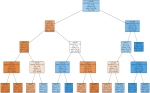
Classification and regression tre-based identification of hierarchical risk profiles for neonatal respiratory distress: in line with the fourth research question, machine-learning analysis was used to identify clinically meaningful combinations of risk factors associated with neonatal respiratory distress. The CART model identified a hierarchical structure of predictors associated with NRD. Resuscitation at birth emerged as the main discriminating variable, indicating its central role in early neonatal respiratory compromise. Among neonates requiring resuscitation, abnormal amniotic fluid appearance, maternal anemia, prematurity, and gestational diabetes contributed to higher-risk pathways.Among neonates who did not require resuscitation, maternal anemia and gestational diabetes still contributed to risk stratification. This finding suggests that maternal conditions may influence neonatal respiratory adaptation even in the absence of immediate resuscitation. The decision tree therefore complements logistic regression by showing how predictors interact in a clinically interpretable sequence. Figure 1 presents the CART decision tree and the main risk pathways identified.
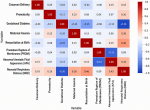
Correlation patterns between neonatal respiratory distress and selected clinical predictors: to address the fifth research question, we examined whether correlation patterns were consistent with the findings obtained from multivariate logistic regression and classification and regression tree modeling. The spearman correlation heatmap showed positive correlations between NRD and several clinical predictors. The strongest correlations were observed with resuscitation at birth, abnormal amniotic fluid appearance, and maternal anemia. Prematurity and cesarean delivery showed weaker but positive correlations with NRD. Gestational diabetes showed a negative correlation, which may reflect differences in antenatal monitoring or planned delivery pathways in this cohort. These correlation patterns support the multifactorial nature of NRD and complement the regression and CART findings by visualizing the direction and relative strength of associations between NRD and its main predictors. Figure 2 presents the correlation heatmap between NRD and selected maternal, obstetric, and neonatal variables.
In this comprehensive study, we combined classical statistical methods and machine learning approaches to identify predictors of neonatal respiratory distress (NRD). The high prevalence of NRD observed in our cohort (66.8%) likely reflects the characteristics of the population managed at a university hospital, where complicated pregnancies and neonates with critical conditions are often referred for specialized care. This highlights the importance of early antenatal risk stratification and reinforced peripartum care protocols. Our results highlight several maternal and neonatal determinants of respiratory distress. The median maternal age was 35 years (Q1-Q3: 22-36). Advanced maternal age (30-40 years) is known to increase neonatal morbidity, partly due to chronic conditions such as hypertension and diabetes [12]. Birth weight was another determinant. The average was 3000 g (Q1-Q3: 2100-4050), with higher distress among neonates <2500 g. Over half (54.4%) were hypotrophic. Previous studies have shown intrauterine growth restriction, often linked to hypertension and reduced placental perfusion, predisposes to respiratory morbidity [13]. Regarding perinatal care, oxygen therapy was administered in all cases, yet 94.4% of neonates were not resuscitated at birth. Many were referred from peripheral centers with inadequate transport, illustrating systemic challenges. Similar to Alamneh et al. [14], preventable factors such as preterm birth, low birth weight, prolonged labor, or meconium aspiration were frequent contributors.
Cesarean section was strongly linked to neonatal distress, in line with previous studies [15,16]. The delayed clearance of lung fluid and reduced catecholamine release in scheduled cesarean deliveries impair lung adaptation to extrauterine life. We also confirmed the association between maternal diabetes and neonatal respiratory distress. Poorly controlled diabetes induces fetal hyperglycemia, oxidative stress, and impaired lung maturation [17]. Likewise, hypertensive disorders, especially pre-eclampsia, increased complications and NICU admissions, as reported elsewhere [18]. Maternal anemia (OR= 18.1) and gestational diabetes (OR= 3.65) emerged as major determinants of NRD ;nutritional deficiencies, especially iron and folate, likely explain this association.These results are consistent with previous studies showing that maternal health substantially influences neonatal respiratory adaptation through mechanisms involving inflammation, hypoxia, and metabolic imbalance [19]. Prolonged premature rupture of membranes (12h) and abnormal amniotic fluid were also strongly associated with NRD, reflecting the infectious and inflammatory burden on the fetus that increases pulmonary vulnerability. These findings align with evidence linking intra-amniotic infection and fetal distress to meconium aspiration and inflammatory lung injury [20]. Prematurity (OR=2.45) remains a dominant risk factor, largely due to surfactant deficiency and structural lung immaturity, while cesarean delivery (OR = 4.23) was associated with higher NRD risk, likely because of the absence of thoracic compression and incomplete fluid clearance during delivery, as seen in transient tachypnea of the newborn.
This emphasizes the importance of avoiding non-indicated cesarean sections before 39 weeks of gestation [21]. A low 1-minute Apgar score and the need for neonatal resuscitation were the strongest indicators of NRD, with resuscitation showing the highest odds ratio (OR = 30.95). While these factors may reflect severity rather than causality, they remain critical early warning signs that predict the need for intensive respiratory support, consistent with findings from other cohorts [22]. Beyond classical regression, the CART model provided novel insights by highlighting hierarchical and conditional risk profiles. Among preterm infants, a low Apgar score pushed the likelihood of NRD beyond 90%, while among term infants, cesarean delivery was the dominant determinant. Such non-linear and context-dependent interactions are difficult to capture with traditional models. Machine learning thus provided clinically intuitive, interpretable decision trees that may help anticipate NRD and support individualized monitoring [23]. The correlation heatmap based on Spearman coefficients provided a more nuanced perspective on the associations between neonatal respiratory distress (NRD) and its main clinical predictors. We showed moderate positive associations with resuscitation at birth (ρ = 0.46), abnormal amniotic fluid appearance (ρ = 0.43), and maternal anemia (ρ=0.38). Other factors such as prematurity (ρ=0.26) and cesarean delivery (ρ =0.18) exhibited weaker associations, while gestational diabetes was negatively correlated with NRD (ρ = -0.36). This pattern emphasizes that NRD arises from a combination of interrelated factors rather than from uniformly strong predictors.
Clinically, the strongest correlations observed with resuscitation at birth and abnormal amniotic fluid underscore the importance of immediate perinatal assessment and management in predicting and preventing NRD. The negative association with gestational diabetes may reflect better antenatal monitoring and planned deliveries, potentially reducing the risk of neonatal complications.The heatmap therefore complements classical inference, not by confirming universally strong correlations, but by highlighting the hierarchical and differential weight of predictors. This integrative approach strengthens interpretability and bridges classical epidemiological methods with AI-based models. In particular, it supports the careful selection of relevant variables for machine learning, avoiding overfitting while ensuring clinical plausibility. Our findings align with broader literature advocating the use of AI and data mining tools in healthcare decision-making. Previouss author emphasized that the complexity of NICU environments, characterized by heterogeneous real-time processes, cannot be fully addressed by a single tool and requires advanced data mining methods and multi-agent architectures [23]. In line with this perspective, our study demonstrates that machine learning, particularly Random Forest, holds significant potential for improving NRD prediction and reducing neonatal complications [24]. Similarly, research on maternal and child health has highlighted the value of decision support systems that integrate systemic analysis and data mining algorithms across medical, social, and organizational dimensions. Such systems provide clinicians and policymakers with evidence-based insights to design targeted interventions [25]. Taken together, these parallels underscore the growing relevance of AI in supporting effective strategies to reduce neonatal morbidity and mortality [26]. Moreover, the NICU is particularly well-suited for AI applications due to the large volume of high-dimensional data generated, including continuous monitoring, laboratory results, imaging, and medical records, which provide a robust foundation for training and validating AI algorithms [27].
Study limitations: this study has several limitations. Its retrospective design may have introduced information bias due to incomplete or inconsistently recorded clinical data. The single-center setting limits the generalizability of the findings to other neonatal units in Morocco or other resource-limited settings. Some clinically relevant variables, such as antenatal corticosteroid exposure, timing of cesarean delivery, surfactant administration, severity of maternal diabetes, and detailed respiratory support modalities, were not fully available. In addition, the very high performance of the CART model suggests possible overfitting; therefore, this model should be considered exploratory and requires external validation. Finally, because of the observational design, the associations identified cannot be interpreted as causal relationships.
This study identified key determinants of neonatal respiratory distress (NRD) through integrated classical and AI analyses. Resuscitation at birth, abnormal amniotic fluid, and maternal anemia were major predictors, while prematurity and cesarean delivery showed weaker links. The combined use of logistic regression and AI models enhances understanding and supports the development of neonatal risk-prediction tools, especially in limited-resource settings.
What is known about this topic
- Neonatal respiratory distress remains one of the leading causes of neonatal morbidity and mortality in low- and middle-income countries;
- Classical statistical models, such as logistic regression, have been widely used to identify risk factors but often fail to capture complex, non-linear interactions between variables;
- Machine learning methods, including decision trees, have been proposed in recent years to improve neonatal risk prediction but are rarely applied in African neonatal cohorts.
What this study adds
- Resuscitation at birth was the strongest predictor of neonatal respiratory distress in both classical and machine-learning analyses;
- The Classification and regression tree model identified hierarchical risk pathways that were not fully captured by logistic regression alone;
- The correlation heatmap confirmed that resuscitation at birth, abnormal amniotic fluid appearance, and maternal anemia had the strongest positive associations with neonatal respiratory distress.
The authors declare no competing interests.
Conceptualization: Latifa Mochhoury, Amina Barkat. Methodology: Latifa Mochhoury, Amina Barkat, Milouda Chebabe. Software: Latifa Mochhoury , Khaddouj El Goundali. Validation: Milouda Chebabe, Kawtar Chafik, Lalla Asmaa Katir Masnaoui. Formal analysis: Latifa Mochhoury, Khaddouj El Goundali. Investigation: Latifa Mochhoury, Amina Barkat. Data curation: Amina Barkat, Latifa Mochhoury. Writing original draft: Latifa Mochhoury. Writing review and editing: Milouda Chebabe, Kawtar Chafik, Lalla Asmaa Katir Masnaoui, Khaddouj El Goundali, Amina Barkat. Supervision: Milouda Chebabe, Kawtar Chafik, Lalla Asmaa Katir Masnaoui. Project administration: Latifa Mochhoury, Amina Barkat. All the authors have read and approved the final version of this manuscript.
We thank the Neonatology Department Secretariat and all contributors for their valuable support.
Table 1: maternal and neonatal baseline characteristics of newborns with and without neonatal respiratory distress at the National reference center for neonatology and nutrition, children´s hospital of Rabat, Morocco, January 2023-December 2024
Table 2: obstetric, neonatal, and maternal pathological characteristics associated with neonatal respiratory distress among newborns admitted to the National National reference center for neonatology and nutrition, children´s hospital of Rabat, Morocco, January 2023-December 2024
Table 3: independent predictors of neonatal respiratory distress identified by multivariate logistic regression among newborns admitted to the National National reference center for neonatology and nutrition, children´s hospital of Rabat, Morocco, January 2023-December 2024
Figure 1: clinical decision tree predicting neonatal respiratory distress risk based on maternal and neonatal variables
Figure 2: spearman correlation heatmap of neonatal respiratory distress and associated clinical risk factors
- Liu L, Oza S, Hogan D, Chu Y, Perin J, Zhu J et al. Global, regional, and national causes of under-5 mortality in 2000-15: an updated systematic analysis with implications for the Sustainable Development Goals. Lancet. 2016 Dec 17;388(10063):3027-3035. PubMed | Google Scholar
- Sweet DG, Carnielli VP, Greisen G, Hallman M, Klebermass-Schrehof K, Ozek E et al. European Consensus Guidelines on the Management of Respiratory Distress Syndrome: 2022 Update. Neonatology. 2023;120(1):3-23. PubMed | Google Scholar
- Aynalem YA, Mekonen H, Akalu TY, Habtewold TD, Endalamaw A, Petrucka PM et al. Incidence of respiratory distress and its predictors among neonates admitted to the neonatal intensive care unit, Black Lion Specialized Hospital, Addis Ababa, Ethiopia. PLoS One. 2020 Jul 1;15(7):e0235544. PubMed | Google Scholar
- Farshid P, Mirnia K, Rezaei-Hachesu P, Maserat E, Samad-Soltani T. Developing a model to predict neonatal respiratory distress syndrome and affecting factors using data mining: a cross-sectional study. Int J Reprod Biomed. 2023 Dec 19;21(11):909-920. PubMed | Google Scholar
- Kitano T, Takagi K, Arai I, Yasuhara H, Ebisu R, Ohgitani A et al. Prenatal predictors of neonatal intensive care unit admission due to respiratory distress. Pediatr Int. 2018 Jun;60(6):560-564. PubMed | Google Scholar
- Liman CN, Retno Putri A, Arumndari R, Suryawan IWB, Suryaningsih PS. Factors affecting neonatal respiratory distress syndrome at Wangaya General Hospital. Intisari Sains Medis. 2024 Jun 7;15(2):595-9. Google Scholar
- Pesce G, Marchetti P, Calciano L, Pironi V, Ricci P, Marcon A. Fetal Exposure to Maternal Pregnancy Complications and Respiratory Health in Childhood. Pediatr Allergy Immunol Pulmonol. 2017 Dec;30(4):218-226. PubMed | Google Scholar
- Betts KS, Kisely S, Alati R. Predicting neonatal respiratory distress syndrome and hypoglycaemia prior to discharge: Leveraging health administrative data and machine learning. J Biomed Inform. 2021 Feb;114:103651. PubMed | Google Scholar
- McElroy SJ, Lueschow SR. State of the art review on machine learning and artificial intelligence in the study of neonatal necrotizing enterocolitis. Front Pediatr. 2023 May 26;11:1182597. PubMed | Google Scholar
- Singh K, Nayal AS, Chiary HR, Chaudhary A, Kumar S, Sharma B et al. Molecular data reveal diversity of Tylodelphys spp. [Trematoda: Diplostomidae] in India: with evidence of new lineages, morphology and statistical analysis. Mol Biol Rep. 2025 Mar 26;52(1):336. PubMed | Google Scholar
- Ahmed W, Veluthandath AV, Rowe DJ, Madsen J, Clark HW, Postle AD et al. Prediction of Neonatal Respiratory Distress Biomarker Concentration by Application of Machine Learning to Mid-Infrared Spectra. Sensors (Basel). 2022 Feb 23;22(5):1744. PubMed | Google Scholar
- Curiello S, Iannuzzi E, Meissner D, Nigro C. Mind the gap: unveiling the advantages and challenges of artificial intelligence in the healthcare ecosystem. Eur J Innov Manag.2025 Aug 5;28(5):1790-833. Google Scholar
- Wyckoff MH, Aziz K, Escobedo MB, Kapadia VS, Kattwinkel J, Perlman JM et al. Part 13: Neonatal Resuscitation: 2015 American Heart Association Guidelines Update for Cardiopulmonary Resuscitation and Emergency Cardiovascular Care. Circulation. 2015 Nov 3;132(18 Suppl 2):S543-60. PubMed | Google Scholar
- Alamneh YM, Negesse A, Aynalem YA, Shiferaw WSH, Gedefew M, Tilahun M et al. Risk Factors of Birth Asphyxia among Newborns at Debre Markos Comprehensive Specialized Referral Hospital, Northwest Ethiopia: Unmatched Case-Control Study. Ethiop J Health Sci. 2022 May;32(3):513-522. PubMed | Google Scholar
- Tahir AG, Baythoon MB, Al Saddi YI. The Timing of Elective Caesarean Deliveries and Early Neonatal Respiratory Morbidity in Term Neonates. J Fac Med Baghdad. 2018 Apr 1;60(1):38-42. Google Scholar
- Tefera M, Assefa N, Mengistie B, Abrham A, Teji K, Worku T. Elective Cesarean Section on Term Pregnancies Has a High Risk for Neonatal Respiratory Morbidity in Developed Countries: A Systematic Review and Meta-Analysis. Front Pediatr. 2020 Jun 25;8:286. PubMed | Google Scholar
- Yang F, Liu H, Ding C. Gestational diabetes mellitus and risk of neonatal respiratory distress syndrome: a systematic review and meta-analysis. Diabetol Metab Syndr. 2024 Dec 5;16(1):294. PubMed | Google Scholar
- Khan B, Yar RA, Khakwani AK, Karim S, Ali HA. Preeclampsia Incidence and Its Maternal and Neonatal Outcomes With Associated Risk Factors. Cureus. 2022 Nov 6;14(11):e31143. PubMed | Google Scholar
- Zhao B, Sun M, Wu T, Li J, Shi H, Wei Y. The association between maternal anemia and neonatal anemia: a systematic review and meta-analysis. BMC Pregnancy Childbirth. 2024 Oct 18;24(1):677. PubMed | Google Scholar
- Yoon SJ, Lim J, Han JH, Shin JE, Eun HS, Park MS et al. Impact of neonatal resuscitation changes on outcomes of very-low-birth-weight infants. Sci Rep. 2021 Apr 26;11(1):9003. PubMed | Google Scholar
- Stylianou-Riga P, Boutsikou T, Kouis P, Kinni P, Krokou M, Ioannou A et al. Maternal and neonatal risk factors for neonatal respiratory distress syndrome in term neonates in Cyprus: a prospective case-control study. Ital J Pediatr. 2021 Jun 3;47(1):129. PubMed | Google Scholar
- Malak JS, Zeraati H, Nayeri FS, Safdari R, Shahraki AD. Neonatal intensive care decision support systems using artificial intelligence techniques: a systematic review. Artif Intell Rev. 2019 Dec;52(4):2685-704. Google Scholar
- Lei Y, Qiu X, Zhou R. Construction and evaluation of neonatal respiratory failure risk prediction model for neonatal respiratory distress syndrome. BMC Pulm Med. 2024 Jan 2;24(1):8. PubMed | Google Scholar
- Saha P. Design of decision support system incorporating data mining algorithms for strengthening maternal and child health systems: Inclusion of systems-thinking approach. BMC Pulm Me. 2024 Jan 2;24(1):81. Google Scholar
- Keles E, Bagci U. The past, current, and future of neonatal intensive care units with artificial intelligence: a systematic review. NPJ Digit Med. 2023 Nov 27;6(1):220. PubMed | Google Scholar
- Huang C, Ha X, Cui Y, Zhang H. A study of machine learning to predict NRDS severity based on lung ultrasound score and clinical indicators. Front Med (Lausanne). 2024 Nov 1:11:1481830. PubMed | Google Scholar
- Beam K, Sharma P, Levy P, Beam AL. Artificial intelligence in the neonatal intensive care unit: the time is now. JJ Perinatol. 2024 Jan;44(1):131-135. PubMed | Google Scholar
Search
This article authors
On Pubmed
On Google Scholar
Citation [Download]
Navigate this article
Similar articles in
Key words
Tables and figures

Article metrics
Recently from the PAMJ







Authors´ services
