Factors associated with uncontrolled seizures among adult epileptic patients at the Kenyatta National Hospital in Kenya: a cross-sectional study
Denis Kamau Kariuki, Margaret Ngw'ono Oluka, Faith Apolot Okalebo, Judith Katono Kwasa
Corresponding author: Denis Kamau Kariuki, Department of Pharmacology, Clinical Pharmacy and Pharmacy Practice, Faculty of Health Sciences, University of Nairobi, Nairobi, Kenya 
Received: 21 Aug 2024 - Accepted: 03 Jul 2026 - Published: 26 Aug 2026
Domain: Pharmacology
Keywords: Epilepsy, seizures, antiepileptic drugs, Carbamazepine
Funding: This work received no specific grant from any funding agency in the public, commercial, or non-profit sectors.
©Denis Kamau Kariuki et al. Pan African Medical Journal (ISSN: 1937-8688). This is an Open Access article distributed under the terms of the Creative Commons Attribution International 4.0 License (https://creativecommons.org/licenses/by/4.0/), which permits unrestricted use, distribution, and reproduction in any medium, provided the original work is properly cited.
Cite this article: Denis Kamau Kariuki et al. Factors associated with uncontrolled seizures among adult epileptic patients at the Kenyatta National Hospital in Kenya: a cross-sectional study. Pan African Medical Journal. 2026;54:139. [doi: 10.11604/pamj.2026.54.139.44535]
Available online at: https://www.panafrican-med-journal.com//content/article/54/139/full
 PDF in process
 Research 

Factors associated with uncontrolled seizures among adult epileptic patients at the Kenyatta National Hospital in Kenya: a cross-sectional study
Factors associated with uncontrolled seizures among adult epileptic patients at the Kenyatta National Hospital in Kenya: a cross-sectional study
Denis Kamau Kariuki1,&, Margaret Ngw'ono Oluka1, Faith Apolot Okalebo1, Judith Katono Kwasa2
&Corresponding author
Introduction: epilepsy is a condition characterised by recurrent seizures which are 24 hours apart. Eighty per cent of global cases are found in Low-and-Middle Income Countries.
Methods: an analytical cross-sectional study design was adopted for this study. A total of 185 adult epileptic patients were recruited between June and September 2023 at the neurology clinic of the Kenyatta National Hospital. Participants were interviewed, and medical records were reviewed. Multivariable logistic regression was carried out to identify factors associated with uncontrolled seizures. The level of significance was set at P<.05.
Results: oral carbamazepine was the most prescribed antiepileptic drug (AED) followed by sodium valproate and levetiracetam. Only 71(38.4%) participants were adherent to their antiepileptic drugs. Participants with at least one seizure in the past year were considered to have uncontrolled seizures 128(69.2%). Factors associated with uncontrolled seizures were non-adherence to antiepileptic drugs (aOR = 2.56, 95% CI: 1.21 - 5.42; P=.01), treatment with phenobarbitone (aOR = 2.76, 95% CI: 1.18 - 6.45; P=.02), sodium valproate (aOR = 1.50, 95% CI: 1.10 - 2.03; P=.01) or levetiracetam (aOR = 1.28, 95% CI: 1.07 - 1.53; P=.01), and head trauma as an aetiology of the first epileptic seizure (aOR = 0.81, 95% CI: 0.67 - 0.98; P=.03).
Conclusion: the prevalence of uncontrolled seizures was notably high at 69.6%. The best predictors for uncontrolled seizures in this study included non-adherence to AEDs, treatment with either phenobarbitone, sodium valproate or head trauma as an aetiology of the first epileptic seizure.

World Health Organization (WHO) defines epilepsy as a chronic, non-communicable disease characterized by recurrent involuntary movements involving a part or the entire body set. Epilepsy affects more than 50 million people of all ages worldwide, with approximately 80% of cases occurring in developing countries [1]. People living with uncontrolled epilepsy and their caregivers face stigma leading to emotional, psychosocial, physical, and mental problems [2].
A study done in Kilifi county, rural Kenya, reported a crude lifelong prevalence of epilepsy of 31.7 per 1000 persons with an active convulsive epilepsy prevalence of 21.6/1000 persons [3]. An overall prevalence of epilepsy of 11.9 per 1000 persons is reported in a study carried out in Nairobi city county where active convulsive epilepsy was 8.3/1000 persons and non-convulsive epilepsy at 3.2/1000 persons [4]. According to WHO, "up to 70% of people living with epilepsy could become seizure-free with proper diagnoses and treatment" [1]. Unfortunately, the available AEDs often fail to suppress epileptic seizures and are associated with a great risk of side effects that affect the quality of life of patients [5]. When prescribed appropriately, AEDs can be discontinued when the patient has been seizure-free for at least two years of treatment thereby reducing the burden of lifelong medication to control seizures [1].
The Epilepsy Treatment Gap (ETG) is the percentage of people with active epilepsy who are not adequately treated in a particular population during a specific period. This gap describes the inability to achieve optimal seizure control among epileptic patients while using available AEDs in a community [6]. Seizure control is the main treatment outcome of epilepsy and it is used to evaluate the effectiveness of current AEDs [7].
Although some studies have been conducted in Kenya on various aspects of epilepsy, there is a need for up-to-date and comprehensive information on the prescribing of AEDs and their effectiveness in controlling seizures [3,4,8]. This study sets out to show how seizure control in Kenya compares to international trends and highlight gaps that may lead to sub-optimal outcomes. This study aimed to assess the prescribing patterns and identify factors associated with uncontrolled seizures among adult epileptic patients.

Study design and setting: an analytical cross-sectional study design was adopted in this study. Study participants comprised of registered epileptic patients attending the neurology outpatient clinic of Kenyatta National Hospital (KNH) from June to September 2023. Kenyatta National Hospital is a tertiary hospital situated in Nairobi, Kenya. The patients who attend this clinic are seen by consultants (neurologists) and resident doctors (internal medicine).
Study population: the target population in this study was adult epileptic patients receiving specialized care in a tertiary public hospital. The study population comprised of adult epilepsy patients receiving clinical care at the neurology clinic for at least one year before the interview date and on at least one AED. Patients were excluded if they failed to visit the clinic at least once in the year preceding data collection, or were pregnant epileptic women due to complexities of physiological changes interfering with accurate determination of seizure frequency. The Cochran formula for categorical outcomes was used for sample size calculation [9]. The Z score was 1.96 at 95% confidence interval. An acceptable margin of error of 0.05 was used. The Cochran correction formula for adjustment in a finite population was used to calculate a minimum sample size of 167 patients and inflated by 10% to cater for non-response bias to achieve a sample size of 184. Consecutive sampling method was used to select the eligible participants.
Data collection: a day before the clinic day, the neurology clinic records manager compiled a scheduling list of patients expected at the clinic the following day. Using this list, the researcher and research assistants identified patients with epilepsy by checking their diagnosis of epilepsy or convulsive disorder in their medical file. The eligible epileptic patients were then selected as they registered using consecutive sampling on the next day. Paper informed consent forms were available in both English and Kiswahili. Patients who met the eligibility criteria were requested to participate in the study before being seen by the physician. Consenting and interviews were conducted in a consultation room or secluded area in the neurology clinic depending on the participant's physical capability. Retrospective data was extracted from patients' medical records using a predesigned data collection form. A structured interview guide and a 5-item Medication Adherence Report Scale (MARS-5) were used to collect subjective data and adherence scores respectively [10]. The research assistant was trained to accurately gather information. Participants were interviewed in a consultation room. The calculated minimum sample size required to detect statistically significant effects in this study was achieved to minimize the impact of sampling bias. Data from medical records was used in this study to mitigate recall bias. All participants were subjected to the same study protocols and tools to minimize measurement bias and variability.
Definitions: independent variables consisted of socio-demographic, clinical, and treatment characteristics. Socio-demographic characteristics such as age, gender, marital status, education status, and employment status, were captured in the interview guide. The month of the last seizure was collected using the interview guide, and this information was used to determine seizure control status. Clinical characteristics included comorbidities, type of epilepsy, and side effects. Treatment-related characteristics included prescription drugs and adherence. In this study, a patient was considered to have controlled seizures if they were seizure-free in the past year from the interview date and having uncontrolled seizures if they had at least one seizure episode within the same period [11-13].
Statistical analysis: data from the interview guides and data collection form was input into a Microsoft Excel spreadsheet on the day of data collection and imported to STATA-MP version 13.0 for data analyses. Pearson's chi and Fischer's exact tests were used to compare distributions in categorical variables. Wilcoxon rank-sum test was used for continuous variables that were not normally distributed. Continuous variables were presented as median [interquartile range] for variables that were not normally distributed. Categorical variables were presented as counts and percentages. Univariable logistic regression was done to obtain associations of various predictor variables with uncontrolled seizures. Multivariable logistic regression was used to control for confounding and identified the significant predictor variables for uncontrolled seizures. The level of significance used in this study was P<.05. Missing data primarily related to the classification of epilepsy, duration with epilepsy and treatment period did not proceed for further analyses.
Ethical considerations: ethical approval was obtained from Kenyatta National Hospital - University of Nairobi Ethics and Research Committee before the launch of this study (Approval number: P82/02/2023). Informed consent was obtained before enrolment into the study. The study participants did not incur any costs during this study.
Socio-demographic and clinical characteristics of the study participants: a total of 185 participants were interviewed between June 2023 and September 2023. The participants ranged from 18 to 77 years, with a median age of 32 years. Table 1 presents the socio-demographic characteristics and clinical characteristics of study participants interviewed. Hypertension was the most common comorbidity, followed by neuropsychiatric disorders. Study participants who reported or had a side effect indicated on their medical file experienced CNS depression, followed by memory loss and gastrointestinal effects were the third most prevalent AED side effects.
Prescribing patterns and other co-medication: ten different antiepileptic drugs were prescribed to the study participants. Carbamazepine was the most commonly prescribed AED, either solely or in combination with other antiepileptic drugs. The other three most widely prescribed drugs were sodium valproate, levetiracetam, and phenobarbitone. Sodium valproate was found to be prescribed to 18(23.4%) epileptic women of childbearing age (18 to 49 years). Table 2 presents the prescription frequency of various AED regimens in the neurology clinic. Folic acid-containing supplements were the most predominantly prescribed concomitant drugs followed by antihypertensives.
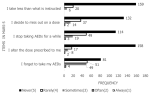
Medication adherence: all participants completed the self-administered 5-item Medication Adherence Report Scale (MARS-5). Respondents who attained a score of 25 were considered adherent 71(38.4%) while those who scored 24 and below were defined as non-adherent 114(61.6%). Forgetfulness had the lowest score on the MARS-5 tool, highlighting it as a major reason for medication non-adherence shown in Figure 1.
Prevalence and factors for uncontrolled seizures: participants who had at least one seizure in the past year were considered to have uncontrolled seizures 128(69.2%) while those who were seizure-free in the past year were considered to have controlled seizures 57(30.8%). In univariable logistic regression age, no income, non-adherence, side effects, cerebral infection, head trauma, and treatment with phenobarbitone, sodium valproate, or levetiracetam had significant positive associations with uncontrolled seizures. Only age, head trauma as the primary cause of the first epileptic seizure, and monotherapy had a negative correlation with uncontrolled seizures. The association of duration of treatment with uncontrolled seizures was statistically insignificant. All variables with a P<.2 in univariable logistic regression proceeded to multivariable logistic regression as presented in Table 3. Significant variables making up best predictors of uncontrolled seizures include non-adherence to antiepileptic drugs (adjusted odds ratio (aOR) = 2.56, 95% Confidence interval (CI): 1.21 - 5.42; p value (P) =.01), treatment with phenobarbitone (aOR = 2.76, 95% CI: 1.18 - 6.45; P=.02), sodium valproate (aOR = 1.50, 95% CI: 1.10 - 2.03; P=.01) or levetiracetam (aOR = 1.28, 95% CI: 1.07 - 1.53; P=.01), and head trauma as an aetiology of the first epileptic seizure (aOR = 0.81, 95% CI: 0.67 - 0.98; P=.03).
This study aimed to assess the prescribing patterns and identify factors associated with uncontrolled seizures among adult epileptic patients. Only first- and second-generation AEDs were prescribed in the clinic. Sodium valproate was prescribed to 23.4% of women of childbearing age. The majority of the participants were non-adherent to AEDs and had uncontrolled seizures.
The prescribed AEDs were either first- or second-generation agents. This complies with the Kenya National Guidelines for the Management of Epilepsy, 2014, which does not contain the third-generation AEDs [14]. A proactive rational approach should be taken while prescribing first-generation AEDs with other drugs, as they have a high risk of drug interactions. Karaźniewicz-Łada et al., 2021 recommend the prescription of newer antiepileptic drugs with a lower risk of drug interactions compared to first-generation AEDs [15]. Women of reproductive age receiving sodium valproate require comprehensive preconception counselling and contraceptive guidance to minimise teratogenic risk, with an emphasis on the uptake of highly effective long-acting contraceptive methods [16].
A study conducted in a university hospital in Northwestern, Ethiopia found a drug-related side effect prevalence of 8% among epileptic adults, while another study in the same facility found a prevalence of 48% in children [11,17]. Another Swedish multi-centre study found 40% of adult epileptic patients to have reported at least one antiepileptic drug-related side effect [18]. Gayatri and Livingstone found the high prevalence of side effects was attributable to high polytherapy rates, an observation that is consistent with the findings of this study [19]. The prevalence of non-adherence was estimated to be 61.6% in this study, which was higher when compared to an Ethiopian, 40.3%, and 35% in a Sudanese study [20,21]. This cites a wider gap in adherence to AEDs considering it was significantly associated with uncontrolled seizures.
In this study, the prevalence of controlled seizures was 30.8% which was lower compared to 44% in a survey conducted in America and a hospital-based study conducted in Ethiopia of 43% [11,22]. A study conducted in a tertiary hospital in Addis Ababa, Ethiopia, found a prevalence of uncontrolled seizures of 65.5%, which is comparable to 69.2% in this study [23]. This suboptimal seizure suppression highlights a treatment gap in the management of epilepsy. The significant negative association of head trauma as the cause of the first epileptic seizure with uncontrolled seizures might be explained by mild to moderate traumatic brain injury and early medical interventions of cranial post-traumatic cases that result in better seizure control [24,25].
Objective data from the medical files and a validated MARS-5 rating scale were used, strengthening the validity of this study. A consecutive sampling method was used due to the limited time of the study, and it might affect the generalizability of this study. This study did not consider well-controlled seizures that might have otherwise reduced the clinical validity of this study. There might be recall biases in both the MARS-5 adherence tool and interview guide, which might threaten the validity of this study's findings. The findings of this study might be useful in other national referral public hospitals.
Carbamazepine was the most widely prescribed antiepileptic drug, followed by sodium valproate and levetiracetam. Half of the study participants were on polytherapy treatment and experienced at least one side effect. Only about one-third of adult epileptic patients had controlled seizures, highlighting a treatment gap in the management of epilepsy. Uncontrolled seizures were significantly associated with non-adherence to antiepileptic drugs, treatment with phenobarbitone, sodium valproate, levetiracetam and head trauma as the cause of the first epileptic seizure.
What is known about this topic
- Non-adherence to medication hinders expected treatment outcomes of all diseases;
- First-generation AEDs are the most prevalently used AEDs in sub-Saharan Africa.
What this study adds
- The prevailing rate of side effects is 50.3% and the non-adherence rate is 61.6% in the clinic;
- The prevalence of uncontrolled seizures in the clinic is 69.2%.
The authors declare no competing interests.
Conception and study design: Denis Kamau Kariuki, Margaret Ngw'ono Oluka and Faith Apolot Okalebo. Expertise on the neurological aspects of the study: Judith Katono Kwasa. Data collection: Denis Kamau Kariuki. Data analysis and interpretation: Denis Kamau Kariuki, Margaret Ngw'ono Oluka and Faith Apolot Okalebo. Manuscript drafting and revision: Denis Kamau Kariuki. All authors read and approved the final version of the manuscript.
The authors are grateful to the staff of the neurology clinic at Kenyatta National Hospital for their cooperation and to epileptic patients for their participation in this study.
Table 1: socio-demographic and clinical characteristics of adult participants with epilepsy attending the Neurology Clinic of the Kenyatta National Hospital, 2023
Table 2: antiepileptic drug regimens prescribed to adult participants with epilepsy attending the Neurology Clinic of the Kenyatta National Hospital, 2023
Table 3: factors associated with uncontrolled seizures among adult epileptic patients attending the Neurology Clinic of the Kenyatta National Hospital, 2023
Figure 1: MARS-5 epileptic participant responses at the neurology clinic of Kenyatta National Hospital, 2023
- World Health Organization (WHO). Epilepsy. Accessed 4th September 2024.
- Saada F, Wang S, Bautista R. In focus: The everyday lives of families of adult individuals with epilepsy. Epilepsy Behav. 2015;50:10-13. PubMed | Google Scholar
- Kariuki SM, Ngugi AK, Kombe MZ, Kazungu M, Chengo E, Odhiambo R et al. Prevalence and mortality of epilepsies with convulsive and non-convulsive seizures in Kilifi, Kenya. Seizure. 2021;89:51-55. PubMed | Google Scholar
- Mwanga DM, Kadengye DT, Otieno PO, Wekesah FM, Kipchirchir IC, Muhua GO et al. Prevalence of all epilepsies in urban informal settlements in Nairobi, Kenya: a two-stage population-based study. Lancet Glob Health. 2024;0(0). PubMed | Google Scholar
- National Health Service (NHS). Epilepsy. Accessed 7th September 2022.
- Pellinen J. Treatment gaps in epilepsy. Front Epidemiol. 2022 Aug 1;2:976039. PubMed | Google Scholar
- Tefera G, Woldehaimanot T, Angamo M. Poor treatment outcomes and associated factors among epileptic patients at Ambo Hospital, Ethiopia. Gaziantep Med J. 2015;21(1):9. PubMed | Google Scholar
- Samia P, Hassell J, Hudson J-A, Murithi MK, Kariuki SM, Newton CR et al. Epilepsy diagnosis and management of children in Kenya: review of current literature. Res Rep Trop Med. 2019;10:91-102. PubMed | Google Scholar
- Cochran WG. Sampling techniques. 3d ed. 1977. New York. Wiley.
- Chan AHY, Horne R, Hankins M, Chisari C. The Medication Adherence Report Scale: A measurement tool for eliciting patients’ reports of nonadherence. Br J Clin Pharmacol. 2020;86(7):1281-1288. PubMed | Google Scholar
- Zena D, Tadesse A, Bekele N, Yaregal S, Sualih N, Worku E. Seizure control and its associated factors among epileptic patients at Neurology Clinic, University of Gondar hospital, Northwest Ethiopia. SAGE Open Med. 2022;10:205031212211006. PubMed | Google Scholar
- Adal HD, Alemu K, Muche EA. Seizure control status and associated factors among pediatric epileptic patients at a neurologic outpatient clinic in Ethiopia. PLOS ONE. 2021;16(11):e0259079. PubMed | Google Scholar
- Karceski S. What is Uncontrolled Epilepsy?: Part I Accessed 20th December 2023.
- Ministry of Health, Kenya. Kenya National Guidelines for the Management of Epilepsy. Second edition. 2016. Accessed 20th December 2023.
- Karaźniewicz-Łada M, Główka AK, Mikulska AA, Główka FK. Pharmacokinetic Drug-Drug Interactions among Antiepileptic Drugs, Including CBD, Drugs Used to Treat COVID-19 and Nutrients. Int J Mol Sci. 2021;22(17):9582. PubMed | Google Scholar
- Beardsley SJ, Dostal I, Cole J, Gutierrez A, Robson J. Valproate use in women aged 15-44 years: an observational study in general practice. BJGP Open.5(2):BJGPO.2020.0104. PubMed | Google Scholar
- Beyene A, Ayalew AF, Mulat G, Simachew Kassa A, Birhan T. The treatment outcomes of epilepsy and its root causes in children attending at the University of Gondar teaching hospital: A retrospective cohort study, 2018. PLoS ONE. 2020;15(3):e0230187. PubMed | Google Scholar
- Zelano J, Nika O, Asztely F, Larsson D, Andersson K, Andrén K. Prevalence and nature of patient-reported antiseizure medication side effects in a Swedish regional multi-center study. Seizure Eur J Epilepsy. 2023;113:23-27. PubMed | Google Scholar
- Gayatri N, Livingston J. Aggravation of epilepsy by anti-epileptic drugs. Dev Med Child Neurol. 2006;48(5):394-398. PubMed | Google Scholar
- Elsayed MA, El-Sayed NM, Badi S, Ahmed MH. Factors affecting adherence to antiepileptic medications among Sudanese individuals with epilepsy: A cross-sectional survey. J Fam Med Prim Care. 2019;8(7):2312. PubMed | Google Scholar
- Bekele F. Non-Adherence to Antiepileptic Drugs and Associated Factors among Epileptic Patients at Ambulatory Clinic of Southwestern Ethiopian Hospital: A Cross-Sectional Study. Patient Prefer Adherence. 2022;16:1865-1873. PubMed | Google Scholar
- Tian N, Boring M, Kobau R, Zack MM, Croft JB. Active Epilepsy and Seizure Control in Adults - United States, 2013 and 2015. MMWR Morb Mortal Wkly Rep. 2018 Apr 20;67(15):437-442. PubMed | Google Scholar
- Nasir BB, Yifru YM, Engidawork E, Gebrewold MA, Woldu MA, Berha AB. Antiepileptic Drug Treatment Outcomes and Seizure-Related Injuries Among Adult Patients with Epilepsy in a Tertiary Care Hospital in Ethiopia. Patient Relat Outcome Meas. 2020;11:119-127. PubMed | Google Scholar
- Verellen RM, Cavazos JE. Post-traumatic epilepsy: an overview. Therapy. 2010;7(5):527-531. PubMed | Google Scholar
- Ding K, Gupta PK, Diaz-Arrastia R. Epilepsy after Traumatic Brain Injury. In: Laskowitz D, Grant G, editors. Translational Research in Traumatic Brain Injury. Boca Raton (FL): CRC Press/Taylor and Francis Group; 2016. Chapter 14. PubMed | Google Scholar
Search
This article authors
On Pubmed
On Google Scholar
Citation [Download]
Navigate this article
Similar articles in
Key words
Tables and figures

Article metrics
Recently from the PAMJ


Authors´ services