Acute coronary syndrome in young adults: a 5-year retrospective study at Hôpital Général Idrissa Pouye, Dakar, Senegal (2020-2024)
Papa Mouhamadou Diarra Fall, Papa Guirane Ndiaye, Assane Diaw, Alioune Kane, Patern Abadassi, Cheikh Mouhamadou Bamba Diop, Mohamed Gazal, Coumba Niang, Maodo Diop, Bineta Gueye, Ndeye Rokhaya Diop, Bouna Diack, Momar Dioum, Alassane Mbaye, Maboury Diao
Corresponding author: Papa Mouhamadou Diarra Fall, Cardiology Department, Hôpital Général Idrissa Pouye, Dakar, Senegal 
Received: 13 Mar 2026 - Accepted: 06 Aug 2026 - Published: 05 Oct 2026
Domain: Cardiology
Keywords: Acute coronary syndrome, young adults, sub-Saharan Africa, Senegal, cardiovascular risk factors, primary percutaneous coronary intervention
Funding: This work received no specific grant from any funding agency in the public, commercial, or non-profit sectors.
©Papa Mouhamadou Diarra Fall et al. Pan African Medical Journal (ISSN: 1937-8688). This is an Open Access article distributed under the terms of the Creative Commons Attribution International 4.0 License (https://creativecommons.org/licenses/by/4.0/), which permits unrestricted use, distribution, and reproduction in any medium, provided the original work is properly cited.
Cite this article: Papa Mouhamadou Diarra Fall et al. Acute coronary syndrome in young adults: a 5-year retrospective study at Hôpital Général Idrissa Pouye, Dakar, Senegal (2020-2024). Pan African Medical Journal. 2026;55:57. [doi: 10.11604/pamj.2026.55.57.52159]
Available online at: https://www.panafrican-med-journal.com//content/article/55/57/full
 PDF in process
 Narrative Review 

Acute coronary syndrome in young adults: a 5-year retrospective study at Hôpital Général Idrissa Pouye, Dakar, Senegal (2020-2024)
Acute coronary syndrome in young adults: a 5-year retrospective study at Hôpital Général Idrissa Pouye, Dakar, Senegal (2020-2024)
Papa Mouhamadou Diarra Fall1,&, Papa Guirane Ndiaye1, Assane Diaw1, Alioune Kane1,  Patern Abadassi1, Cheikh Mouhamadou Bamba Diop1, Mohamed Gazal1, Coumba Niang1, Maodo Diop1, Bineta Gueye1, Ndeye Rokhaya Diop2, Bouna Diack1, Momar Dioum2, Alassane Mbaye1, Maboury Diao2
&Corresponding author
Acute coronary syndrome (ACS) in young adults (≤45 years) is an emerging and poorly documented entity in sub-Saharan Africa. Data on its epidemiological, clinical, therapeutic, and prognostic profile remain scarce, particularly in Senegal. We conducted a retrospective, single-centre study at HOGIP, Dakar, Senegal, over five years (January 2020-December 2024), including all patients aged 18-45 years hospitalised for ACS according to 2020 ESC criteria. Data were analysed using descriptive statistics (means ± standard deviations for continuous variables and absolute frequencies with percentages for categorical variables). Among 663 ACS hospitalisations, 53 (8.0%) involved young adults. The mean age was 38.2±5.3 years and 40 patients (75.5%) were male. The study population was predominantly urban (n=47, 89%) with a high prevalence of dyslipidaemia (n=34, 64.0%), psychosocial stress (n=28, 52.8%), and physical inactivity (n=19, 35.9%). STE-ACS was the predominant presentation (n=40, 75.5%), mainly in the anterior territory (n=27, 50.9%). Among the 34 patients (64.0%) who underwent coronary angiography, single-vessel disease was found in 20 (60.6%), with the left anterior descending artery as the culprit vessel in 26 (78.8%). Thrombolysis was performed in 16 patients (30.2%) with a success rate of 62.5% (n=10), primary PCI in 10 (18.9%), and 23 patients (43.4%) received medical therapy alone. In-hospital mortality was 3.8% (n=2). In this single-centre study at HOGIP, ACS in young adults predominantly affected men with multiple modifiable risk factors and single-vessel coronary lesions, with a relatively favourable in-hospital prognosis. The limited use of primary PCI highlights the need to strengthen interventional cardiology capacity in this setting.

Cardiovascular diseases are the leading cause of mortality worldwide, accounting for an estimated 17.9 million deaths annually [1]. Acute coronary syndrome (ACS) represents one of the most severe manifestations of coronary artery disease and a major driver of premature mortality in both high-income and low-income countries [1,2].
In Senegal, published data on ACS in young adults remain limited. The seminal series by Sarr et al. reported only 21 cases over several years [3]. In sub-Saharan Africa, the epidemiological transition driven by urbanisation, changing dietary habits, and rising rates of physical inactivity has led to a surge in non-communicable cardiovascular diseases [4]. ACS occurring in young adults (≤45 years) is an increasingly recognised entity in this region, with reported frequencies ranging from 7% to 14% of all ACS admissions in African series [2,5], compared with 4-10% in European cohorts [6]. This higher frequency is thought to reflect the particularly adverse cardiovascular risk factor burden in African urban populations, including poorly controlled dyslipidaemia, psychosocial stress, and tobacco use, in the absence of systematic screening or prevention programmes [7,8].
No study to date has examined this population in Senegal over an extended contemporary period. Such data are critically needed to inform clinical practice and health policy in a resource-limited context where access to invasive revascularisation remains challenging [9]. This study aimed to describe the epidemiological, clinical, therapeutic, and in-hospital prognostic characteristics of ACS in young adult patients hospitalised at the Cardiology Department of Hôpital Général Idrissa Pouye (HOGIP), Dakar, Senegal, over a five-year period (2020-2024).

Study design and setting: we conducted a retrospective, hospital-based observational study at the Cardiology Department of Hôpital Général Idrissa Pouye (HOGIP), a 500-bed public referral hospital located in the Grand-Yoff district of Dakar, Senegal. The study period spanned five years, from 1st January 2020 to 31st December 2024. HOGIP is one of the main tertiary cardiology referral centres in the country, equipped with a cardiac catheterisation laboratory and a coronary care unit.
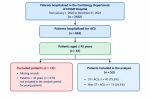
Study population: the target population comprised all patients aged 18 to 45 years admitted to the Cardiology Department of HOGIP for ACS during the study period. Patients were included if they fulfilled the 2020 ESC criteria for ACS [10], which require the presence of acute chest pain or an equivalent symptom with at least one of the following: dynamic ECG changes, elevation of high-sensitivity cardiac troponin above the 99th percentile, or new segmental wall motion abnormalities on echocardiography. Patients in whom an alternative diagnosis was established after initial workup were excluded. No formal sample size calculation was performed, as this was a consecutive inclusion study. All eligible patients identified from the department registry were enrolled. The patient selection process is summarised in Figure 1. Of 663 consecutive patients admitted for acute coronary syndrome (ACS) at the Cardiology Department of Hôpital Général Idrissa Pouye (HOGIP) between January 2020 and December 2024, 53 patients aged 18-45 years fulfilling the 2020 ESC criteria were included. Patients aged >45 years (n=610) and those in whom an alternative diagnosis was established after initial workup were excluded. As this was a retrospective observational study and not a systematic review or meta-analysis, the PRISMA (Preferred Reporting Items for Systematic Reviews and Meta-Analyses) guidelines do not apply to this work.
Data collection: data were collected retrospectively from medical records, nursing notes, ECG tracings, biological results, echocardiographic reports, and coronary angiography reports. Variables extracted included socio-demographic characteristics (age, sex, area of residence), cardiovascular risk factors (hypertension, diabetes, smoking, dyslipidaemia, obesity, family history of premature CVD, psychosocial stress, physical inactivity, alcohol use), admission delay, Killip class on admission [11], ECG findings, high-sensitivity troponin and C-reactive protein levels, echocardiographic data (LVEF, wall motion abnormalities), and coronary angiography findings. Data on therapeutic strategies (thrombolysis, primary/rescue/deferred PCI, coronary artery bypass grafting, and medical therapy), in-hospital complications, and mortality were also recorded.
Definitions: dyslipidaemia was defined as a total cholesterol level ≥5.2 mmol/l, LDL cholesterol ≥3.4 mmol/l, or triglycerides ≥1.7 mmol/l, or current use of lipid-lowering therapy. Hypertension was defined as a systolic blood pressure ≥140 mmHg or diastolic ≥90 mmHg on at least two occasions, or current antihypertensive treatment. Diabetes was defined according to WHO criteria or current use of antidiabetic therapy. Obesity was defined as a body mass index ≥30kg/m². Psychosocial stress was defined as self-reported chronic professional or familial stress. Thrombolysis success was defined as ≥50% reduction in ST-segment elevation 60-90 minutes after fibrinolytic administration. The SYNTAX score was calculated for patients with multivessel disease.
Statistical analysis: data were analysed using SPSS Statistics version 27. Given the descriptive nature of this study, no inferential statistical tests were performed. Continuous variables are expressed as means ± standard deviations and categorical variables as absolute frequencies and percentages.
Ethical considerations: this study was approved by the Ethics Committee of Cheikh Anta Diop University, Dakar, Senegal (Ref. No. REF-2025-78). Given the retrospective nature of the study, individual informed consent was waived by the Ethics Committee. Patient data were anonymised and handled in strict accordance with the principles of the Declaration of Helsinki.
Socio-demographic characteristics and cardiovascular risk factors: of 663 patients admitted for ACS during the study period, 53 (8.0%) were aged ≤45 years. The mean age was 38.2±5.3 years (range 25-45 years). A clear male predominance was observed, with 40 patients (75.5%) being male (sex ratio 3.08). The majority, 47 patients (89%), resided in urban areas. The predominant cardiovascular risk factors were dyslipidaemia (n=34, 64.0%), psychosocial stress (n=28, 52.8%), physical inactivity (n=19, 35.9%), smoking (n=18, 34.0%), family history of CVD (n=15, 28.3%), hypertension (n=14, 26.4%), diabetes (n=10, 18.9%), and obesity (n=10, 18.9%). Alcohol use was recorded in 4 patients (7.5%). These data are summarised in Table 1.
Clinical and paraclinical presentation: chest pain was universal (n=53, 100%), typical in 36 (67.9%) of cases, accompanied by dyspnoea in 16 (30.2%) and nausea/vomiting in 15 (28.3%). The mean admission delay was 34.4 hours; 31 patients (58.5%) were seen within the first 12 hours. The majority, 48 patients (90.6%), were Killip class I on admission. The ECG showed STE-ACS in 40 cases (75.5%), predominantly in the anterior territory (n=27, 50.9%). Troponin elevation was found in 50 patients (94.3%), elevated CRP in 30 (56.6%), and impaired renal function in 7 (13.2%). Echocardiography revealed a mean LVEF of 47.4±14.0% and segmental wall motion abnormalities in 36 patients (69.0%). These results are detailed in Table 2.
Coronary angiography findings: coronary angiography was performed in 34 patients (64%), revealing single-vessel disease in 20 (60.6%), two-vessel disease in 9 (27.3%), and three-vessel disease in 4 (12.1%). The left anterior descending artery was the culprit vessel in 26 cases (78.8%). The SYNTAX score ranged from 10 to 34 in the four patients with three-vessel disease. These findings are presented in Table 3.
Therapeutic strategies: thrombolysis was performed in 16 patients (30.2%) with a success rate of 62.5% (n=10). Coronary angioplasty was performed in 10 patients (18.9%) as primary PCI, in 4 (7.5%) as rescue PCI, and in 11 (20.8%) as deferred PCI. Coronary artery bypass grafting was performed in 2 patients (3.8%), while 23 (43.4%) received medical therapy alone. Optimal medical therapy included aspirin (n=53, 100%), clopidogrel (n=49, 92.5%), statins (n=53, 100%), beta-blockers (n=48, 90.6%), and ACE inhibitors/ARBs (n=45, 84.9%). Details are provided in Table 4.
In-hospital course: the overall clinical course was favourable. Complications included arrhythmias (n=6, 11.3%), heart failure (n=5, 9.4%), and cardiogenic shock (n=2, 3.8%). The mean hospital stay was 7±2 days. In-hospital mortality was 3.8% (n=2), both deaths secondary to cardiogenic shock. Details are provided in Table 5.
This study aimed to describe the epidemiological, clinical, therapeutic, and in-hospital prognostic characteristics of ACS in young adults at HOGIP, Dakar, over a five-year period. The main findings were: (i) ACS in young adults represented 8% of all ACS admissions; (ii) the population was predominantly male, urban, and dyslipidaemic; (iii) STE-ACS was the dominant presentation with frequent single-vessel LAD disease; (iv) primary PCI was performed in only 18.9% of patients; and (v) in-hospital mortality was low at 3.8%.
The observed frequency of 8.0% is consistent with African data but higher than most European series [1,2], reflecting the accelerating epidemiological transition in sub-Saharan Africa. The epidemiological profile is characterised by a strong male predominance and the primacy of dyslipidaemia, psychosocial stress, and physical inactivity as major risk factors, consistent with findings from other West African centres [3,5] and reflecting the impact of socio-economic transitions on cardiovascular health [4]. The predominance of STE-ACS and single-vessel coronary disease suggests the role of vulnerable plaque rupture rather than diffuse atherosclerosis as the leading pathophysiological mechanism in this population [6].
Limited access to optimal percutaneous revascularisation represents a major structural challenge: only 18.9% of patients underwent primary PCI, far below ESC guideline recommendations [10], while thrombolysis achieved a success rate of 62.5%. These findings likely reflect structural healthcare access barriers and the limited availability of catheterisation laboratory facilities, well-documented constraints across sub-Saharan Africa [9].
Regarding in-hospital complications, our arrhythmia rate of 11.3% is consistent with other Senegalese series (8-15%) [5] and below that reported in certain European cohorts (15-20%) [12]. Heart failure occurred in 9.4% of patients, consistent with African studies (8-12%) [2,5] and lower than European rates (12-18%) [12]. Cardiogenic shock (3.8%) was rare, in line with Moroccan (3.5%) and Tunisian (4%) data [13,14]. Dyslipidaemia, the leading modifiable risk factor in our series, remains widely undertreated in sub-Saharan Africa, and context-adapted management strategies are urgently needed [7]. The metabolic and lifestyle risk factor profiles observed mirror those reported in other populations undergoing rapid socio-economic transitions, underscoring the need for age-targeted prevention protocols [8,15].
The implications of these findings are twofold. First, from a clinical perspective, the predominance of dyslipidaemia, psychosocial stress, and physical inactivity among young ACS patients at HOGIP identifies specific and potentially modifiable targets for cardiovascular risk reduction. Systematic lipid screening, lifestyle counselling, and stress management should be integrated into primary care services targeting the young urban population. Second, from a health system perspective, the low rate of primary PCI (18.9%) highlights a critical infrastructural gap. Strengthening the availability and affordability of interventional cardiology services at HOGIP and other Senegalese hospitals is a priority that requires both institutional investment and health financing reform [9,16].
This study has several limitations that should be considered when interpreting the results. First, the retrospective, single-centre design limits the generalisability of findings to other settings. Second, the sample size of 53 patients, while representative of the HOGIP catchment area, is relatively small for subgroup analyses. Third, some variables were incompletely recorded in medical records, which may have introduced information bias. Fourth, long-term follow-up data were not available. Despite these limitations, this study provides the most comprehensive and up-to-date epidemiological data on ACS in young adults in Senegal, covers five years, and includes detailed angiographic data not previously reported in this population. Multi-centre prospective studies are needed to obtain more representative data for Senegal and the broader West African region.
In this single-centre retrospective study at HOGIP, Dakar, ACS in young adults predominantly affected urban men aged around 38 years, characterised by a high burden of modifiable cardiovascular risk factors, a predominance of STE-ACS with frequent single-vessel LAD disease, and a relatively favourable in-hospital prognosis. The low rate of primary PCI access reflects a critical resource gap. These findings highlight the need for context-adapted primary prevention strategies and improved access to interventional cardiology at HOGIP and similar facilities in Senegal, although confirmation in larger multicentre studies is warranted.
What is known about this topic
- ACS in young adults (≤45 years) accounts for 4-10% of cases in Europe but up to 14% in African series due to epidemiological transition;
- Classical risk factors (dyslipidaemia, smoking, hypertension) predominate, but psychosocial stress and physical inactivity are major contributors in African urban populations;
- Primary PCI remains severely under-utilised across sub-Saharan Africa, where thrombolysis is the predominant reperfusion strategy despite its inferior efficacy.
What this study adds
- This is one of the first five-year analyses of ACS in young adults in Senegal, providing updated epidemiological, clinical, and prognostic data from HOGIP;
- Psychosocial stress (52.8%) and physical inactivity (35.9%) emerge as the second and third most prevalent modifiable risk factors, after dyslipidaemia (64.0%);
- Despite limited primary PCI access (18.9%), in-hospital mortality was low (3.8%), suggesting that a specialised cardiology unit partially compensates for resource constraints.
The authors declare no competing interests.
Conception and study design: Papa Mouhamadou Diarra Fall and Papa Guirane Ndiaye. Data collection: Assane Diaw, Alioune Kane, Patern Abadassi, Cheikh Mouhamadou Bamba Diop, Mohamed Gazal, Coumba Niang, Maodo Diop and Bineta Gueye. Data analysis and interpretation: Papa Mouhamadou Diarra Fall and Maodo Diop. Manuscript drafting: Papa Mouhamadou Diarra Fall. Manuscript revision: Ndeye Rokhaya Diop, Bouna Diack, Momar Dioum, Alassane Mbaye and Maboury Diao. Guarantor of the study: Papa Mouhamadou Diarra Fall. All authors read and approved the final version of the manuscript.
The authors thank the medical and nursing staff of the Cardiology Department of HOGIP for their contribution to patient care and data collection. The English translation of this manuscript was produced with the assistance of an AI language model (Claude, Anthropic) and was carefully reviewed by the authors for medical accuracy, in accordance with the transparency requirements of scientific publishing.
Table 1: socio-demographic characteristics and cardiovascular risk factors (n=53)
Table 2: clinical and paraclinical presentation (n=53)
Table 3: coronary angiography findings (n=34)
Table 4: therapeutic strategies (n=53)
Table 5: in-hospital course and complications (n=53)
Figure 1: patient selection flow diagram
- World Health Organization (WHO). Cardiovascular diseases. Accessed 15th January 2025.
- Yao H, Ekou A, Niamkey T, Hounhoui Gan S, Kouamé I, Afassinou Y et al. Acute coronary syndromes in sub-Saharan Africa: a 10-year systematic review. J Am Heart Assoc. 2022;11(1):e021107. PubMed | Google Scholar
- Sarr M, Ba DM, Ndiaye MB, Bodian M, Jobe M, Kane A et al. Acute coronary syndrome in young Sub-Saharan Africans: a prospective study of 21 cases. BMC Cardiovasc Disord. 2013;13:118. PubMed | Google Scholar
- Roth GA, Mensah GA, Johnson CO, Addolorato G, Ammirati E, Baddour LM et al. Global burden of cardiovascular diseases and risk factors, 1990-2019: update from the GBD 2019 study. J Am Coll Cardiol. 2020;76(25):2982-3021. PubMed | Google Scholar
- N'Guetta R, Yao H, Ekou A, N'Cho-Mottoh MP, Angoran I, Tano M et al. Prevalence and characteristics of acute coronary syndromes in a sub-Saharan Africa population. Ann Cardiol Angeiol (Paris). 2016;65(2):59-63. PubMed | Google Scholar
- Ba H, Thuaire C, Range G, Demicheli T, Kane A, Albert F. Acute coronary syndrome in young Caucasian: about 62 cases. Pan Afr Med J. 2013;14:11. PubMed | Google Scholar
- Obsa MS, Ataro G, Awoke N, Jemal B, Tilahun T, Ayalew N et al. Determinants of dyslipidemia in Africa: a systematic review and meta-analysis. Front Cardiovasc Med. 2022;8:778891. PubMed | Google Scholar
- Kengne AP, Mayosi BM. Readiness of the primary care system for non-communicable diseases in sub-Saharan Africa. Lancet Glob Health. 2014;2(5):e247-8. PubMed | Google Scholar
- Kakou-Guikahue M, N'Guetta R, Anzouan-Kacou JB, Kramoh E, N'Dori R, Ba SA et al. Optimizing the management of acute coronary syndromes in sub-Saharan Africa: a statement from the AFRICARDIO 2015 Consensus Team. Arch Cardiovasc Dis. 2016;109(6-7):376-83. PubMed | Google Scholar
- Collet JP, Thiele H, Barbato E, Bauersachs J, Dendale P, Edvardsen T et al. 2020 ESC Guidelines for the management of acute coronary syndromes in patients presenting without persistent ST-segment elevation. Eur Heart J. 2021;42(14):1289-1367. PubMed | Google Scholar
- Killip T, Kimball JT. Treatment of myocardial infarction in a coronary care unit. A two year experience with 250 patients. Am J Cardiol. 1967;20(4):457-64. PubMed | Google Scholar
- Gupta R, Mohan I, Narula J. Trends in Coronary Heart Disease Epidemiology in India. Ann Glob Health. 2016;82(2):307-15. PubMed | Google Scholar
- Panduranga P, Sulaiman K, Al-Zakwani I, Abdelrahman S. Acute Coronary Syndrome in Young Adults in Oman: Results from the Gulf Registry of Acute Coronary Events. Heart Views. 2010;11(3):93-8. PubMed | Google Scholar
- Yameogo NV, Ndiaye MB, Mbaye A, Bennani R, Kagambega LJ, Bodian M et al. L'infarctus du myocarde du jeune adulte: analyse rétrospective des cas colligés au CHU de Dakar. Pan Afr Med J. 2010;6:21. PubMed | Google Scholar
- Sharma M, Ganguly NK. Premature coronary artery disease in Indians and its associated risk factors. Vasc Health Risk Manag. 2005;1(3):217-25. PubMed | Google Scholar
- Sliwa K, Stewart S, Gersh BJ. Hypertension: a global perspective. Circulation. 2011;123(24):2892-6. PubMed | Google Scholar
Search
This article authors
On Pubmed
On Google Scholar
Citation [Download]
Navigate this article
Similar articles in
Key words
Tables and figures

Article metrics
Recently from the PAMJ







Authors´ services