Instruments to identify healthy lifestyles: a systematic review
Verónica Martínez Lara, José Alberto Ramírez de León, Dionicio Morales Ramírez, Brian González Pérez
Corresponding author: Verónica Martínez Lara, Mexican Institute of Social Security, Family Medicine Unit No.77, Ciudad Madero, Tamaulipas, Mexico 
Received: 20 Aug 2025 - Accepted: 12 Jul 2026 - Published: 23 Jul 2026
Domain: Family Medicine,Health education,Health Research
Keywords: Systematic review, surveys, questionnaires, lifestyle, healthy habits
Funding: This work received no specific grant from any funding agency in the public, commercial, or non-profit sectors.
©Verónica Martínez Lara et al. Pan African Medical Journal (ISSN: 1937-8688). This is an Open Access article distributed under the terms of the Creative Commons Attribution International 4.0 License (https://creativecommons.org/licenses/by/4.0/), which permits unrestricted use, distribution, and reproduction in any medium, provided the original work is properly cited.
Cite this article: Verónica Martínez Lara et al. Instruments to identify healthy lifestyles: a systematic review. Pan African Medical Journal. 2026;54:95. [doi: 10.11604/pamj.2026.54.95.49064]
Available online at: https://www.panafrican-med-journal.com//content/article/54/95/full
 PDF in process
 Review 

Instruments to identify healthy lifestyles: a systematic review
Instruments to identify healthy lifestyles: a systematic review
Verónica Martínez Lara1,&,  José Alberto Ramírez de León2, Dionicio Morales Ramírez2, Brian González Pérez1
&Corresponding author
The World Health Organization defines lifestyle as an individual's behavioral patterns, shaped by social, environmental, and economic interactions. Lifestyles are considered key determinants in the health-disease process; therefore, their measurement has been widely addressed from the perspective of family medicine. Thus, the objective of this study was to identify and describe the instruments that have been used in the academic literature to measure or assess healthy lifestyles. A systematized search of scientific literature published in the SciELO, Dialnet, MEDLINE, Dimensions, Google Scholar, and Medigraphic databases was conducted. The literature review covered the period from 2003 to 2023. Thirty-three full-text articles directly related to the study topic were identified and reviewed. Sixteen dimensions included in the questionnaires were found to assess healthy habits. The internal reliability of the instruments, measured using Cronbach's Alpha, ranged from 0.62 to 0.97. Seventeen instruments were used in adolescent populations, 15 in adults, and 5 in children under 12 years of age. Of these, 43.2% were developed and applied in Spain. Lifestyle analysis is multidimensional. Therefore, developing tools that contribute to its assessment may be highly useful for designing preventive programs aimed at promoting the necessary changes to help individuals improve their lifestyle and, consequently, their health status.

Over time, researchers have developed various theoretical models to understand the determinants of health and identify areas for intervention that promote disease prevention in populations [1]. One of the most influential contributions in this field was the "health field model", proposed in 1974 by Marc Lalonde et al. [2], then Canada's Minister of Health. This model states that health is determined by four dimensions: lifestyle (43%), human biology (27%), environment (19%), and the health care system (11%). Thus, it established a comprehensive and preventive perspective for health promotion [2].
Subsequently, in 2007, the Pan American Health Organization (PAHO) proposed the "social determinants of health model", which classifies health determinants into two levels: structural determinants, such as social class, gender, ethnicity, education, and income; and intermediate determinants, including lifestyle habits, biological conditions, and psychosocial contexts. This model recognizes the interaction among these determinants in shaping individuals' health status and quality of life [3].
These theoretical approaches converge in recognizing lifestyle as both a key determinant and a modifiable factor in the development of chronic noncommunicable diseases. In this regard, several authors have addressed its role in disease prevention and health promotion. Farhud et al. [4] define lifestyle as the specific way of life of a group, shaped by culture and the environment. Rai et al. [5] describe it as each individual's way of life, whereas Tiwari et al. [6] offer a broader definition, referring to individuals' or groups' perception of their own lives, including aspects such as diet, physical activity, mental health, and daily habits. The World Health Organization (WHO), in turn, considers lifestyle to be a set of behavioral patterns determined by the interaction of personal, social, and environmental factors [7].
Jiménez et al. [8] have also examined the evolution of the concept, dividing it into three historical stages: the first with a sociological orientation, the second linked to the field of public health, and the third focused on the multidimensional analysis of individuals within their context. A complementary perspective is offered by Dumont et al. [9], who identify lifestyle as a sociocultural construct that integrates dimensions such as consumption, mobility, leisure time, and the organization of activities, linking these elements to individuals' agency across multiple contexts.
In operational terms, a person's lifestyle is reflected in the habits, decisions, and behaviors that directly influence their health status. When these actions promote self-care, they contribute to optimal health; conversely, when they are unhealthy, they may predispose individuals to disease. The literature has documented that lifestyle has a significant impact on cardiovascular health, nutrition, physical activity, sleep, and substance use, accounting for up to 70% of primary care visits in developed countries [10].
Based on the above, recent studies have emphasized the importance of validated and culturally adapted instruments for assessing lifestyle-related behaviors, including nutrition, physical activity, sleep, stress management, social connectedness, and substance use. These contributions support the need for comprehensive assessment tools that enable researchers and health professionals to identify behavioral risk factors, guide preventive interventions, and promote healthier lifestyles in both general and clinical populations [11,12]. However, the complexity and multidimensionality of the lifestyle construct have led to the development of a wide range of instruments designed to measure it. These questionnaires, which are accessible and low-cost, make it possible to identify behavioral patterns and establish health risk profiles. Therefore, this study identifies and describes the instruments available in the scientific literature that have been used to assess healthy lifestyles.

A systematic review of the scientific literature was conducted to identify, analyze, and synthesize studies that have developed and applied instruments for measuring lifestyle in the context of health. The methodology followed the recommendations of the preferred reporting items for systematic reviews and meta-analyses (PRISMA) statement [13] and was registered in PROSPERO (International Prospective Registry of Systematic Reviews) under registration number 1085431.
The review was guided by the following research questions: What instruments have researchers used to measure lifestyle in the health field? What dimensions do these instruments integrate? How many items comprise each instrument? In which settings and countries have they been applied? What levels of reliability have they reported? In which populations have they been implemented and validated? What statistical tests have been used for their validation?
The following inclusion criteria were established: (a) The article identified the name of the instrument; (b) it described the dimensions comprising the instrument; (c) it included the content of the items and the response scales used; (d) it specified the target population and country of application; (e) it provided either the original version or an adapted version of the instrument; and (f) it presented evidence of reliability. Although some articles did not report validation testing, they were included in the analysis because they met the other characteristics considered in the study.
The search strategy excluded articles that lacked detailed information on the items comprising the evaluated dimensions or that did not adequately describe the characteristics of the instrument. When multiple publications addressed the same instrument, the version providing the most complete and detailed description was selected. Studies that did not present the complete items were also excluded from the analysis. In addition, four reviewers participated in the study selection process and in the methodological quality assessment of each article. All reviewers are recognized by Mexico's National System of Researchers.
Search strategy: the bibliographic search was conducted in open-access databases, including SciELO, Dialnet, MEDLINE, Dimensions, Google Scholar, and Medigraphic. The literature review covered the period from 2003 to 2023. Combinations of key terms in English and Spanish, integrated with Boolean operators, included: "lifestyle test" or "lifestyle questionnaire" or "lifestyle instrument" or "habits questionnaire"; "instrument" + "questionnaire" + "lifestyle"; and "test" + "questionnaire" + "instrument" + "lifestyle" + "habit".
Evaluation of methodological quality: the methodological quality of the included studies was assessed using validated tools, namely the Joanna Briggs Institute (JBI) critical appraisal checklist [14] for cross-sectional and longitudinal studies, as well as the PRISMA checklist [13].
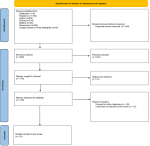
During the selection process, a bibliographic search identified 943 articles: Scielo (n = 209), Dialnet (n = 214), Medline (n = 38), Dimensions (n = 234), Google Scholar (n = 198), and Medigrafic (n = 50). After applying the inclusion and exclusion criteria by the PRISMA methodology, 33 studies remained for detailed review. The complete selection process appears in Figure 1.
The methodological quality of the included studies was assessed using the Joanna Briggs Institute (JBI) critical appraisal tool, developed by the University of Adelaide [14]. The checklist for cross-sectional studies includes eight items, and the studies analyzed obtained scores ranging from 5 to 8. For the longitudinal study, the corresponding JBI checklist, which includes 11 items, was used, with a score of 9. Of the 33 selected studies, four were systematic reviews assessed using the PRISMA 2020 checklist, which comprises 12 items [13], with scores ranging from 6 to 10. In addition, the selection included one quasi-experimental study and one article focused on developing guidelines for detecting sedentary lifestyles [15]. Table 1, Table 1.1, and Table 1.2 presents the 33 included works, identifying 37 instruments used for lifestyle assessment [15-47]. These instruments were applied in 18 countries, highlighting Spain (43.2%), Mexico (16.2%), Peru (13.5%), Colombia (8.1%), the United States (5.2%), and to a lesser extent, China, the United Kingdom, and Finland (2.7%).
The WHOQOL-BREF and ENERGY instruments underwent validation in multiple countries, including Belgium, Greece, Hungary, the Netherlands, Norway, Brazil, India, Indonesia, Japan, and Chile [32]. The target populations for the instruments ranged in age from 8 to 89 years, and the sample size ranged from 29 [33] to 1671 participants [19]. Of the 37 instruments, 20 reported reliability indices. In 17 cases, researchers assessed internal consistency using Cronbach's Alpha; other studies applied the test-retest technique (n = 2), and one study employed Aiken's V test.
Regarding the geographical application of the instruments, three countries accounted for most of the developments: Spain, Mexico, and Peru. In Spain, researchers identified 15 instruments, and only nine reported statistical validation with Cronbach's Alpha. The "questionnaire on attitudes and other healthy habits," composed of 93 items and applied to a sample of 29 participants, obtained the highest value (0.974) [33]. The ENHASA instrument, composed of 26 items and validated in 421 participants, reported the lowest value (0.629) [34]. Both instruments were validated in adolescent populations.
In Mexico, the review identified seven instruments, of which four underwent validation. The CEHAF achieved the highest Cronbach's Alpha value (0.845) with 35 items applied to a sample of 1,671 adolescents. In contrast, the FANTASTIC questionnaire, composed of 26 items and administered to 390 women over 20 years of age, recorded the lowest internal consistency (Cronbach's Alpha = 0.690) [44].
In Chile, the "physical activity patterns questionnaire" was one of the instruments with the highest internal consistency coefficients, with Crobach's alpha values ranging demonstrated adequate internal reliability, with Cronbach's alpha values ranging from 0.81 to 0.86. The instrument initially consisted of 11 items; however, after the confirmatory factor análisis, one item was removed, resulting in a final validated versión comprising 10 items across four dimensions: type, frequency, duration, and intensity of physical activity. It was administered to 3176 school adolescents aged 10 to 18 years [21]. The lowest value (0.76) was observed for the "healthy lifestyle questionnaire in graduate students," which comprised 25 items and was administered to 198 adults [37]. Regarding the domains evaluated by the instruments, 16 different dimensions emerged. Physical activity (n = 29) was the most frequent, followed by eating habits (n = 18), substance use (n = 11), social relationships (n = 8), and general health status (n = 8) [21,31,32,48,49].
It is important to note that 14 instruments focused exclusively on assessing physical activity [21,31,32,48,49]. These instruments organized their content into five subdimensions and four domains, along with the application technique. The domains correspond to the areas where physical activity can be performed [50]: 1) home: activities related to household chores, cleaning, gardening, shopping, moving household objects, and caring for family members; 2) transfer or transportation to school or work: evaluation of the mode of travel according to age, such as walking, cycling, climbing stairs, or traveling with a motorized vehicle; 3) occupational: actions carried out in the work or school context, such as manual work, walking, lifting, or carrying objects; 4) leisure: it encompasses recreational activities in free time, including sports, exercise, or hobbies.
The review identified a wide variety of instruments designed to assess lifestyle, incorporating multiple dimensions that measure health-related attitudes, habits, and behaviors. Among these dimensions, physical activity and diet emerged as the most frequently addressed, both in the instruments analyzed and in systematic reviews. The Organisation for Economic Co-operation and Development (OECD) also recognizes these dimensions as key determinants in the development of obesity [50]. Both are considered modifiable factors, which makes them suitable targets for preventive interventions.
Several authors agree that a healthy diet and regular physical activity are essential components of a comprehensive health model [21,31,32,48,49]. For this reason, the present study places particular emphasis on these two dimensions, given their relevance to promoting healthy lifestyles and preventing chronic noncommunicable diseases. At the international level, instruments focused on dietary assessment primarily aim to identify population dietary patterns and determine their adherence to the recommendations of the World Health Organization (WHO), as well as to various national and international dietary guidelines [51].
Regarding physical activity, both the OECD and the WHO emphasize its importance and its multiple benefits [50], including improvements in cardiorespiratory, musculoskeletal, and metabolic health, as well as mental and cognitive well-being. The American Heart Association also recognizes physical activity as an independent factor in the prevention of cardiovascular disease, particularly ischemic heart disease [15]. Furthermore, the WHO highlights that these benefits extend across all stages of life, including improvements in dyslipidemia, glucose levels, insulin resistance, adiposity, blood pressure, and musculoskeletal function, as well as reductions in depressive symptoms and improvements in academic performance and executive function.
The measurement of physical activity has been addressed through three main methods, according to various studies [31,36,49]: (1) self-reported methods, such as questionnaires, interviews, diaries, or subjective scales; (2) objective techniques using electronic devices, such as accelerometers, pedometers, and heart rate monitors; and (3) methods for measuring energy expenditure, such as indirect calorimetry or the use of doubly labeled water. Among these methods, questionnaires have been the most widely used in epidemiological studies because of their low cost and ease of administration, particularly for identifying physical activity levels and sedentary behavior [21,49].
Likewise, the future development of instruments for assessing healthy lifestyles could benefit from incorporating emerging psychometric approaches that complement traditional analyses of reliability and validity. Methods such as item response theory, the Rasch model, measurement invariance analysis, and differential item functioning assessment would allow for a more precise examination of item-level performance, the stability of the factor structure, and the equivalence of instruments across different population groups and cultural contexts. These approaches may contribute to the design of more robust, comparable, and sensitive tools for the comprehensive assessment of lifestyles in both general and clinical populations [52].
Limitations: a key limitation of our study was the lack of access to payment platforms, which restricted the inclusion of a greater number of scientific articles. Future research should consider using these databases and including instruments validated with second-generation statistical techniques, such as structural equation models. Nevertheless, the findings presented here offer a comprehensive overview of the most studied dimensions, providing a solid foundation for designing and validating new instruments for lifestyle assessment.
Despite the large number of instruments identified, there was considerable heterogeneity in their methodological characteristics. Of the 37 questionnaires, only 20 reported reliability analyses. Three of these showed low internal consistency values (Cronbach's Alpha < 0.70), whereas the remaining instruments showed adequate internal consistency (Cronbach's Alpha > 0.70). The number of items per instrument ranged from 11 to 93, while the dimensions assessed varied according to the specific objectives established by the authors.
What is known about this topic
- The concept of lifestyle is multidimensional and has a significant impact on cardiovascular health;
- Health, nutrition, physical activity, sleep, and substance use are responsible for up to 70% of primary care medical visits in developed countries.
What this study adds
- Identification of instruments and dimensions employed to assess lifestyle in the health field;
- Use of reliability tests to validate these instruments across different countries, together with the number of items included.
The authors declare no competing interests.
All authors have contributed equally to the argumentation and writing of this work. All the authors read and approved the final version of this manuscript.
Thanks are extended to the Faculty of Medicine of Tampico "Dr. Alberto Romo Caballero" of the Autonomous University of Tamaulipas for providing access to the databases analyzed.
Table 1: dimensions, items, reliability, population, study type, and country of the instruments identified in the review
Table 1.1: dimensions, items, reliability, population, study type, and country of the instruments identified in the review
Table 1.2: dimensions, items, reliability, population, study type, and country of the instruments identified in the review
Figure 1: PRISMA chart design for healthy lifestyle questionnaire identification
- Gil-Girbau M, Pons-Vigués M, Rubio-Valera M, Murrugarra G, Masluk B, Rodríguez-Martín B et al. Theoretical models of health promotion in primary healthcare everyday practice. Gac Sanit. 2021;35(1):48-59. Google Scholar
- Lalonde M. A new perspective on the health of Canadians: a working document. 1974.
- Pan American Health Organization. Social Determinants of Health - PAHO/WHO. 2020.
- Farhud DD. Impact of Lifestyle on Health. Iran J Public Health. 2015 Nov;44(11):1442-4. PubMed | Google Scholar
- Raj S, Senjam SS, Singh A. Assessment of health-promoting behavior and lifestyle of adolescents of a north Indian city. Int J Prev Med. 2013 Oct;4(10):1189-93. PubMed | Google Scholar
- Tiwari SC, Pandey NM. The Indian concepts of lifestyle and mental health in old age. Indian J Psychiatry. 2013 Jan;55(Suppl 2):S288-92. PubMed | Google Scholar
- Sánchez-Vega L, Espinoza-Ortega A. Studies on lifestyles and their relationship with diet in Mexico. A review. Journal of Contemporary Food and Regional Development. 2024;34(63). Google Scholar
- Batista M, Jiménez Castuera R, Leyton M, Lobato S, Aspano M. Adaptation and validation of the portuguese version of the healthy life styles questionnaire. PONTE Internacional Scientific Researches Journal. 2016;72(9);145-15. Google Scholar
- Dumont G, Clua Garcia R. Toward a socio-anthropological perspective on the concept of lifestyle. HAL. 2015. Google Scholar
- Tala Á, Vásquez E, Plaza C. [Healthy lifestyles in times of pandemic]. Rev Med Chil. 2020 Aug;148(8):1189-1194. PubMed
- Pangalangan J, Puma J, Tollefson M, Frates B. Development and Psychometric Evaluation of the Lifestyle Medicine Health Behavior Scale. Am J Lifestyle Med. 2024 Sep 8:15598276241280207. PubMed | Google Scholar
- Dehghani E, Karimi K, Sokke HG, Khadembashiri MA, Ghavidel F, Memari AH. Healthy lifestyle scales to assess general and clinical population: A systematic review with narrative synthesis. Lifestyle Medicine. 2024 Jul;5(3):e104. Google Scholar
- Page MJ, McKenzie JE, Bossuyt PM, Boutron I, Hoffmann TC, Mulrow CD et al. The PRISMA 2020 statement: An updated guideline for reporting systematic reviews. BMJ. 2021 Mar 29;372:n71. PubMed | Google Scholar
- García-Iglesias JJ, Gómez-Salgado J, Fagundo-Rivera J, Romero-Martín M, Ortega-Moreno M, Navarro-Abal Y. [Predictive factors for burnout and work engagement levels among doctors and nurses: a systematic review]. Rev Esp Salud Publica. 2021 Apr 5;95:e202104046. PubMed | Google Scholar
- Crespo-Salgado JJ, Delgado-Martín JL, Blanco-Iglesias O, Aldecoa-Landesa S. [Basic guidelines for detecting sedentarism and recommendations for physical activity in primary care]. Aten Primaria. 2015 Mar;47(3):175-83. PubMed | Google Scholar
- Navarro-Patón R, Arufe-Giráldez V, Sanmiguel-Rodríguez A, Ramos-Álvarez O. Differences on Habitual Physical Activity Index in Primary Schoolchildren according to Age and Gender. Sustainability. 2021 Jul 13;13(14):7806. Google Scholar
- Martínez-Gómez G, Martínez-De-Haro V, Del-Campo J, Zapatera B, Welk GJ, Villagra A et al. [Validity of four questionnaires to assess physical activity in Spanish adolescents]. Gac Sanit. 2009 Nov-Dec;23(6):512-7. PubMed | Google Scholar
- Varela Arévalo MT, Ochoa Muñoz AF, Tovar Cuevas JR. Measuring eating habits and physical activity in children: Synthesis of information using indexes and clusters. Rev Mex de trastor aliment. 2018;9(2):264-276. Google Scholar
- De la Roca Chiapas JM, García y Barragán LF, Escalante Guerrero CS, Macías Cervantes MH, Hernández Hernández ME. Validation of the Questionnaire “Stage of Change in Behavior of Scholars in Eating Habits and Physical Activity” (CEHAF). Univ Psychol. 2017;16(4):1-9. Google Scholar
- Guerrero G, López J, Villaseñor N, Gutiérrez C, Sánchez Y, Santiago L et al. Design and validation of a questionnaire to assess healthhabits of school children aged 8 - 12. Rev Chil Salud Pública. 2014;18(3):249-256.
- Cossío Bolaños M, Méndez Cornejo J, Luarte Rocha C, Vargas Vitoria R, Canqui Flores B, Gomez Campos R. [Physical activity patterns of school adolescents: Validity, reliability and percentiles proposal for their evaluation]. Rev Chil Pediatr. 2017 Feb;88(1):73-82. PubMed | Google Scholar
- Grimaldo Muchotrigo MP. Life quality in high school students of Lima city. Av Piscol. 2012;20(1):89-102. Google Scholar
- Grimaldo MP, Correa JD, Jara D, Cirilo IB, Aguirre MT. Psychometric properties of the Olson and Barnes Quality Scale in Lime students (ECVOB). Health and Addictions. 2020;20(2):145-156. Google Scholar
- Paredes-Iragorri MC, Patiño-Guerrero LA. Health risk behaviors in adolescents. Univ Salud. 2020;22(1):58-69. Google Scholar
- Vinaccia Alpi S, Parada N, Quiceno JM, Riveros Munévar F, Vera Maldonado LA. Satisfaction with life Scale (SWLS): validity, reliability and assessment analysis in college students from Bogotá (Col) as sample. Psicogente. 2019;22(42):1-20. Google Scholar
- Bazán-Riverón GE, Osorio-Guzmán M, Torres-Velázquez LE, Rodríguez-Martínez JI, Ocampo-Jasso JA. Validation of a lifestyle scale for Mexican adolescents. Rev Mex Pediatr. 2019;86(3):112-118. Google Scholar
- Liu Y, Wang M, Tynjälä J, Lv Y, Villberg J, Zhang Z et al. Test-retest reliability of selected items of Health Behaviour in School-aged Children (HBSC) survey questionnaire in Beijing, China. BMC Med Res Methodol. 2010 Aug 10;10:73. PubMed | Google Scholar
- Alvarez-Alvarez M, de la Vega-Marcos R, Jiménez-Castuera R, Leyton-Román M. Psychometric Properties of the Healthy Lifestyle Questionnaire for Ecuadorian University Students (EVS-EUE). Int J Environ Res Public Health. 2021 Jan 26;18(3):1087. PubMed | Google Scholar
- Martínez-Gómez D, Martínez-de-Halo V, Pozo T, Welk GJ, Villagra A, Calle ME et al. [Reliability and validity of the PAQ-A questionnaire to assess physical activity in Spanish adolescents]. Rev Esp Salud Publica. 2009 May-Jun;83(3):427-39. PubMed | Google Scholar
- Muros JJ, Zabala M, Oliveras-López MJ, Ocaña-Lara FA, López-García de la Serrana H. Results of a 7-week school-based physical activity and nutrition pilot program on health-related parameters in primary school children in southern Spain. Pediatr Exerc Sci. 2013 May;25(2):248-61. PubMed | Google Scholar
- Hidding LM, Chinapaw MJM, van Poppel MNM, Mokkink LB, Altenburg TM. An Updated Systematic Review of Childhood Physical Activity Questionnaires. Sports Med. 2018 Dec;48(12):2797-2842. PubMed | Google Scholar
- Martínez-Lemos RI, Ayán Pérez C, Sánchez Lastra A, Cancela Carral JM, Valcarce Sánchez R. [Physical activity questionnaires for Spanish children and adolescents: a systematic review]. An Sist Sanit Navar. 2016 Nov 21;39(3):417-428. PubMed | Google Scholar
- Andrés García I, Muñoz Moreno MF, Ruíz López del Prado G, Gil Sáez B, Andrés Puertas M, Almaraz-Gómez A. [Validation of a questionnaire on attitudes and practice of physical activity and other healthy habits through the Delphi method]. Rev Esp Salud Publica. 2019 Sep 16;93:e201909081. PubMed | Google Scholar
- Jiménez Candel MI, Carpena Lucas PJ, Ceballos-Santamaría G, Mondéjar Jiménez J. Design and validation of a questionnaire to study healthy habits among adolescents aged 12-14 years. Arch Argent Pediatr. 2021 Jun;119(3):177-184. PubMed | Google Scholar
- Carrillo HA, Ramírez-Vélez R. [Adherence to the Mediterranean diet in a sample of Colombian schoolchildren: an evaluation of the psychometric properties of the KIDMED questionnaire]. Nutr Hosp. 2020 Feb 17;37(1):73-79. PubMed | Google Scholar
- Kurth JD, Klenosky DB. Validity evidence for a daily, online-delivered, adapted version of the International Physical Activity Questionnaire Short Form (IPAQ-SF). Measurement in physical education and exercise science. 2021;25(2):127-1. Google Scholar
- Grimaldo Muchotrigo MP. Calidad de vida y estilo de vida saludable en un grupo de estudiantes de posgrado de la ciudad de Lima. Pensamiento psicológico. 2010;8(15):17-38. Google Scholar
- Santiago-Bazán C, Carcausto W. Validity and reliability of a healthy lifestyle questionnaire in university students. Health Care & Global Health. 2019;3(1):23-28. Google Scholar
- Leyton-Román M, Mesquita S, Jiménez-Castuera R. Validation of the Spanish Healthy Lifestyle Questionnaire. Int J Clin Health Psychol. 2021 May-Aug;21(2):100228. PubMed | Google Scholar
- Ponce Ccuno NR, Quispe Contreras LA, Alfaro Fernández PR, Meléndez Olivari CE. Beliefs and practices regarding physical activity and healthy lifestyles among administrative staff at a university in Lima, Peru. Rev Hered Rehab. 2016;1:46-58. Google Scholar
- Rodríguez-Romo G, Cordente CA, Mayorga JI, Garrido-Muñoz M, Macías R, Lucía A et al. [Influence of socio-demographic correlates on the adherence to physical activity recommendations in adults aged from 15-to 74 years]. Rev Esp Salud Publica. 2011 Aug;85(4):351-62. PubMed | Google Scholar
- Rodríguez García PL, Pérez Soto JJ, García Cantó E, Tárraga Marcos L, Meseguer Zafra M, Salmerón Ríos R et al. [Reliability and validity of the Acquired healthy lifestyle assessment scale (E-VEVSA) in adults from Albacete and Murcia (Spain)]. Semergen. 2023 Mar;49(2):101910. PubMed | Google Scholar
- Pérez-Rivas FJ, Jiménez-González J, Bayón Cabeza M, Belmonte Cortés S, de Diego Díaz-Plaza M, Domínguez-Bidagor J et al. Design and Content Validation using Expert Opinions of an Instrument Assessing the Lifestyle of Adults: The 'PONTE A 100' Questionnaire. Healthcare (Basel). 2023 Jul 16;11(14):2038. PubMed | Google Scholar
- Morales- Ramírez D, Sánchez-Hernández NA, Martínez-Lara V. Lifestyle and its impact on nutritional status in Mexican women: an application of the FANTASTIC questionnaire. Rev aliment Contemp Desarro Reg. 2020;30(55):e20835. Google Scholar
- López-Carmona JM, Ariza-Andraca CR, Rodríguez-Moctezuma JR, Munguía-Miranda C. [Development and initial validation of an instrument to measure the lifestyles of type 2 diabetes mellitus patients 2]. Salud Publica Mex. 2003 Jul-Aug;45(4):259-68. PubMed | Google Scholar
- Campo-Navarro VM, Orellana-Yánez A, Moreno-González MM. Reliability of the WHOQOL-BREF in studies conducted in women with breast cancer: an integrative review. SANUS. 2022;7:e206. Google Scholar
- Canché-Aguilar DL, Zapata-Vázquez RE, Rubio-Zapata HA, Cámara-Vallejos RM. Effect of an educational intervention on type 2 diabetes mellitus patients concerning lifestyle, glycemic control, and knowledge about the disease, in Bokobá, Yucatán. Rev Biomed. 2019;30(1):3-11. Google Scholar
- Miranda-Ríos L, Vásquez-Garibay EM, Romero-Velarde E, Nuño-Cosío ME, Campos-Barrera L, Caro-Sabido EA et al. [Factors associated with physical activity and body mass index among schoolchildren from Arandas, Jalisco, Mexico]. Rev Med Inst Mex Seguro Soc. 2017 Jul-Aug;55(4):472-480. PubMed | Google Scholar
- Sánchez-Lastra MA, Martínez-Lemos I, Cancela JM, Ayán C. [Physical activity questionnaires: a systematic review and analysis of their psychometric properties in Spanish population over 60 years old]. Rev Esp Salud Publica. 2018 May 14:92:e201805018. PubMed | Google Scholar
- Organization for Economic Cooperation and Development. The heavy burden of obesity: The economics of prevention. 2019.
- Food and Agriculture Organization (FAO). FAO/WHO International Workshop on Fruits and Vegetables in preparation for the International Year of Fruits and Vegetables 2021. 2021.
- Petrillo J, Cano SJ, McLeod LD, Coon CD. Using classical test theory, item response theory, and Rasch measurement theory to evaluate patient-reported outcome measures: a comparison of worked examples. Value Health. 2015 Jan;18(1):25-34. PubMed | Google Scholar
Search
This article authors
On Pubmed
On Google Scholar
Citation [Download]
Navigate this article
Similar articles in
Key words
Tables and figures

Article metrics
Recently from the PAMJ



Authors´ services