
Mothers as a source of menstrual information for adolescents in Ethiopia: a systematic review and meta-analysis
Alemi Kebede Olika, Gurmesa Tura Debelew, Zewdie Birhanu Koricha, Sena Belina Kitila, Muluemebet Abera Wordofa
Corresponding author: Alemi Kebede Olik, Department of Population and Family Health, Public Health Faculty, Institute of Health, Jimma University, Ethiopia 
Received: 11 Nov 2024 - Accepted: 20 Jul 2026 - Published: 24 Aug 2026
Domain: Reproductive Health
Keywords: Menstruation, adolescents, mother, prevalence, source of information, review, meta-analysis
Funding: This work received no specific grant from any funding agency in the public, commercial, or non-profit sectors.
©Alemi Kebede Olika et al. Pan African Medical Journal (ISSN: 1937-8688). This is an Open Access article distributed under the terms of the Creative Commons Attribution International 4.0 License (https://creativecommons.org/licenses/by/4.0/), which permits unrestricted use, distribution, and reproduction in any medium, provided the original work is properly cited.
Cite this article: Alemi Kebede Olika et al. Mothers as a source of menstrual information for adolescents in Ethiopia: a systematic review and meta-analysis. Pan African Medical Journal. 2026;54:132. [doi: 10.11604/pamj.2026.54.132.45886]
Available online at: https://www.panafrican-med-journal.com//content/article/54/132/full
 PDF in process
 Review 

Mothers as a source of menstrual information for adolescents in Ethiopia: a systematic review and meta-analysis
Mothers as a source of menstrual information for adolescents in Ethiopia: a systematic review and meta-analysis
 Alemi Kebede Olika1,&, Gurmesa Tura Debelew1, Zewdie Birhanu Koricha2, Sena Belina Kitila3, Muluemebet Abera Wordofa1
&Corresponding author
Many girls in low- and middle-income countries (LMICs) have misconceptions and gaps in their knowledge about menstruation. Teenagers' education, the transformation of information and health behaviours are greatly aided by the family, the primary social unit. Mothers play a more significant role than others since they set the example for many of the health-related behaviours that teenagers adopt. Therefore, the objective of this systematic review and meta-analysis was to assess the pooled prevalence of mothers as adolescents' sources of menstruation information in Ethiopia. Online databases, namely PubMed, HINARI, Cochrane Library, Google Scholar, and Google, were used to search studies. Article search was conducted from July 4 to September 10, 2023. A critical appraisal of studies was conducted using the JBI critical appraisal checklist for analytical cross-sectional studies. STATA 17.0 was used to analyse the data, including subgroup analysis. The pooled prevalence of mothers as a menstrual source of information in Ethiopia was found to be 39% (95% CI: 32 to 47%). The pooled prevalence of mothers as a source of menstrual information for adolescents is very low in Ethiopia. Although mothers are cited as a source of information for 39 out of 100 tenagers, they may not always be able to fill knowledge gaps for girls. Therefore, it would be good to improve the knowledge of mothers to prepare their daughters in delivering accurate information about menstruation, and awareness programs need to be accelerated for the promotion of menstrual hygiene by working with mothers.

Adolescence, a whirlwind of rapid physical, cognitive, emotional, and social changes orchestrated by hormones, marks the transition between the period of being a child and Adultness. Sexual and reproductive growth and development are some of the remarkable changes noticed during this period. Menstruation marks a key stage in adolescent girls' sexual and reproductive development [1-3]. Onset of menstruation marks a critical juncture for females, acting as a core mechanism for human reproduction and perpetuating the cycle of life. However, women and girls often have negative experiences with it [4,5]. Many adolescent girls and women are burdened by groundless taboos surrounding menarche and its management. Traditionally, menstruation has been surrounded by silence; it is seen as a personal matter, is rarely discussed in everyday settings, and is also kept private. Because of the taboo surrounding menstruation, many girls lack basic understanding and are unaware of what menstruation is before their first menses [6-9]. When girls reach puberty in many developing countries, they often lack the knowledge and have misunderstandings about menstruation, making them ill-prepared to deal with it and uncertain of where and when to get support [9]. Therefore, adolescents should get accurate information on menstruation to ensure a stress-free transition through adolescence. The primary social unit, the family, plays a crucial role in educating teenagers and transforming information and health behaviours. Although every family member participates in educating teenagers about puberty-related issues, the mother's role is more significant than others since more adolescents acquire their health-related behaviours from their mothers [10-13]. Teenagers always require advice on new challenges in their lives; thus, the mother-daughter relationship is critical and essential for healthy and various puberty maturation milestones [14,15].
Research in Ethiopia suggests mothers play a key role in educating adolescent girls about menstruation. Edris K et al. found that 10% of mothers provide information to their children about menstruation [16], while Shibeshi et al. found that 86% of mothers provide information [17], and Shallo A et al. found that 47% of mothers provide information about menstruation [18]. Primary studies conducted among adolescents have reported different sources of menstrual information, including mothers, peers, and teachers, with considerable variation in the proportion of adolescents relying on each source. Given the influential role mothers may play in shaping adolescents' knowledge and practices, understanding their contribution as a source of menstrual information is important. Accurate guidance from mothers can prevent a range of problems, including unhealthy behaviours often rooted in adolescence [19]. Chandra-Mouli and Patel SV attributed adolescents' lack of understanding about puberty to limitations in the information they receive, often characterized by delays and inadequacy [8]. Hence, mothers can be an alternative source of reproductive information, especially for adolescent girls in their home environment, through providing timely and accurate information. Building on the authors' findings, understanding the prevalence of mothers as a source of menstrual information for adolescents is crucial. This knowledge can inform policymakers, enabling them to consider mothers' role when designing menstrual health and hygiene strategies. Therefore, this review aimed to synthesize the available evidence and estimate the prevalence of mothers as a source of menstrual information among adolescent girls in Ethiopia.

This systematic review was conducted complying with Preferred Reporting Items for Systematic Reviews and Meta-Analyses (PRISMA) in order to identify and synthesize the range of existing evidence on the subject. Our literature search focused on studies evaluating adolescent girls' information sources on menstruation in Ethiopia. This aimed to estimate the combined prevalence of mothers as a source of menstrual information for adolescents.
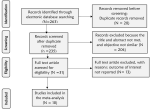
Search strategy and study selection: to identify relevant studies, two independent researchers conducted a systematic search of published literature on menstruation and related concepts among adolescent girls. Studies published in English were identified through an online search of PubMed, HINARI, the Cochrane Library, Google Scholar, and Google. The search for relevant articles was conducted from July 4 to September 10, 2023, using a comprehensive search strategy across PubMed, HINARI, and the Cochrane Library. We employed a combination of keywords and search operators (And, Or) to identify studies suitable for inclusion in this systematic review. We searched the databases using the keywords (adolescent Or adolescence Or puberty) and (menstruation Or menstrual Or menses) And (hygiene Or hygienically Or sanitation Or sanitary) And Ethiopia in the first phase, and search 2 using (adolescent Or adolescence Or puberty) And (menstruation Or menstrual Or menses) And (source of information Or knowledge Or education Or communication) And Ethiopia. The initial stage of article selection involved reviewing titles and abstracts to determine their relevance to the research question and ensure they met the pre-established inclusion criteria. Following title and abstract screening, studies published in English that investigated menstrual hygiene management (MHM) and related topics among adolescent girls in Ethiopia were retained for further evaluation. Articles were classified as included and excluded. Further, full-text articles were carefully assessed to determine if they addressed the menstrual information source. For studies deemed fully relevant, a standardized data extraction tool from the Joanna Briggs Institute (JBI), Meta-analysis of statistics assessment and review Instrument was used to systematically extract data. The selection and exclusion of studies for this systematic review were rigorously guided by the PRISMA guidelines (Figure 1).
Eligibility criteria: this review included primary studies published in English that investigated menstrual hygiene management (MHM) and related topics among adolescent girls (aged 10-19 years) in Ethiopia. Studies were included if they: i) Reported the source (s) of information about menstruation for adolescent girls; ii) Were conducted in Ethiopia between January 2005 and September 2023; iii)Employed any study design.
Data extraction: the scientific quality of selected studies was assessed using the standardized critical appraisal instruments from the Joanna Briggs Institute Meta-Analysis of Statistics Assessment and Review Instruments. Data extraction was conducted using a pre-defined data extraction form developed by the authors. This form specifically focused on capturing information related to mothers as a source of menstrual information for adolescent girls. A standardized data extraction form was used to collect the following information from each included study: i)Study characteristics: author(s), year of publication, study region(s) in Ethiopia, study design, study period, study setting (e.g., school, community), sample size; ii) Outcome of interest: proportion of adolescents who selected mother as a source of menstrual information out of the total study participants. For this review, a mother was considered a source of menstrual information when adolescent girls identified their mother among the reported sources from which they had obtained information about menstruation. It should be noted that all stages of the evaluation of articles were done by two independent researchers. In case of disagreement between the investigators, an article would be judged by a third person.
Data synthesis: the data synthesis process began with a narrative summary of the included studies. This summary was constructed by creating a table that presented key characteristics of each study, including author(s), year of publication, study design, and sample size. The primary outcome variable of interest was the pooled prevalence of mothers as a source of menstrual information for adolescent girls in the included studies. The statistical analysis software used was STATA 17.0. The combined prevalence was calculated using a random effects model. The effect sizes along with their 95% confidence intervals (CIs) were calculated to estimate the overall prevalence and its uncertainty. A p-value of less than 0.05 was considered statistically significant. Heterogeneity between studies was assessed using the I2 statistic.
A total of 263 articles were identified through a systematic search of online academic databases, including PubMed, HINARI, and the Cochrane Library. After removing duplicates, 235 articles remained for further screening. Following title and abstract review, an additional 204 articles were excluded for various reasons. This resulted in 31 articles deemed potentially relevant for full-text review. After a thorough examination of the full text, 18 studies ultimately met the inclusion criteria for this systematic review and meta-analysis (Figure 1).
Characteristics of the included studies: in this review, 18 studies were included to estimate the pooled prevalence of mothers serving as adolescents' sources of menstrual information, based on data from 8,945 participants. The 18 studies included in this review were published between 2007 and 2023 and conducted in various regions of Ethiopia. Notably, nine studies originated from the Oromia region [18, 20-27], six from Amhara [17, 28-32], two from Tigray [16,33] and one from the Southern Nations, Nationalities, and Peoples' Region (SNNPR) [34]. The sample sizes of the included studies varied, ranging from 257 participants in Tigray [33] to 828 participants in Oromia [22]. All studies included in this meta-analysis were cross-sectional surveys (Table 1).
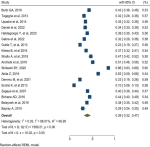
Pooled prevalence of mothers as a source of menstrual information for adolescent girls in Ethiopia: eighteen studies were included to estimate the pooled prevalence of mothers as a source of menstrual information in Ethiopia, which was 39% (95% CI: 32, 47). This finding suggests that nearly four in ten adolescent girls reported their mothers as a source of information about menstruation. However, there was high heterogeneity among studies ( I2 = 98.51%, p ≤ 0.001), indicating substantial variation in prevalence estimates. The proportion of girls reporting mothers as a source of information ranged from 10% (95% CI: 6-13) [16] to 86% (95% CI: 83-89) [17] across the studies in Ethiopia (Figure 2).
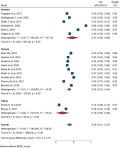
Subgroup analysis by region: substantial heterogeneity was detected among the included studies ( I2 = 98.51%, p ≤ 0.001). Given the high heterogeneity observed (I2 = 98.51%), a subgroup analysis was conducted to explore potential variations in the prevalence of mothers as a source of menstrual information across different study regions in Ethiopia (Figure 3). Sub-group analysis by study region revealed variations in the prevalence of mothers as a source of menstrual information for adolescent girls. The highest prevalence was reported in the Amhara region (47%, 95% CI: 29, 66%), while the lowest prevalence was found in Tigray (19%, 95% CI: 0, 38%). Due to the limited number of studies (only one) included from the SNNPR, subgroup analysis results for this region are not reported here.
This systematic review and meta-analysis, the first of its kind, investigated the pooled prevalence of mothers as a source of menstrual information for adolescent girls in Ethiopia. By identifying mothers as a key source for nearly four in ten girls (39%), this review sheds light on the crucial role mothers play in shaping adolescents' knowledge and experiences. These findings can inform policymakers, program developers, planners, and researchers to consider mothers during the design of culturally appropriate menstrual hygiene management packages that equip them to effectively support their daughters. Our analysis revealed that 39% (95% CI: 31% to 47%) of adolescent girls in Ethiopia reported their mothers as a source of menstrual information. This finding suggests that a significant proportion of girls rely on mothers for menstrual knowledge. This low prevalence might be due to cultural norms surrounding menstruation, including shame and shyness that influence communication patterns within families. Our analysis revealed that over 61% of adolescent girls in Ethiopia rely on sources other than mothers for menstrual information, such as discussions with peers, teachers, and exposure to media. This finding contrasts with a systematic review conducted in India, which reported a higher prevalence (52%, 95% CI: 47%-57%) of mothers as a source of information [35]. This might be because of the study period. The systematic review conducted in India included the studies published before 2015. Notably, two-thirds of the studies included in our review were published after 2015, reflecting more recent data on menstrual information sources in Ethiopia. Due to the development of technology and the availability of other forms of platforms, girls can now obtain information from their school by joining various clubs. This gives them the chance to network with peers and teachers, among other information sources.
A review conducted in other low- and middle-income countries identifies mothers as the primary source of information as well. Unfortunately, these mothers often lack accurate knowledge themselves, frequently transmitting limited or outdated information, or delaying conversations until after menarche [36]. Supporting this notion, a study in Nigeria also identified mothers as the most common source of menstrual information. Interestingly, the Nigerian study further found that girls whose mothers were their primary source were more likely to attend pre-menstrual training and practice good menstrual hygiene [37]. This suggests a potential benefit of equipping mothers with accurate knowledge to encourage them to initiate conversations and support their daughters' access to menstrual education. In addition, the finding of this review is lower than the meta-analysis conducted in Iran, where 56% of adolescents reported a mother as a current source of information [15]. It seems that one important reason for this difference is caused by differences in areas of focus. A review conducted in Iran considers a broader scope, encompassing sources of information about the process of puberty, menarche, and menstruation. Our current review, however, specifically focused on menstruation. Further, a scoping review conducted across low- and middle-income countries (LMICs) similarly identified mothers as the primary source of information for adolescent girls. However, this review also highlighted a critical concern: mothers themselves may often lack sufficient or accurate knowledge about puberty or menstruation [7].
It seems that mothers are the best person to teach their daughters about the basics of puberty, including menstruation. However, stigma, a lack of understanding, and misconceptions in the field might prevent mothers from giving their children the information they require. Thus, it is essential to give mothers accurate and comprehensive information on menstruation so they can prepare their daughters for life's new experiences before those experiences arise. This review has limitations. Our analysis revealed high heterogeneity between studies ( I2 90%). This significant variation could be attributed to factors such as differences in study settings. While our review aimed to assess the prevalence of mothers as a source of menstrual information for adolescent girls across Ethiopia, the inclusion of studies from only some regions might limit the generalizability of the findings to the entire country. Due to a lack of studies conducted in the nation, a small number of studies were selected to examine the pooled prevalence, for instance, the Southern nations and nationalities region are under-represented, as only one study has been included in this review. Further, the review only included published articles.
Although the pooled prevalence of mothers as adolescents' sources of menstruation information in Ethiopia was found to be low, it appears that mothers are an alternative option to teach their daughters about puberty and menstruation. However, shame, a lack of understanding, some myths, and misconceptions in the field can keep mothers from providing their teenagers with the necessary information. Therefore, to help their daughters overcome any shyness that may be connected to sexual and reproductive health, mothers need to be properly and adequately informed about the physical and emotional changes that teens go through. In order to prepare their daughters for new experiences in life before they happen, mothers should be ready to provide them with sufficient and correct knowledge. Our findings emphasize the crucial role mothers play in shaping adolescent girls' knowledge about menstruation. However, empowering mothers with accurate knowledge and skills through targeted interventions can further enhance their role as providers of home-based sexual and reproductive health education. This can effectively complement school-based programs, ultimately contributing to increased awareness, positive menstrual management practices, and good menstrual hygiene among adolescent girls in Ethiopia.
What is known about this topic
- Mothers are recognized as an important source of menstrual information for adolescent girls and can influence menstrual knowledge and hygiene practices;
- Studies from Ethiopia and other low- and middle-income countries have reported that adolescent girls obtain menstrual information from multiple sources, including mothers, peers, teachers, and media;
- Cultural taboos, stigma, and limited communication about menstruation can hinder mother-daughter discussions on menstrual health.
What this study adds
- This is the first systematic review and meta-analysis in Ethiopia to estimate the pooled prevalence of mothers as a source of menstrual information among adolescent girls;
- The review found that only 39% (95% CI: 32%-47%) of adolescent girls reported their mothers as a source of menstrual information, indicating that most girls rely on other information sources;
- The findings highlight the need for interventions that equip mothers with accurate menstrual health knowledge and communication skills to strengthen home-based menstrual and reproductive health education.
The authors declare no competing interests.
Alemi Kebede Olika, Muluemebet Abera Wordofa, Gurmesa Tura Debelew, Zewdie Birhanu Koricha, Sena Belina Kitila: protocol development. Alemi Kebede and Sena Belina: searched the articles, screened and evaluated for full-text eligibility, and data extraction and analysis. All the authors have read and agreed to the final manuscript.
We want to sincerely thank the team for their dedication and significant input during the whole planning and completion process of this work. We would also like to thank Jimma University, as well as friends and family, for their support throughout this Work.
Table 1: characteristics of included studies reporting prevalence of mother as a source of menstrual information among adolescents in Ethiopia, 2023
Figure 1: prisma flow chart revealing study selection for systematic review and meta-analysis of mother as a source of menstrual information for adolescents in Ethiopia
Figure 2: forest plot of the pooled prevalence of mothers as adolescents' sources of menstruation information in Ethiopia
Figure 3: subgroup analysis of pooled prevalence of mothers as adolescents' sources of menstruation information based on study region
- World Health Organization. Global accelerated action for the health of adolescents (AA-HA!): guidance to support country implementation. WHO. 2023 Oct 11. Google Scholar
- Patton GC, Viner R. Pubertal transitions in health. Lancet. 2007 Mar 31;369(9567):1130-9. PubMed | Google Scholar
- Kar SK, Choudhury A, Singh AP. Understanding normal development of adolescent sexuality: A bumpy ride. Journal of human reproductive sciences. Am J Public Health . 2015 Jul;105(7):1302-11. PubMed | Google Scholar
- Sommer M, Hirsch JS, Nathanson C, Parker RG. Comfortably, safely, and without shame: defining menstrual hygiene management as a public health issue. Am J Public Health. 2015 Jul;105(7):1302-11. PubMed | Google Scholar
- Hennegan J, Shannon AK, Rubli J, Schwab KJ, Melendez-Torres GJ. Women's and girls' experiences of menstruation in low-and middle-income countries: A systematic review and qualitative meta synthesis. PLoS Med. 2019 May 16;16(5):e1002803. PubMed | Google Scholar
- Haver J, Long JL. Menstrual Hygiene Management: Operational Guidelines. Save The Children. 2015. Google Scholar
- Coast E, Lattof SR, Strong J. Puberty and menstruation knowledge among young adolescents in low-and middle-income countries: a scoping review. Int J Public Health. 2019 Mar;64(2):293-304. PubMed | Google Scholar
- Hennegan J, Winkler IT, Bobel C, Keiser D, Hampton J, Larsson G et al. Menstrual health: a definition for policy, practice, and research. Sex Reprod Health Matters. 2021 Dec;29(1):1911618. PubMed | Google Scholar
- Chandra-Mouli V, Patel SV. Mapping the knowledge and understanding of menarche, menstrual hygiene and menstrual health among adolescent girls in low-and middle-income countries. Reprod Health. 2017 Mar 1;14(1):30. PubMed | Google Scholar
- Malek A, Abbasi Shokoohi H, Faghihi AN, Bina M, Shafiee-Kandjani AR. A study on the sources of sexual knowledge acquisition among high school students in northwest Iran. Arch Iran Med. 2010 Nov;13(6):537-42. PubMed | Google Scholar
- Golchin NA, Hamzehgardeshi Z, Fakhri M, Hamzehgardeshi L. The experience of puberty in Iranian adolescent girls: a qualitative content analysis.BMC Public Health. 2012 Aug 27:12:698. PubMed | Google Scholar
- Onyeonoro UU, Oshi DC, Ndimele EC, Chuku NC, Onyemuchara IL, Ezekwere SC et al. Sources of sex information and its effects on sexual practices among in-school female adolescents in Osisioma Ngwa LGA, South East Nigeria. J Pediatr Adolesc Gynecol. 2011 Oct;24(5):294-9. PubMed | Google Scholar
- Mosavi SA, Babazadeh R, Najmabadi KM, Shariati M. Assessing Iranian adolescent girls' needs for sexual and reproductive health information. Journal of J Adolesc Health. 2014 Jul;55(1):107-13. PubMed | Google Scholar
- Sommer M. Where the education system and women's bodies collide: The social and health impact of girls' experiences of menstruation and schooling in Tanzania. J Adolesc. 2010 Aug;33(4):521-9. PubMed | Google Scholar
- Sooki Z, Shariati M, Chaman R, Khosravi A, Effatpanah M, Keramat A. The role of mother in informing girls about puberty: a meta-analysis study. Nurs Midwifery Stud. 2016 Feb 20;5(1):e30360. PubMed | Google Scholar
- Kedir E, Gebre Y, Marta G. Awareness of menstruation and related problems among adolescent girls in Ayder High School, Mekelle, 2013. Accessed on November 11, 2024.
- Shibeshi BY, Emiru AA, Asresie MB. Disparities in menstrual hygiene management between urban and rural schoolgirls in Northeast, Ethiopia. PLoS One. 2021 Sep 30;16(9):e0257853. PubMed | Google Scholar
- Ahmed Shallo S, Willi W, Abubeker A. Factors affecting menstrual hygiene management practice among school adolescents in Ambo, Western Ethiopia, 2018: a cross-sectional mixed-method study. Risk Manag Healthc Policy. 2020 Sep 15:13:1579-1587. PubMed | Google Scholar
- Hutchinson MK, Kahwa E, Waldron N, Hepburn Brown C, Hamilton PI, Hewitt HH et al. Jamaican mothers' influences of adolescent girls' sexual beliefs and behaviors. J Nurs Scholarsh. 2012 Mar;44(1):27-35. PubMed | Google Scholar
- Bulto GA. Knowledge on menstruation and practice of menstrual hygiene management among school adolescent girls in Central Ethiopia: a cross-sectional study. Risk Manag Healthc Policy. 2021 Mar 5:14:911-923. PubMed | Google Scholar
- Kitesa B, Getahun T, Wako K. Assessment of knowledge and practice of adolescent in-school girls towards menstrual hygiene management and determining factors in Lucy village of Ethiopian great Rift valley, 2016. International Journal of Immunology. 2016 Dec;4(6):52-63. Google Scholar
- Upashe SP, Tekelab T, Mekonnen J. Assessment of knowledge and practice of menstrual hygiene among high school girls in Western Ethiopia. BMC Womens Health. 2015 Oct 14:15:84. PubMed | Google Scholar
- Daniel N, Kejela G, Fantahun F, Desalegn M, Guteta F. Menstrual hygiene management practice and its associated factors among in-school adolescent girls in Western Ethiopia. Contracept Reprod Med. 2023 Jan 3;8(1):1. PubMed | Google Scholar
- Gebre W, Kidane EM, Negussie YM, Getahun MS, Bekele NT, Gurara AM. Assessment of menstrual hygiene management knowledge, practice, and associated factors among girls in Boset District, Ethiopia: a school-based cross-sectional study. Contracept Reprod Med. 2023 Jun 1;8(1):34. PubMed | Google Scholar
- Anchebi H, Shiferaw B, Fite R, Abeya S. Practice of menstrual hygiene and associated factors among female high school students in adama town. J Women's Health Care. 2017;6(370):2167-0420. Google Scholar
- Mulugeta Demmu Y, Shifera GM, Ayana GM, Adare D, Yazew B, Damtew YT et al. Menstrual hygiene management and associated factors among adolescent school girls in gursum district, Eastern Ethiopia: Institution-based a cross-sectional study. BMC Womens Health. 2023 Jun 21;23(1):328. PubMed | Google Scholar
- Birhane AD, Serbessa MK, Degfie TT. Menstrual hygiene management: a study of adolescent schoolgirls in sebeta town, oromia region, Ethiopia. Glob Drugs Ther. 2020;5:1-8. Google Scholar
- Tegegne TK, Sisay MM. Menstrual hygiene management and school absenteeism among female adolescent students in Northeast Ethiopia. BMC Public Health. 2014 Oct 29:14:1118. PubMed | Google Scholar
- Habtegiorgis Y, Sisay T, Kloos H, Malede A, Yalew M, Arefaynie M et al. Menstrual hygiene practices among high school girls in urban areas in Northeastern Ethiopia: A neglected issue in water, sanitation, and hygiene research. PLoS One. 2021 Jun 9;16(6):e0248825. PubMed | Google Scholar
- Gultie T, Hailu D, Workineh Y. Age of menarche and knowledge about menstrual hygiene management among adolescent school girls in Amhara province, Ethiopia: implication to health care workers and school teachers. PLoS One. 2014 Sep 30;9(9):e108644. PubMed | Google Scholar
- Abita Z, Ali R, Admassu B, Abita Z, Ali R, Admassu B. Menstrual hygiene management practice and associated factors among secondary school girls in finot selam town, northwest Ethiopia, 2019. Int J Sex Reprod Health Care. 2021;4(1):053-61. Google Scholar
- Zegeye DT, Megabiaw B, Mulu A. Age at menarche and the menstrual pattern of secondary school adolescents in northwest Ethiopia. BMC Womens Health. 2009 Oct 5:9:29. PubMed | Google Scholar
- Bayray A. Assessment of Menstrual Perceptions and Preparation of Rural Adolescent Females, South Eastern Zone of Tigray, Ethiopia. Scholarly Journal of Medicine. 2011;1:12-21. Google Scholar
- Belayneh Z, Mekuriaw B. Knowledge and menstrual hygiene practice among adolescent school girls in southern Ethiopia: a cross-sectional study. BMC Public Health. 2019 Nov 29;19(1):1595. PubMed | Google Scholar
- van Eijk AM, Sivakami M, Thakkar MB, Bauman A, Laserson KF, Coates S et al. Menstrual hygiene management among adolescent girls in India: a systematic review and meta-analysis. BMJ Open. 2016 Mar 2;6(3):e010290. PubMed | Google Scholar
- Sumpter C, Torondel B. A systematic review of the health and social effects of menstrual hygiene management.PLoS One. 2013 Apr 26;8(4):e62004. PubMed | Google Scholar
- Aniebue UU, Aniebue PN, Nwankwo TO. The impact of pre-menarcheal training on menstrual practices and hygiene of Nigerian school girls. Pan Afr Med J. 2009 Jun 29:2:9. PubMed | Google Scholar
Search
This article authors
On Pubmed
On Google Scholar
Citation [Download]
Navigate this article
Similar articles in
Key words
Tables and figures

Article metrics
Recently from the PAMJ



Authors´ services
