Intensive rehabilitation in stroke recovery: a case series with family integration and cultural adaptation (Cogni-Famille protocol) in a regional hospital setting, Bafoussam, Cameroon
Ibrahim Npochinto Moumeni
Corresponding author: Ibrahim Npochinto Moumeni, Department of Physical Medicine and Osteopathy, Bafoussam Regional Hospital, Bafoussam, Cameroon 
Received: 17 Jul 2025 - Accepted: 18 Jun 2026 - Published: 29 Jul 2026
Domain: Geriatrics,Clinical Neurophysiology,Geriatric Neurology
Keywords: Stroke rehabilitation, intensive therapy, Cogni-Famille protocol, neuroplasticity, low-income countries
Funding: This work received no specific grant from any funding agency in the public, commercial, or non-profit sectors.
©Ibrahim Npochinto Moumeni et al. Pan African Medical Journal (ISSN: 1937-8688). This is an Open Access article distributed under the terms of the Creative Commons Attribution International 4.0 License (https://creativecommons.org/licenses/by/4.0/), which permits unrestricted use, distribution, and reproduction in any medium, provided the original work is properly cited.
Cite this article: Ibrahim Npochinto Moumeni et al. Intensive rehabilitation in stroke recovery: a case series with family integration and cultural adaptation (Cogni-Famille protocol) in a regional hospital setting, Bafoussam, Cameroon. Pan African Medical Journal. 2026;54:104. [doi: 10.11604/pamj.2026.54.104.48678]
Available online at: https://www.panafrican-med-journal.com//content/article/54/104/full
 PDF in process
 Case series 

Intensive rehabilitation in stroke recovery: a case series with family integration and cultural adaptation (Cogni-Famille protocol) in a regional hospital setting, Bafoussam, Cameroon
Intensive rehabilitation in stroke recovery: a case series with family integration and cultural adaptation (Cogni-Famille protocol) in a regional hospital setting, Bafoussam, Cameroon
 Ibrahim Npochinto Moumeni1,2,3,&
&Corresponding author
Stroke imposes a disproportionate disability burden in low- and middle-income countries, where access to intensive rehabilitation remains critically limited. In resource-constrained African settings, family-mediated care represents a potentially scalable strategy for extending therapeutic dose beyond what professionally delivered sessions alone can achieve. Five consecutive stroke patients were enrolled in an intensive family-integrated rehabilitation programme at the Regional Hospital of Bafoussam, Cameroon: mean age 51.4 years (range 34-68), three males and two females, with baseline modified Rankin scale (mRS) 4-5 and mean Barthel index (BI) 25.0 ± 7.6. Patients received 4-6 hours of structured daily rehabilitation over 3-4 weeks, combining professional neuroplasticity-informed sessions with a structured family caregiver training programme based on task-shifting principles. Family caregivers were assessed for competency across five standardised domains: mobility assistance, speech exercises, feeding techniques, safety measures, and exercise supervision, with a pre-specified certification threshold of ≥80% overall mastery. Primary outcomes, BI and mRS, were assessed at baseline, 3 weeks, 3 months, and 6 months. No formal sample size calculation was performed given the exploratory case series design. Mean BI improved from 25.0 (SD ±7.6) at baseline to 68.0 (SD ±5.7) at 3 weeks and 88.0 (SD ±2.7) at 6 months. All five patients achieved functional independence (mRS ≤2) by 6 months. Family caregiver competency improved from 15% (SD ±5.2) at baseline to 89% (SD ±3.4) at 6 months, with all caregivers attaining the certification threshold by week 3. No serious adverse events occurred; minor complications included transient fatigue (n=2) and mild muscle soreness (n=3), both resolving with protocol adjustment. In this small exploratory case series, an intensive family-integrated rehabilitation protocol applying task-shifting and neuroplasticity-informed principles was feasible, safe, and associated with substantial functional gains at 6 months in stroke survivors managed in a resource-limited African hospital setting. The family co-therapist model achieved consistent caregiver competency with low professional resource requirements. These preliminary findings are hypothesis-generating and require confirmation through larger prospective controlled trials with independent outcome assessment.

Stroke is the second leading cause of death worldwide, with the burden of disability increasing at a faster pace in low- and middle-income countries (LMICs) than in high-income countries [1]. Recent projections indicate that stroke-related disability-adjusted life-years will grow from 144.8 million to 189.3 million between 2020 and 2050, with LMICs bearing a disproportionate share of this burden [1]. In Africa, stroke disproportionately affects individuals in their most productive years, creating substantial socio-economic burden [2].
Access to guideline-based acute stroke interventions remains critically limited in Africa, with only 10% of patients receiving thrombolysis due to resource constraints [3]. The shortage of neurological and rehabilitation professionals, estimated at three neurologists per 10 million people compared to up to 900 per 10 million in Europe, perpetuates a cycle of inadequate care [4]. In this context, post-stroke rehabilitation represents the most accessible intervention to promote functional recovery for the majority of African stroke survivors [5].
Evidence supports the importance of intensive training during critical neuroplasticity windows in the early weeks following stroke [6]. Animal and human studies suggest that coinciding therapeutic intensity with this period of enhanced brain plasticity may maximise recovery [7]. Traditional rehabilitation protocols, delivering 1-2 hours of therapy over 12-20 weeks, may not optimally exploit this time-sensitive window. Family-centred care has emerged as a cost-effective strategy for extending therapeutic reach in resource-limited settings, with structured caregiver training enabling greater daily stimulation doses than professionally-delivered care alone can achieve [8-11].
This study aimed to describe the feasibility, safety, and preliminary functional outcomes of an intensive family-integrated rehabilitation protocol implemented in a regional hospital setting in Cameroon.

Study design and setting: this is a prospective case series conducted at the Department of Physical Medicine and Osteopathy, Regional Hospital of Bafoussam (a 350-bed referral hospital serving approximately two million inhabitants in the West Region, Cameroon) over a 12-month period from February 2023 to January 2024. The study adheres to the Strengthening the Reporting of Observational Studies in Epidemiology (STROBE) guidelines for observational study reporting [12].
Study population: consecutive adult stroke patients admitted to the department were screened for eligibility. Inclusion criteria were: first-ever ischaemic stroke confirmed by computed tomography (CT) or magnetic resonance imaging (MRI), age 18-75 years, mRS 2-5 at baseline, stroke onset ≤14 days prior to enrolment, medical stability permitting intensive rehabilitation, availability of at least one family member willing to participate in caregiver training, and written informed consent. Exclusion criteria were: recurrent stroke with pre-existing functional sequelae, severe cardiovascular comorbidities limiting exercise, major cognitive or psychiatric disorders, and active malignancy. Of 23 patients assessed during the study period, 18 were excluded (12 did not meet inclusion criteria, 4 declined participations, 2 had incomplete follow-up), yielding a final sample of five consecutive patients (21.7% of eligible cases). No formal sample size calculation was performed given the exploratory case series design.
Data collection: all outcome assessments were performed by the treating clinician using standardized instruments at four time points: baseline (within 3-10 days' post-stroke), 3 weeks (end of intensive training), 3 months, and 6 months. The Barthel index (BI, range 0-100, higher scores indicating greater independence) and modified Rankin scale (mRS, range 0-6) assessed functional status. Family caregiver competency was evaluated through standardized practical skill demonstrations and written assessments covering five domains: mobility assistance, speech exercises, feeding techniques, safety measures, and exercise supervision. A pre-specified competency threshold of ≥80% mastery across domains was required for caregiver certification. Data were recorded on standardized case report forms, double-entered, and de-identified prior to analysis.
Definitions: functional independence was defined as mRS ≤2. Intensive rehabilitation was defined as ≥4 hours of structured daily therapy over ≥3 consecutive weeks. Family caregiver certification was defined as achieving ≥80% overall competency score across all five assessed skill domains. Therapeutic intensity was conceptualized as the total daily stimulation dose delivered through combined professional and family-mediated sessions.
Statistical analysis: descriptive statistics were calculated as means with standard deviations for continuous variables and frequencies with percentages for categorical variables. Given the small sample size (n=5), formal hypothesis testing with p-values and confidence intervals is not statistically appropriate and is therefore not reported in the revised manuscript. Individual patient trajectories are presented descriptively, consistent with STROBE guidance for case series. No logistic regression analysis was performed as the sample size precludes meaningful multivariable modelling. All analyses were performed using Microsoft Excel (Microsoft Corporation, Redmond, WA, USA).
Ethical considerations: this case series was conducted in accordance with the Declaration of Helsinki. The study was certified by the Regional Hospital of Bafoussam Institutional Review Board (Certification No. 43/DRSO/HRB/55/2025) as a retrospective clinical evaluation of anonymized routine care data not requiring prior ethics committee approval under Cameroonian national guidelines. Written informed consent was obtained from all patients or their legal representatives prior to enrolment. Patient confidentiality was maintained through complete anonymisation: all names used (K.F., J.T., A.N., B.M., P.K.) are pseudonyms.
Participants: five patients were enrolled: mean age 51.4 years (range 34-68), three males and two females. All presented with first-ever middle cerebral artery territory ischaemic infarction confirmed by neuroimaging. Baseline mRS ranged from 4 to 5 and mean BI was 25.0 (SD ±7.6). Time from stroke onset to treatment initiation ranged from 3 to 10 days. All patients resided in rural or semi-urban areas of the West Region of Cameroon and had at least one family member available to participate in the caregiver training programme (Table 1).
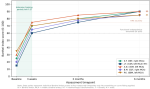
Outcomes: functional recovery data are presented in Table 1 and Figure 1. Mean BI improved from 25.0 (SD ±7.6) at baseline to 68.0 (SD ±5.7) at 3 weeks and 88.0 (SD ±2.7) at 6 months. All five patients achieved functional independence (mRS = 1) by 6 months. No serious adverse events occurred during the intensive training period. Minor adverse events included transient fatigue in two patients (40%) and mild muscle soreness in three patients (60%), both resolving with protocol adjustment. Individual recovery trajectories showed consistent improvement patterns across all patients despite variability in age, stroke severity, and social context (Figure 1). Data points are shown at baseline, 3 weeks, 3 months, and 6 months. The shaded region indicates the intensive training period (weeks 0-3). BI = Barthel index (range 0-100, higher = more independent). Patient characteristics: K.F. (teacher, 58 years, right MCA); J.T. (engineer, 34 years, left MCA with haemorrhagic transformation); A.N. (farmer, 45 years, left MCA); B.M. (merchant, 52 years, right MCA); P.K. (retired teacher, 68 years, left MCA). All patients achieved mRS ≤2 by 6 months. Note: individual trajectories are shown without smoothing; no extrapolation was performed between measured time points.
Family caregiver outcomes: all five family caregivers achieved the pre-specified certification threshold of ≥80% overall competency by the end of the 3-week training period, with competency maintained at 6-month follow-up (Table 2). Mean overall competency improved from 15% (SD ±5.2) at baseline to 87% (SD ±3.1) at 3 weeks and 89% (SD ±3.4) at 6 months. Improvement was consistent across all five skill domains (Table 2). Competency assessed through standardised practical skill demonstration and written assessment. Certification threshold: ≥80% overall competency. SD = standard deviation.
Resource utilization: compared with conventional rehabilitation schedules described in the literature (48-72 professional therapy hours over 12-16 weeks), the intensive protocol delivered 28-35 professional therapy hours over 3-4 weeks, with the remaining daily stimulation dose provided by trained family members. This shift in delivery model represents a reduction in professional therapy hours per patient, though formal health economic analysis was not conducted and no definitive cost-effectiveness conclusions can be drawn from this case series.
This exploratory case series aimed to describe the feasibility, safety, and preliminary functional outcomes of an intensive family-integrated rehabilitation protocol in five stroke patients treated at a regional hospital in Cameroon. All patients demonstrated substantial functional improvement, achieving mRS ≤2 by 6 months, and all family caregivers attained pre-specified competency thresholds. These findings suggest that intensive, family-supported rehabilitation is feasible and safe in this resource-limited context, and they justify the design of larger controlled studies.
The functional gains observed in this case series, mean BI improvement of 63 points over 6 months, are consistent with the broader evidence base supporting intensive rehabilitation during the early post-stroke neuroplasticity window [6,13,14]. Kwakkel et al. demonstrated in a landmark meta-analysis that augmented exercise therapy time significantly improves functional outcomes after stroke, with effect sizes independent of technological complexity [10]. Our observations align with this principle: the intensive daily dose, achieved through the combination of professional sessions and family-mediated training, may have contributed to the functional gains recorded. However, without a concurrent control group, it is not possible to distinguish intervention effects from natural spontaneous recovery, which is particularly robust during the early weeks post-stroke [11,15-17]. This is the primary methodological limitation of this case series, and all outcome data should be interpreted with this caveat explicitly in mind.
The family caregiver training component produced consistent competency gains across all assessed domains. This finding is consistent with systematic reviews demonstrating that structured family caregiver programmes improve both caregiver competency and patient outcomes after stroke [8,9,18]. The family co-therapist model addresses a critical structural gap in African rehabilitation: the absence of sufficient professional resources means that extending the therapeutic dose through trained family members may represent the most scalable strategy available in settings such as Bafoussam [4,5,19,20]. The caregiver competency assessment tool used in this study was developed pragmatically for this protocol and has not been formally validated; its psychometric properties remain to be established in future research.
The cultural adaptation of rehabilitation tasks, incorporating agriculturally relevant movements, traditional beadwork, and community-role activities, appeared to sustain patient engagement throughout the intensive protocol. Recent evidence supports the principle that culturally meaningful task selection enhances adherence and motivation in LMIC rehabilitation settings [2,3]. However, the standardization and individualization of cultural adaptations in this protocol were not systematically operationalized, and their independent contribution to outcomes cannot be quantified from this case series alone.
Several important limitations must be acknowledged alongside the strengths of this work. The sample size of five patients limits statistical power, generalizability, and the ability to control for confounding variables including stroke severity, time to treatment, and socio-demographic factors. Assessment bias is present as all outcome measurements were performed by the treating clinician rather than a blinded independent evaluator [10]. The absence of a control or historical comparison group prevents causal attribution of outcomes to the intervention. The 6-month follow-up period may be insufficient to assess long-term sustainability of functional gains. Conversely, the strengths of this study include consecutive patient enrolment, standardized outcome measurement at four time points, complete follow-up for all enrolled patients, and detailed individual case documentation enabling transparent reporting of patient heterogeneity. These preliminary findings provide a rationale and protocol foundation for a larger prospective controlled trial [15-17].
In this exploratory case series of five stroke patients treated in Bafoussam, Cameroon, an intensive family-integrated rehabilitation protocol delivered over 3-4 weeks was feasible, safe, and associated with substantial functional improvement at 6 months. All patients achieved functional independence, and all family caregivers attained pre-specified competency thresholds. These preliminary observations support the potential of family-supported intensive rehabilitation as a scalable strategy for stroke care in resource-limited African health systems. Given the small sample size and absence of a control group, these findings should be considered hypothesis-generating. Larger prospective controlled trials with independent outcome assessment, validated caregiver outcome measures, and longer follow-up are needed to confirm the effectiveness of this approach and to quantify the relative contributions of intervention intensity, family support, and natural recovery.
What is known about this topic
- Intensive stroke rehabilitation during early neuroplasticity windows is associated with better functional outcomes than low-intensity distributed approaches in high-income settings;
- Resource constraints in LMICs severely limit access to professional stroke rehabilitation, with fewer than three neurologists per 10 million people available in Africa;
- Family-centred care approaches show promise for improving stroke outcomes but lack systematic implementation frameworks validated in African hospital settings.
What this study adds
- First case series describing a structured family caregiver certification model achieving ≥80% competency in all five trained caregivers in a Cameroonian regional hospital.
- Intensive family-integrated rehabilitation (4-6 h/day over 3-4 weeks) was feasible and safe, with no serious adverse events in five consecutive stroke patients;
- These exploratory findings provide a protocol foundation and preliminary data to inform the design of larger controlled trials of family-supported intensive rehabilitation in African LMICs.
The author declares no competing interest.
Conception and study design, data collection, data analysis and interpretation, manuscript drafting, manuscript revision, and guarantor of the study: Ibrahim Npochinto Moumeni. The author read and approved the final version of this manuscript.
The author acknowledges Professor Jean-Michel Gracies (Henri Mondor University Hospital, France) and all his team for foundational training in spastic paresis mechanisms. Sincere gratitude is expressed to the patients and families who participated in this study and to the rehabilitation team at Regional Hospital of Bafoussam.
Table 1: baseline characteristics and functional recovery trajectories of stroke patients receiving an intensive rehabilitation protocol with family integration, recruited from the Department of Physical Medicine and Osteopathy, Regional Hospital of Bafoussam, West Region, Cameroon, from February 2023 to January 2024 (N=5)
Table 2: progressive competency assessment of family caregivers in stroke care domains during an intensive rehabilitation protocol with a structured training program, Regional Hospital of Bafoussam, West Region, Cameroon, February 2023 to July 2024 (N=5 caregivers)
Figure 1: individual functional recovery trajectories showing Barthel index scores over 6 months following an intensive rehabilitation protocol with family integration in consecutive stroke patients, Department of Physical Medicine and Osteopathy, Regional Hospital of Bafoussam, West Region, Cameroon, February 2023 to July 2024 (N=5)
- Feigin VL, Stark BA, Johnson CO, Roth GA, Bisignano C, Abady GG et al. Global, regional, and national burden of stroke and its risk factors, 1990-2019: a systematic analysis for the Global Burden of Disease Study 2019. Lancet Neurol. 2021 Oct;20(10):795-820. PubMed | Google Scholar
- Owolabi MO, Sarfo F, Akinyemi R, Gebregziabher M, Akpa O, Akpalu A et al. Dominant modifiable risk factors for stroke in Ghana and Nigeria (SIREN): a case-control study. Lancet Glob Health. 2018 Apr;6(4):e436-e446. PubMed | Google Scholar
- Akinyemi RO, Ovbiagele B, Adeniji OA, Sarfo FS, Abd-Allah F, Adoukonou T et al. Stroke in Africa: profile, progress, prospects and priorities. Nat Rev Neurol. 2021 Oct;17(10):634-656. PubMed | Google Scholar
- Brainin M, Feigin VL, Norrving B, Martins SCO, Hankey GJ, Hachinski V. Global prevention of stroke and dementia: the WSO Declaration. Lancet Neurol. 2020 Jun;19(6):487-488. PubMed | Google Scholar
- Langhorne P, Bernhardt J, Kwakkel G. Stroke rehabilitation. Lancet. 2011 May 14;377(9778):1693-702. PubMed | Google Scholar
- Npochinto Moumeni I. Intensity is not time: reframing dose prescription in post-stroke neurorehabilitation. Front Rehabil Sci. 2026 May 29;7:1796730. Google Scholar
- Krakauer JW, Carmichael ST, Corbett D, Wittenberg GF. Getting neurorehabilitation right: what can be learned from animal models? Neurorehabil Neural Repair. 2012 Oct;26(8):923-31. PubMed | Google Scholar
- Creasy KR, Lutz BJ, Young ME, Stacciarini JM. Clinical Implications of Family-Centered Care in Stroke Rehabilitation. Rehabil Nurs. 2015 Nov-Dec;40(6):349-59. PubMed | Google Scholar
- Plank A, Mazzoni V, Cavada L. Becoming a caregiver: new family carers' experience during the transition from hospital to home. J Clin Nurs. 2012 Jul;21(13-14):2072-82. PubMed | Google Scholar
- Kwakkel G, van Peppen R, Wagenaar RC, Wood Dauphinee S, Richards C, Ashburn A et al. Effects of augmented exercise therapy time after stroke: a meta-analysis. Stroke. 2004 Nov;35(11):2529-39. PubMed | Google Scholar
- Bernhardt J, Hayward KS, Kwakkel G, Ward NS, Wolf SL, Borschmann K et al. Agreed definitions and a shared vision for new standards in stroke recovery research: The Stroke Recovery and Rehabilitation Roundtable taskforce. Int J Stroke. 2017 Jul;12(5):444-450. PubMed | Google Scholar
- von Elm E, Altman DG, Egger M, Pocock SJ, Gøtzsche PC, Vandenbroucke JP. The Strengthening the Reporting of Observational Studies in Epidemiology (STROBE) statement: guidelines for reporting observational studies. Lancet. 2007 Oct 20;370(9596):1453-7. PubMed | Google Scholar
- Npochinto Moumeni I, Abdel-Nasser NM, Bristher Horlister TK, Temgoua M, Mapoure YN. From hands-on to family-on: Task-Shifting manual therapy techniques in post-stroke neuroplasticity - A retrospective comparative analysis of the Cogni-Famille protocol. J Bodyw Mov Ther. 2026 Jun;46:168-180. PubMed | Google Scholar
- Npochinto Moumeni I. Intensity over duration in neurological rehabilitation: exploring evidence for optimised recovery paradigms. Front Neurol. 2026 Jan 22:16:1697186. PubMed | Google Scholar
- Moumeni IN, Mapoure YN, Gracies JM, Moyse E, Temgoua M, Moulangou JP et al. Plasticité musculaire et traitement physique dans la parésie spastique déformante. NPG Neurol Psychiatr Gériatr. 2021 Aug 1;21(124):227-42. Google Scholar
- Npochinto Moumeni I. Plasticité cérébrale : régénération ? réparation ? réorganisation ? ou compensation ? NPG Neurol Psychiatr Gériatr. 2021;21(121):11-18.
- Npochinto Moumeni I. From learned helplessness to motor recovery: integrating intensive neurorehabilitation in poststroke spastic paresis-clinical insights from over 10 years of practice. Front Rehabil Sci. 2026 Jan 30:6:1644723. PubMed | Google Scholar
- Moumeni IN, Mourey F, Tsatedem FA, Oyene K, Mapoure YN. Institutional mechanisms excluding rehabilitation from medical education in Central Africa: A mixed-methods case study from Cameroon with implications for WHO regional strategy implementation. Dialogues Health. 2025 Dec 30;8:100274. PubMed | Google Scholar
- Npochinto Moumeni I. From policy to practice: why the WHO's Africa rehabilitation strategy 2025-2035 risks failure without educational reform. Front Med (Lausanne). 2026 Jan 6:12:1716773. PubMed | Google Scholar
- Npochinto Moumeni I, Njikam Moumeni AN, Tchuidjio Ketchogué BO, Temgoua M, Njankouo Mapoure Y. When medical training amplifies therapeutic nihilism: a cross-national study of healthcare professional attitudes toward stroke recovery in Central Africa. Front Med (Lausanne). 2026 Apr 22;13:1795929. PubMed | Google Scholar
Search
This article authors
On Pubmed
On Google Scholar
Citation [Download]
Navigate this article
Similar articles in
Key words
Tables and figures

Article metrics
Recently from the PAMJ
Authors´ services