Toxoplasmosis in the Republic of Guinea: a narrative review of the available evidence, knowledge gaps and control priorities
Abdoulaye Oury Barry, Lanan Wassy Soromou, Eric Ghigo
Corresponding author: Eric Ghigo, Training and Research Unit (UFR) BioHafia, Department of Applied Biology, Faculty of Science and Technology, University of Labé, Labé, Republic of Guinea 
Received: 04 Feb 2026 - Accepted: 06 Nov 2026 - Published: 17 Nov 2026
Domain: Parasitology,Environmental health,Hygiene and sanitation
Keywords: Toxoplasmosis, Toxoplasma gondii, Guinea, West Africa, epidemiology
Funding: This work received no specific grant from any funding agency in the public, commercial, or non-profit sectors.
©Abdoulaye Oury Barry et al. Pan African Medical Journal (ISSN: 1937-8688). This is an Open Access article distributed under the terms of the Creative Commons Attribution International 4.0 License (https://creativecommons.org/licenses/by/4.0/), which permits unrestricted use, distribution, and reproduction in any medium, provided the original work is properly cited.
Cite this article: Abdoulaye Oury Barry et al. Toxoplasmosis in the Republic of Guinea: a narrative review of the available evidence, knowledge gaps and control priorities. Pan African Medical Journal. 2026;55:121. [doi: 10.11604/pamj.2026.55.121.51450]
Available online at: https://www.panafrican-med-journal.com//content/article/55/121/full
 PDF in process
Narrative Review 

Toxoplasmosis in the Republic of Guinea: a narrative review of the available evidence, knowledge gaps and control priorities
Toxoplasmosis in the Republic of Guinea: a narrative review of the available evidence, knowledge gaps and control priorities
Abdoulaye Oury Barry1,  Lanan Wassy Soromou1, Eric Ghigo1,&
&Corresponding author
Toxoplasmosis, caused by Toxoplasma gondii, is a common zoonotic infection in West Africa, but very little is known about its real burden in Guinea. The published Guinean data are scarce, mostly hospital-based, and come almost entirely from Conakry and its surroundings. We carried out a narrative review. PubMed/MEDLINE, Google Scholar and institutional websites were searched up to 1 February 2026, and a focused PubMed check was repeated on 1st November 2026. The documents identified were sorted into three categories: Guinea-specific studies, regional African evidence and global background. Only the first category was used to describe the situation in Guinea. No formal systematic review methodology and no meta-analysis were applied. We identified seven Guinea-specific reports: one antenatal survey in Coyah (100 women, seroprevalence 73%, data from 2013; the same study found 51% of 100 cats seropositive) and six hospital-based studies in Conakry, mostly in people living with HIV. None of them can be generalised to the national level. We found no Guinean data on congenital toxoplasmosis, infection in livestock, environmental contamination, parasite genotypes or availability of treatment. African data suggest a pooled seroprevalence of about 43% in pregnant women, but none of the studies behind this estimate was done in Guinea. Toxoplasmosis is probably an important but largely undocumented problem in Guinea. Before a national policy can be defined, basic data are needed: a seroprevalence survey of pregnant women in several regions, a description of congenital cases, and a first look at infection in animals. A One Health approach is an appropriate framework, but its priorities will have to rely on data that Guinea does not yet have.

Toxoplasma gondii is an intracellular protozoan of the phylum Apicomplexa that is found all over the world. It is estimated to infect nearly one-third of the human population [1,2]. The parasite exists in several lineages that differ in geographical distribution and in virulence [3]. In immunocompetent people, primary infection is often asymptomatic or causes a mild, self-limiting lymphadenopathy. The parasite then stays in the body for life as tissue cysts, mainly in the brain, skeletal muscle and retina. In people with a weakened immune system (AIDS, transplant recipients, immunosuppressive treatment), the cysts can reactivate and cause toxoplasmic encephalitis, pneumonitis or disseminated infection [1,4]. Congenital toxoplasmosis follows a primary infection of the mother during pregnancy. The earlier the infection, the less likely the transmission, but the more severe the damage: about 10 to 15% of foetuses are infected in the first trimester, with a risk of abortion, hydrocephalus, intracranial calcifications and chorioretinitis, against more than 50% (up to about 70% in some cohorts) in the third trimester, when the disease is usually milder or silent at birth [5-7].
Guinea is a good example of a country where this burden is poorly documented. To our knowledge, the literature does not describe any national surveillance system or antenatal screening policy for toxoplasmosis, and the number of published studies is small. The factors that favour transmission elsewhere in Africa, such as limited access to safe water, contact with cats and consumption of undercooked meat, are likely to be present here too. The aim of this review is therefore limited: we wanted to bring together what has been published on toxoplasmosis in Guinea, to show what is documented and what is not, to place these data in the context of regional and global knowledge without mixing the two, and to suggest realistic priorities for research and public health.

Study design and reporting: this is a narrative review. Its purpose is to describe and discuss what is known about toxoplasmosis in the Republic of Guinea, not to produce a pooled estimate. In the first version, we borrowed several elements from systematic reviews (a PRISMA flow diagram, record counts and a PRISMA checklist) that did not fit this design, and we have removed them. The review was written with the principles of the Scale for the Assessment of Narrative Review Articles (SANRA) in mind: a clear aim, a described literature search, appropriate referencing, scientific reasoning and relevant presentation of data.
Protocol and registration: no protocol was registered. Given the narrative design, we did not consider registration necessary. The absence of a registered protocol is acknowledged among the limitations.
Literature search: we searched PubMed/MEDLINE, Google Scholar, and the websites of the World Health Organization (WHO), United Nations Children's Fund (UNICEF), the World Bank and the Ministry of Health of the Republic of Guinea. Reference lists of key articles were also checked by hand. For regional and global evidence, the period covered was January 2015 to December 2025, with several earlier fundamental references. The last search for the first version of the manuscript was done on 1 February 2026. For this revision, we repeated the PubMed search on 1st November 2026, without a date limit for Guinea-specific studies, to look for further Guinean studies, including those published in 2026, and for any earlier review on the subject. Search terms were “Toxoplasma gondii”, toxoplasmosis, congenital toxoplasmosis, seroprevalence and epidemiology, combined with Guinea and West Africa and adapted to the different themes of the review. Broader terms were used to find regional evidence. The geographical scope gave priority to Guinean data, complemented by West African and international studies when national data were missing. Google Scholar results were screened by relevance, but we did not record the number of pages or records examined; this part of the search cannot be reproduced exactly, and we do not claim that the search was exhaustive.
Categories of evidence and selection: because the aim is to describe Guinea, we sorted the documents into three categories. The first one is Guinea-specific studies, defined as any report with original data on toxoplasmosis in people or animals living in Guinea, whatever its date, including hospital series and reports in French. All of them are listed in Table 1. The second category is regional African evidence, meaning systematic reviews and studies from other African countries, which we used only to indicate what might be expected and which are always labelled as such. The third is global background (parasite biology, clinical features, diagnosis, treatment), for which we favoured recent reviews and kept a few classical papers. Articles in English or French were considered. Letters, editorials and conference abstracts without primary data were not used. The three authors selected the documents and settled any disagreement by discussion.
Data extraction: for each Guinea-specific report, one author extracted the location, year, population, sample size, design, diagnostic method, main result and confidence interval, and the three authors then reviewed the resulting table together against the original documents. Disagreements were resolved by discussion, and the authors of the original studies were not contacted. When a confidence interval was not given but the numerator and the denominator were available, we calculated a Wilson 95% confidence interval. Results are reported as they appear in the original documents.
Appraisal of the evidence: we did not apply a formal risk-of-bias tool, because the sources are few, heterogeneous and partly descriptive. Instead, the main limitations of each Guinea-specific study are listed in Table 1 and were taken into account when interpreting its result. Regional and global sources were used for context and were not graded. No quantitative pooling was attempted.
Overview of the evidence found: the literature is very uneven. At the global and regional level there are many recent reviews. For Guinea itself, we found seven reports with original data on human toxoplasmosis (Table 1), one of which also tested cats, and none on livestock, food, water or parasite genotypes. The complementary PubMed search of 1st November 2026 did not identify any earlier review dedicated to toxoplasmosis in Guinea.
Guinea-specific evidence: only one study provided data on pregnant women. It was a cross-sectional survey of 100 consenting women attending two health centres in Coyah, about 50 km from Conakry, between June and November 2013 and published in 2023. Using a modified agglutination test, the authors found a seroprevalence of 73% (95% CI 63.6 to 80.7 by the Wilson method; the report gives 73% ± 8.7) [8]. No significant association was found with the variables studied, including a cat in the house, raw milk or meat consumption, but the numbers in each subgroup were small [8]. The same study tested 100 cats from the town and found 51% seropositive (95% CI 41.3 to 60.6), with no association with age, sex or lifestyle [8]. To our knowledge, this is the only direct estimate in pregnant women and the only data on T. gondii infection in animals in Guinea. They come from a single site and should not be taken as representative of the country.
The other studies were done in hospitals in Conakry, among people living with HIV or patients with opportunistic infections. At the Donka National Hospital, a retrospective study of patients hospitalised between January 2016 and June 2017 reported 87 cases of cerebral toxoplasmosis and 33 deaths, a hospital lethality of 37.9%, with a CD4 count below 200 cells/mm3 at the start of antiretroviral treatment associated with death [9]. In the advanced HIV unit supported by Médecins Sans Frontières at the same hospital, 1,240 of the 3,690 patients with a recorded discharge outcome (3,718 were hospitalised) between 2017 and 2021 died (33.6%), and among those who died toxoplasmosis was the second most frequent discharge diagnosis (11.4%), after tuberculosis (43.8%) [10]. Older series from Donka show the same pattern: toxoplasmosis accounted for 5% of lymphocytic meningitis in HIV-infected patients, with a lethality of 75% (76% for cryptococcosis, the leading cause at 58%) [11], and for 23 of 119 deaths (about 19%) among patients on antiretroviral treatment in a dermatology-venereology department between 2004 and 2007 [12]. Two serological studies point in the same direction. Of 291 patients tested at the China-Guinea Friendship Hospital in Kipé in 2017, 43% were seropositive, including 15 of the 18 HIV-positive patients (83.3%) [13], and 49% (28/57) of the people living with HIV who had a detectable viral load at the Matam Communal Medical Centre were seropositive, the mean CD4 count in that study being about 125 cells/µL [14]. These studies share several limitations. They are hospital-based, they come from Conakry, they use different populations and assays, and they rarely report confidence intervals. A seroprevalence in HIV patients is not an incidence of disease, and the mortality of cerebral toxoplasmosis reflects late presentation and limited access to imaging and treatment as much as the parasite itself. Overall, they show that toxoplasmosis is present and clinically important in advanced HIV disease in Conakry, but they do not provide a national prevalence.
What is not documented in Guinea: we found no Guinean data on congenital toxoplasmosis (no newborn screening and no case series), on children, on occupational exposure, on infection in livestock, on contamination of water, soil or food, on risk factors beyond the exploratory analysis done in Coyah, or on circulating parasite lineages. Table 2 summarises the status of the evidence by domain.
Regional African evidence (context, not Guinea): the most useful regional source is a systematic review and meta-analysis of 60 studies including 29,383 pregnant women from 19 African countries, which found a pooled seroprevalence of 42.89% (95% CI 36.75 to 49.03, as given in the abstract; the results section of the article gives 42.12%), with country values from 2.62% in Namibia to 80.28% in Congo and a gradient from southern to central Africa [15]. For West Africa as a whole (17 studies), the sub-regional estimate was 38.66% (95% CI 30.32 to 47.01) [15]. None of the 60 studies was done in Guinea, and heterogeneity was very high (I2 99.4%), so the pooled value says little about any particular country. Cat ownership and consumption of raw meat and raw vegetables were associated with seropositivity in that analysis [15]. In other countries of the region, a quarter of HIV-infected patients with meningitis in Accra had cerebral toxoplasmosis [16], and further data on HIV-related central nervous system infections come from Cameroon, Malawi and Tanzania [17]. A very high seroprevalence (IgG 84%) has been reported in slaughterhouse workers in Kenya, although the risk factors identified were not specific to slaughterhouse work [18], and meat animals across Africa show a substantial but variable seroprevalence [19].
Genotyping in West and Central Africa has revealed lineages that differ from the clonal types dominant in Europe and North America. The Africa 1 lineage has been reported in animals in Benin [20], and in domestic animals in Gabon most isolates belonged to the type III haplogroup, the remainder being Africa 1 and Africa 3, and Africa 1 was the most virulent in mice [21]; an Africa 4 lineage was found in carnivores in South Africa [22]. These findings concern other countries. No parasite has been genotyped in Guinea, so we cannot say which lineages circulate there or whether they are more virulent.
Contextual factors in Guinea (not toxoplasmosis data): several features of the Guinean setting could favour exposure or worsen outcomes, but none of them has been measured in relation to toxoplasmosis. According to the WHO/UNICEF Joint Monitoring Programme, about 74% of the Guinean population used at least a basic drinking water service in 2024, and only about 62% in rural areas [23]. Antenatal care is incomplete: in the 2018 demographic and health survey, about one woman in five completed the full continuum of maternal care [24], and a 2022 study in the five communes of Conakry found 26.9% [25]. Reported barriers include cost, poor infrastructure, and shortages of equipment and medicines [24,26]. These elements are hypotheses about risk. They are not findings about toxoplasmosis.
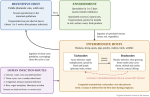
Global background used to interpret the Guinean data: T. gondii has a heteroxenous life cycle (Figure 1). Cats and other felids are the definitive hosts. The parasite reproduces sexually in their intestine and the oocysts are shed in the faeces; they become infectious in the environment within one to five days and can survive for months in moist soil and water [27-29]. Almost all warm-blooded animals, humans included, are intermediate hosts. Once oocysts or tissue cysts are ingested, the tachyzoites multiply, spread through blood and lymph, and can cross the placenta and the blood-brain barrier. Under immune pressure they become bradyzoites and form tissue cysts in the brain, muscle and retina, where they persist for life [27,30,31]. An interferon-gamma dependent cell-mediated response keeps the chronic infection under control [32], which is why the loss of CD4 T cells allows reactivation.
People are infected by swallowing sporulated oocysts in contaminated water, soil or fresh produce, by eating tissue cysts in raw or undercooked meat, or, congenitally, when a woman is infected for the first time during pregnancy [27,33]. Large waterborne outbreaks have been described, for example in Brazil [34]. Proper cooking and freezing reduce the risk, but they are less reliable for large pieces of meat [35]. The risk of mother-to-child transmission rises with gestational age, from roughly 10 to 15% in the first trimester to more than half in the third (up to about 70% in some cohorts), while severity falls [7]. Organ transplantation and laboratory accidents are rare routes [36,37].
Primary infection in immunocompetent people is mostly asymptomatic, or causes a self-limiting lymphadenopathy with fever and malaise [38,39]. In advanced HIV infection, latent cysts reactivate and cause toxoplasmic encephalitis, usually when the CD4 count falls below 100 cells/µL; patients present with focal neurological signs, headache, fever, seizures or altered consciousness [40]. It can also appear after antiretroviral therapy is started [41], and it is usually fatal without treatment [40,42]. Congenital toxoplasmosis can cause miscarriage, hydrocephalus, intracranial calcifications and chorioretinitis. The classical triad is uncommon, and most infected newborns look normal at birth, but they remain at risk of late ocular and neurological sequelae [43-45].
Diagnosis relies mostly on serology, with immunoglobulin G (IgG) and immunoglobulin M (IgM) measured by ELISA or immunofluorescence [46,47]. IgG avidity helps to date an infection, which matters in pregnancy [48,49]. Polymerase chain reaction (PCR) detects parasite deoxyribonucleic acid (DNA) in amniotic fluid and other samples, and loop-mediated isothermal amplification and point-of-care tests are under development [50,51]. We found no published assessment of toxoplasmosis diagnostic capacity in Guinea. Assessments of African laboratories in general show uneven capacity, with limited access to advanced tests outside reference centres [52,53]. Molecular tests and IgG avidity are probably not routinely available in Guinea, but this has not been documented.
Treatment depends on the clinical situation, the gestational age, whether foetal infection is documented, and the guideline followed. We therefore do not give doses here and refer readers to current national and international guidance and to specialist advice. In brief, pyrimethamine with sulfadiazine and folinic acid is the usual first-line treatment of toxoplasmic encephalitis, and trimethoprim-sulfamethoxazole is an alternative that showed similar efficacy in randomised trials [54,55]. In pregnancy, spiramycin is used to reduce placental transmission, and pyrimethamine-sulfadiazine is considered when foetal infection is confirmed or strongly suspected. A systematic review, though, found no randomised trial of treatment in pregnancy or in congenital toxoplasmosis, and the published protocols differ widely [54,56]. In HIV-related encephalitis, relapse rates under pyrimethamine-based maintenance therapy were about 19% before and about 11% after the introduction of Awareness Against Human Trafficking (HAART) [57].
No vaccine is licensed for humans. A live attenuated vaccine is used in sheep to prevent abortion, and several recombinant, DNA and messenger ribonucleic acid (mRNA) candidates are at the preclinical stage [58]. For the foreseeable future, prevention rests on hygiene, food safety, safe water, and counselling or screening in pregnancy.
We found no data on the availability or price of anti-Toxoplasma drugs in Guinea. As an illustration of the regional situation only, a national survey in Chad found an average availability of essential medicines between 39.6% and 67.4% depending on the sector [59]. This is a different country, and the figure must not be read as a measure of drug availability in Guinea.
The main finding of this review is that Guinea has very little published data on toxoplasmosis, and that almost all of it comes from hospitals in Conakry. This limits what can be said. Toxoplasmosis is present and clinically relevant in the country: a seroprevalence of 73% in pregnant women in Coyah in 2013 and repeated hospital reports of cerebral toxoplasmosis in advanced HIV disease show this. How common it is in the general population, or in pregnant women in the other regions, is not known.
One could be tempted to fill these gaps with African averages, which we have chosen not to do. A pooled seroprevalence of about 43% in African pregnant women [15] indicates that high values are common in the region. Yet it comes from countries with different climates, diets and cat populations, and Guinea contributed no data. In the same way, the factors usually linked with exposure (contact with cats, raw meat, raw vegetables) were identified in other African populations [15]. The only Guinean analysis, in Coyah, found no significant association with a cat in the house or with raw milk or meat consumption [8], but with 100 women it had little power; whether these factors drive infection in Guinea therefore remains a hypothesis. The same caution applies to congenital toxoplasmosis. No newborn or antenatal screening data are available, so we cannot say how many children are affected. It is likely that cases are missed, but we cannot show it with the data we have.
The hospital data are more consistent. Toxoplasmosis was among the most frequent discharge diagnoses in patients who died of advanced HIV disease at Donka [10], and mortality was high in every series [9,11,12]. Patients seem to arrive late: in the Donka unit, 69.6% of those admitted had a CD4 count of 200 cells/µL or less [10], and low CD4 counts were also reported in the other series [9,14], and in one series the diagnosis was retained on the clinical response to cotrimoxazole when imaging was not available [9]. Some priorities therefore seem practical: earlier HIV diagnosis, access to cotrimoxazole prophylaxis, and a clear diagnostic and treatment pathway for cerebral toxoplasmosis in infectious disease services. Recording CD4 counts, prophylaxis, and outcomes systematically in these services would be an inexpensive way to improve the available data.
For research, we propose the following order of priorities. First, a seroprevalence survey of pregnant women in several regions, with a standard assay and a sampling plan that allows regional estimates. Second, in the same survey, IgM and avidity testing in a subset, and follow-up of women who seroconvert and of their newborns, to describe recent and congenital infection. Third, an extension of the Coyah observation in cats to livestock and to other regions, with genotyping of any isolate. Fourth, an inventory of laboratory capacity and of the availability and price of drugs. A One Health framework is appropriate, because transmission involves people, animals and the environment, but at this stage, Guinea needs baseline data before integrated interventions. In the meantime, simple messages on food hygiene and contact with cats can be given during antenatal care, as they are cheap and consistent with advice used elsewhere. Treatment decisions should rely on current clinical guidance adapted by Guinean specialists, not on this review.
Limitations: this review has several limits. It is a narrative review, and its search is not systematic and only partly reproducible: Google Scholar was screened without recording the number of results, and some Guinean reports may be missing, in particular theses and other grey literature. No protocol was registered. We did not use a formal risk-of-bias tool, and described the limitations of each Guinea-specific study instead. The Guinean evidence is small, hospital-based, concentrated in Conakry and heterogeneous in method, and for several studies no confidence interval is reported. Some sources are published in regional journals or are institutional reports that are difficult to access, and the contextual statements that rely on them (for example on access to water) could not be checked as thoroughly as the Guinean studies, whose full texts we read. Finally, regional and global sources are used for context, and they must not be read as describing Guinea.
Toxoplasmosis is documented in Guinea, but only in a few places and populations: pregnant women and cats in one prefecture, and people with advanced HIV infection in hospitals in Conakry. The national burden, the burden of congenital toxoplasmosis and the role of animals and of the environment are unknown. The most useful next steps are simple and affordable, namely a multi-region antenatal seroprevalence survey, systematic recording of cerebral toxoplasmosis in HIV services, and an assessment of infection in livestock and in cats outside Coyah, together with diagnostic and drug availability. These data should then guide decisions on screening and on a One Health strategy.
What is known about this topic
- Toxoplasmosis is a common zoonotic infection worldwide, with high seroprevalence in pregnant women in many African countries;
- In people with advanced HIV infection, reactivation causes severe and often fatal toxoplasmic encephalitis;
- Primary infection during pregnancy can lead to congenital infection with serious foetal and neonatal damage.
What this study adds
- To our knowledge, this is the first review focused on toxoplasmosis in Guinea; a PubMed check on 1st November 2026 found no earlier one;
- It gathers the seven Guinea-specific studies that we identified (one also tested cats) and keeps them separate from regional and global evidence;
- Guinean data are limited to hospital series and one antenatal survey; congenital, animal, environmental and molecular data are absent, which defines clear research priorities.
The authors declare no competing interests.
Abdoulaye Oury Barry, Lanan Wassy Soromou, and Eric Ghigo conducted the bibliographic research, analysed the bibliographic data, and wrote and edited the manuscript. All the authors read and approved the final version of this manuscript.
Table 1: Guinea-specific studies on toxoplasmosis identified in this review (all of them are listed)
Table 2: status of the evidence on toxoplasmosis in Guinea, by domain
Figure 1: life cycle of Toxoplasma gondii and routes of human infection
- Beltrame A, Kim K, Weiss LM. Human toxoplasmosis: current advances in the field. Curr Opin Infect Dis. 2025 Oct 1;38(5):392-402. PubMed | Google Scholar
- Carranza-Rodriguez C, Bolanos-Rivero M, Perez-Arellano JL. Toxoplasma gondii Infection in Humans: A Comprehensive Approach Involving the General Population, HIV-Infected Patients and Intermediate-Duration Fever in the Canary Islands, Spain. Diagnostics (Basel). 2024 Apr 12;14(8):809. PubMed | Google Scholar
- Robert-Gangneux F, Darde ML. Epidemiology of and diagnostic strategies for toxoplasmosis. Clin Microbiol Rev. 2012 Apr;25(2):264-96. PubMed | Google Scholar
- Tuazon CU. Toxoplasmosis in AIDS patients. J Antimicrob Chemother. 1989 Jan;23 Suppl A:77-82. PubMed | Google Scholar
- Cerisola A, Francia M, Gesuele JP. Congenital toxoplasmosis. Semin Pediatr Neurol. 2025 Jul;54:101203. PubMed | Google Scholar
- Lorea CF, Pressman K, Schuler-Faccini L. Infections during pregnancy: An ongoing threat. Semin Perinatol. 2025 Jun;49(4):152075. PubMed | Google Scholar
- Dubey JP, Murata FHA, Cerqueira-Cézar CK, Kwok OCH, Villena I. Congenital toxoplasmosis in humans: an update of worldwide rate of congenital infections. Parasitology. 2021 Oct;148(12):1406-1416. PubMed | Google Scholar
- Konate Y, Goumou P, Soromou LW, Diallo AOS, Kaba L, Keyra M et al. Seroprevalence and risk factors of toxoplasmosis in cats and women undergoing prenatal consultation in Coyah, Guinea. J Drug Deliv Ther. 2023;13(4):79-84. Google Scholar
- Sow MS, Sylla K, Cissé D, Cissé FA, Bah I, Cissé K et al. Prognostic factors of cerebral toxoplasmosis in the Department of Infectious and Tropical Diseases at Donka National Hospital. Adv Infect Dis. 2019;9(3):243-251. Google Scholar
- Abdourahimi D, Yehadji D, Briskin E, Khine EM, Arias C, André KS et al. Facteurs associés à la létalité chez les patients hospitalisés pour le VIH avancé. Public Health Action. 2023 Aug 1;13(2 Suppl 1):19-24. PubMed | Google Scholar
- Traoré FA, Cissoko Y, Tounkara TM, Sako FB, Mouelle AD, Kpami DO et al. [Causes of lymphocytic meningitis in people with HIV admitted to the Infectious Disease department of Conakry]. Med Sante Trop. 2015 Jan-Mar;25(1):52-5. PubMed | Google Scholar
- Camara A, Diaby B, Sako FB, Camara AD, Baldé H, Keita M et al. [Causes and characteristics of patient death under ARV at the Dermatology-Venereology Department of the Donka National Hospital, GUINEA]. Mali Med. 2012;27(2):29-34. PubMed | Google Scholar
- Makanéra A, Sidibé S, Camara T, Condé M, Barry AO, Diallo MA et al. Seroprevalence of the triple infection by hepatitis B virus, HIV and Toxoplasma gondii at the China-Guinea Friendship Hospital of Kipé in Conakry. Rev Mali Infect Microbiol. 2024;19(1):1-7.
- Dramou I, Makanéra A, Camara TD, Délamou AB, Traoré S. Seroprevalence of Toxoplasma gondii in people living with HIV/AIDS on antiretroviral therapy. GSC Adv Res Rev. 2026;26(2):21-28.
- Mulu Gelaw Y, Worku Dagnew G, Degu Alene G, Gangneux JP, Robert-Gangneux F. Toxoplasma gondii seroprevalence among pregnant women in Africa: A systematic review and meta-analysis. PLoS Negl Trop Dis. 2024 May 23;18(5):e0012198. PubMed | Google Scholar
- Opintan JA, Awadzi BK, Biney IJK, Ganu V, Doe R, Kenu E et al. High rates of cerebral toxoplasmosis in HIV patients presenting with meningitis in Accra, Ghana. Trans R Soc Trop Med Hyg. 2017 Oct 1;111(10):464-471. PubMed | Google Scholar
- Kanyama C, Kouanfack C, Nyirenda S, Mfinanga S, Kivuyo SL, Beaumont E et al. Causes of HIV-related CNS infection in Cameroon, Malawi, and Tanzania: epidemiological findings from the DREAMM HIV-related CNS implementation study. Lancet Glob Health. 2025 Feb;13(2):e345-e354. PubMed | Google Scholar
- Cook EAJ, Gitahi N, de Glanville WA, Thomas LF, Kariuki S, Kang'ethe E et al. Prevalence and risk factors for exposure to Toxoplasma gondii in slaughterhouse workers in western Kenya. BMC Infect Dis. 2021 Sep 11;21(1):944. PubMed | Google Scholar
- Tonouhewa AB, Akpo Y, Sessou P, Adoligbe C, Yessinou E, Hounmanou YG et al. Toxoplasma gondii infection in meat animals from Africa: Systematic review and meta-analysis of sero-epidemiological studies. Vet World. 2017 Feb;10(2):194-208. PubMed | Google Scholar
- Hamidović A, Etougbétché JR, Tonouhewa ABN, Galal L, Dobigny G, Houémènou G et al. A hotspot of Toxoplasma gondii Africa 1 lineage in Benin: How new genotypes from West Africa contribute to understand the parasite genetic diversity worldwide. PLoS Negl Trop Dis. 2021 Feb 11;15(2):e0008980. PubMed | Google Scholar
- Mercier A, Devillard S, Ngoubangoye B, Bonnabau H, Bañuls AL, Durand P et al. Additional haplogroups of Toxoplasma gondii out of Africa: population structure and mouse-virulence of strains from Gabon. PLoS Negl Trop Dis. 2010 Nov 2;4(11):e876. PubMed | Google Scholar
- Račka K, Bártová E, Hamidović A, Plault N, Kočišová A, Camacho G et al. First detection of Toxoplasma gondii Africa 4 lineage in a population of carnivores from South Africa. Front Cell Infect Microbiol. 2024 Jan 30;14:1274577. PubMed | Google Scholar
- WHO/UNICEF Joint Monitoring Programme for Water Supply, Sanitation and Hygiene. Progress on household drinking water, sanitation and hygiene 2000-2024: special focus on inequalities. Geneva: World Health Organization and United Nations Children's Fund. 2025. Google Scholar
- Camara BS, Benova L, Delvaux T, Sidibé S, El Ayadi AM, Grietens KP et al. Women's progression through the maternal continuum of care in Guinea: Evidence from the 2018 Guinean Demographic and Health Survey. Trop Med Int Health. 2021 Nov;26(11):1446-1461. PubMed | Google Scholar
- Leno NN, Leno DWA, Sow A, Kambadouno G, Camara A, Mayaka S et al. State of the maternal healthcare continuum in Guinea, awaiting the next Demographic and Health Survey: the case of the five communes of Conakry in 2022. Front Reprod Health. 2024 Sep 12;6:1324011. PubMed | Google Scholar
- Camara BS, De Kok B, Delvaux T, Delamou A, Grietens KP, Gerrits T. Navigating health system constraints and risks for childbirth care in rural Guinea: the role of women's agency. Crit Public Health. 2025;35(1):2484339. Google Scholar
- Tenter AM, Heckeroth AR, Weiss LM. Toxoplasma gondii: from animals to humans. Int J Parasitol. 2000 Nov;30(12-13):1217-58. PubMed | Google Scholar
- Arranz-Solís D, Warschkau D, Fabian BT, Seeber F, Saeij JPJ. Late Embryogenesis Abundant Proteins Contribute to the Resistance of Toxoplasma gondii Oocysts against Environmental Stresses. mBio. 2023 Apr 25;14(2):e0286822. PubMed | Google Scholar
- Pinto-Ferreira F, Paschoal ATP, Pasquali AKS, Bernardes JC, Caldart ET, Freire RL et al. Techniques for inactivating Toxoplasma gondii oocysts: a systematic review. Rev Bras Parasitol Vet. 2021 May 28;30(2):e026420. PubMed | Google Scholar
- Attias M, Teixeira DE, Benchimol M, Vommaro RC, Crepaldi PH, De Souza W. The life-cycle of Toxoplasma gondii reviewed using animations. Parasit Vectors. 2020 Nov 23;13(1):588. PubMed | Google Scholar
- Sullivan WJ Jr, Jeffers V. Mechanisms of Toxoplasma gondii persistence and latency. FEMS Microbiol Rev. 2012 May;36(3):717-33. PubMed | Google Scholar
- Dupont CD, Christian DA, Hunter CA. Immune response and immunopathology during toxoplasmosis. Semin Immunopathol. 2012 Nov;34(6):793-813. PubMed | Google Scholar
- Shapiro K, Bahia-Oliveira L, Dixon B, Dumètre A, de Wit LA, VanWormer E et al. Environmental transmission of Toxoplasma gondii: Oocysts in water, soil and food. Food Waterborne Parasitol. 2019 Apr 1;15:e00049. PubMed | Google Scholar
- Fernandes FD, Samoel GVA, Guerra RR, Bräunig P, Machado DWN, Cargnelutti JF et al. Five years of the biggest outbreak of human toxoplasmosis in Santa Maria, Brazil: a review. Parasitol Res. 2023 Dec 29;123(1):76. PubMed | Google Scholar
- Mirza Alizadeh A, Jazaeri S, Shemshadi B, Hashempour-Baltork F, Sarlak Z, Pilevar Z et al. A review on inactivation methods of Toxoplasma gondii in foods. Pathog Glob Health. 2018 Sep;112(6):306-319. PubMed | Google Scholar
- Herwaldt BL. Laboratory-acquired parasitic infections from accidental exposures. Clin Microbiol Rev. 2001 Oct;14(4):659-88. PubMed | Google Scholar
- Martina MN, Cervera C, Esforzado N, Linares L, Torregrosa V, Sanclemente G et al. Toxoplasma gondii primary infection in renal transplant recipients. Two case reports and literature review. Transpl Int. 2011 Jan;24(1):e6-12. PubMed | Google Scholar
- Hammadi SA, Al-Anbari AJK, Al-Alosi BM. Toxoplasma Lymphadenopathy: A Comparative Diagnostic Assessment of Clinical, Serological and Histopathological Findings. Iran J Otorhinolaryngol. 2023 May;35(128):157-163. PubMed | Google Scholar
- Montoya JG, Liesenfeld O. Toxoplasmosis. Lancet. 2004 Jun 12;363(9425):1965-76. PubMed
- Vidal JE. HIV-Related Cerebral Toxoplasmosis Revisited: Current Concepts and Controversies of an Old Disease. J Int Assoc Provid AIDS Care. 2019 Jan-Dec;18:2325958219867315. PubMed | Google Scholar
- Kubono Y, Kawashima A, Nakamoto T, Kawahara F, Kuwata R, Inoue E et al. Toxoplasmic encephalitis unmasked during treatment for miliary tuberculosis in a patient with human immunodeficiency virus infection: a case report and literature review. Trop Med Health. 2025 Dec 1;53(1):178. PubMed | Google Scholar
- Dedicoat M, Livesley N. Management of toxoplasmic encephalitis in HIV-infected adults (with an emphasis on resource-poor settings). Cochrane Database Syst Rev. 2006 Jul 19;2006(3):CD005420. PubMed | Google Scholar
- Singh S. Congenital toxoplasmosis: Clinical features, outcomes, treatment, and prevention. Trop Parasitol. 2016 Jul-Dec;6(2):113-122. PubMed | Google Scholar
- Garweg JG, Kieffer F, Mandelbrot L, Peyron F, Wallon M. Long-Term Outcomes in Children with Congenital Toxoplasmosis-A Systematic Review. Pathogens. 2022 Oct 15;11(10):1187. PubMed | Google Scholar
- Bollani L, Auriti C, Achille C, Garofoli F, De Rose DU, Meroni V, et al. Congenital Toxoplasmosis: The State of the Art. Front Pediatr. 2022;10:894573. PubMed | Google Scholar
- Villard O, Cimon B, L'Ollivier C, Fricker-Hidalgo H, Godineau N, Houze S et al. Serological diagnosis of Toxoplasma gondii infection: Recommendations from the French National Reference Center for Toxoplasmosis. Diagn Microbiol Infect Dis. 2016 Jan;84(1):22-33. PubMed | Google Scholar
- Naghili B, Abbasalizadeh S, Tabrizi S, Rajaii M, Akramiyan M, Alikhah H et al. Comparison of IIF, ELISA and IgG avidity tests for the detection of anti-Toxoplasma antibodies in single serum sample from pregnant women. Infez Med. 2017 Mar 1;25(1):50-56. PubMed | Google Scholar
- Teimouri A, Mohtasebi S, Kazemirad E, Keshavarz H. Role of Toxoplasma gondii IgG Avidity Testing in Discriminating between Acute and Chronic Toxoplasmosis in Pregnancy. J Clin Microbiol. 2020 Aug 24;58(9):e00505-20. PubMed | Google Scholar
- Jenum PA, Stray-Pedersen B, Gundersen AG. Improved diagnosis of primary Toxoplasma gondii infection in early pregnancy by determination of antitoxoplasma immunoglobulin G avidity. J Clin Microbiol. 1997 Aug;35(8):1972-7. PubMed | Google Scholar
- Lau YL, Meganathan P, Sonaimuthu P, Thiruvengadam G, Nissapatorn V, Chen Y. Specific, sensitive, and rapid diagnosis of active toxoplasmosis by a loop-mediated isothermal amplification method using blood samples from patients. J Clin Microbiol. 2010 Oct;48(10):3698-702. PubMed | Google Scholar
- Gomez CA, Budvytyte LN, Press C, Zhou L, McLeod R, Maldonado Y et al. Evaluation of Three Point-of-Care Tests for Detection of Toxoplasma Immunoglobulin IgG and IgM in the United States: Proof of Concept and Challenges. Open Forum Infect Dis. 2018 Oct 29;5(10):ofy215. PubMed | Google Scholar
- Ashenafi A, Sule O, Peter T, Mashate S, Otieno O, Kebede A et al. Diagnostics for detection and surveillance of priority epidemic-prone diseases in Africa: an assessment of testing capacity and laboratory strengthening needs. Front Public Health. 2024 Sep 18;12:1438334. PubMed | Google Scholar
- Mfuh KO, Abanda NN, Titanji BK. Strengthening diagnostic capacity in Africa as a key pillar of public health and pandemic preparedness. PLOS Glob Public Health. 2023 Jun 13;3(6):e0001998. PubMed | Google Scholar
- Rajapakse S, Chrishan Shivanthan M, Samaranayake N, Rodrigo C, Deepika Fernando S. Antibiotics for human toxoplasmosis: a systematic review of randomized trials. Pathog Glob Health. 2013 Jun;107(4):162-9. PubMed | Google Scholar
- Dunay IR, Gajurel K, Dhakal R, Liesenfeld O, Montoya JG. Treatment of Toxoplasmosis: Historical Perspective, Animal Models, and Current Clinical Practice. Clin Microbiol Rev. 2018 Sep 12;31(4):e00057-17. PubMed | Google Scholar
- Ribeiro SK, Mariano IM, Cunha ACR, Pajuaba ACAM, Mineo TWP, Mineo JR. Treatment Protocols for Gestational and Congenital Toxoplasmosis: A Systematic Review and Meta-Analysis. Microorganisms. 2025 Mar 24;13(4):723. PubMed | Google Scholar
- Connolly MP, Goodwin E, Schey C, Zummo J. Toxoplasmic encephalitis relapse rates with pyrimethamine-based therapy: systematic review and meta-analysis. Pathog Glob Health. 2017 Feb;111(1):31-44. PubMed | Google Scholar
- Zhang Y, Li D, Lu S, Zheng B. Toxoplasmosis vaccines: what we have and where to go? NPJ Vaccines. 2022 Oct 31;7(1):131. PubMed | Google Scholar
- Ragomzingba FEZ, Haroun SH, Ngabéré C, Borgnol A, Yoyammel M, Kadai AO et al. National availability, prices and affordability of essential medicines: a comprehensive analysis using WHO/HAI methodology in Chad. The Pan African Medical Journal. 2025;51:72. PubMed | Google Scholar
Search
This article authors
On Pubmed
On Google Scholar
Citation [Download]
Navigate this article
Similar articles in
Key words
Tables and figures

Article metrics
Recently from the PAMJ


Authors´ services