Prevalence and factors associated with hyperglycemia among adolescents living with HIV on a dolutegravir-based regimen attending the Pediatric HIV Clinic at Bugando Medical Centre, Mwanza, Tanzania: a cross-sectional study
Irene Abel Kyungai, Judith John Gwimile, Rwezaula Azalias Raphael, Neema Passian Chami, Julieth Nachone Kabirigi, Epaphura Festo Manyama, Delfina Robert Msanga, Tulla Sylvester Masoza
Corresponding author: Tulla Sylvester Masoza, Department of Pediatrics and Child Health, Catholic University of Health and Allied Sciences, Bugando, Mwanza, Tanzania 
Received: 13 Jan 2026 - Accepted: 29 May 2026 - Published: 27 Aug 2026
Domain: HIV epidemiology,Pediatrics (general)
Keywords: Dolutegravir, hyperglycemia, factors associated, adolescents living with HIV, Tanzania
Funding: This work received no specific grant from any funding agency in the public, commercial, or non-profit sectors.
©Irene Abel Kyungai et al. Pan African Medical Journal (ISSN: 1937-8688). This is an Open Access article distributed under the terms of the Creative Commons Attribution International 4.0 License (https://creativecommons.org/licenses/by/4.0/), which permits unrestricted use, distribution, and reproduction in any medium, provided the original work is properly cited.
Cite this article: Irene Abel Kyungai et al. Prevalence and factors associated with hyperglycemia among adolescents living with HIV on a dolutegravir-based regimen attending the Pediatric HIV Clinic at Bugando Medical Centre, Mwanza, Tanzania: a cross-sectional study. Pan African Medical Journal. 2026;54:147. [doi: 10.11604/pamj.2026.54.147.51038]
Available online at: https://www.panafrican-med-journal.com//content/article/54/147/full
 PDF in process
 Research 

Prevalence and factors associated with hyperglycemia among adolescents living with HIV on a dolutegravir-based regimen attending the Pediatric HIV Clinic at Bugando Medical Centre, Mwanza, Tanzania: a cross-sectional study
Prevalence and factors associated with hyperglycemia among adolescents living with HIV on a dolutegravir-based regimen attending the Pediatric HIV Clinic at Bugando Medical Centre, Mwanza, Tanzania: a cross-sectional study
Irene Abel Kyungai1, Judith John Gwimile2, Rwezaula Azalias Raphael1, Neema Passian Chami2, Julieth Nachone Kabirigi2, Epaphura Festo Manyama2, Delfina Robert Msanga1, Tulla Sylvester Masoza1,&
&Corresponding author
Introduction: introduction of dolutegravir-based therapy has offered a powerful treatment choice for children and adolescents living with human immunodeficiency virus (HIV). Nevertheless, there is increasing evidence among adults living with HIV suggesting that prolonged use of dolutegravir could lead to hyperglycemia. Evidence among adolescents is still limited, especially in sub-Saharan Africa where the majority reside.
Methods: a cross-sectional study was conducted among 345 adolescents living with HIV on a dolutegravir-based regimen attending the Pediatric HIV Clinic at Bugando Medical Centre in Mwanza, Tanzania. Data were collected using a standardized questionnaire. Hyperglycemia was diagnosed as fasting blood glucose ≥ 7 mmo/l. To determine factors associated with hyperglycemia, multivariable logistic analysis was performed using STATA version 15.
Results: among 345 adolescents, 178/345 (51.6%) were females with a median age of 13 (IQR 10-15) years. The prevalence of hyperglycemia was 9.0%. In multivariable logistic analysis, factors significantly associated with hyperglycemia among the study participants were: missing antiretroviral therapy dose(s) within the past 30 days (aOR: 6.05, 95% CI 2.17-16.85.0; P = 0.001) and previous regimen with protease inhibitor (aOR: 3.48, 95% CI 1.38-8.74; P = 0.008).
Conclusion: the study found that 9.0% of adolescents living with HIV on a dolutegravir-based regimen had hyperglycemia. We recommend regular blood glucose monitoring among adolescents living with HIV on a dolutegravir regimen, especially those who have poor antiretroviral therapy (ART) adherence and used protease inhibitors in the previous regimen.

The introduction of antiretroviral treatment (ART) has led to a dramatic decline in HIV acquired immunodeficiency syndrome (AIDS), which is associated with disease and fatality. This has directly changed the HIV outlook, from a killer condition to a chronic, controllable infectious disease [1]. The World Health Organization (WHO) recommended the initiation of ART among People living with HIV (PLWHIV) regardless of their CD4 count since 2016. dolutegravir (DTG), an integrase strand transfer inhibitor (INSTI), was recommended by the WHO to be used as the first line of treatment for children and adolescents living with HIV in sub-Saharan Africa [2,3] in 2019, after its introduction among adults LWHIV. Dolutegravir was recommended due to its improved virological suppression and pharmacological efficacy compared to protease inhibitors and non-nucleoside reverse transcriptase inhibitors [4,5]. DTG possesses unique features compared to other INSTI drugs, such as an unboosted daily dose, long duration of action, improved barrier to resistance, and minimal resistance to the first generation [6]. The drug is included in the first-line and second-line regimen by substituting the previous therapeutic regimen that had lesser efficacy and increased toxicities.
Recent data among adults LWHIV have shown an association between the use of DTG and the development of hyperglycemia [7,8]. However, there is limited data among adolescents LWHIV, especially in sub-Saharan Africa where the majority reside. Unlike hypoglycemia, hyperglycemia is often initially asymptomatic. Uncontrolled hyperglycemia is usually associated with progressive occurrence of microvascular and macrovascular complications through enhanced oxidative stress that contribute to increased morbidity and mortality among those affected [9,10]. Understanding the epidemiology of hyperglycemia among adolescents LWHIV on DTG will not only provide the baseline magnitude in our setting but also identify adolescents at risk, hence providing room for early screening, intervention, and follow-up. Therefore, this study aimed to determine the prevalence of hyperglycemia and associated factors among adolescents LWHIV on a DTG regimen attending the Pediatric HIV Clinic at the Bugando Medical Centre in Mwanza, Tanzania.

Study design and setting: this was an analytical cross-sectional study conducted at the Pediatric HIV Clinic of Bugando Medical Centre (BMC), which is located along the shores of Lake Victoria in Mwanza City, Tanzania. BMC is a tertiary referral, consultant, and university teaching hospital for the Lake and Western zones of the United Republic of Tanzania. It is a tertiary referral hospital for specialized care for eight regions, namely, Mwanza, Geita, Shinyanga, Mara, Kagera, Simuyu, Tabora, and Kigoma. BMC serves a catchment population of over 22 million people, approximately one-third of Tanzania's population. The hospital offers a variety of specialized care, including HIV care and treatment for both pediatric and adult populations. The pediatric HIV clinic renders service to a catchment population of approximately 1200 children and adolescents LWHIV from within and outside Mwanza City.
Study population: this study involved 10-17 years old adolescents living with HIV (LWHIV) on a DTG-based regimen who provided assent with parent/guardian's written informed consent. Adolescents with known diabetes mellitus and those on steroids were excluded. Sample size was calculated using the Kish-Leslie formula using the prevalence of 29% from a study by Nkinda L et al. [11]. The minimum sample size estimated was 443 participants, who were sequentially recruited into the study.
Data collection: data were collected using a structured coded questionnaire which included socio-demographic variables (age, sex, residence, and level of education) and lifestyle behaviors. Information on physical activity, cigarette smoking, alcohol consumption, and fruits and vegetable intake was adapted from the WHO STEPS questionnaire [12]. Data collected on HIV included: DTG duration, history of missed ART doses(s) in the past 30 days, use of protease inhibitors in previous regimen, recent CD4 count and HIV viral load. A physical examination was also performed to obtain height, weight, body mass index (BMI), and blood pressure. Participants' weight was measured using a digital weight scale (876 flat scale, Seca, Hamburg, Germany) while standing upright and barefoot with light clothing. Height was measured using a portable stadiometer (213 stadiometer, Seca) while standing barefoot in an upright posture. BMI for age z-scores for boys and girls were calculated using WHO growth reference charts to determine the nutritional status of the participants. Blood pressure was measured using the automated OMRO HEM-907XL BP machine (OMRON Corporation, Kyoto, Japan) using an algorithm adopted from the 2017 American Academy of Pediatrics (AAP) guidelines for Screening and Management of High Blood Pressure in Children and Adolescents [13].
To obtain fasting blood glucose (FBG) measurements, participants were instructed to fast overnight, with the last meal consumed between 8 and 10 hours before the test. Measurement of fasting blood glucose was done by using a finger-prick blood sample with an Accu-Chek® glucometer (Roche Diagnostics, Mannheim, Germany) according to the manufacturer's instructions. The procedure was first explained to the participants, after which the finger was cleaned, followed by a gentle prick. A drop of blood was placed on the disposable test strip, and the blood glucose was read off the glucometer in mmol/L within 5 seconds.
Definitions: hyperglycemia was defined as fasting blood glucose above or equal to 7mmo/l [14]; normal nutritional status was considered if BMI for age z- score of < +1SD to < -2SD, overweight: BMI for age z- score of > +1SD, obesity: BMI for age z- score of > +2 SD and underweight: BMI for age z- score of <-2SD [15]; systolic blood pressure (SBP) and diastolic blood pressure (DBP) was regarded elevated if respective averaged SBP and DBP readings were greater than or equal to the 90th percentile for participants under 13 years old or greater than or equal to 120/80 mmHg for participants 13 years and older; according to the 2017 American Academy of Pediatrics (AAP) guideline [13].
Statistical analysis: data were analyzed using STATA version 15 (College Station, TX: StataCorp LP). Categorical variables were summarized in proportions and frequency tables, and continuous variables were summarized using median and interquartile range. Factors associated with hyperglycemia using both univariable and multivariable logistic regression. Variables identified in the univariable analysis with a p-value < 0.20 were subsequently included in the multivariable logistic regression model. Finally, those factors with p-value of less than 0.05 were considered statistically significant. Odds ratios with respective 95% confidence intervals (CI) were reported as well.
Ethical considerations: written consent and verbal assent were obtained from parents/guardians and adolescents, respectively, before enrollment. Study information, including procedures, risks, and benefits, was explained to patients/caregivers and adolescents before they agreed to participate. The approval for the research proposal was sought from the joint BMC/CUHAS research ethics and review committee with certificate CREC/743/2024. This joint committee includes members from both the hospital (Bugando Medical Centre) and the university (Catholic University of Health and Allied Sciences (CUHAS)).
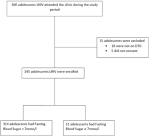
Study enrollment and participants characteristics: from January to March 2024, a total of three hundred and sixty adolescents living with HIV attended the Pediatric HIV Clinic at BMC. Fifteen adolescents were excluded for not meeting inclusion criteria, as depicted in Figure 1. Of the enrolled participants, the median age was 13 (IQR 10-15) years, and a slight majority were female 178/345 (51.6%). None of the participants reported a history of alcohol use or cigarette smoking. All participants reported consuming fruits or vegetables at least once per day in a given week. Other characteristics are summarized in Table 1.
Clinical characteristics of the participants: most participants, 321/345 (93.0%), were virologically suppressed with a viral load count below 1000 copies/ml. Similarly, about 337/345 (97.7%) of participants had a CD4+ T Cell count ≥ 350cell/mm3. Participants were on a DTG regimen for a median duration of 4 (IQR 2-4) years. Other characteristics are shown in Table 2.
Prevalence and factors associated with hyperglycemia among participants: out of 345 participants, 31 (9.0%) were found to have hyperglycemia. In the multivariable logistic regression analysis, factors that were significantly associated with hyperglycemia were: having missed ART dose(s) within the past 30 days (aOR: 6.05, 95% CI 2.17-16.85.0; P =0.001) and previous regimen with Protease Inhibitor (aOR: 3.48, 95% CI 1.38-8.74; P =0.008), as shown in Table 3.
This study aimed to determine the prevalence and associated factors with hyperglycemia among adolescents LWHIV on a DTG regimen attending the Pediatric HIV Clinic at Bugando Medical Centre in Mwanza, Tanzania. We report a 9.0% prevalence of hyperglycemia, and factors associated with hyperglycemia in this population were the use of a protease inhibitor in the previous ART regimen and missing ART dose(s) within the past 30 days.
Studies conducted previously among children and adolescents LWHIV across sub-Saharan Africa have reported varying prevalence of hyperglycemia [11,16-20], with the highest and lowest being 40% [18], and 2.6% [20] respectively. Overall, these studies show that the differences in diagnostic approaches and study population parameters might have influenced differences in the reported prevalence estimates. For instance, while the current study only enrolled adolescents (10-17 years) on DTG, the study at the Muhimbili National Hospital included participants on varied ART regimens [11], the study in Uganda by Akello F et al. included both children and adolescents under 18 years [16], while Ayanful-Torgby et al. in Ghana enrolled a wider age range (6-18 years) [17]. Likewise, while our study employed an American Diabetes Association (ADA) recommended cutoff of ≥7.0 mmol/L [14], the study at Muhimbili used a cutoff of ≥6.1 mmol/L [11], while Akello et al. and Ayanfulet et al. employed multiple diagnostic tools, including FBG, random blood glucose (RBG), and hemoglobin A1c (HbA1c) [16,17]. Nevertheless, findings from the current study underscore the importance of routine screening for hyperglycemia among adolescents LWHIV receiving DTG-based regimens.
In this study, we observed an association between hyperglycemia and previous use of a protease inhibitor-based ART regimen. Studies have reported hyperglycemia or diabetes mellitus as a side effect of Protease Inhibitors that could possibly occur within the early months of treatment [21-23]. The impaired glucose metabolism with regard to the use of protease inhibitors is thought to occur through peripheral insulin resistance in the adipose tissue and skeletal muscle and through decline in pancreatic beta cell function [24]. Possibility of developing new onset diabetes have been reported in individuals who were initially on NNRTIs or PI based regimen and transitioned to DTG based regimen, however this is reported on case basis [25,26]. The shift from a PI-based to DTG-based ART could unmask residual insulin resistance and possibly increase the odds of overt hyperglycemia. This finding suggests that adolescents who were on a PI-based regimen before being shifted to a DTG-based regimen should be routinely screened for hyperglycemia. Moreover, adolescents who are still on a PI-based regimen for one reason or the other may similarly benefit from routine screening for hyperglycemia.
We also document an association between hyperglycemia and history of missing ART doses in the past 30 days. Adolescents who missed doses had four times higher odds of experiencing hyperglycemia compared to those who reported not missing any doses. Missing ART medications has been linked to increased inflammation, driven by higher viral replication and immune activation, which in turn stimulates the release of TNF-α, IL-6, and IL-8. These factors contribute to T-cell depletion and heightened insulin resistance [27]. ART interruptions have been reported as a risk for diabetes mellitus/impaired fasting glucose in adults living with HIV as well [28]. Among adolescents LWHIV, Nkinda et al. found that poor ART drug adherence was higher among those with impaired fasting glucose; however, this finding was not statistically significant [11]. This finding underscores the importance and necessity of strict adherence to ART in order to minimize inflammation and accompanying metabolic complications.
Our study had some limitations. First, being cross-sectional in design, causal relationship between outcome and risk factors could not be ascertained. Second, generalizability of the study findings to other populations might be limited as the study was done in a single center. Third, recall bias may have affected some variables, and lastly, lack of comprehensive assessment of hyperglycemia with methods such as HbA1c measurements limited the ability to determine long-term glycemic control status.
About 9.0% of adolescents living with HIV on a DTG-based regimen attending Bugando Medical Centre have hyperglycemia. Regular blood glucose monitoring among adolescents living with HIV on DGT regimen is warranted, particularly among those who have poor ART adherence and used Protease Inhibitors in the previous ART regimen.
What is known about this topic
- World Health Organization recommends dolutegravir, an integrase strand transfer inhibitor (INSTI) antiretroviral, as first-line treatment due to its higher potency and higher resistance barrier;
- Studies among adults LWHIV have reported onset of hyperglycemia following the initiation of DTG; studies in adolescents LWHIV are scarce;
- Untreated persistent high blood sugar levels lead to both short- and long-term complications.
What this study adds
- Impaired glucose metabolism is present among adolescents LWHIV on a DTG-based regimen;
- Routine screening for hyperglycemia should be considered for all adolescents on dolutegravir;
- In resource-limited settings, screening for hyperglycemia in adolescents LHIV could be prioritized to those with poor ART adherence and prior exposure to Protease Inhibitors.
The authors declare no competing interests.
Conception and study design: Irene Abel Kyungai, Judith John Gwimile, Delfina Robert Msanga, Rwezaula Azalias Raphael, Julieth Nachone Kabirigi, Neema Passian Chami, Epaphura Festo Manyama, and Tulla Sylvester Masoza; data collection and manuscript drafting: Irene Abel Kyungai; data analysis and interpretation: Irene Abel Kyungai, Judith John Gwimile, and Tulla Sylvester Masoza; manuscript revision: Judith John Gwimile, Delfina Robert Msanga, Rwezaula Azalias Raphael, Julieth Nachone Kabirigi, Neema Passian Chami, Epaphura Festo Manyama, and Tulla Sylvester Masoza. All the authors read and approved the final version of this manuscript.
The authors would like to acknowledge the parents/guardians and participants for their involvement in the study. Our gratitude goes as well to the members of the Department of Pediatrics and Child Health at BMC for the expert support provided.
Table 1: sociodemographic and other baseline characteristics of 345 adolescents living with HIV on DTG regimen attending the Pediatric HIV Clinic at Bugando Medical Centre (Tanzania), from January to March 2024
Table 2: clinical characteristics of 345 adolescents living with HIV on DTG regimen attending the Pediatric HIV Clinic at Bugando Medical Centre (Tanzania), from January to March 2024
Table 3: factors associated with hyperglycemia among 345 adolescents living with HIV on DTG regimen attending the Pediatric HIV Clinic at Bugando Medical Centre (Tanzania), from January to March 2024
Figure 1: study enrollment flow chart of 345 adolescents living with HIV on DTG regimen attending the Pediatric HIV Clinic at Bugando Medical Centre (Tanzania), from January to March 2024
- Palella FJ Jr, Delaney KM, Moorman AC, Loveless MO, Fuhrer J, Satten GA et al. Declining morbidity and mortality among patients with advanced human immunodeficiency virus infection. HIV Outpatient Study Investigators. N Engl J Med. 1998 Mar 26;338(13):853-60. PubMed | Google Scholar
- World Health Organization. WHO recommends dolutegravir as preferred HIV treatment option in all populations. 2019. Accessed 7th January, 2026.
- Chandasana H, Thapar M, Hayes S, Baker M, Gibb DM, Turkova A et al. Population Pharmacokinetic Modeling of Dolutegravir to Optimize Pediatric Dosing in HIV-1-Infected Infants, Children, and Adolescents. Clin Pharmacokinet. 2023 Oct;62(10):1445-1459. PubMed | Google Scholar
- Townsend CL, O'Rourke J, Milanzi E, Collins IJ, Judd A, Castro H et al. Effectiveness and safety of dolutegravir and raltegravir for treating children and adolescents living with HIV: a systematic review. J Int AIDS Soc. 2022 Nov;25(11):e25970. PubMed | Google Scholar
- Bacha JM, Dlamini S, Anabwani F, Gwimile J, Kanywa JB, Farirai J et al. Realizing the Promise of Dolutegravir in Effectively Treating Children and Adolescents Living With HIV in Real-world Settings in 6 Countries in Eastern and Southern Africa. Pediatr Infect Dis J. 2023 Jul 1;42(7):576-581. PubMed | Google Scholar
- Fantauzzi A, Mezzaroma I. Dolutegravir: clinical efficacy and role in HIV therapy. Ther Adv Chronic Dis. 2014 Jul;5(4):164-77. PubMed | Google Scholar
- Odenyo JA, Mugendi GA, Nyamu DG, Okiko AA. Dolutegravir Associated glycaemia Among Persons with HIV on Treatment at a Kenyan Referral Hospital. East Afr Health Res J. 2024;8(3):387-393. PubMed | Google Scholar
- Hirigo AT, Gutema S, Eifa A, Ketema W. Experience of dolutegravir-based antiretroviral treatment and risks of diabetes mellitus. SAGE Open Med Case Rep. 2022 Feb 23;10:2050313X221079444. PubMed | Google Scholar
- Resnick HE, Howard BV. Diabetes and cardiovascular disease. Annu Rev Med. 2002;53:245-67. PubMed | Google Scholar
- Fowler MJ. Microvascular and macrovascular complications of diabetes. Clin diabetes. 2008 Apr 1;26(2):77-82. Google Scholar
- Nkinda L, Buberwa E, Memiah P, Ntagalinda A, George M, Msafiri F et al. Impaired fasting glucose levels among perinatally HIV-infected adolescents and youths in Dar es Salaam, Tanzania. Front Endocrinol (Lausanne). 2022 Dec 6;13:1045628. PubMed | Google Scholar
- World Health Organization. WHO STEPS Instrument Question-by-Question Guide (Core and Expanded). 2008. Accessed 8th January, 2026.
- Flynn JT, Kaelber DC, Baker-Smith CM, Blowey D, Carroll AE, Daniels SR et al. Clinical Practice Guideline for Screening and Management of High Blood Pressure in Children and Adolescents. Pediatrics. 2017 Sep;140(3):e20171904. PubMed | Google Scholar
- Chiang JL, Maahs DM, Garvey KC, Hood KK, Laffel LM, Weinzimer SA et al. Type 1 Diabetes in Children and Adolescents: A Position Statement by the American Diabetes Association. Diabetes Care. 2018 Sep;41(9):2026-2044. PubMed | Google Scholar
- World Health Organization. Growth reference 5-19 years: Indicators: BMI-for-age (5-19 years). Accessed 15th February, 2026.
- Akello F, Nalwanga D, Musiime V, Kiguli S. Dolutegravir-related hyperglycemia among children and adolescents< 18 years in Northern and Eastern Uganda: A cross-sectional study. medRxiv. 2023 Dec 6:2023-12. Google Scholar
- Ayanful-Torgby R, Shabanova V, Essuman AA, Boafo E, Aboagye F, Al-Mahroof Y et al. High prevalence of impaired glucose metabolism among children and adolescents living with HIV in Ghana. HIV Med. 2024;25(5):577-586. PubMed | Google Scholar
- Francisco K, Pole B, Tchiva S, Ngwiri T, Nduati R, Mungai L. Insulin resistance and glucose intolerance in HIV infected children on antiretroviral therapy at lubango pediatric hospital-Angola. Int J Virol AIDS. 2020;7(071):10-23937. Google Scholar
- Ohuche IO, Chikani UN, Oyenusi EE, Onu JU, Oduwole A. Correlates of fasting blood glucose among children living with hiv in a Nigerian tertiary hospital: a cross-sectional study. BMC Pediatr. 2020 Oct 2;20(1):458. PubMed | Google Scholar
- Oyenusi EE, Micondo KH, Dainguy ME, Abodo RJ, Folquet MA, Oduwolé AO. Fasting blood glucose profile of children living with HIV taking first-line antiretroviral treatment in Abidjan, cote D'Ivoire: A cross-sectional study. Romanian Journal of Diabetes Nutrition and Metabolic Diseases. 2020 Aug 13;27(2):90-8. Google Scholar
- Gómez-Vera J, de Alarcón A, Jiménez-Mejías ME, Acosta D, Prados D, Viciana P. Hyperglycemia associated with protease inhibitors in HIV-1-infected patients. Clin Microbiol Infect. 2000 Jul;6(7):391-94. PubMed | Google Scholar
- Kaufman MB, Simionatto C. A review of protease inhibitor-induced hyperglycemia. Pharmacotherapy. 1999 Jan;19(1):114-7. PubMed | Google Scholar
- Tsiodras S, Mantzoros C, Hammer S, Samore M. Effects of protease inhibitors on hyperglycemia, hyperlipidemia, and lipodystrophy: a 5-year cohort study. Arch Intern Med. 2000 Jul 10;160(13):2050-6. PubMed | Google Scholar
- Woerle HJ, Mariuz PR, Meyer C, Reichman RC, Popa EM, Dostou JM et al. Mechanisms for the Deterioration in Glucose Tolerance Associated With HIV Protease Inhibitor Regimens. Diabetes. 2003 Apr;52(4):918-25. PubMed | Google Scholar
- Kostov K. Effects of Magnesium Deficiency on Mechanisms of Insulin Resistance in Type 2 Diabetes: Focusing on the Processes of Insulin Secretion and Signaling. Int J Mol Sci. 2019 Mar 18;20(6):1351. PubMed | Google Scholar
- McLaughlin M, Walsh S, Galvin S. Dolutegravir-induced hyperglycaemia in a patient living with HIV. J Antimicrob Chemother. 2018 Jan 1;73(1):258-260. PubMed | Google Scholar
- Brown TT, Tassiopoulos K, Bosch RJ, Shikuma C, McComsey GA. Association between systemic inflammation and incident diabetes in HIV-infected patients after initiation of antiretroviral therapy. Diabetes Care. 2010 Oct;33(10):2244-9. PubMed | Google Scholar
- Geteneh A, Muhammed S, Tadesse S, Tesfaye A, Rega S, Biset S et al. Diabetes mellitus among HIV patients on ART at Woldia comprehensive specialized hospital, Northeast Ethiopia. Sci Rep. 2025 Mar 29;15(1):10877. PubMed | Google Scholar
Search
This article authors
On Pubmed
On Google Scholar
Citation [Download]
Navigate this article
Similar articles in
Key words
Tables and figures

Article metrics
Recently from the PAMJ


Authors´ services