
Health system challenges and strategies for improving HIV PMTCT services in the Central African Republic: a narrative review
Onacis Yeremon Guerde, Joseph Steve Telo Mabundou-siala, Elizabeth Ezekiel Malingumu, Rabas Wende Pierre Kabore, Qun He
Corresponding author: Onacis Yeremon Guerde, School of Public Health, University of Bangui, Bangui, Central African Republic 
Received: 05 May 2026 - Accepted: 06 Aug 2026 - Published: 27 Aug 2026
Domain: Health information system management, Health system development
Keywords: Prevention of mother-to-child transmission of HIV, HIV, armed conflict, health systems, Central African Republic
Funding: This work received no specific grant from any funding agency in the public, commercial, or non-profit sectors.
©Onacis Yeremon Guerde et al. Pan African Medical Journal (ISSN: 1937-8688). This is an Open Access article distributed under the terms of the Creative Commons Attribution International 4.0 License (https://creativecommons.org/licenses/by/4.0/), which permits unrestricted use, distribution, and reproduction in any medium, provided the original work is properly cited.
Cite this article: Onacis Yeremon Guerde et al. Health system challenges and strategies for improving HIV PMTCT services in the Central African Republic: a narrative review. Pan African Medical Journal. 2026;54:146. [doi: 10.11604/pamj.2026.54.146.53169]
Available online at: https://www.panafrican-med-journal.com//content/article/54/146/full
 PDF in process
 Review 

Health system challenges and strategies for improving HIV PMTCT services in the Central African Republic: a narrative review
Health system challenges and strategies for improving HIV PMTCT services in the Central African Republic: a narrative review
Onacis Yeremon Guerde1,2,&,  Joseph Steve Telo Mabundou-siala3, Elizabeth Ezekiel Malingumu2, Rabas Wende Pierre Kabore2, Qun He2
&Corresponding author
Prevention of mother-to-child transmission of HIV (PMTCT) continues to be a significant issue for public health within the Central African Republic (CAR). Although policies have been developed within the country, efforts towards PMTCT continue to lag. A narrative review was conducted between 2021 and 2026. Data were collected from academic databases and institutional gray literature. Twenty-eight documents were included after screening and eligibility assessment. Analysis was structured around the six World Health Organization (WHO) health system building blocks: service delivery, health workforce, health information systems, access to essential medicines and technologies, health financing, and leadership/governance. Data were synthesized thematically without meta-analysis, adapted to the fragile context of CAR. The national coverage rate for PMTCT in the CAR is 69%, whereas less than 40% of HIV-exposed children get tested through early infant diagnosis. The country's policies call for universal testing among pregnant women and Option B+. However, the execution of these policies is inconsistent. Based on the WHO framework, there are several key deficits across all six building blocks: compromised service delivery due to violence in the regions, insufficient health personnel, poor health information systems, medicine and diagnostic shortages, limited domestic financing for health, and a lack of coordinated leadership/governance. Conflict and fragility undermine all six WHO health system building blocks, limiting PMTCT progress. Strengthening each component with conflict-sensitive, integrated, and community-led strategies is essential to accelerate PMTCT scale-up and eliminate mother-to-child transmission of HIV by 2030.

Global and regional epidemiological context: in 2024-2025, the global HIV/AIDS epidemic affected 40 million people worldwide. The treatment coverage rate was 77%. The cascade was 95-95-95 to 87-77-73% [1]. For West and Central Africa, an estimated 5.2 million people were living with HIV. The treatment coverage rate was 76% (59-92%). Among children, only 39% were on treatment [2]. New infections among children remain a public health concern in this region [2,3].
For the Central African Republic, HIV is considered a generalized epidemic. The prevalence rate among adults (15-49 years) is 2.4% [3,4]. Among this population, 3.1% are women [3]. An estimated 100,000 residents of the CAR live with HIV, of whom 8,000 are children under 15 years of age. The cascade is fragile. For PMTCT, the coverage rate is 69% (49-91%) according to UNAIDS Spectrum 2023 estimates [2,5].
Health system organization and operational context: the CAR health system is structured as a three-tiered pyramid. The country has around 1,028 health facilities, of which 941 are operational, but more than 60% of them need rehabilitation [6,7]. The supply of medicines and access to health care are affected by the repeated political and military crises, particularly in the countryside and on the borders [8,9]. The density of physicians is very low (0.05 physicians per 1,000 inhabitants) [4,10,11].
Specific challenges of PMTCT prevention and research questions: PMTCT programs are based on the principles of universal screening of pregnant women, Option B+, and individualized counseling for the mother and the baby, as well as infant feeding [12]. However, the implementation of the policies is not optimal in the context of fragility.
The present narrative review aims to answer three research questions: 1) What is the actual situation regarding PMTCT policies, coverage, and outcomes in the CAR? 2) What are the main challenges and facilitators in the health system in the context of armed conflict? 3) What are the specific improvements, concrete and innovative, to rapidly eliminate PMTCT in the CAR and similar low- and middle-income countries (LMIC)?

The present narrative review focuses on the literature about PMTCT of HIV in the Central African Republic, which is a fragile and conflict-affected state. This review has been carried out and reported following the Preferred Reporting Items for Systematic Reviews and Meta-Analyses (PRISMA) 2020 [13] guidelines for narrative reviews to the extent possible. Narrative methods were chosen to incorporate heterogeneous sources of information, such as program documentation, epidemiological data, scholarly publications, and health systems evaluation, where standard quantitative data may not be available. The analysis is organized according to the six WHO health system building blocks that are frequently used to assess the performance of health systems: (1) Service delivery; (2) health workforce; (3) health information systems; (4) essential medicines, vaccines, and technologies; (5) health financing; and (6) leadership and governance.
Search strategy and information sources: evidence was collected from two categories of sources: 1) academic databases: PubMed, ScienceDirect, Web of Science; 2) institutional grey literature: UNAIDS, WHO Regional Office for Africa, Ministry of Health and Population (Central African Republic), PEPFAR, The Global Fund, UNICEF, World Bank.
Search terms were used in English and French: ("PMTCT" OR "prevention of mother-to-child transmission") AND ("Central African Republic" OR "CAR") AND ("conflict" OR "fragile state" OR "health system"). The first body of evidence analysis was centered on studies and literature that came out between January 2021 and March 2026. In addition, seminal and contextual literature published before 2021 was considered for conceptual, comparative, and historical analyses.
Eligible criteria
Inclusion criteria: 1) documents published in English or French; 2) studies focused on PMTCT policies, health systems, service delivery, barriers, or solutions in the CAR or comparable; 3) conflict affected low-and middle-income countries (Cameroon, Democratic Republic of the Congo, Chad); 4) publications dated 2021-2026; 5) evidence types: peer-reviewed scientific articles, official program reports, epidemiological estimates, and health system assessments; 6) content explicitly addressing health systems and conflict contexts (excluding purely biomedical or laboratory-based studies).
Exclusion criteria: 1) publications outside the 2021-2026 time window; 2) documents in languages other than English or French; 3) studies lacking analysis of health systems or conflict dynamics; 4) duplicate publication.
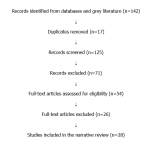
Study selection process: a flowchart of PRISMA was employed to illustrate the process of selecting the studies (Figure 1). Altogether, there were 142 references obtained, out of which 63 came from the academic database (PubMed, ScienceDirect, and Web of Science) and 79 were gathered from the gray literature. With the help of EndNote software, 17 duplicate entries were eliminated, yielding 125 references. Out of these references, 71 papers were filtered out during the screening phase based on their titles and abstracts' lack of relation to the topic under consideration. Further, out of the remaining 54 full texts, 26 references were excluded after assessing their eligibility, leaving us with 28 included references.
Quality assessment: pragmatic assessment of quality was carried out based on the guidelines for narrative reviews when conducting research in a data-poor setting: (1) high-quality sources: official reports from intergovernmental agencies (UNAIDS, WHO, PEPFAR, The Global Fund) using verified data; (2) medium to high-quality sources: peer-reviewed scholarly literature; (3) medium-quality sources: reports by national AIDS programs (relevant but lacking methodology). Scoring mechanisms were not employed as they focused on the contextual relevance and pragmatic utility of the findings.
Data extraction and synthesis: extraction of data was done following a structured approach in line with the WHO six building blocks, which included: organization and accessibility of PMTCT services; workforce availability and training; surveillance and monitoring systems; availability of HIV testing kits, antiretrovirals, and other logistics; health financing; policy coordination and governance. The analysis was primarily thematic and descriptive, without conducting any meta-analysis or statistical analysis.
Epidemiology context: the Central African Republic is classified as having an HIV epidemic that is considered generalized, with a rate of 2.4% among individuals aged between 15 and 49 years, and 3.1% among women [3,4]. There are about 100,000 persons living with HIV in the country, with 8,000 being children [6]. According to UNAIDS projections for 2025, the coverage of PMTCT in the country is 69% (49-91%) [2,12], while only about 40% of HIV-exposed infants receive early infant diagnosis [14].
Performance based on the WHO health systems building blocks
Service delivery: nationally agreed policies encourage routine HIV testing in antenatal care and the provision of Option B+ services to pregnant and lactating mothers [12,15-17]. The PMTCT program is officially integrated into the maternal and child health service delivery system; however, actual integration is yet to be achieved. Service delivery in rural, border, and war zones is highly compromised, resulting in poor antenatal attendance, inadequate postnatal care, and failure to diagnose infants at an early age [16,18]. There are mobile and outreach clinics; however, their operation is constrained by security issues [8,19].
Health workforce: the health workforce is seriously understaffed, with less than 0.05 doctors per 1,000 population [5,10,20,21]. There are very few skilled personnel devoted to PMTCT programs, particularly in rural and peripheral settings [10,13]. Task-shifting interventions targeting community health workers have been identified as an essential intervention to ensure access to services in remote areas [17,21]. Staff turnover, health worker displacement, and inadequate supervision exacerbate this problem even more [5].
Health information systems: health information systems are underdeveloped, with insufficient and inaccurate information collected from conflict and rural areas [3,7]. Surveillance systems do not take into account population mobility and transnational migrations; hence, there are gaps in surveillance among displaced people [14]. The quality, availability, and use of data are constrained by the poor dissemination of digital tools [22,23].
Access to basic medicines and technologies: recurrent commodity stock-outs of HIV rapid diagnostic test kits, antiretroviral (ART) medicines, and other PMTCT commodities were common. Supply chains can be insecure due to instability, poor infrastructure, and delays in administration. Peripheral health facilities lack some basic instruments for implementing PMTCT interventions and conducting early infant diagnosis [3,5,7].
Health financing: the health sector is greatly dependent on foreign financing through organizations such as PEPFAR, The Global Fund, WHO, and UNICEF [5,23]. Government expenditures for the health sector are not sufficient for implementing PMTCT activities [3]. High direct costs limit access for poor households and people living in difficult circumstances [24].
Leadership and governance: two main policies support PMTCT services: the National HIV Strategic Plan 2023-2027 and the Triple Elimination Plan 2022-2025 [5]. National policies comply with global guidelines; however, implementation capacity is very low [25,26]. There is a need for better coordination among governments, humanitarian organizations, and donors, especially in areas affected by emergencies. Gaps in governance include low accountability, poor conflict-sensitivity, and cross-border collaboration [14].
Catalytic barriers to PMTCT scale-up: armed conflict and instability serve as catalytic barriers by impacting all health system functions. Poor infrastructure, staffing shortages, and logistic failures impede service delivery. Sociocultural stigma, poor health literacy, and migration decrease service utilization [27]. Poor postnatal care and poor retention undermine the entire PMTCT continuum of care [19,24,28,29].
Catalytic enablers to PMTCT scale-up: foreign funding and technical assistance sustain core PMTCT services [1,15]. Task-shifting and community engagement enhance coverage in regions lacking formal health facilities. Religious and traditional leaders play an important role in reducing stigma and improving service demand [13]. Policies and frameworks provide strategic guidance for comprehensive PMTCT scale-up [16].
Determined service and health systems gaps: insufficient coordination between PMTCT and other maternal and child health services. Poor postnatal care and early infant diagnosis among HIV-exposed children [18]. Inadequate conflict-sensitive service delivery and cross-border surveillance [7]. Poor data collection systems and inadequate monitoring of migrants [4].
National policies and interventions implemented: in the Central African Republic, two policies have been adopted and implemented to combat HIV transmission from mothers to children. The policies include the National Strategic Plan for HIV Control 2023-2027 and the Triple Elimination Plan 2022-2025 for HIV, syphilis, and hepatitis B [5]. The essential interventions adopted include universal antenatal HIV screening, immediate antiretroviral therapy initiation for all pregnant women under Option B+, new clinical guidelines, and population-wide awareness campaigns [5]. The strategies have resulted in a decrease in HIV prevalence among pregnant women and a gradual increase in antiretroviral coverage [12]. However, there is a wide gap in implementing these policies in urban and rural areas, especially in conflict zones [20].
Cross-cutting synthesis of barriers, facilitators, and gaps to PMTCT implementation: these identified barriers include armed conflicts, lack of health infrastructure, recurrent commodity stock-outs of HIV rapid diagnostic test kits and antiretroviral (ART) medications, critical shortages of trained PMTCT staff in rural areas, socio-cultural factors, HIV/AIDS-related stigma, and population displacement on a massive scale [3,7,10,22,23]. Of all these factors identified, conflicts and insecurity can be seen to be posing the greatest and most limiting challenge to PMTCT interventions because of their systemic nature in disrupting access and supply of anti-retroviral and other interventions to persons in need, despite the availability of facilities and infrastructure [8,21,24]. Key enablers include continued technical and financial support from international partners (WHO, UNAIDS, PEPFAR, The Global Fund) [1,8], good community mobilization, the involvement of traditional and religious leaders to address stigma, and task-shifting pilot programs for the delegation of PMTCT activities to community health workers [22]. The most scalable and conflict-resilient enabler is community engagement, which ensures access to services in conflict-affected areas where the health infrastructure has ceased to function. The major gaps identified are the failure to integrate PMTCT with conventional maternal and child health care services [20,26], the incompleteness and representativeness of data collected from rural and border areas [7], inadequate postnatal follow-up and early infant diagnosis [23], and the failure to adapt the interventions to the context of conflict and cross-border dynamics [5]. The failure to establish robust cross-border and conflict surveillance has created a critical blind spot in the program, with mobile and displaced populations inadequately served and thus at higher risk of transmission (Table 1).
Performance of the CAR health system for PMTCT using the WHO building blocks
Service delivery: the incorporation of PMTCT services into ANC and the introduction of Option B+ constitute huge milestones toward meeting international benchmarks [15,16,20]. However, the provision of these services is very inconsistent, particularly because of the conflicts and insecurity that have led to a wide coverage gap in remote and border regions [8]. Discontinuity in the provision of the PMTCT program often results in poor postnatal monitoring and diagnosis for the infants, thus hindering the entire PMTCT cascade [23,29]. These inconsistencies align with experiences in other fragile or conflict-affected contexts in which coverage is emphasized above service continuity [28].
Health workforce: serious shortages in staffing, characterized by just 0.05 doctors for every 1,000 inhabitants, constitute the primary limiting factor to effective PMTCT interventions in CAR [3,7,10,11,21]. The low number of trained professionals in PMTCT at the peripheral level constitutes another limiting factor for coverage and quality of interventions. Task shifting to community health workers has been identified as a suitable response in terms of context to provide coverage in areas that are difficult to reach, though insufficient monitoring is still present [11,20,21].
Health information systems: inadequate health information systems impede the capacity to monitor, evaluate, and make decisions based on evidence for PMTCT programs [3,7]. Regular reporting is absent from areas affected by conflicts, and surveillance systems do not take into account the movement of people across borders [6,16,26]. The lack of digitalization and connectivity hinders the process of gathering data and decreases its reliability, making it difficult to track displaced or mobile populations [14,22].
Access to essential medicines and technologies: recurrent supply chain disruptions of HIV testing kits, antiretroviral medicines, and other PMTCT supplies adversely affect the service delivery process [5,20,21]. The chain is highly prone to threats, infrastructural shortcomings, and bureaucratic delays, making the availability of life-saving products very unpredictable [6,11,21]. Most peripheral sites lack even the most basic facilities for PMTCT and early infant testing programs, hampering the level of service delivery [5]. Such problems are common in conflict areas, where the resiliency of supply chain systems remains a major challenge [21].
Health financing: dependency on foreign aid for CAR's health system is very high in terms of funding from PEPFAR, The Global Fund, and other international organizations [1,3,12]. The domestic contribution to the health sector is relatively low, and there is a lack of adequate financing for PMTCT services [3,20]. High user charges and financial constraints limit access to care among vulnerable populations [20,29]. High dependency on foreign aid raises concerns about the future sustainability of PMTCT achievements, similar to those seen in other fragile states [6].
Leadership and governance: there are no discrepancies between the national policies and guidelines for PMTCT and triple elimination, and the internationally recommended best practices [4,15,16]. The lack of implementation capacity exists at district and community levels, while collaboration among government, humanitarian agencies, and international partners is poor [8,25]. Governance weaknesses are related to inadequate conflict-sensitive planning, accountability, and cross-border cooperation [27]. Such issues arise due to the inherent governance weaknesses in fragile states, where policy goals do not materialize in practice [5].
Overarching barriers and facilitators: the presence of violence and insecurity acts as a catalytic obstacle that worsens all other deficiencies within the health system, including service provision, supply, staffing, and surveillance [8,22]. Displacement and stigma associated with HIV make access to health care services more difficult and less sustainable [14,22]. In this regard, international financial support, community involvement, and task-shifting become the most durable enablers that can help maintain the provision of PMTCT services [2,7,18]. The study findings prove that PMTCT programs should be conflict-sensitive and community-based.
Innovative and priority strategies to accelerate PMTCT: to fast-track the elimination of mother-to-child HIV transmission by 2030, there is a need to embrace some evidence-based interventions, which include: the integration of the PMTCT program into maternal, newborn, and child health services to increase coherence and effectiveness [26]. Conflict-resistant and mobile delivery of health services targeting displaced persons, those residing in remote or border areas [5,8,19].
Use of low-tech digital communication channels (SMS and USSD) to enhance follow-up and monitoring among hard-to-reach populations [22,23]; cross-border health surveillance and mobility maps to minimize gaps in monitoring programs [14]; initiatives led by communities aimed at combating stigma and discrimination against PLHIV in their communities [24,30]; improvements in the supply chain systems and prepositioning of commodities as a way of dealing with stockouts in conflict-prone areas [8,22]. These intervention efforts have resilience, equity, and appropriateness for the context at hand.
Implications for policy and practice: improving all six WHO health system building blocks will be necessary to increase the effectiveness of PMTCT programs in CAR. Policy measures must pay attention to conflict sensitivity, community involvement, and coordination between different programs. Funding from international donors and the CAR government must be directed toward strengthening the healthcare system's human resources, logistics, information systems, and financing. For other fragile and conflict-affected nations, the lessons learned in CAR show that scaling up PMTCT programs will require system-wide improvements instead of implementing a vertical program.
Limitations of this review: some limitations of this review include: diverse types of studies and varying study quality; insufficient evidence from rural, border, and conflict-affected areas; lack of meta-analysis and quality assessment; use of grey literature, which may vary in quality. The limitations of this review cannot be avoided in crisis-affected environments where there is little available data.
Contributions and limitations of national strategies: universal antenatal HIV testing and Option B+ have resulted in marginal gains in PMTCT and maternal ART service coverage in CAR. However, CAR is lagging behind other SSA nations, where retention in care is above 75% and vertical transmission is below 5% [10,27]. As observed in Cameroon and the Democratic Republic of the Congo, performance remains constrained by weak service integration and fragile health information systems in conflict-affected areas. This is mainly attributed to poor health system integration and poor data governance in CAR. Despite having national policies that meet global standards for triple elimination of HIV, syphilis, and hepatitis B, their practical application is hindered by poor health system infrastructure in CAR [8,20,30].
Contextual specificities of the conflict-affected CAR: armed conflict is seen as a "catalytic barrier that heightens the difficulty of all other implementation challenges" [8,20]. It leads to "supply chain disruptions, interrupted continuity of care, displacement of health workers, and increased stigma related to HIV" among displaced populations in the region. In addition, the mobility of populations to and from the DRC, Cameroon, and Chad also affects the continuity of care and surveillance. It is important to adopt a conflict-sensitive approach to ensure that there is no "negative peace" that leads to exclusion of marginalized and mobile populations.
Research perspectives: 1) mixed-methods studies on the determinants of adherence in conflict zones; 2) evaluation of conflict-sensitive interventions (mobile clinics + offline digital tools); 3) impact of triple elimination and innovative cross-border surveillance on mother-to-child transmission reduction; 4) cost-effectiveness analysis of low-tech approaches in fragile LMIC contexts.
The Central African Republic has seen some progress in the prevention of mother-to-child transmission of HIV, but the health system is weak in the face of conflict and inequality. The country can achieve elimination of MTCT by 2030 by strengthening the health system, improving service delivery, adopting conflict-sensitive approaches, leveraging low-tech innovations, and enhancing cross-border surveillance. With the government's political commitment and the effective partnership of all actors, the country can reduce MTCT and improve the health of its women and children.
What is known about this topic
- The level of PMTCT coverage in the Central African Republic is at 69%, far below the global target for elimination;
- The impact of armed conflicts and fragility severely undermines the ability to provide health services, logistics, and treatment retention;
- Inefficiencies within all six WHO building blocks contribute to the difficulty of implementing the PMTCT program in CAR.
What this study adds
- To our knowledge, this is the first systematic narrative review of PMTCT obstacles in conflict-affected CAR utilizing the WHO health systems building blocks model;
- The study recognizes the impact of armed conflict on all aspects of the health system as a catalytic barrier;
- The study suggests practical and adaptable interventions that can help eliminate MTCT by 2030.
The authors declare no competing interests.
Onacis Yeremon Guerde: conceptualization, methodology, writing original draft, review, and editing; Joseph Steve Telo Mabundou-siala: writing, review, editing, validation; Elizabeth Ezekiel Malingumu, Rabas Wende Pierre Kabore and Qun He: review, editing, and validation; Qun He: supervision. All the authors read and approved the final version of this manuscript.
Table 1: characteristics, source types, objectives, and principal findings of the 28 scientific articles and institutional reports included in this narrative review on prevention of mother-to-child transmission of HIV health system challenges in the Central African Republic published between 2021 and 2026 (N=28)
Figure 1: PRISMA flow diagram showing the identification, screening, eligibility assessment, and inclusion process of studies and institutional reports included in the narrative review on PMTCT in the Central African Republic (2021-2026)
- Joint United Nations Programme on HIV/AIDS (UNAIDS). Global AIDS Update 2025: AIDS, Crisis and the Power to Transform. 2025. Accessed 5th May, 2026.
- Joint United Nations Programme on HIV/AIDS (UNAIDS). Western and Central Africa - Regional profile - 2025 Global AIDS Update - AIDS, Crisis and the Power to Transform. 2024.
- World Health Organization (WHO). Country guidance for planning triple elimination of mother-to-child transmission of HIV, syphilis and hepatitis B virus programmes. 2025. Google Scholar
- Joint United Nations Programme on HIV/AIDS (UNAIDS). Country: Central African Republic. Accessed 5th May, 2026.
- Ministry of Health and Population, Central African Republic. Plan strategique national de lutte contre le vih et le sida en Republique Centrafricaine 2023-2027. 2023. Accessed 5th May, 2026.
- Mabundou-Siala T, Steve J, Edgar T, Cyriaque K, Schella YM, Tchebemou T, Sandrine NJ, Marcel MS. Impact de la Non-Adhérence au Traitement Antirétroviral sur la Charge Virale chez les Enfants Vivant avec le VIH suivis à Bangui: Impact of Antiretroviral Therapy Non-Adherence on Viral Load Among Children Living with HIV Followed in Bangui. HEALTH SCIENCES AND DISEASE. 2026 Jul 1;27(7):1-7. Google Scholar
- Tenthani L, Haas AD, Tweya H, Jahn A, van Oosterhout JJ, Chimbwandira F et al. Retention in care under universal antiretroviral therapy for HIV-infected pregnant and breastfeeding women ('Option B+') in Malawi. AIDS. 2014 Feb 20;28(4):589-598. PubMed | Google Scholar
- Central African Republic. 2026. Accessed 5th May, 2026.
- Ngbale NR, Gaunefet CE, Koïrokpi A, Kossa-ko-Ouakoua GD, Matoulou-Mbala-Wa-Ngogbe S, Ouapou S et al. The HIV's Transmission from the Mother to the Child at the Community Hospital Center of Bangui (Central African Republic). Open Journal of Obstetrics and Gynecology. 2020;10:802-8. Google Scholar
- United Nations Children's Fund (UNICEF). Central African Republic: Key demographic indicators. Accessed 5th May, 2026.
- Ministry of Health and Population, Central African Republic. Recensement général des personnels du secteur de la santé de la Centrafrique. 2024. Accessed 5th May, 2026.
- Ssonko C, Gonzalez L, Mesic A, da Fonseca MS, Achar J, Safar N et al. Delivering HIV care in challenging operating environments: the MSF experience towards differentiated models of care for settings with multiple basic health care needs. J Int AIDS Soc. 2017 Jul 21;20(Suppl 4):21654. PubMed | Google Scholar
- Page MJ, McKenzie JE, Bossuyt PM, Boutron I, Hoffmann TC, Mulrow CD et al. The PRISMA 2020 statement: an updated guideline for reporting systematic reviews. BMJ. 2021 Mar 29;372:n71. PubMed | Google Scholar
- Joint United Nations Programme on HIV/AIDS (UNAIDS). Global AIDS Strategy 2021-2026 - End Inequalities. End AIDS. 2021. Accessed 5th May, 2026.
- World Health Organization, Regional Office for Africa. The Central African Republic (CAR): Public Health Situation Analysis (PHSA): Summary of crisis and key findings. 2025. Accessed 5th May, 2026.
- Nkenfou CN, Ngoufack MN, Nguefack-Tsague G, Atogho BT, Tchakounte C, Bongwong BT et al. Maternal Socio-Demographic Factors and Mother-to-Child Transmission of HIV in the North Region of Cameroon. Int J MCH AIDS. 2023;12(1):e593. PubMed | Google Scholar
- World Health Organization (WHO) Regional Office for Africa. Implementing triple EMTCT of HIV, syphilis and hepatitis B in Francophone African countries: orientations, challenges and opportunities. 2024. Accessed 5th May, 2026.
- United Nations Population Fund (UNFPA), West and Central Africa. UNFPA Humanitarian Action Overview 2023. 2023. Accessed 5th May, 2026.
- Humphrey J, Alera M, Kipchumba B, Pfeiffer EJ, Songok J, Mwangi W et al. A qualitative study of the barriers and enhancers to retention in care for pregnant and postpartum women living with HIV. PLOS Glob Public Health. 2021 Oct 13;1(10):e0000004. PubMed | Google Scholar
- World Health Organization. HeRAMS Central African Republic Baseline Report 2023: Operational status of the health system. 2023. Accessed 5th May, 2026.
- United Nations Children's Fund (UNICEF). Improving nutrition supply chains for children. 2020.
- Kruk ME, Gage AD, Arsenault C, Jordan K, Leslie HH, Roder-DeWan S et al. High-quality health systems in the Sustainable Development Goals era: time for a revolution. Lancet Glob Health. 2018 Nov;6(11):e1196-e1252. PubMed | Google Scholar
- U.S. Department of State. PEPFAR Country Operation Planning 2025 Guidance Draft for Public Review. 2024. Accessed 5th May, 2026.
- Njom Nlend AE, Nguedou Marcelle K, Koki Ndombo P, Brunelle Sandié A. [12-months efficacy of option B+ for prevention of mother-to-child transmission of HIV in Yaoundé, Cameroon]. Rev Epidemiol Sante Publique. 2019 May;67(3):163-167. PubMed | Google Scholar
- World Health Organization. Quality of care in fragile, conflict-affected and vulnerable settings: taking action. 2020. Google Scholar
- Mudji J, Olarewaju V, Madinga B, Malala J, Kayeye A, Horsmans Y. HIV testing and knowledge on mother-to-child transmission among pregnant women attending antenatal care at Vanga Hospital, Democratic Republic of Congo. J Public Health Afr. 2023 May 24;14(8):1991. PubMed | Google Scholar
- World Health Organization. Global guidance on criteria and processes for validation: elimination of mother-to-child transmission of HIV and syphilis. 2017. Google Scholar
- Tekpa G, Inikoutiyo J, Yonli C, Noguera C, Lujwiro PP, Gigout L et al. Retention on antiretroviral therapy and drivers of lost-to-follow up in the Central African Republic: a longitudinal analysis. J Int AIDS Soc. 2024 Dec;27(12):e26387. PubMed | Google Scholar
- Sweeney S, Obure CD, Maier CB, Greener R, Dehne K, Vassall A. Costs and efficiency of integrating HIV/AIDS services with other health services: a systematic review of evidence and experience. Sex Transm Infect. 2012 Mar;88(2):85-99. PubMed | Google Scholar
- United Nations Children's Fund (UNICEF). The State of the World's Children 2025: Ending child poverty: Our shared imperative. 2025. Accessed 5th May, 2026.
Search
This article authors
On Pubmed
On Google Scholar
Citation [Download]
Navigate this article
Similar articles in
Key words
Tables and figures

Article metrics
Recently from the PAMJ



Authors´ services
