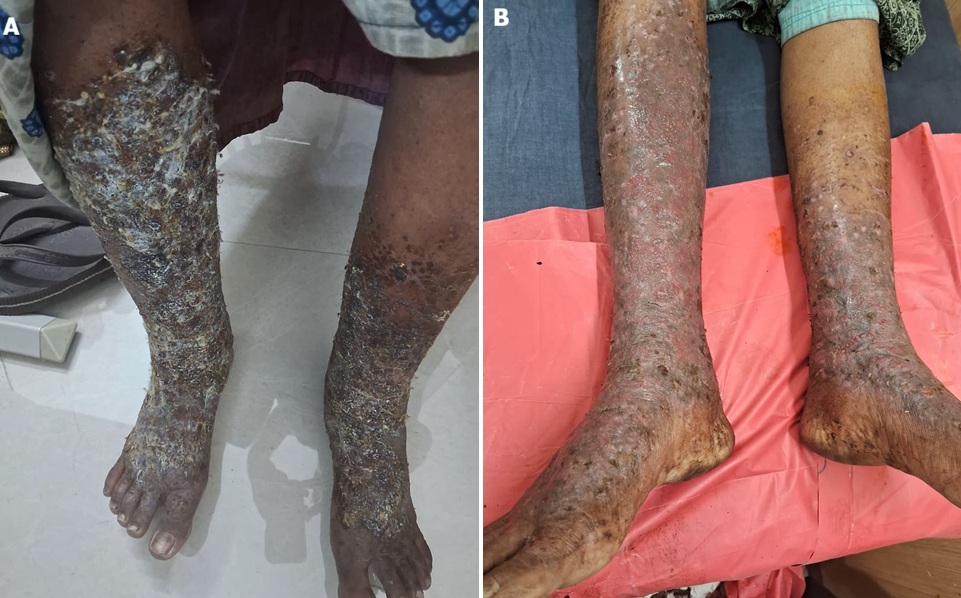
Eczema is a chronic, relapsing inflammatory skin disorder characterised by itching, erythema, and recurrent eczematous lesions. It commonly begins in childhood but can persist or present at any age. The disease arises from a complex interplay of genetic predisposition, skin barrier dysfunction, immune dysregulation, and environmental triggers. Patients often experience periods of exacerbation and remission, with significant impact on quality of life due to pruritus, disturbed sleep, and cosmetic concerns. A 32-year-old female presented to the Outpatient Department of Mahatma Gandhi Ayurveda College, Hospital and Research Center with complaints of blackish discolouration, itching, and oozing from both legs. She had a known history of eczema involving both legs. She had received treatment from a local doctor, who prescribed Tablet Ivermectin 6mg once daily and Topical Hydrocortisone for local application. During the first three days, she experienced partial relief, but due to persistent itching and oozing, she started applying the steroid cream multiple times a day (6-7 times daily) without medical advice. She continued this unsupervised application for nearly one month, after which she noticed excessive dead skin and progressive blackish discolouration over both legs (A). She later approached the Ayurvedic Hospital, where she was started on Tablet Augmentin 625mg twice daily, Cutis dusting powder twice daily, and Exoskin cream twice daily for local application. Within 15 days of treatment, she reported significant improvement in symptoms, with a reduction in itching, oozing, and discolouration (B). Although topical corticosteroids remain the mainstay of eczema management, unsupervised or prolonged use can worsen the disease and cause steroid-induced complications, highlighting the need for cautious prescribing and patient education.
Corresponding Author
Mahesh Sharma, Department of Kayachikitsa, Mahatma Gandhi Ayurveda College, Hospital and Research Center, Salod (H), DMIHER (Datta Meghe Institute of Higher Education and Research), Wardha, Maharashtra , India (maheshkumarsharma369@gmail.com)