Association between early oXiris hemoadsorption and survival in critically ill COVID-19 patients: a single-center risk-set-matched cohort study
Dong Phu Khiem, Dao Xuan Co, Bui Thi Huong Giang, Than Manh Hung, Dang Van Duong, Pham Van Phuc, Do Quoc Phong, Vu Dinh Phu
Corresponding author: Dao Xuan Co, Intensive Care Center, Bach Mai Hospital, Hanoi 100000, Vietnam 
Received: 23 Apr 2026 - Accepted: 05 Jun 2026 - Published: 17 Jun 2026
Domain: Health Emergencies, Infection prevention and control, Nephrology, Pulmonology
Keywords: COVID-19, oXiris, hemoadsorption, critically ill patients, propensity-score matching, mortality
Funding: This work received no specific grant from any funding agency in the public, commercial, or non-profit sectors.
This article is published as part of the supplement Innovations and Challenges in Global Health: A Multidisciplinary Perspective, commissioned by Young Researchers and Elite Club.
©Dong Phu Khiem et al. Pan African Medical Journal (ISSN: 1937-8688). This is an Open Access article distributed under the terms of the Creative Commons Attribution International 4.0 License (https://creativecommons.org/licenses/by/4.0/), which permits unrestricted use, distribution, and reproduction in any medium, provided the original work is properly cited.
Cite this article: Dong Phu Khiem et al. Association between early oXiris hemoadsorption and survival in critically ill COVID-19 patients: a single-center risk-set-matched cohort study. Pan African Medical Journal. 2026;54(1):10. [doi: 10.11604/pamj.supp.2026.54.1.52945]
Available online at: https://www.panafrican-med-journal.com//content/series/54/1/10/full
Research 
Association between early oXiris hemoadsorption and survival in critically ill COVID-19 patients: a single-center risk-set-matched cohort study
Association between early oXiris hemoadsorption and survival in critically ill COVID-19 patients: a single-center risk-set-matched cohort study
 Dong Phu Khiem1,2,3, Dao Xuan Co3,4,&, Bui Thi Huong Giang2,4, Than Manh Hung1,3, Dang Van Duong1, Pham Van Phuc1,3, Do Quoc Phong3,5, Vu Dinh Phu1,3
&Corresponding author
Introduction: extracorporeal blood purification using the oXiris hemofilter has been widely applied as an adjunctive therapy in critically ill patients with coronavirus disease (COVID-19), aiming to attenuate hyperinflammation. However, existing evidence regarding its impact on mortality remains inconsistent and is largely derived from small-scale observational studies. This study aimed to evaluate the association between early oXiris hemoadsorption and 28-day mortality and clinical outcomes in patients with severe and critical COVID-19.
Methods: we conducted a single-centre retrospective cohort study in the intensive care unit of the National Hospital for Tropical Diseases, including adult patients with RT-PCR-confirmed COVID-19 who met severity criteria and had indications for oXiris hemoadsorption according to Ministry of Health guidelines between March 2020 and October 2023. Sequential risk-set propensity-score matching (1:1) was applied on ICU days 0, 1, and 2, incorporating baseline characteristics and time-varying clinical covariates to address confounding by indication and immortal time bias.
Results: among 1,065 screened patients, 306 received early oXiris and 759 received standard care. After matching, 496 patients (248 pairs) were included, with good covariate balance. There was no statistically significant difference in 28-day mortality between the oXiris and control groups (32.3% vs. 33.5%; p = 0.842). Stratified Cox analysis showed no significant association (hazard ratio 0.86; 95% confidence interval: 0.59-1.26; p = 0.45). Secondary outcomes, subgroup analyses, and sensitivity analyses were consistent with the primary findings.
Conclusion: early oXiris hemoadsorption was not associated with reduced short-term mortality or improved clinical outcomes in critically ill COVID-19 patients. These findings suggest that clinical severity-based selection alone may be insufficient to identify patients who benefit from this therapy, highlighting the need for well-designed randomised controlled trials.

The coronavirus disease 2019 (COVID-19) pandemic has placed extraordinary strain on intensive care systems worldwide. In patients who progress to severe or critical illness, a dysregulated host immune response—commonly described as a "cytokine storm"-is recognised as a central pathophysiological driver of multiple organ dysfunction syndrome (MODS) and mortality [1,2]. Accordingly, anti-inflammatory therapies, including corticosteroids and interleukin-6 inhibitors such as tocilizumab, have been incorporated into standard treatment protocols [3-5]. Nevertheless, mortality among patients with acute respiratory distress syndrome (ARDS) and septic shock remains substantial, highlighting the need for additional adjunctive interventions [6,7].
Extracorporeal blood purification (EBP) has emerged as a potential strategy for mitigating hyperinflammation through the nonselective removal of circulating mediators. Among available hemofilters, the oXiris membrane (Baxter, Deerfield, IL, USA) is distinguished by its "three-in-one" functionality, combining renal replacement support with adsorption of cytokines and endotoxins [8-10]. Based on these theoretical advantages, oXiris received Emergency Use Authorisation (EUA) from the U.S. Food and Drug Administration (FDA) and has been widely implemented as an adjunctive therapy in critically ill COVID-19 patients across multiple settings [11,12]. However, robust evidence demonstrating its impact on clinically meaningful outcomes, particularly mortality, remains limited. Existing studies are largely restricted to small observational cohorts or case series, often lacking appropriate control groups and yielding heterogeneous results [13]. In addition, in routine clinical practice, initiation of hemoadsorption is typically guided by overall disease severity-such as Sequential Organ Failure Assessment (SOFA) scores and hemodynamic instability-rather than predefined biomarker thresholds [11,14]. Whether this severity-driven approach translates into improved survival compared with standard care alone remains uncertain.
In Vietnam, the National Hospital for Tropical Diseases functions as a leading national referral centre for infectious diseases and managed a large volume of critically ill COVID-19 patients during the pandemic. During peak periods, oXiris hemoadsorption was employed as adjunctive therapy in selected patients. However, disruptions in global supply chains led to intermittent shortages of oXiris filters, resulting in natural variation in treatment allocation. Consequently, some patients received oXiris therapy, while others with comparable clinical severity were managed with standard care alone. This context provided a pragmatic internal comparison framework to evaluate treatment effectiveness in real-world conditions. Therefore, we conducted a retrospective cohort study to examine the association between early initiation of oXiris hemoadsorption and 28-day all-cause mortality, with secondary outcomes including 14-day mortality, in-hospital mortality, intensive care unit length of stay, and ventilator-free days.

Study design: this study was designed as a single-centre retrospective cohort analysis using a sequential risk-set propensity-score matching framework applied across intensive care unit (ICU) days 0, 1, and 2. This analytic approach was selected to emulate a target trial and to minimise confounding by indication and immortal time bias, which are inherent challenges in observational studies involving time-dependent interventions. Sequential risk-set matching was performed separately on ICU days 0, 1, and 2. For each index day, patients initiating oXiris therapy were matched to eligible control patients who had not yet received oXiris therapy at the same time point. Patients who later received oXiris remained eligible for matching within earlier untreated risk sets before treatment initiation. This approach aligned treatment assignment with eligibility assessment across time and reduced immortal time bias. The study design and analytic framework were informed by principles of target trial emulation and prior methodological literature on immortal time bias in observational studies.
Setting: the study was conducted in the ICU of the National Hospital for Tropical Diseases in Hanoi, Vietnam. This institution serves as a national tertiary referral centre for infectious diseases and managed a high volume of critically ill COVID-19 patients during the pandemic period from March 2020 to October 2023. The study period encompassed multiple pandemic waves characterised by differences in circulating viral variants, ICU burden, vaccination coverage, and evolving therapeutic protocols.
Participants: all adult patients (≥18 years) with reverse transcription polymerase chain reaction-confirmed COVID-19 admitted to the ICU during the study period were screened for eligibility. Patients were included if they met both severity criteria and indications for intervention. Severity was defined according to World Health Organization criteria for critical COVID-19, including acute respiratory distress syndrome (ARDS), sepsis, or septic shock, or severe COVID-19 with progressive respiratory failure requiring advanced respiratory support (oxygen mask ≥6 L/min, high-flow nasal cannula, or noninvasive ventilation). Indications for oXiris hemoadsorption followed Vietnamese Ministry of Health guidelines, aligned with U.S. FDA Emergency Use Authorisation, including severe ARDS or progressive respiratory failure (PaO2/FiO2 ≤300) despite optimised therapy, septic shock, or multiple organ dysfunction syndrome. Patients were excluded if they died or were expected to die within 24 hours of ICU admission, received palliative care only, were admitted ≥10 days after meeting severe or critical criteria, were admitted primarily for non-COVID-19 conditions, or had received hemoadsorption before ICU admission.
Variables: the primary exposure was early initiation of oXiris hemoadsorption within the first 72 hours of ICU admission (ICU days 0-2), indexed to ICU days 0, 1, and 2. Early oXiris therapy was operationally defined as treatment delivered for at least 12 cumulative hours during the indexed treatment day. Repeated sessions and cartridge replacement were permitted according to clinical indication, filter lifespan, and circuit performance. Interrupted therapy due to circuit clotting, hemodynamic instability, or technical issues remained classified as valid exposure if cumulative treatment duration exceeded 12 hours. The control condition consisted of standard care without oXiris during the same period. The primary outcome was 28-day all-cause mortality from ICU admission. Secondary outcomes included 14-day mortality, in-hospital mortality, ICU length of stay, and ventilator-free days at day 28, with deceased patients assigned zero ventilator-free days. Covariates included baseline characteristics (age, sex, comorbidities, pregnancy status, APACHE II score) and time-varying clinical parameters (SOFA score, PaO2/FiO2 ratio, FiO2, vasopressor use, respiratory support level, and concomitant therapies such as corticosteroids, neuromuscular blocking agents, and remdesivir). Detailed laboratory variables and supportive therapy characteristics are additionally presented in Supplementary Annex 1.
Data sources/measurement: data were extracted retrospectively from electronic and paper-based medical records. Exposure status, clinical variables, and outcomes were recorded according to standardised ICU documentation. The oXiris therapy was delivered using the Prismaflex system (Baxter) following Asia-Pacific consensus recommendations, with target effluent doses of 25-35 mL/kg/h. Blood flow rates were generally maintained between 150-250 mL/min. Regional citrate anticoagulation or systemic unfractionated heparin was administered according to institutional protocols and bleeding risk assessment. Cartridge replacement was typically performed every 12-24 hours depending on circuit performance and clotting. Detailed technical parameters were predefined and consistently applied.
Bias: several methodological strategies were implemented to reduce bias. Sequential risk-set matching was used to address immortal time bias and confounding by indication. Exact matching was applied for critical clinical variables, including pregnancy status, respiratory support level, and shock status. Propensity scores were estimated using bias-reduced logistic regression to mitigate small-sample bias and data separation. Matching was performed within daily risk sets and stratified by respiratory support modality to improve comparability. Sensitivity analyses, including alternative calliper widths, additional matching on inflammatory biomarkers, and inverse probability weighting, were conducted to evaluate robustness. Nevertheless, residual confounding from unmeasured clinical and biological factors could not be completely excluded because of the retrospective observational design.
Study size: no formal sample size calculation was performed because the study included all eligible consecutive ICU admissions during the study period. The sample size was therefore determined by the total number of patients meeting inclusion and exclusion criteria.
Quantitative variables: continuous variables, including physiological parameters and severity scores, were analysed on their original scale. Propensity scores were calculated on the logit scale, and matching was performed using a predefined calliper width. Standardised mean differences were used to assess covariate balance, with an absolute value ≥0.10 indicating adequate balance.
Statistical methods: all analyses were performed using R software (version 4.5.2). Covariate balance after matching was evaluated using the standardised mean difference (SMD), with an absolute value ≥ 0.10 considered indicative of adequate balance. To ensure reproducibility, the matching algorithm was executed across combinations of three match orders (largest, closest, and random) and up to 200 random seeds; the configuration yielding the maximum number of valid matched pairs while preserving calliper and exact-matching constraints was selected, and the corresponding seed and match order are reported in the Supplementary materials. Missing data were handled according to the purpose of each analysis. Variables with substantial missingness, particularly inflammatory biomarkers, were not included in the primary matching model. Inflammatory biomarkers demonstrated substantial missingness, including approximately 48% for IL-6, 36% for ferritin, and 18% for D-dimer. Because biomarker testing was influenced by disease severity, resource availability, and evolving clinical protocols during different pandemic waves, the missing-at-random assumption required for multiple imputation was considered unlikely to be satisfied. Therefore, multiple imputation was not performed. Instead, inflammatory biomarkers were excluded from the primary matching model and evaluated in sensitivity analyses restricted to patients with available biomarker data. The primary matched analysis was based on available data for the prespecified matching covariates, whereas the IPTW sensitivity analysis was conducted in a complete-case cohort.
Covariate balance was assessed using standardised mean differences. Survival outcomes were analysed using Kaplan-Meier estimation and stratified Cox proportional hazards models accounting for matched pairs. Binary outcomes were evaluated using conditional logistic regression, and continuous outcomes were compared using the Wilcoxon signed-rank test. Prespecified subgroup analyses were conducted using interaction terms within conditional logistic models. Sensitivity analyses included alternative calliper specifications, additional exact matching on inflammatory markers, and inverse probability of treatment weighting targeting the average treatment effect in the treated.
Ethical consideration statement: the study protocol was approved by the Institutional Review Board of Hanoi Medical University (approval No. 1304/GCN-HMUIRB). Given the retrospective design and use of deidentified data, the requirement for informed consent was waived. All study procedures were conducted in accordance with relevant institutional guidelines and regulations.
Study population and baseline characteristics: during the study period, a total of 1,065 patients with severe or critical COVID-19 were screened for eligibility. After applying the predefined exclusion criteria, 306 patients who received early oXiris hemoadsorption and 759 patients managed with standard care were included in the initial cohort for matching. Sequential risk-set propensity-score matching across ICU days 0-2 yielded 248 matched pairs (496 patients) for the primary analysis.
Baseline characteristics before matching: before matching, there were substantial imbalances in baseline characteristics and disease severity between the two groups (Table 1). Although patients in the oXiris group were younger than those in the control group (57.1 ± 19.9 vs. 64.3 ± 19.3 years; p < 0.001), they presented with more severe illness at ICU admission. The oXiris group had higher median SOFA scores (4.5 vs. 3.0; p < 0.001) and lower PaO2/FiO2 ratios (130 vs. 156; p < 0.001), indicating more severe organ dysfunction and hypoxemia. The requirement for advanced organ support was also markedly higher in the oXiris group, with 94.1% requiring invasive mechanical ventilation compared with 69.6% in the control group (SMD = 0.672; p < 0.001), and a higher proportion requiring vasopressors (26.5% vs. 16.7%; p < 0.001). Inflammatory burden was also greater in the oXiris group, as reflected by significantly higher C-reactive protein levels (p = 0.047). Baseline differences additionally reflected the severity-based clinical selection process for oXiris therapy during periods of variable ICU burden and resource availability across different pandemic waves.
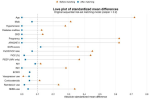
Baseline characteristics after matching: the sequential risk-set matching procedure yielded a well-balanced cohort comprising 496 patients (248 matched pairs) (Table 2). Exact matching ensured perfect balance (SMD = 0) for key prognostic variables, including pregnancy status, level of respiratory support (noninvasive ventilation, invasive mechanical ventilation, and extracorporeal membrane oxygenation), and shock status as defined by vasopressor use. For the remaining covariates, balance was substantially improved, with absolute SMD values ≥0.10 for most variables. However, residual imbalance persisted for several inflammatory biomarkers, particularly IL-6 (SMD = 0.244) and ferritin (SMD = 0.293). These biomarkers were not included in the primary matching model because of substantial missingness and incomplete availability across the study period. Overall covariate balance before and after matching is illustrated in the Love plot (Figure 1).
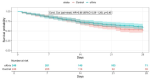
Primary outcome and survival analysis: in the unmatched cohort, the oXiris group exhibited significantly higher 28-day mortality (p = 0.002) and in-hospital mortality (p < 0.001), reflecting the greater baseline severity among treated patients. After adjustment through sequential risk-set matching, these differences were no longer observed. In the matched cohort (n = 496), 28-day mortality was comparable between the oXiris and control groups (32.3% vs. 33.5%; p = 0.842). Similarly, no significant differences were found for 14-day mortality (23.4% in both groups; p = 1.000) or in-hospital mortality (41.1% vs. 39.5%; p = 0.775) (Table 3). Kaplan-Meier survival curves demonstrated substantial overlap between the two groups throughout the 28-day follow-up period (Figure 2). Consistently, the stratified Cox proportional hazards model showed no statistically significant association between oXiris therapy and survival (hazard ratio 0.86; 95% CI: 0.59-1.26; p = 0.45). The proportional overlap of survival curves throughout follow-up further supported the absence of a detectable difference in short-term survival between groups after adjustment for measured baseline severity.
Secondary outcomes: with respect to healthcare utilisation, patients in the oXiris group had a significantly longer ICU length of stay compared with controls (median 17.0 days [IQR 8.0-28.2] vs. 13.0 days [IQR 8.0-20.2]; p < 0.001). However, ventilator-free days at day 28 did not differ significantly between groups (median 2.0 days; p = 0.155). Because ICU length of stay is influenced by survival duration, this finding should be interpreted cautiously, as survivor bias may partly contribute to prolonged ICU hospitalisation among patients who survived longer.
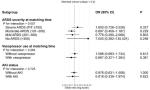
Subgroup analysis: prespecified subgroup analyses were conducted to assess whether the treatment effect varied across different levels of baseline severity at the index day. As shown in the forest plot (Figure 3), no statistically significant interactions were observed between oXiris treatment and any subgroup variables. The estimated odds ratios for 28-day mortality were consistent across strata defined by oxygenation status (PaO2/FiO2 ratio), presence of acute kidney injury, and shock status. No subgroup demonstrated a statistically significant mortality reduction associated with oXiris therapy.
Sensitivity analyses: sensitivity analyses supported the robustness of the primary findings (Annex 1 (2-6). Repeating the matching procedure with a narrower calliper (0.1 SD of the logit propensity score) resulted in 238 matched pairs and yielded similar 28-day mortality rates between groups (34.0% vs. 33.6%; p = 1.000). Using a wider calliper (0.25 SD) retained 248 pairs and likewise showed no significant difference (32.3% vs. 30.2%; p = 0.685). Additional exact matching on C-reactive protein and interleukin-6 quartiles reduced the cohort to 38 pairs but produced results consistent with the primary analysis (34.2% vs. 28.9%; p = 0.752). Furthermore, in a complementary day-3 landmark complete-case inverse probability of treatment weighting analysis (n = 769), early oXiris initiation was not associated with 28-day mortality (weighted OR 1.19; 95% CI: 0.81-1.75; p = 0.364). A summary of these findings is presented in Supplementary Annex 1 (2), with detailed results provided in Supplementary Annex 1 (3-6). Collectively, these analyses demonstrated consistent findings across alternative matching specifications and analytic approaches, although residual confounding from unmeasured biological severity could not be completely excluded.
To our knowledge, this study represents one of the largest evaluations of the comparative effectiveness of oXiris hemoadsorption in critically ill COVID-19 patients. Using a sequential risk-set propensity-score matching design to address confounding by indication and immortal time bias, we found no evidence that early initiation of oXiris reduced 28-day mortality in patients selected primarily based on clinical severity. Mortality at 28 days was similar between groups (32.3% vs. 33.5%; HR 0.86, 95% CI: 0.59-1.26; p = 0.45), and this finding was consistent across secondary outcomes and multiple sensitivity analyses. Importantly, given the retrospective observational design, these findings should be interpreted as demonstrating no statistically significant association between early oXiris use and improved short-term survival rather than definitive evidence of treatment ineffectiveness.
The global evidence regarding the effectiveness of oXiris in critically ill COVID-19 patients remains limited and heterogeneous, particularly with respect to survival outcomes. Our findings are broadly consistent with most controlled observational studies. Abdelaty et al. reported numerically higher survival and ventilator weaning rates in patients treated with oXiris compared with standard continuous renal replacement therapy (CRRT), but these differences were not statistically significant after adjustment for disease severity, and mortality outcomes were comparable [15]. Similarly, Cama-Olivares et al., using inverse probability of treatment weighting, found no reduction in in-hospital mortality or dialysis dependence, despite shorter ventilation duration and ICU stay among survivors [16]. Other studies, including those by Ortiz-Soriano et al. and Bounab et al., also reported no mortality benefit despite observed reductions in inflammatory mediators in some cases [17,18]. In contrast, Premužić et al. suggested a potential survival advantage, particularly with early initiation; however, the small sample size and lack of robust adjustment methods limit the reliability of these findings [19]. Furthermore, single-arm cohort studies have reported mortality rates ranging from approximately 38% to over 60%, which are comparable to those observed in our cohort [20-23]. While case reports and small series often describe favourable outcomes, their inherent selection bias and absence of control groups preclude causal inference [24-28]. Overall, the currently available literature remains dominated by observational evidence with heterogeneous patient selection criteria, variable timing of intervention, and inconsistent adjustment for disease severity, making direct comparisons across studies challenging.
Our study contributes to this body of evidence with several methodological strengths. The relatively large sample size (496 patients, including 248 matched pairs) enhances statistical power compared with prior studies. The use of sequential risk-set matching allows for more appropriate handling of time-dependent treatment allocation, thereby reducing key biases that commonly affect observational analyses. Specifically, the daily risk-set framework aligned eligibility assessment and treatment assignment within the same temporal window, thereby minimising immortal time bias and partially emulating a target trial design [29,30]. Moreover, the consistency of findings across multiple sensitivity analyses, including variations in matching parameters and complementary inverse probability weighting, supports the robustness of the results. Collectively, these findings suggest that although oXiris may exert biological effects, these do not consistently translate into measurable survival benefit when applied to patients selected primarily based on clinical severity.
Several factors may explain the absence of a detectable improvement in outcomes. First, the hyperinflammatory response in critical COVID-19 is highly heterogeneous. Although experimental studies suggest that oXiris can reduce circulating cytokine levels [8,9,27,28], the magnitude and temporal dynamics of inflammation vary widely among patients, leading to variable treatment effects. Furthermore, reductions in circulating biomarkers do not necessarily reflect modulation of the inflammatory process at the tissue level. This discrepancy may be related to compartmentalisation of the immune response, as described in prior studies [31,32]. Pulmonary and endothelial inflammatory activity may persist despite measurable reductions in circulating cytokines, thereby limiting the capacity of extracorporeal cytokine removal to reverse established organ dysfunction. In addition, the nonselective nature of adsorption may remove both pro- and anti-inflammatory mediators, potentially disrupting the immune balance required for recovery [33,34]. Another possible explanation relates to timing of intervention. In many critically ill patients, hemoadsorption may have been initiated after substantial inflammatory and microvascular injury had already occurred, at a stage when cytokine reduction alone may be insufficient to alter downstream pathological cascades. As a result, even effective reduction of plasma cytokines may not yield consistent clinical benefit.
Second, patient selection likely plays a critical role. During the pandemic, indications for hemoadsorption were largely based on clinical severity—such as respiratory failure, shock, or multiple organ dysfunction—rather than on specific biomarker thresholds [11,14]. Our study reflects this real-world practice. The findings suggest that reliance on severity criteria alone may be insufficient to identify patients most likely to benefit from this intervention. Residual imbalance in inflammatory biomarkers after matching, particularly for IL-6 and ferritin, further highlights the biological heterogeneity of the study population and the difficulty of adequately capturing inflammatory severity using routinely available clinical variables alone. Importantly, these results should not be interpreted as evidence of no benefit in all patients. Rather, they highlight the need for more refined selection strategies, potentially incorporating biological markers, inflammatory phenotypes, or dynamic response trajectories, to identify subgroups in whom hemoadsorption may be effective. Prospective studies, particularly randomized controlled trials, are required to address this question.
The present findings should also be interpreted within the evolving context of the COVID-19 pandemic between 2020 and 2023. During this period, major changes occurred in viral variants, vaccination coverage, ICU capacity, and therapeutic protocols. Early pandemic phases were characterized by limited vaccination, higher healthcare system strain, and fewer evidence-based therapies, whereas later periods included broader vaccine coverage and more standardized use of corticosteroids, anticoagulation, remdesivir, and immunomodulatory therapies. Although matching procedures attempted to improve comparability, these temporal variations may have influenced baseline prognosis and treatment responsiveness and could not be completely controlled for in this retrospective analysis.
This study has several limitations. First, as a retrospective observational study, residual confounding cannot be completely excluded despite rigorous matching procedures. Although sequential risk-set matching reduced measured imbalances and minimized immortal time bias, unmeasured factors such as frailty, clinician judgment, physiological reserve, and subtle differences in ICU management may still have influenced treatment allocation and outcomes. Second, the study spanned multiple waves of the pandemic, during which healthcare system strain varied. Factors such as staffing constraints and resource limitations may have affected patient outcomes but could not be fully accounted for. These systemic influences may also partly explain the longer ICU length of stay observed in the oXiris group. Moreover, interpretation of ICU length of stay requires caution because survivor bias may contribute to prolonged ICU duration among patients surviving longer. Third, inflammatory biomarkers and endotoxin levels were not consistently measured, and several variables exhibited substantial missingness. In particular, IL-6 and ferritin demonstrated substantial incomplete availability, limiting their inclusion in the primary matching model. Because missingness was likely influenced by clinical severity and resource availability during different pandemic phases, multiple imputation was not considered appropriate. Consequently, residual confounding related to biological inflammatory severity remains possible. Finally, as a single-center study conducted in a national tertiary referral center managing the most critically ill patients, the generalizability of the findings to other settings may be limited. Therefore, extrapolation of these findings to centers with different patient populations, healthcare resources, or hemoadsorption protocols should be performed cautiously.
In this single-center matched cohort study, early oXiris hemoadsorption was not significantly associated with reduced short-term mortality or improved clinical outcomes among critically ill COVID-19 patients. These findings suggest that caution is warranted when considering this therapy based solely on clinical severity. However, because causal inference remains limited in retrospective observational studies, the present results should not be interpreted as definitive evidence against potential benefit in selected patient subgroups. Well-designed randomized controlled trials are needed to define whether specific patient subgroups may derive benefit from this intervention.
What is known about this topic
- Extracorporeal blood purification, including oXiris hemoadsorption, has been proposed as an adjunctive therapy for critically ill COVID-19 patients with hyperinflammatory states;
- Previous studies have shown that oXiris can reduce circulating inflammatory mediators; however, evidence regarding its impact on survival and major clinical outcomes remains limited and inconsistent;
- In clinical practice, initiation of hemoadsorption is often based on disease severity (e.g., respiratory failure, septic shock, or multiple organ dysfunction) rather than specific biomarker thresholds.
What this study adds
- This large retrospective cohort study using sequential risk-set propensity-score matching found no significant reduction in 28-day mortality associated with early oXiris hemoadsorption compared with standard care (32.3% vs. 33.5%; HR 0.86, 95% CI: 0.59-1.26);
- The findings were consistent across secondary outcomes, subgroup analyses, and multiple sensitivity analyses, reinforcing the robustness of the results;
- The study highlights that selection based primarily on clinical severity may be insufficient to identify patients who benefit from hemoadsorption, underscoring the need for more targeted, biomarker-guided approaches.
The authors declare no competing interests.
Dong Phu Khiem conceived and designed the study, collected and curated the data, performed formal analysis, interpreted the results, and drafted the manuscript. Dao Xuan Co contributed to study design, supervision, and critical revision of the manuscript. Bui Thi Huong Giang contributed to study design, data interpretation, and manuscript revision. Than Manh Hung, Dang Van Duong, and Pham Van Phuc contributed to data collection, data verification, and manuscript revision. Do Quoc Phong and Vu Dinh Phu contributed to methodology, data interpretation, supervision, and critical revision. All authors read and approved the final manuscript.
The authors sincerely thank the physicians, nurses, and staff of the Intensive Care Unit of the National Hospital for Tropical Diseases for their dedicated patient care during the COVID-19 pandemic and for their support in data collection and clinical management.
Table 1: baseline characteristics of the study population before matching
Table 2: characteristics of the matched cohort
Table 3: primary and secondary outcomes in the unmatched and matched cohorts
Figure 1: covariate balance before and after matching (Love plot)
Figure 2: Kaplan-Meier survival analysis
Figure 3: subgroup analysis of 28-day mortality
Annex 1: supplementary materials (PDF )
- Ragab D, Salah Eldin H, Taeimah M, Khattab R, Salem R. The COVID-19 cytokine storm; what we know so far. Front Immunol. 2020 Jun 16;11:1446. PubMed | Google Scholar
- Zanza C, Romenskaya T, Manetti AC, Franceschi F, La Russa R, Bertozzi G et al. Cytokine storm in COVID-19: immunopathogenesis and therapy. Medicina (Kaunas). 2022;58(2):144. PubMed | Google Scholar
- RECOVERY Collaborative Group. Dexamethasone in hospitalized patients with Covid-19. N Engl J Med. 2021;384(8):693-704. PubMed | Google Scholar
- RECOVERY Collaborative Group. Tocilizumab in patients admitted to hospital with COVID-19 (RECOVERY): a randomised, controlled, open-label, platform trial. Lancet. 2021;397(10285):1637-1645. PubMed | Google Scholar
- Bhimraj A, Morgan RL, Shumaker AH, Baden LR, Cheng VC, Edwards KM et al. Infectious Diseases Society of America guidelines on the treatment and management of patients with COVID-19 (September 2022). Clin Infect Dis. 2024;78(7):e250-e349. PubMed | Google Scholar
- Chandel A, Leazer S, Alcover KC, Farley J, Berk J, Jayne C et al. Intensive care and organ support related mortality in patients with COVID-19: a systematic review and meta-analysis. Crit Care Explor. 2023;5(3):e087 PubMed | Google Scholar
- Gebremeskel GG, Tadesse DB, Haile TG. Mortality and morbidity in critically ill COVID-19 patients: a systematic review and meta-analysis. J Infect Public Health. 2024;17(10):102533. PubMed | Google Scholar
- Kalenka A, Arens P, Müllenbach RM, Weigand MA, Brune M, Fiedler-Kalenka MO. Effects of oXiris® therapy on cytokine elimination after an LPS infusion—an experimental animal study. Int J Mol Sci. 2024;25(17):9283. PubMed | Google Scholar
- Malard B, Lambert C, Kellum JA. In vitro comparison of the adsorption of inflammatory mediators by blood purification devices. Intensive Care Med Exp. 2018;6(1):12. PubMed | Google Scholar
- Monard C, Rimmelé T, Ronco C. Extracorporeal blood purification therapies for sepsis. Blood Purif. 2019;47(Suppl 3):2-15. PubMed | Google Scholar
- Baxter. Baxter Obtains U.S. FDA Emergency Use Authorization for oXiris Blood Purification Filter for COVID-19 Treatment. Accessed 22nd December 2025.
- Li Y, Sun P, Chang K, Yang M, Deng N, Chen S et al. Effect of continuous renal replacement therapy with the oXiris hemofilter on critically ill patients: a narrative review. J Clin Med. 2022;11(22):6719. PubMed | Google Scholar
- Siew LY, Lee ZY, Yunos NM, Atan R, Cove ME, Lumlertgul N et al. Outcomes of extracorporeal blood purification with oXiris® membrane in critically ill patients: a systematic review and meta-analysis. J Crit Care. 2024;83:154844. PubMed | Google Scholar
- Ronco C, Bagshaw SM, Bellomo R, Clark WR, Husain-Syed F, Kellum JA et al. Extracorporeal blood purification and organ support in the critically ill patient during COVID-19 pandemic: expert review and recommendation. Blood Purif. 2021;50(1):17-27. PubMed | Google Scholar
- Abdelaty M, Mohamed A, Saad MO, Mitwally H, Alkadi MM, Hashim A et al. Extracorporeal blood purification with oXiris® filter in critically ill patients with COVID-19 requiring continuous renal replacement therapy. Int J Artif Organs. 2023;46(12):629-635. PubMed | Google Scholar
- Cama-Olivares A, Ortiz-Soriano V, Liu LJ, Carter S, Takeuchi T, Chen J et al. Evaluation of clinical and machine data of critically ill adult COVID patients with acute kidney injury exposed to enhanced hemoadsorption during CRRT. Blood Purif. 2024;53(6):476-485. PubMed | Google Scholar
- Ortiz-Soriano VM, Carter SM, Liu LJ, Chen J, Neyra JA. Clinical characteristics and outcomes of critically ill COVID-19 patients that required continuous renal replacement therapy with and without adjuvant blood purification: FR-PO030. J Am Soc Nephrol. 2022;33(11 Suppl 1):334. Google Scholar
- Bounab R, Heming N, Maxime V. Continuous renal replacement therapy with oXiris filter in critically ill COVID-19 patients. Ann Intensive Care. 2023;13(Suppl 1):FC-0249.
- Premužić V, Babel J, Gardijan D, Lapić I, Gabelica R, Ostojić Z et al. Extracorporeal blood purification is associated with improvement in biochemical and clinical variables in critically ill COVID-19 patients. Ther Apher Dial. 2022;26(2):316-329. PubMed | Google Scholar
- Rosalia RA, Ugurov P, Neziri D, Despotovska S, Kostoska E, Veljanovska-Kiridjievska L et al. Extracorporeal blood purification in moderate and severe COVID-19 patients: a prospective cohort study. Blood Purif. 2022;51(3):233-242. PubMed | Google Scholar
- Villa G, Fioccola A, Mari G, Cecchi M, Pomarè Montin D, Scirè-Calabrisotto C et al. A role of circuit clotting and strategies to prevent it during blood purification therapy with oXiris membrane: an observational multicenter study. Blood Purif. 2022;51(6):503-512. PubMed | Google Scholar
- Borbolla-Flores P, Villegas-Gutiérrez LY, Samaniego-Segovia BM, Torres-Quintanilla FJ, Gómez-Villarreal JP, Garza-Treviño RA et al. Critically ill patients with COVID-19 pneumonia requiring continuous renal replacement therapy with oXiris® membrane in a third-level hospital in northeast Mexico. Blood Purif. 2024;53(8):634-640. PubMed | Google Scholar
- Lilia RT, Paola B, Bruno S, Francisco T. Critically ill patients with COVID-19 pneumonia requiring renal replacement therapy with oXiris membrane in a third-level hospital in northeast Mexico. Blood Purif. 2021;50(Suppl 1):4.
- Chen J, Zhang Z, Gao J, Liu Y, Zhu B, Gao Y et al. A multicentre, randomised controlled clinical trial evaluating the effect of the adsorptive filter oXiris on haemodynamics in abdominal septic shock patients requiring continuous renal replacement therapy (oXiris for Abdominal SEptic Shock study). BMJ Open. 2025;15(7):e094792. PubMed | Google Scholar
- Padala SA, Vakiti A, White JJ, Mulloy L, Mohammed A. First reported use of highly adsorptive hemofilter in critically ill COVID-19 patients in the USA. J Clin Med Res. 2020;12(7):454-457. PubMed | Google Scholar
- Zhang L, Yan Tang GK, Liu S, Cai J, Chan WM, Yang Y et al. Hemofilter with adsorptive capacities: case report series. Blood Purif. 2019;47(Suppl 3):1-6. PubMed | Google Scholar
- Rimmelé T, Assadi A, Cattenoz M, Desebbe O, Lambert C, Boselli E et al. High-volume haemofiltration with a new haemofiltration membrane having enhanced adsorption properties in septic pigs. Nephrol Dial Transplant. 2009;24(2):421-4. PubMed | Google Scholar
- Kang K, Luo Y, Gao Y, Zhang J, Wang C, Fei D et al. Continuous renal replacement therapy with oXiris filter may not be an effective resolution to alleviate cytokine release syndrome in non-AKI patients with severe and critical COVID-19. Front Pharmacol. 2022;13:817793. Google Scholar
- Santiago L, Gonçalves-Pereira MH, Vieira MS, Gómez Ravetti C, Vassallo PF, Silva E Castro R et al. Compartmentalized regulation of pulmonary and systemic inflammation in critical COVID-19 patients. Viruses. 2023;15(8):1704. PubMed | Google Scholar
- Guillon A, Hiemstra PS, Si-Tahar M. Pulmonary immune responses against SARS-CoV-2 infection: harmful or not? Intensive Care Med. 2020;46(10):1897-1900. PubMed | Google Scholar
- Hernán MA, Robins JM. Using Big Data to Emulate a Target Trial When a Randomized Trial Is Not Available. Am J Epidemiol. 2016;183(8):758-764. PubMed | Google Scholar
- Suissa S. Immortal Time Bias in Pharmacoepidemiology. Am J Epidemiol. 2008;167(4):492-499. PubMed | Google Scholar
- Girardis M, Tosi M, David S. Hemoadsorption in septic shock—CON. Intensive Care Med. 2025 Jul;51(7):1416. PubMed | Google Scholar
- De Rosa S, Marengo M, Fiorentino M, Fanelli V, Brienza N, Fiaccadori E et al. Extracorporeal blood purification therapies for sepsis-associated acute kidney injury in critically ill patients: expert opinion from the SIAARTI-SIN joint commission. J Nephrol. 2023 Sep;36(7):1731-1742. PubMed | Google Scholar
Search
This article authors
On Pubmed
On Google Scholar
Citation [Download]
Navigate this article
Similar articles in
Key words
Tables and figures

This supplement
Article metrics
Recently from the PAMJ



Authors´ services