Management of generalized pustular psoriasis revealed during pregnancy: a case report
Ines Mkhinini, Jawaher Hammedi, Amani Guezguez, Sana Ghades, Yosra Fejji, Haifa Mkhinini, Ridha Fatnassi
Corresponding author: Ines Mkhinini, Department of Gynecology and Obstetrics, Ibn El Jazzar Hospital, Kairouan, Tunisia 
Received: 08 Oct 2025 - Accepted: 12 Jan 2026 - Published: 14 Sep 2026
Domain: Dermatology,Obstetrics and gynecology
Keywords: Generalized pustular psoriasis, pregnancy, corticosteroid, case report
Funding: This work received no specific grant from any funding agency in the public, commercial, or non-profit sectors.
©Ines Mkhinini et al. Pan African Medical Journal (ISSN: 1937-8688). This is an Open Access article distributed under the terms of the Creative Commons Attribution International 4.0 License (https://creativecommons.org/licenses/by/4.0/), which permits unrestricted use, distribution, and reproduction in any medium, provided the original work is properly cited.
Cite this article: Ines Mkhinini et al. Management of generalized pustular psoriasis revealed during pregnancy: a case report. Pan African Medical Journal. 2026;55:25. [doi: 10.11604/pamj.2026.55.25.49694]
Available online at: https://www.panafrican-med-journal.com//content/article/55/25/full
 PDF in process
 Case report 

Management of generalized pustular psoriasis revealed during pregnancy: a case report
Management of generalized pustular psoriasis revealed during pregnancy: a case report
 Ines Mkhinini1,2,&, Jawaher Hammedi1,2, Amani Guezguez1,2, Sana Ghades1,2, Yosra Fejji2,3, Haifa Mkhinini2,4, Ridha Fatnassi1
&Corresponding author
Generalized pustular psoriasis (GPP) triggered during pregnancy is a rare but potentially life-threatening condition associated with significant maternal and fetal morbidity. We report the case of a 23-year-old primigravida at 32 weeks of gestation who presented with widespread pruritic and painful pustular lesions affecting the chest, abdomen, back, and limbs. Clinical examination, systemic inflammation, and skin biopsy confirmed the diagnosis of GPP. Initial corticosteroid therapy was complicated by a secondary bacterial infection, and the patient required an emergency cesarean delivery at 35 weeks. Following delivery, her skin lesions improved progressively until complete resolution. This case highlights the importance of early recognition and appropriate management of pregnancy-associated GPP to prevent severe complications, including maternal deterioration and preterm delivery. Reporting such cases contributes to raising awareness of this rare dermatosis and emphasizes the need for multidisciplinary care in pregnant patients presenting with acute pustular eruption.

Generalized pustular psoriasis (GPP) is a rare and potentially life-threatening autoinflammatory disorder characterized by recurrent episodes of extensive, painful erythema accompanied by sterile pustules and confluent "lakes of pus," predominantly affecting non-acral skin [1,2]. Reported mortality rates vary between 2% and 16% [1]. The clinical course of GPP is often unpredictable, with flares varying in intensity and duration. Gestational pustular psoriasis, a pregnancy-associated form of GPP, typically manifests during the third trimester and often resolves postpartum, although it may recur in subsequent pregnancies [1]. Severe and prolonged episodes can result in significant maternal and fetal complications [2]. The safety of many drugs used during pregnancy to treat GPP is not fully known [3]. We report a case of a 23-year-old primigravida presenting with a generalized pruritic rash at 32 weeks of gestation.

Patient information: a 23-year-old primigravida woman at 32 weeks of gestation presented with a generalized, pruritic, and painful pustular rash progressively involving the chest, abdomen, back, and limbs over one month (Figure 1, Figure 2, and Figure 3). The patient's medical history was unremarkable, with no personal or family history of psoriasis or autoimmune diseases. Psychosocial history revealed no relevant stressors or exposures, and no genetic predispositions were identified. She had not received any prior treatments for the skin condition during this pregnancy.
Clinical findings: physical examination revealed widespread erythema with numerous sterile pustules and confluent "lakes of pus" predominantly on non-acral areas, associated with tenderness. Vital signs indicated low-grade fever, and systemic inflammatory signs were evident on laboratory investigations.
Timeline of current episode: At week 31, we noticed the onset of localized pruritic erythematous lesions. Week 32, the progression to widespread pustular eruption; presentation to dermatology and obstetrics. Week 32-33, the Skin biopsy confirmed generalized pustular psoriasis; laboratory tests showed systemic inflammation (Figure 4, and Figure 5). Week 33-35, initiation of systemic corticosteroids and vitamin supplementation. Week 35, secondary infection complicated lesions, prompting emergency cesarean delivery. Postpartum marked clinical improvement with resolution of skin lesions (Figure 6, and Figure 7).
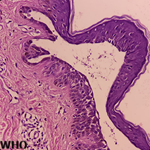
Diagnostic assessment: diagnosis was confirmed by skin biopsy (Figure 4, and Figure 5), demonstrating classic histopathological features of pustular psoriasis. Laboratory tests revealed elevated inflammatory markers. Differential diagnoses included infectious pustulosis and autoimmune blistering disorders. Diagnostic challenges included limited access to certain immunological assays due to financial constraints.
Diagnosis: final diagnosis confirmed pregnancy-associated generalized pustular psoriasis (Gestational Pustular Psoriasis). Prognosis required close maternal-fetal monitoring due to risks of placental insufficiency and preterm delivery associated with severe GPP.
Therapeutic interventions: initial treatment consisted of systemic corticosteroids (prednisone at [appropriate dose]) combined with vitamin supplementation. Due to a secondary infection of a lesion, antibiotics were administered, and an emergency cesarean section was performed at 35 weeks to safeguard fetal health. Post-delivery, corticosteroids were tapered, and the skin condition markedly improved without the need for additional immunosuppressive agents.
Follow-up and outcome of interventions: the patient showed significant clinical and laboratory improvement postpartum. Skin examination confirmed resolution of pustules and erythema. The patient adhered well to prescribed treatments, and no adverse drug reactions were reported. Continued dermatologic and obstetric follow-up was planned for the postpartum period.
Patient perspective: the patient expressed relief following delivery and treatment but described the course as distressing due to severe skin symptoms and concerns for her baby's health. She emphasized the importance of timely medical intervention and appreciated the multidisciplinary care she received throughout the pregnancy and delivery.
Informed consent: informed consent for publication of the case and related clinical information was obtained from the patient, including explanation of the case report's purpose, confidentiality measures, and the option to withdraw consent at any time.
Impetigo herpetiformis (IH), also known as pregnancy-associated generalized pustular psoriasis, is a rare and potentially life-threatening dermatosis most commonly occurring during the third trimester [4]. Although first described by Ferdinand von Hebra in 1872, debate continues regarding whether IH represents a distinct clinical entity or a pregnancy-triggered variant of pustular psoriasis (PP). The condition typically presents with sudden-onset sterile pustules on an erythematous base, initially affecting intertriginous areas before spreading centrifugally to involve large areas of the skin, while sparing the face, palms, and soles; occasional mucosal involvement has been reported [5]. Systemic symptoms such as fever, fatigue, nausea, diarrhea, and polyarthralgia are frequently observed, reflecting the systemic inflammatory nature of the disease. Histopathology shows spongiform pustules with neutrophilic infiltration, and laboratory findings often include leukocytosis, elevated ESR, and electrolyte disturbances such as hypocalcemia and hypoalbuminemia. Differential diagnoses include acute generalized exanthematous pustulosis, gestational pemphigoid, dermatitis herpetiformis, erythema multiforme, and autoimmune blistering disorders, which must be carefully considered to ensure appropriate management [6]. Although a personal or family history of psoriasis is common, many cases arise de novo, suggesting that hormonal, immunological, and genetic factors-including IL36RN mutations-contribute to disease pathogenesis [6-8].
Management of IH during pregnancy presents significant challenges due to the potential teratogenicity of systemic therapies and the risk of maternal and fetal complications. Mild cases may respond to topical corticosteroids, supportive care, and correction of electrolyte imbalances, while moderate to severe presentations often require systemic corticosteroids, administered with close monitoring to prevent reduced fetal reactivity [9]. In corticosteroid-refractory cases, cyclosporine has emerged as a second-line treatment, with reported efficacy at 5-10 mg/kg/day, and is generally considered safe during pregnancy despite associations with low birth weight and preterm delivery [7,8,10]. Biologic therapies, such as infliximab, have been successfully used as rescue therapy, particularly in patients harboring IL36RN mutations, though caution is advised in the third trimester due to placental transfer. Phototherapy with narrow-band UVB is considered safe in pregnancy, while PUVA is reserved for postpartum use. Supportive measures, including maintenance of fluid and electrolyte balance, supplementation with calcium, iron, and vitamin D, and close obstetric monitoring with serial ultrasounds and non-stress testing, are critical to optimize maternal and fetal outcomes [7,8,9].
In the present case, a 23-year-old primigravida at 32 weeks of gestation presented with widespread pruritic and painful pustular lesions, systemic inflammation, and risk for fetal compromise. Skin biopsy confirmed generalized pustular psoriasis, and systemic corticosteroids were initiated, complicated by secondary infection that necessitated emergency cesarean delivery at 35 weeks. Postpartum, the patient showed rapid clinical improvement and resolution of lesions. This course illustrates the challenges of balancing effective maternal treatment with fetal safety, highlighting the importance of a multidisciplinary approach involving dermatology, obstetrics, neonatology, and pathology. Our case reinforces the need for early recognition and timely intervention, as delays may lead to placental insufficiency, preterm birth, or fetal demise. The clinical evolution observed in this patient aligns with previously reported cases, emphasizing the potential for postpartum resolution while demonstrating the risks associated with severe or complicated presentations [7,8].
This report has several strengths and limitations. Key strengths include detailed clinical and histopathological documentation, careful monitoring of maternal-fetal outcomes, and illustration of real-world challenges in the management of IH. The coordination between dermatology and obstetrics teams facilitated prompt diagnosis and intervention, ultimately achieving favorable maternal and neonatal outcomes, contributing meaningful insight to current literature. Limitations include the inherent lack of generalizability of a single case, the absence of long-term postpartum follow-up, and restricted access to specialized immunological assays. The diagnostic complexity-particularly distinguishing IH from acute generalized exanthematous pustulosis or systemic lupus erythematosus-highlights challenges faced in clinical practice. Additionally, while hydroxychloroquine was considered a possible trigger, drug-induced IH remains rare and poorly understood, warranting further research. Overall, this case underscores the critical need for early diagnosis, aggressive maternal monitoring, and individualized multidisciplinary management of pregnancy-associated generalized pustular psoriasis [7,8].
This case illustrates that pustular psoriasis of pregnancy (PPP) is a rare but serious condition requiring prompt recognition and multidisciplinary management to optimize maternal and fetal outcomes. In this patient, early diagnosis through clinical and histopathological assessment allowed timely initiation of systemic corticosteroids, with escalation to other therapies as needed, and close obstetric monitoring. The main takeaway is that individualized, closely supervised treatment and coordinated care are critical to prevent maternal complications such as infection and fetal risks including preterm delivery, highlighting the importance of vigilance in managing PPP during pregnancy.
The authors declare no competing interests.
Patient management: Mkhinini Ines and Mkhinini Haifa. Data collection: Guezguez Amani. Literature review: Hammedi Jawaher. Histopathological analysis: Fejji Yosra. Results section drafting: Ghades Sana. Manuscript revision: Mkhinini Ines. Supervision: Fatnassi Ridha. All authors read and approved the final version of the manuscript.
Figure 1: abdominal lesions in generalized pustular psoriasis during pregnancy; erythematous to violaceous plaques with intense pruritus, bordered by scattered sterile pustules on the abdomen
Figure 2: arm lesions in generalized pustular psoriasis during pregnancy; erythematous to violaceous plaques with severe pruritus and peripheral sterile pustules on the arms
Figure 3: leg lesions in generalized pustular psoriasis during pregnancy; erythematous to violaceous plaques with marked pruritus and scattered sterile pustules on the legs
Figure 4: skin biopsy of generalized pustular psoriasis (low magnification); low-magnification histological section showing the epidermis and dermis in a full-thickness skin fragment
Figure 5: skin biopsy of generalized pustular psoriasis (high magnification); high-magnification view (×40) showing an acanthotic epidermis with thinning of the granular layer and subcorneal pustules, with a polymorphic perivascular inflammatory infiltrate in the dermis
Figure 6: postpartum healing of generalized pustular psoriasis phase; postpartum healing under corticosteroid therapy showing disappearance of pustules and inflammation with restored epidermal integrity and residual hypo- or hyperpigmentation on the face
Figure 7: postpartum healing of generalized pustular psoriasis; postpartum healing phase showing resolution of active lesions with re-epithelialization and variable residual pigmentation on the arms and legs
- Choon SE, Navarini AA, Pinter A. Clinical course and characteristics of generalized pustular psoriasis. Am J Clin Dermatol. 2022;23(Suppl 1):21-29. PubMed | Google Scholar
- Yang C, Wang Y, Li R, Tu P, Wang R. Successful treatment of recalcitrant generalized pustular psoriasis of pregnancy with spesolimab. J Dermatol Treat. 2024;35(1):2334791. PubMed | Google Scholar
- Seishima M, Fujii K, Mizutani Y. Generalized pustular psoriasis in pregnancy: current and future treatments. Am J Clin Dermatol. 2022;23(5):661-671. PubMed | Google Scholar
- Genovese G, Moltrasio C, Cassano N, Maronese CA, Vena GA, Marzano AV. Pustular psoriasis: From pathophysiology to treatment. Biomedicines. 2021;9(12):1746. PubMed | Google Scholar
- Ali AIA, Abdulkadir MMA, Mumin HA, Aden AI, Hassan MS. Treatment of generalized pustular psoriasis in pregnancy with systemic corticosteroid: A rare case report. Ann Med Surg (Lond). 2022;82:104568. PubMed | Google Scholar
- Mohaghegh F, Galehdari H, Rezaie M. Pustular psoriasis of pregnancy in early first trimester: A case report. J Dermatol Case Rep. 2022;16(1):26-29. PubMed | Google Scholar
- Trivedi MK, Vaughn AR, Murase JE. Pustular psoriasis of pregnancy: Current perspectives. J Dermatol. 2023;50(4):234-239. PubMed | Google Scholar
- McStay D, McBride S, Hill S, Sutton J, Saleem A, Singh V. Pustular psoriasis of pregnancy: A rare cause of placental insufficiency. J Obstet Gynecol. 2023;45(6):789-792. PubMed | Google Scholar
- Raja A, Palaniappan P, Sankar D, Baalann KP. An arcane presentation of pustular psoriasis in pregnancy: Case report. Pan Afr Med J. 2022;43:104. PubMed | Google Scholar
- Khederlou H, Najmi Z, Mohammadi N, Atrak S, Ghaffari N. Successful Treatment of Generalized Pustular Psoriasis of Pregnancy with Oral Cyclosporine. SKIN The Journal of Cutaneous Medicine. 2020 May 8;4(3):252-5. Google Scholar
Search
This article authors
On Pubmed
On Google Scholar
Citation [Download]
Navigate this article
Similar articles in
Key words
Tables and figures


Article metrics
Recently from the PAMJ





Authors´ services