Ulcerated nodular lesion over the nasal tip suggestive of basal cell carcinoma
Nishad Mohadure, Pooja Kasturkar
Corresponding author: Nishad Mohadure, Mental Health Nursing, Smt. Radhikabai Meghe Memorial College of Nursing, Datta Meghe Institute of Higher Education and Research (Deemed to be University), Wardha, Maharashtra, India 
Received: 07 Jan 2026 - Accepted: 27 Jan 2026 - Published: 27 Aug 2026
Domain: Nursing education,Public Health Nursing
Keywords: Basal cell carcinoma, nasal tip lesion, skin cancer
Funding: This work received no specific grant from any funding agency in the public, commercial, or non-profit sectors.
©Nishad Mohadure et al. Pan African Medical Journal (ISSN: 1937-8688). This is an Open Access article distributed under the terms of the Creative Commons Attribution International 4.0 License (https://creativecommons.org/licenses/by/4.0/), which permits unrestricted use, distribution, and reproduction in any medium, provided the original work is properly cited.
Cite this article: Nishad Mohadure et al. Ulcerated nodular lesion over the nasal tip suggestive of basal cell carcinoma. Pan African Medical Journal. 2026;54:145. [doi: 10.11604/pamj.2026.54.145.51004]
Available online at: https://www.panafrican-med-journal.com//content/article/54/145/full
 PDF in process
 Images in clinical medicine 

Ulcerated nodular lesion over the nasal tip suggestive of basal cell carcinoma
Ulcerated nodular lesion over the nasal tip suggestive of basal cell carcinoma
Nishad Mohadure1,&, Pooja Kasturkar1
&Corresponding author

A 42-year-old woman presented with a slowly progressive lesion over the nasal tip for the past several months, associated with intermittent crusting and occasional spontaneous bleeding. She reported gradual enlargement of the lesion without pain, fever, or systemic symptoms. There was no history of trauma, infection, or similar lesions elsewhere. On clinical examination, a solitary, well-defined nodular growth with central ulceration and crusting was noted over the nasal tip. The surrounding skin showed erythema and induration, and the margins appeared raised and rolled. The lesion was firm, non-tender, and fixed to the underlying skin. The diagnostic approach was based on the characteristic clinical morphology and its location on a chronically sun-exposed area of the face. The presence of a nodular lesion with ulceration, crusting, and pearly, rolled edges strongly suggested a malignant epithelial tumor. Based on these typical features, a clinical diagnosis of basal cell carcinoma was made. The final diagnosis was basal cell carcinoma of the nasal tip. Important differential diagnoses considered were squamous cell carcinoma, actinic keratosis, and lupus vulgaris, as these conditions may present with ulcerated or nodular lesions over the face. The patient was referred to the dermatology department for further management, and surgical excision was advised as the preferred therapeutic intervention to achieve complete removal and prevent local tissue destruction. In the short-term follow-up, the patient remained clinically stable while awaiting surgery. With early diagnosis and complete excision, the prognosis is excellent, as basal cell carcinoma rarely metastasizes but can cause significant local damage if left untreated.
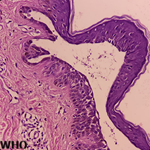
Figure 1: ulcerated nodular lesion over the nasal tip consistent with basal cell carcinoma
Search
This article authors
On Pubmed
On Google Scholar
Citation [Download]
Navigate this article
Similar articles in
Key words
Tables and figures

Article metrics
Recently from the PAMJ





Authors´ services