Factors associated with tuberculosis treatment adherence: reflections on a retrospective cohort study in Lesotho
Gianella Ramos Mejia
Corresponding author: Gianella Ramos Mejia, Instituto de Investigaciones en Ciencias Biomédicas, Universidad Ricardo Palma, Lima, Perú 
Received: 29 Apr 2026 - Accepted: 12 May 2026 - Published: 14 May 2026
Domain: Public health, Respiratory diseases
Keywords: Tuberculosis, treatment adherence, public health
Funding: This work received no specific grant from any funding agency in the public, commercial, or non-profit sectors.
©Gianella Ramos Mejia et al. Pan African Medical Journal (ISSN: 1937-8688). This is an Open Access article distributed under the terms of the Creative Commons Attribution International 4.0 License (https://creativecommons.org/licenses/by/4.0/), which permits unrestricted use, distribution, and reproduction in any medium, provided the original work is properly cited.
Cite this article: Gianella Ramos Mejia et al. Factors associated with tuberculosis treatment adherence: reflections on a retrospective cohort study in Lesotho. Pan African Medical Journal. 2026;54:10. [doi: 10.11604/pamj.2026.54.10.53079]
Available online at: https://www.panafrican-med-journal.com//content/article/54/10/full
 PDF in process
 Reaction 

Factors associated with tuberculosis treatment adherence: reflections on a retrospective cohort study in Lesotho
Factors associated with tuberculosis treatment adherence: reflections on a retrospective cohort study in Lesotho
 Gianella Ramos Mejia1,&
&Corresponding author

I read with great interest the article on tuberculosis treatment adherence and associated factors in the district of Butha-Buthe, Lesotho [1], which provides relevant evidence on the determinants of therapeutic adherence in a high-burden setting. I believe this study makes a significant contribution to understanding the sociodemographic and clinical factors involved in adherence to anti-tuberculosis treatment.
The authors identify several factors associated with adherence, highlighting the influence of sociodemographic variables and health system-related aspects. This finding is consistent with global reports, where the World Health Organization has emphasized that adherence to tuberculosis treatment remains a critical challenge, particularly in developing countries [2]. In this regard, factors such as educational level, social support, access to healthcare services, and economic conditions have been widely described as key determinants of treatment adherence [3,4].
However, I believe it is important to further examine certain methodological aspects of the study. Given its retrospective cohort design, there is a potential for information bias and limitations related to the quality of recorded data, which could influence the estimation of associated factors. Additionally, the absence of variables related to mental health, social stigma, or family support may limit a comprehensive understanding of adherence, as these factors have shown a significant impact in different settings [5,6].
Furthermore, the findings of this study gain particular relevance when compared with the situation in other regions. In Latin America, and especially in Peru, tuberculosis remains a major public health concern, where treatment adherence continues to be a significant challenge despite the implementation of strategies such as directly observed therapy (DOTS) [7]. Studies conducted in similar contexts have shown that treatment default is frequently associated with socioeconomic factors, substance use, and barriers to accessing healthcare services [8].
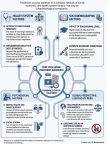
Based on the above, I consider that the study conducted in Lesotho represents a valuable contribution that reinforces the need to address tuberculosis treatment adherence from a multidimensional perspective. It is essential to integrate interventions that not only focus on pharmacological treatment but also consider social, educational, and psychological determinants (Figure 1). Likewise, future research should incorporate additional variables and prospective designs to allow for a better assessment of causal factors.
Finally, I congratulate the authors on their contribution and believe that their findings may serve as a basis for developing more effective strategies aimed at improving treatment adherence and, consequently, tuberculosis control at a global level.
The author declares no competing interests.

The author has read and approved the final version of this manuscript.
Figure 1: multidimensional determinants of tuberculosis treatment adherence, including health system, sociodemographic, and psychosocial factors, and their interaction with pharmacological treatment
- Rangoanana M, Ngah V, Tamuzi JL, Maphalale S, Molete M, Ratikoane R et al. Adherence to tuberculosis treatment and associated factors in Butha-Buthe district, Lesotho: a retrospective cohort study. Pan Afr Med J. 2025;50:91. PubMed | Google Scholar
- World Health Organization. Global tuberculosis report 2023. Geneva: WHO; 2023.
- Munro SA, Lewin SA, Smith HJ, Engel ME, Fretheim A, Volmink J. Patient adherence to tuberculosis treatment: a systematic review of qualitative research. PLoS Med. 2007 Jul 24;4(7):e238. PubMed | Google Scholar
- Tola HH, Azar TO, Shojaeizadeh D, Garmaroudi G. Tuberculosis treatment non-adherence and associated factors: a systematic review. Iran J Public Health. 2015 Jan;44(1):1-11. PubMed | Google Scholar
- Nezenega ZS, Perimal-Lewis L, Maeder AJ. Factores que influyen en la adherencia de los pacientes al tratamiento de la tuberculosis en Etiopía: una revisión de la literatura. Int J Environ Res Public Health. 2020;17:5626.
- Vega P, Sweetland A, Acha J, Castillo H, Guerra D, Fawzi MS et al. Psychiatric issues in the management of patients with multidrug-resistant tuberculosis. Int J Tuberc Lung Dis. 2004 Jun;8(6):749-59. PubMed | Google Scholar
- Ministerio de Salud del Perú. Norma técnica de salud para la prevención y el control de la tuberculosis. Lima: MINSA; 2025.
- Culqui DR, Munayco CV, Grijalva CG, Cayla JA, Horna-Campos O, Alva-Ch K et al. Factores asociados al abandono de tratamiento antituberculoso convencional en Perú. Arch Bronconeumol. 2012;48(5):150-155. PubMed | Google Scholar
Search
This article authors
On Pubmed
On Google Scholar
Citation [Download]
Navigate this article
Similar articles in
Key words
Article metrics
Recently from the PAMJ






Authors´ services