
Severe bullous erythema multiforme with atypical mucosal involvement: a rare clinical image
Pooja Kasturkar, Kavita Gomase
Corresponding author: Kavita Gomase, Department of Obstetrics and Gynaecological Nursing, Smt Radhikabai Meghe Memorial College of Nursing, Datta Meghe Institute of Higher Education and Research, Sawangi (M) Wardha, India 
Received: 30 Mar 2025 - Accepted: 22 Apr 2025 - Published: 20 Nov 2025
Domain: Internal medicine,Child nutrition, Pediatrics (general)
Keywords: Severe bullous erythema multiforme, hypersensitivity reaction, amoxicillin-clavulanic acid allergy, erythematous macules, mucosal necrosis, genital mucosal
Funding: This work received no specific grant from any funding agency in the public, commercial, or non-profit sectors.
©Pooja Kasturkar et al. Pan African Medical Journal (ISSN: 1937-8688). This is an Open Access article distributed under the terms of the Creative Commons Attribution International 4.0 License (https://creativecommons.org/licenses/by/4.0/), which permits unrestricted use, distribution, and reproduction in any medium, provided the original work is properly cited.
Cite this article: Pooja Kasturkar et al. Severe bullous erythema multiforme with atypical mucosal involvement: a rare clinical image. Pan African Medical Journal. 2025;52:118. [doi: 10.11604/pamj.2025.52.118.47430]
Available online at: https://www.panafrican-med-journal.com//content/article/52/118/full
Images in clinical medicine 

Severe bullous erythema multiforme with atypical mucosal involvement: a rare clinical image
Severe bullous erythema multiforme with atypical mucosal involvement: a rare clinical image
Pooja Kasturkar1,  Kavita Gomase2,&
&Corresponding author

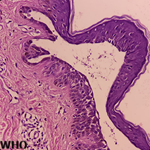
A three-year-old girl who weighed 8.4kg and was 80cm tall was brought in with weakness, drowsiness, and a fever. Injection of Augmentin (Amoxicillin-clavulanic acid) was prescribed to her. She experienced a significant hypersensitive reaction within 24 hours, resulting in erythematous macules, bullae on the face, trunk, and extremities, and widespread involvement of the oral mucosa, which hindered oral intake. She had no known allergies, no recent pharmaceutical exposure. Laboratory investigations showed elevated erythrocyte sedimentation rate (ESR) and C-reactive protein (CRP), with a negative autoimmune panel. Serological tests confirmed Mycoplasma pneumoniae infection via immunoglobulin M (IgM) positivity. Skin biopsy revealed subepidermal bullae with keratinocyte necrosis and perivascular lymphocytic infiltration, confirming bullous erythema multiforme. The case was diagnosed as severe bullous erythema multiforme with atypical mucosal involvement, resembling paediatric autoimmune blistering diseases or severe bacterial/viral stomatitis. Treatment included systemic corticosteroids (methylprednisolone 1 mg/kg/day), hydration, pain management, and supportive care. Azithromycin was started for Mycoplasma pneumoniae. As her condition worsened with severe oral ulcerations and extensive blistering, intravenous immunoglobulin (IVIG) (2g/kg) was given on day 5, leading to significant improvement within 72 hours. Supportive care included antiseptic mouthwash, petroleum jelly, oral morphine for pain, parenteral nutrition, and ophthalmologic monitoring. Dapsone (1 mg/kg/day) helped reduce new blister formation. Complete mucosal healing occurred over three weeks, allowing normal eating. At a six-month follow-up, no long-term complications were noted. The reaction was likely due to immune system immaturity, genetic predisposition, and infection-triggered hypersensitivity. This case highlights the importance of early diagnosis, prompt treatment, and multidisciplinary care in managing drug-induced severe cutaneous reactions in children.
Figure 1: severe bullous erythema multiforme with atypical mucosal involvement
Search
This article authors
On Pubmed
On Google Scholar
Citation [Download]
Navigate this article
Similar articles in
Key words

Article metrics
Recently from the PAMJ



Authors´ services
