
Diagnostic challenges of longstanding nasal cutaneous tuberculosis in an endemic setting: a case report
Anke van der Linden, Eugenne Elliot, Rehuel Borstlap
Corresponding author: Anke van der Linden, Department of Otorhinolaryngology, Head and Neck Surgery, Robert Mangaliso Sobukwe Hospital, Kimberley, Northern Cape, South Africa 
Received: 26 Jun 2025 - Accepted: 12 Jul 2025 - Published: 18 Aug 2025
Domain: Dermatology,Tuberculosis,Otolaryngology (ENT)
Keywords: Granulomatous disease, tuberculosis, lupus vulgaris, nasal cutaneous tuberculosis, case report
Funding: This work received no specific grant from any funding agency in the public, commercial, or not-for-profit sectors.
©Anke van der Linden et al. Pan African Medical Journal (ISSN: 1937-8688). This is an Open Access article distributed under the terms of the Creative Commons Attribution International 4.0 License (https://creativecommons.org/licenses/by/4.0/), which permits unrestricted use, distribution, and reproduction in any medium, provided the original work is properly cited.
Cite this article: Anke van der Linden et al. Diagnostic challenges of longstanding nasal cutaneous tuberculosis in an endemic setting: a case report. Pan African Medical Journal. 2025;51:95. [doi: 10.11604/pamj.2025.51.95.48456]
Available online at: https://www.panafrican-med-journal.com//content/article/51/95/full
Case report 

Diagnostic challenges of longstanding nasal cutaneous tuberculosis in an endemic setting: a case report
Diagnostic challenges of longstanding nasal cutaneous tuberculosis in an endemic setting: a case report
 Anke van der Linden1,&, Eugenne Elliot1, Rehuel Borstlap1
&Corresponding author
Nasal cutaneous tuberculosis (TB) is a rare manifestation of extrapulmonary tuberculosis and presents a diagnostic challenge, particularly in its paucibacillary form. As demonstrated in this case, achieving laboratory-confirmed diagnosis in paucibacillary TB remains a significant challenge, often resulting in missed or delayed diagnoses and increased severity of disease on presentation. We report an atypical case involving a 19-year-old male with extensive nasal destruction progressing for fourteen years. In this case, lupus vulgaris was ultimately diagnosed after extending the tissue culture duration beyond 35 days, despite prior exclusion of TB as the cause. The patient completed antituberculosis therapy with resolution of the active disease, and he was referred for further management of his facial deformity. The delayed diagnosis led to significant tissue destruction, which could have been prevented with earlier confirmation and treatment of the infection. We propose that, in diagnostically difficult cases, the investigating team consider extending the specimen culture time to the maximum before definitively excluding tuberculous disease.

Cutaneous tuberculosis (CTB) is diagnostically elusive due to the condition's diverse clinical morphology, uncommon presentation, and the frequent difficulty in obtaining microbiological confirmation [1,2]. CTB is rare, estimated to account for approximately 1-2% of all extrapulmonary tuberculosis cases [3]. Lupus vulgaris (LV) is a paucibacillary form of CTB, a classification that also includes tuberculosis verrucosa cutis and tuberculids. Mycobacterium tuberculosis is the predominant causative agent.
The gold standard for diagnosis of CTB is a successful tissue culture [3], yet obtaining laboratory confirmation or a positive culture in paucibacillary CTB remains challenging. This can result in delayed or missed diagnoses, disease progression, and increased severity of disease on presentation - as was seen in this case. Despite the prevalence of CTB, nasal LV is an uncommon presentation, with cases of absent external nasal structures secondary to LV being even more rare. We present one such uncommon case of lupus vulgaris affecting the external nose.

Patient information: an otherwise healthy 19-year-old male was referred from a primary care facility with absent external nasal structures and centrofacial granulomatous skin lesions progressing for fourteen years (Figure 1).
Clinical findings: he first presented to a primary care facility in 2014 (age ten), five years after he first developed lesions on his upper lip and philtrum. The disease had since progressed to involve his perioral region, inferior nasal skin, and his anterior nasal septum, without septal perforation.
Timeline of the current episode: upon presentation in 2014, his first workup was initiated. Extensive investigations, including tissue biopsies for histology and TB cultures, were conducted. Prior to establishing a diagnosis the patient defaulted follow-up. Over the next decade (2014-2023), the patient underwent several diagnostic evaluations but repeatedly defaulted before a definitive diagnosis could be made. Throughout this time, he had numerous investigations performed, some of which included new tissue biopsies for histology and TB cultures (2014, 2018, and 2023) (Table 1). Beyond TB, other causes investigated included sarcoidosis, leprosy, and atypical fungi [4].
Diagnostic assessment: he re-presented in November 2023 and a new, comprehensive workup was done. Investigations included radiological imaging, blood tests, and new tissue biopsies of his perinasal region. Specimens were sent for histological analysis, TB culture, and TB nucleic acid amplification tests (TB NAAT) [5]. X-ray imaging and laboratory markers of infection and inflammation were non-specific, with normal results except for a moderately raised angiotensin-converting enzyme (ACE) level. The TB NAAT tests were negative again, and the histopathological analysis of the new specimens delivered similar results to those obtained in 2014 and 2018, with negative stains and no conclusive evidence of TB (Table 1). Considering all the previous negative culture findings, repeat biopsies were taken for histology and culture. While awaiting these results, our patient was booked for a high-resolution computed tomography (CT) scan of his chest to exclude sarcoidosis, which remained a possible diagnosis.
Therapeutic interventions: after collecting the last samples, a trial of standard antituberculosis therapy was initiated while awaiting the final culture and CT scan results, given the persistent clinical suspicion of TB [6].
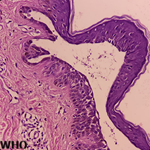
Follow-up and outcome of interventions: the TB culture, incubated using the Becton Dickinson mycobacteria growth indicator tube (BD MGIT), was extended and became positive on day 42. The second biopsy taken in December 2023, though negative for TB on culture at 35 days, was the first of four specimens that had histological features suggestive of TB (Figure 2, see Table 1). The patient completed TB treatment and showed remarkable recovery of his facial lesions in 2024 (Figure 3). After clinical resolution of his TB, he was referred for reconstructive surgery, also to our dermatology department for annual follow-up and screening for recurrence or carcinomatous changes.
Patient perspective: the patient was grateful that a diagnosis was finally made and that the treatment had such a good effect.
Informed consent: written informed consent was obtained from the patient for publication.
LV is a paucibacillary, post-primary form of CTB, occurring in individuals with a moderate to high degree of immunity. Hematogenous seeding is thought to be the main method of spread from the primary site, but it can also occur secondary to autoinoculation or lymphatic dissemination. Despite the prevalence of TB and its global burden of disease, a patient presenting with absent external nasal structures secondary to destruction caused by sinonasal LV is extremely rare. LV is characterized by its infrequency and clinical polymorphism, often mimicking other granulomatous or neoplastic processes, contributing to its diagnostic difficulty. The gold standard for diagnosis of CTB is a successful tissue culture and susceptibility testing to exclude multidrug-resistant and extensively drug-resistant tuberculosis (MDR/XDR TB).
Resource constraints have necessitated limiting the culture duration to 35 days [7], but it is not long enough to exclude all paucibacillary infections, as is demonstrated by this case. In similar situations, extending the incubation time should be considered and can be requested from the laboratory. The breakthrough in this case was achieved by prolonging the specimen's culture time. Despite adequate specimen size and extensive diagnostic efforts, all four TB cultures were negative at 35 days. Currently, BD MGIT machines can only detect bacteria at 10^1 to 10^2 bacilli/mL [8,9]. In the case described above, multiple histopathological, laboratory, and imaging tests were also nonspecific. This, combined with the negative TB culture result at 35 days, previously led clinicians to exclude TB as the potential cause. It was only when the TB culture duration was extended beyond the routine culture time that a positive culture result was finally obtained on day 42 from the specimen collected in November 2023 (Table 1).
We recommend that in diagnostically complex cases, clinicians consider extending the specimen culture time to the maximum before definitively excluding TB. This is especially relevant in areas of high TB prevalence [10] where there is a high index of suspicion of CTB, combined with a negative culture result at 35 days and a lack of other conclusive diagnostic evidence. Positive culture results allow directed treatment; negative extended culture results will exclude TB as the diagnosis, for the treatment of alternative causes of the mutilating effect could accelerate multiplication of TB bacilli and exacerbate tissue damage. This is applicable to other forms of extrapulmonary TB; however, this consideration is especially relevant in challenging cases of cutaneous disease, as well as other rare or low-yield conditions that can be attributed to TB infection. After obtaining adequate samples, a trial of antituberculosis therapy can be considered awaiting pending results, as clinical improvement is often rapid and marked when TB is correctly identified and treated.
The authors declare no competing interests.
Anke van der Linden was the medical officer in charge of the case, and wrote and reviewed the manuscript. Rehuel Borstlap and Eugenne Elliot provided expert consultation and critically reviewed the manuscript. All the authors read and approved the final version of this manuscript.
Table 1: summary of investigations and results
Figure 1: A, B) clinical appearance at the first visit: significant centrofacial mutilation and absence of anterior nasal structures, with ulcerating, vegetative reddish-brown plaques and extensive crusting
Figure 2: histologic image of the fourth submitted tissue specimen (December 2023): the first specimen with histopathological features more suggestive of cutaneous tuberculosis
Figure 3: A, B) post-treatment images with healed skin lesions, residual nasal defect evident, but overall, markedly improved appearance
- Khadka P, Koirala S, Thapaliya J. Cutaneous Tuberculosis: Clinicopathologic Arrays and Diagnostic Challenges. Dermatol Res Pract. 2018 Jul 9;2018:7201973. PubMed | Google Scholar
- Kaul S, Kaur I, Mehta S, Singal A. Cutaneous tuberculosis. Part I: Pathogenesis, classification, and clinical features. J Am Acad Dermatol. 2023 Dec;89(6):1091-1103. PubMed | Google Scholar
- Dias MF, Bernardes Filho F, Quaresma MV, Nascimento LV, Nery JA, Azulay DR. Update on cutaneous tuberculosis. An Bras Dermatol. 2014 Nov-Dec;89(6):925-38. PubMed | Google Scholar
- Hughes RG, Drake-Lee A. Nasal manifestations of granulomatous disease. Hosp Med. 2001 Jul;62(7):417-21. PubMed | Google Scholar
- Zargari O, Elpern DJ. Granulomatous diseases of the nose. Int J Dermatol. 2009 Dec;48(12):1275-82; quiz 1282. PubMed | Google Scholar
- Health Department: Health Republic of South Africa. National Tuberculosis Management Guidelines 2014. 2014.
- Pfyffer GE, Wittwer F. Incubation time of mycobacterial cultures: how long is long enough to issue a final negative report to the clinician? J Clin Microbiol. 2012 Dec;50(12):4188-9. PubMed | Google Scholar
- Birhanu T, Ejeta E. Review on convectional and advanced diagnostic techniques of human tuberculosis. Journal of Medical Laboratory and Diagnosis. 2015 Feb 28;6(2):9-16. Google Scholar
- Salman H, Siddiqi. MGIT TM Procedure Manual. July 2006.
- World Health Organization. Global Tuberculosis Report 2023. 2023.
Search
This article authors
On Pubmed
On Google Scholar
Citation [Download]
Navigate this article
Similar articles in
Key words
Tables and figures



Article metrics
Recently from the PAMJ






Authors´ services
