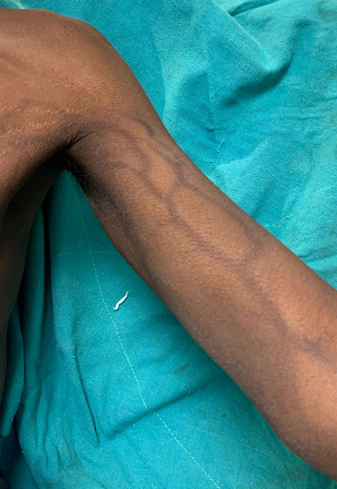
A 39-year-old male presented with complaints of left arm skin discoloration associated with itching for the past 2 weeks. The patient has a known case of signet ring cell carcinoma of the stomach for the past 6 months and has completed 6 cycles of intravenous 5-fluorouracil through a peripheral venous catheter. A biopsy of the skin showed melanophages with perivascular mononuclear cell infiltration. A diagnosis of 5-fluorouracil-induced hyperpigmentation was made. The patient was treated with topical steroid application and antihistamine and is currently on follow-up. Serpentine supravenous hyperpigmentation was described by Hrushesky in 1976 which is a cutaneous reaction to intravenous antineoplastic agents. It is seen in 2-5% of patients receiving intravenous chemotherapy drugs but is a benign and self-limiting disease. The chemotherapy agents include cyclophosphamide, actinomycin, bortezomib, doxorubicin, and 5-fluorouracil. The exact mechanism is unclear, but possible hypotheses include endothelial damage leading to extravasation of the drug and interference with melanogenesis, direct stimulation of melanocytes, hyperthermia-related increased expression of melanocyte-stimulating hormone receptor, and hyperpigmentation secondary to increased blood flow. The condition is reversible, usually months to years after cessation of the drug. It can be prevented by using a central chemo port for drug administration.
Corresponding Author
Ashwin Karnan, Department of Respiratory Medicine, Jawaharlal Nehru Medical College, Datta Meghe Institute of Higher Education and Research, Sawangi (Meghe), Wardha, Maharashtra, India (ashwin2700@gmail.com)