Treatment of chronic hepatitis C with direct-acting antivirals: a prospective multicenter cohort study in three health facilities in Benin, 2020
Nicolas Kodjoh, Aboudou Raïmi Kpossou, Khadidjatou Saké Alassan, Euloge Houndonnougbo, Mahougnon Bleck Fourrier Adido, Comlan N'déhougbèa Sokpon, Rodolph Koffi Vignon, Coffi Denis Fanou, Edmond Gbedo Sossa, Jean Séhonou
Corresponding author: Aboudou Raïmi Kpossou, University Clinic of Hepatology and Gastroenterology, Hubert Koutoukou Maga National Teaching Hospital, Cotonou, Benin 
Received: 05 Jan 2026 - Accepted: 18 Jun 2026 - Published: 05 Oct 2026
Domain: Gastroenterology,Hepatology
Keywords: Hepatitis C, direct-acting antivirals, efficacy, safety, Benin
Funding: This work received no specific grant from any funding agency in the public, commercial, or non-profit sectors.
This article is published as part of the supplement Hepatogastroenterology and Digestive Oncology, commissioned by African Journal of Hepatogastroenterology and Digestive Oncology (RAHGOD) and the African Society of Hepatogastroenterology Digestive Endoscopy (SAHGE).
©Nicolas Kodjoh et al. Pan African Medical Journal (ISSN: 1937-8688). This is an Open Access article distributed under the terms of the Creative Commons Attribution International 4.0 License (https://creativecommons.org/licenses/by/4.0/), which permits unrestricted use, distribution, and reproduction in any medium, provided the original work is properly cited.
Cite this article: Nicolas Kodjoh et al. Treatment of chronic hepatitis C with direct-acting antivirals: a prospective multicenter cohort study in three health facilities in Benin, 2020. Pan African Medical Journal. 2026;55(1):8. [doi: 10.11604/pamj.supp.2026.55.1.50960]
Available online at: https://www.panafrican-med-journal.com//content/series/55/1/8/full
 PDF in process
Research 
Treatment of chronic hepatitis C with direct-acting antivirals: a prospective multicenter cohort study in three health facilities in Benin, 2020
Treatment of chronic hepatitis C with direct-acting antivirals: a prospective multicenter cohort study in three health facilities in Benin, 2020
Nicolas Kodjoh1,  Aboudou Raïmi Kpossou2,&, Khadidjatou Saké Alassan3, Euloge Houndonnougbo4, Mahougnon Bleck Fourrier Adido2, Comlan N'déhougbèa Sokpon2, Rodolph Koffi Vignon2, Coffi Denis Fanou5, Edmond Gbedo Sossa1, Jean Séhonou2
&Corresponding author
Introduction: viral hepatitis C (HCV) is a global public health issue that can now be cured with direct-acting antivirals (DAAs). This study aims to report on the efficacy and tolerability of DAAs among patients with chronic hepatitis C in Benin.
Methods: this was a prospective, descriptive and analytical multicenter cohort. It was conducted from June 2019 to December 2020 at the University Hepatology and Gastroenterology Clinic of the Hubert Koutoukou Maga National Hospital and University Centre in Cotonou, the medical departments of the Borgou Departmental University Hospital Centre in Parakou and the Saint Jean de Dieu Hospital in Tanguiéta. The patients treated with DAAs had all been carriers of hepatitis C virus antibodies for more than six months. Cure was confirmed by a sustained virological response defined as the absence of detectable HCV RNA by PCR 12 weeks after the end of treatment. Data were analysed using EPI-INFO version 7.2.1.0.
Results: a total of 150 patients treated for hepatitis C were included, with a median age of 62 years [49-74] (range 18-68 years), with a predominance of females 92/150. The sustained virological response was 98% for all patients (147/150). Mainly, side effects were asthenia (11 patients, 18.6%), followed by weight loss (9 patients, 15.3%) and headaches (8 patients, 13.6%).
Conclusion: DAAs are highly effective and relatively well tolerated in the treatment of hepatitis C in Benin.

Worldwide, viral hepatitis represents a major public health problem. According to the latest estimates (2024), viral hepatitis is responsible for 1,373,412 deaths annually, including 1,124,563 deaths attributable to the hepatitis B virus (HBV) and 248,849 deaths due to the hepatitis C virus (HCV) [1]. Based on the same estimates, chronic infection with the hepatitis C virus, defined by the persistent presence of HCV RNA in the blood, affects 49,785,080 people worldwide, while the annual number of new chronic HCV infections is estimated at 998,043 cases [2]. In West Africa, approximately 1% of the population is estimated to be chronically infected with HCV [3]. Available data on the prevalence of hepatitis C in sub-Saharan African countries are fragmented and mainly derived from studies conducted among blood donors and specific high-risk groups. In Benin, the most recent estimates for 2024 reported a national prevalence of 1% [4].
Unlike hepatitis B, which can be prevented through vaccination, no vaccine is currently available for hepatitis C. As HCV is transmitted primarily through parenteral exposure, prevention relies mainly on healthcare safety measures, particularly the safety of blood products and injections, as well as efforts to combat injection drug use. Notably, in recent years, highly effective antiviral treatments have become available, allowing the cure of hepatitis C within 8 to 12 weeks. Consequently, a key strategy to combat this disease consists of large-scale screening of infected populations followed by treatment to interrupt transmission. This approach has been implemented with considerable success in several countries, notably Egypt.
It remains essential to document the outcomes of such initiatives to better inform health policies and advocate for the integration of hepatitis C treatment into national priority health programs. In this context, following the establishment of the National Program for the Control of Viral Hepatitis B and C in 2018, the present study reports Benin's initial experience with the treatment of chronic hepatitis C using direct-acting antivirals (DAAs) in patients who benefited from a free access treatment program. The primary objective of this study is to evaluate the efficacy and safety of these medications.

Study design and setting: this was a prospective, descriptive and analytical multicenter cohort. Therapeutic management was conducted from June 1, 2019, to December 31, 2020, at the University Clinic of Hepatology and Gastroenterology of the Hubert Koutoukou Maga National Teaching Hospital (CNHU-HKM) in Cotonou, the Departments of Medicine of the Borgou Departmental University Hospital Centre (CHUD-B) in Parakou, and the Saint Jean de Dieu Hospital of Tanguiéta.
Study population: the Study size is 150 patients. The study population consisted of two groups of patients. The first group included patients consecutively seen at the CNHU-HKM outpatient clinic who tested positive for anti-HCV antibodies and were awaiting medical evacuation abroad for treatment between 2013 and 2017. The second group consisted of patients who tested positive for anti-HCV antibodies at other treatment sites and during screening campaigns conducted in 2016 and 2018, organised with the support of partners in the context of World Hepatitis Day activities. Only patients with confirmed chronic hepatitis C, defined by the detection of HCV RNA by PCR, were included. Treatment was provided free of charge, thanks to partner support that supplied laboratory reagents and medical consumables for PCR testing and genotyping, as well as direct-acting antivirals (DAAs) for treatment. Patients were treated either with sofosbuvir-velpatasvir or sofosbuvir-edipasvir in cases of genotype 1 or 4 infection. Treatment regimens were selected according to the presence or absence of cirrhosis. Patients without cirrhosis received sofosbuvir plus velpatasvir or sofosbuvir plus ledipasvir, while cirrhotic patients received sofosbuvir plus ledipasvir plus ribavirin, or sofosbuvir plus velpatasvir with the addition of ribavirin in cases of decompensated cirrhosis. The variables are: age, sex, cirrhosis status, HCV genotype, baseline viral load, type of DAA regimen, SVR, and adverse events. All adult patients with confirmed chronic hepatitis C infection, defined by detectable HCV RNA, who received direct-acting antiviral therapy during the study period were eligible for inclusion. Négative HCV RNA or missing consent or with missing essential clinical data were the exclusion criteria. Patients were treated either with sofosbuvir-velpatasvir or sofosbuvir-ledipasvir in cases of genotype 1 or 4 infection. Treatment regimens were selected according to the presence or absence of cirrhosis. Patients without cirrhosis received sofosbuvir plus velpatasvir or sofosbuvir plus ledipasvir, while cirrhotic patients received sofosbuvir plus ledipasvir plus ribavirin, or sofosbuvir plus velpatasvir with the addition of ribavirin in cases of decompensated cirrhosis.
Data collection: data on comorbidities, prior antiviral treatment exposure, and treatment adherence were collected from medical records when available.
Definitions: virological cure was defined by a sustained virological response (SVR), corresponding to undetectable HCV RNA 12 weeks after the end of treatment. Biochemical response was defined as normalisation of aminotransferase levels 12 weeks after treatment completion. To assess treatment adherence, record adverse events, and evaluate quality of life, patients were followed up every 4 weeks during treatment and again 3 months after treatment completion. Adverse events were classified using the CTCAE grading system.
Statistical analysis: data were analysed using EPI-INFO version 7.2.1.0. Tables and figures were generated using Microsoft Excel 2016, and manuscripts were prepared using Microsoft Word. Qualitative variables were expressed as frequencies, and quantitative variables as means with standard deviations.
Ethical considerations: data collection, storage, and analysis were conducted under strict confidentiality. Administrative authorisations were obtained from all participating centres, and verbal informed consent was obtained from all patients before inclusion.
Participants: a total of 150 patients were included.
Descriptive data: the median age was 62 years (range: 18-68 years), and the most represented age group was 55 years (99 patients, 66%). There was a female predominance (sex ratio 0.6) (Table 1). HCV infection was discovered during systematic screening in 34% of cases and during investigations for another condition in 32% of cases. HBV co-infection was observed in four patients, and HIV co-infection in two patients. Ten patients (6.7%) had cirrhosis. Among the 47 patients who underwent HCV genotyping, 23 (48.9%) had genotype 1, 23 (48.9%) genotype 2, and 1 (2.1%) genotype 4. The mean baseline HCV viral load was 4,028,212 ± 1,947,563 IU/mL, with values ranging from 3,422 to 75,674,348 IU/mL.
Outcome data: patients were treated with sofosbuvir plus velpatasvir (125 patients; 83.3%), including 7 with compensated cirrhosis; sofosbuvir plus ledipasvir (22 patients; 14.7%); sofosbuvir plus velpatasvir plus ribavirin (1 patient; 0.7%) in a case of decompensated cirrhosis; or sofosbuvir plus ledipasvir plus ribavirin (2 patients; 1.3%) in compensated cirrhosis (Table 2).
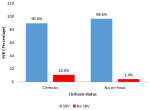
Main results: overall, virological cure was achieved in 98.0% of patients (147/150). The SVR rate was 98.6% (138/140) among non-cirrhotic patients compared with 90% (9/10) among cirrhotic patients (Figure 1). Among the three patients who did not achieve SVR, one was a cirrhotic patient infected with genotype 2, and two were non-cirrhotic patients infected with genotypes 1 and 2. The two non-cirrhotic patients had received sofosbuvir-velpatasvir and sofosbuvir-ledipasvir, respectively, while the cirrhotic patient had been treated with sofosbuvir-velpatasvir plus ribavirin. Overall, 59 patients (39.3%) experienced adverse events during treatment. Asthenia was the most frequently reported adverse effect (11 patients, 18.6%), followed by weight loss (9 patients, 15.3%), headache (8 patients, 13.6%), and gastrointestinal disorders (7 patients) (Table 3). All reported adverse events were classified as grade I.
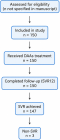
Follow-up and missing data: no loss to follow-up was recorded, and all patients completed SVR12 assessment. Therefore, the SVR analysis was performed on an intention-to-treat basis (Figure 2).
Overall, virological cure was achieved in 98.0% of patients (147/150). The SVR rate was 98.6% (138/140) among non-cirrhotic patients compared with 90% (9/10) among cirrhotic patients. Overall, 59 patients (39.3%) experienced adverse events during treatment. Asthenia was the most frequently reported adverse effect (11 patients, 18.6%), followed by weight loss (9 patients, 15.3%), headache (8 patients, 13.6%), and gastrointestinal disorders (7 patients).
As in many sub-Saharan African countries, the healthcare context in Benin is characterised by limited purchasing power, which represents a major barrier to financing HCV RNA quantification tests required for diagnosis and confirmation of cure after treatment. Consequently, shortly after its establishment in 2018, the National Program for the Control of Viral Hepatitis B and C (PNLH) sought and obtained support from partners who provided laboratory reagents, medical consumables, and DAAs for the diagnostic confirmation and treatment of the 150 patients included in this study between 2019 and 2020, some of whom had been awaiting medical evacuation abroad since 2013. In our cohort, the prevalence of HCV infection increased with age, with most patients aged 55 years and older, and a predominance of women (sex ratio 0.6). The age-related increase in HCV prevalence has been consistently reported in the literature [5,6] and is explained by cumulative exposure to risk factors over time. Genotyping was performed in only one-third of patients, reflecting limited access to specialised laboratory investigations in our setting. Given the diversity of genotypes (1, 2, and 4) and restricted access to PCR and genotyping, the use of pangenotypic regimens such as sofosbuvir-velpatasvir and sofosbuvir-ledipasvir offers a clear advantage in our working conditions. Our therapeutic outcomes confirm the very high efficacy of DAAs in an African context, with SVR rates comparable to global data. A study conducted in Cotonou in 2018 reported an SVR rate of 97.4% [7,8], very close to the 98.6% observed among non-cirrhotic patients in our study. In Burkina Faso, Ouoba et al. [9] reported an SVR rate of 95.2%, with lower rates among cirrhotic patients, a trend also observed in our cohort. The overall SVR rate of 98% in our study is consistent with those reported in Benin (96.7%) [10], Burkina Faso (97.1%) [11], and other African countries [7-12]. In West Africa, several studies converge toward cure rates exceeding 94% [13]. In a 2020 study by Boeck et al. the SVR rate was 93.3% (50,811/54,473) across seven countries (India, Myanmar, Nigeria, Cambodia, Indonesia, Rwanda, and Vietnam) [14]. Treatment tolerance was good in our study population. Reported adverse events such as asthenia (18.6%), weight loss (15.3%), and headache (13.6%) were relatively frequent but mild, and comparable to data from Côte d'Ivoire. An Ivorian study reported adverse events in approximately 40% of cases, predominantly fatigue and gastrointestinal disorders, reinforcing the notion that DAAs are generally well tolerated even in resource-limited settings [15]. In low-income countries such as Benin and other sub-Saharan African states, financing remains the major barrier to access to HCV diagnosis and treatment. In this subcontinent, approximately 14% of individuals with chronic hepatitis C are diagnosed, and among them, less than 1% receive treatment [4]. In the present study, diagnostic and therapeutic management was made possible through partner support accompanying the government following the establishment of the national hepatitis program in 2018.
The present study has limitations. First, the absence of a control or comparison group limits causal inference regarding the effectiveness of direct-acting antivirals. Second, genotyping was not performed in all patients, which may limit the assessment of treatment response according to viral genotype. Third, the relatively small number of cirrhotic patients reduces the strength of subgroup analyses in this population. Finally, although data were collected prospectively in a real-world setting, potential biases related to patient selection from different recruitment sources cannot be excluded.
This study demonstrates a high sustained virological response rate (98%) and good tolerability of direct-acting antivirals in a multicenter cohort of patients with chronic hepatitis C in Benin. These results are consistent with previously reported real-world data in sub-Saharan Africa and confirm the effectiveness of sofosbuvir-based regimens in routine clinical practice, including in resource-limited settings. However, in the absence of a control group, causal interpretation should be made with caution. Our findings support improved access to hepatitis C diagnosis and treatment and reinforce the role of DAAs as standard therapy in similar settings.
What is known about this topic
- Chronic HCV affects ~1% of the population in Benin;
- DAAs are effective in low-resource settings;
- Financial and logistical constraints limit diagnosis and treatment access.
What this study adds
- First evaluation of DAA efficacy and safety in 150 Beninese patients;
- Pangenotypic regimens effective despite limited genotyping;
- Highlights barriers to national HCV elimination efforts.
The authors declare no competing interests.
Conception, data collection and study design: Aboudou Raïmi Kpossou, Mahougnon Bleck Fourrier Adido, Comlan N'déhougbèa Sokpon and Rodolph Koffi Vignon. Data analysis and interpretation: Aboudou Raïmi Kpossou, Mahougnon Bleck Fourrier Adido, Khadidjatou Saké Alassan, Comlan N'déhougbèa Sokpon and Rodolph Koffi Vignon. Manuscript drafting, revision and guarantor of the study: Nicolas Kodjoh, Nicolas Kodjoh, Mahougnon Bleck Fourrier Adido, Khadidjatou Saké Alassan, Rodolph Koffi Vignon, Euloge Houndonnougbo, Edmond Gbedo Sossa, Coffi Denis Fanou and Jean Séhonou. All the authors read and approved the final version of this manuscript.
The authors acknowledge Bioservices Benin, the Council of Beninese Citizens in France (CBF), Gilead Laboratory, Gilead Foundation, Roche Laboratory, GENIX-PHARMA Laboratory, Biolynx, TIC Benin, and the Rotary Club Benin. Special thanks are extended to Professor Emma Thomson (University of Glasgow) for her support in providing free HCV viral load testing and genotyping for some patients.
Table 1: distribution of patients treated for hepatitis C with DAAs by age and sex
Table 2: distribution of patient types (non-cirrhotic or cirrhotic) according to specific current anti-HCV treatment
Table 3: distribution of patients according to adverse effects
Figure 1: sustained virological response (SVR) according to cirrhosis status
Figure 2: flow diagram of study cohort and SVR12 outcomes after DAA therapy
- CDA Foundation. Polaris, Database Query. CDA Foundation. 2025. Accessed July 21, 2025.
- CDA Foundation. Cause IQ. CDA Foundation. 2025. Accessed August 12, 2025.
- CDA Foundation. Saving Lives, Globally. CDA Foundation. 2025. Accessed August 12, 2025.
- CDA Foundation. HCV. CDA Foundation. 2025. Accessed August 12, 2025.
- Salomon I, Olivier S, Egide N. Advancing Hepatitis C Elimination in Africa: Insights from Egypt. Hepat Med. 2024 Jun 4;16:37-44. PubMed | Google Scholar
- Soli JA, Guingané AN, Abdou N, Houndonougbo E, Mayanna H, Coulibaly A. www. jaccrafrica. com ISSN 1859-5138 Open access. Google Scholar
- Kpossou AR, Séhonou J, Wanvoegbe FA, Abattan C, Sokpon CNM, Vignon RK. Hepatitis B and C: epidemiological and clinical aspects at the National University Hospital Centre of Cotonou. Médecine d'Afrique noire. 2019;66(1):5-12. Google Scholar
- Kpossou DA. Efficacy And Tolerance of Hepatitis C Treatment with Direct-Acting Antivirals at the CNHU-HKM In Cotonou (Benin). Japanese Jour of Gastro and Hepatology. 2025;11(1):1-8. Google Scholar
- Ouoba S, Ouedraogo JCRP, Lingani M, E B, Hussain MRA, Ko K et al. Epidemiologic profile of hepatitis C virus infection and genotype distribution in Burkina Faso: a systematic review with meta-analysis. BMC Infect Dis. 2021 Nov 1;21(1):1126. PubMed | Google Scholar
- Kpossou AR, Séhonou J, Adjigbé GM, Vignon RK, Alassan KS, Kodjoh N. Treatment of Hepatitis C with Pegylated Interferon Alpha-2a and Ribavirin: Experience from Benin. Open Journal of Gastroenterology. 2018;8:275-83. Google Scholar
- Yelemkoure ET, Yonli AT, Sombie HK, Tao I, Zouré AA, Ouattara AK et al. Seroprevalence, Genotyping, and Monitoring of Hepatitis C Viral Loads in Patients on Antivirals in Burkina Faso. Intervirology. 2022;65(3):151-159. PubMed | Google Scholar
- Mazzarelli C, Considine A, Childs K, Carey I, Manini MA, Suddle A et al. Efficacy and Tolerability of Direct-Acting Antivirals for Hepatitis C in Older Adults. J Am Geriatr Soc. 2018 Jul;66(7):1339-1345. PubMed | Google Scholar
- Saayman E, Hechter VB, Sishwili NS, Sonderup MW. A decentralized point of service triple prevention and treatment model for hepatitis B, C and HIV in people who inject drugs in South Africa. Int J Drug Policy. 2025 Sep;143:104894. PubMed | Google Scholar
- Boeke CE, Adesigbin C, Agwuocha C, Anartati A, Aung HT, Aung KS et al. Initial success from a public health approach to hepatitis C testing, treatment and cure in seven countries: the road to elimination. BMJ Glob Health. 2020 Dec;5(12):e003767. PubMed | Google Scholar
- Lawson-Ananissoh LM, Anzouan-Kacou YHK, Tsevi YM, Ackoundou-N'Guessan KC, Attia KA. Effectiveness of the Treatment of Chronic Hepatitis C Virus Infection Genotype 2 by the Combination Sofosbuvir/Ledipasvir in a Black African Kidney Transplant. West Afr J Med. 2019 Sep-Dec;36(3):280-282. PubMed | Google Scholar
Search
This article authors
On Pubmed
On Google Scholar
Citation [Download]
Navigate this article
Similar articles in
Key words
Tables and figures

Article metrics
Map loading delayed...
Recently from the PAMJ




Authors´ services