HCV infection in adult diabetics in Cotonou in 2023: prevalence and associated factors
Aboudou Raïmi Kpossou, Martin Sokpon Comlan N´déhougbèa, Hubert Alade Elija Olouwasegoun, Rodolph Koffi Vignon, Sossa Edmond Gbedo, Annelie Kerekou Hode, Nicolas Kodjoh, Jean Séhonou
Corresponding author: Aboudou Raïmi Kpossou, Faculty of Health Sciences, University of Abomey-Calavi, Cotonou, Benin 
Received: 13 Aug 2025 - Accepted: 19 May 2026 - Published: 30 Sep 2026
Domain: Diabetes epidemiology,Epidemiology,Infectious diseases epidemiology
Keywords: Type 2 diabetes, hepatitis C, prevalence, associated factors, Cotonou
Funding: This work received no specific grant from any funding agency in the public, commercial, or non-profit sectors.
This article is published as part of the supplement Hepatogastroenterology and Digestive Oncology, commissioned by African Journal of Hepatogastroenterology and Digestive Oncology (RAHGOD) and the African Society of Hepatogastroenterology Digestive Endoscopy (SAHGE).
©Aboudou Raïmi Kpossou et al. Pan African Medical Journal (ISSN: 1937-8688). This is an Open Access article distributed under the terms of the Creative Commons Attribution International 4.0 License (https://creativecommons.org/licenses/by/4.0/), which permits unrestricted use, distribution, and reproduction in any medium, provided the original work is properly cited.
Cite this article: Aboudou Raïmi Kpossou et al. HCV infection in adult diabetics in Cotonou in 2023: prevalence and associated factors. Pan African Medical Journal. 2026;55(1):2. [doi: 10.11604/pamj.supp.2026.55.1.48964]
Available online at: https://www.panafrican-med-journal.com//content/series/55/1/2/full
 PDF in process
Research 

HCV infection in adult diabetics in Cotonou in 2023: prevalence and associated factors
HCV infection in adult diabetics in Cotonou in 2023: prevalence and associated factors
 Aboudou Raïmi Kpossou1,2,&, Martin Sokpon Comlan N'déhougbèa1,2, Hubert Alade Elija Olouwasegoun2, Rodolph Koffi Vignon1,2, Sossa Edmond Gbedo3, Annelie Kerekou Hode4, Nicolas Kodjoh5, Jean Séhonou1,2
&Corresponding author
Introduction: diabetes and chronic liver diseases, such as viral hepatitis C (HCV), are global public health issues. The combination of the two increases the risk of cirrhosis and hepatocellular carcinoma. This study aimed to investigate the prevalence of HCV among adult diabetics and associated factors in referral health centres in Cotonou.
Methods: this was a descriptive and analytical cross-sectional study with prospective data collection from July to October 2023 at the University Clinic of Endocrinology, Metabolism, and Nutrition at CNHU-HKM and at the Akpakpa Insulin Bank. A rapid test was used for the diagnosis of hepatitis C, and viral load C was determined by PCR. Hepatic fibrosis was assessed using the APRI (ASAT to platelet ratio Index) score.
Results: a total of 281 patients were included, with a mean age of 60.4±11.2 years (range 22 to 88 years) and a sex ratio of 0.6. Anti-HCV antibodies were positive in 5 patients, representing a prevalence of 1.7%, including 3 with detectable HCV RNA by PCR (1.1% of the study population). Factors associated with the presence of anti-HCV antibodies in bivariate analysis were age (p=0.036), hepatic cytolysis (p=0.005), APRI score (p=0.003), and insulin therapy (p=0.030). In multivariate analysis, surgical history (p=0.045) and insulin therapy (p=0.030) were statistically associated with the presence of anti-HCV antibodies in diabetics.
Conclusion: viral hepatitis C was fairly common among adult diabetics, especially those with a history of surgery or undergoing insulin therapy. Screening for this condition would be useful among diabetics to reduce morbidity and mortality associated with this association.

Diabetes and chronic liver disease are currently global public health issues. In 2019, the World Health Organisation (WHO) estimated that 58 million people worldwide were chronic carriers of the hepatitis C virus [1]. In Benin, in a study conducted by Kpossou et al. [2] in 2016, the seroprevalence of anti-HCV antibodies was 1.5% during mass screening. The WHO and the International Diabetes Federation (IDF) estimated that diabetes affected more than 537 million people worldwide in 2021 [3]. The current forecasts of these two organisations are very worrying: they predict 643 million diabetic patients by 2030 and 784 million by 2045 [4]. In Benin, specifically in the economic capital, Cotonou, the prevalence of diabetes was estimated at 4.6% in 2007 [5]. In 2008, the prevalence of diabetes in the general Beninese population was estimated at 1.26%, and by 2015, it had risen to 3.30% [6]. The combination of hepatitis C virus (HCV) infection and diabetes increases the risk of hepatic steatosis, hepatic fibrosis, and the development of hepatocellular carcinoma [7]. To enable better management of patients with diabetes, particularly to prevent these additional infections and their morbid consequences, this study was initiated with the aim of investigating viral hepatitis C in adult diabetics in two referral health centres in Cotonou.

Type and duration of study: it was a descriptive and analytical cross-sectional study. Data collection was prospective and took place from July 2, 2023, to October 31, 2023.
Study population: the population consisted of adult diabetic patients followed at CNHU-HKM in the University Clinic of Endocrinology, Metabolism, and Nutrition, and at the Insulin Bank of Akpakpa during the study period.
Inclusion criteria: the inclusion criteria were as follows: adult diabetic patients followed at the University Clinic of Endocrinology, Metabolism, and Nutrition at CNHU-HKM and/or at the Insulin Bank of Akpakpa during the study period and who gave their consent.
Exclusion criteria: diabetic patients who refused to undergo the anti-HCV antibody detection test.
Sampling technique: a non-probability convenience sample was established. All patients seen in consultation during the study period who were eligible were included in the study. Variables and their operationalisation: Dependent variable: The dependent variable was the presence of hepatitis C virus infection in the diabetic. Hepatitis C virus infection is suspected based on a positive anti-HCV antibody and confirmed by positive HCV RNA.
Variables and their operationalization
Dependent variable: was the existence of infection with hepatitis C virus in diabetics. Infection with the hepatitis C virus is suspected by a positive anti-HCV antibody and confirmed by the positivity of HCV RNA.
Independent variables: were sociodemographic factors (age, gender, profession, marital status, level of education), medical and surgical history, risk factors for C infection, diabetes-related data, and clinical and paraclinical data.
Data collection tools and techniques: data were collected using a digitised survey form installed on an Android phone with the Kobo Collect application. Patients were informed that they were free to choose not to participate in the study. Their written consent was obtained. Data on sociodemographic factors, medical history, and diabetes were collected from the medical records of the University Clinic of Endocrinology, Metabolism, and Nutrition, and the Akpakpa insulin bank; missing data were directly requested from the patients. Vital signs (weight, height, blood pressure) were taken by a medical assistant. Patients then underwent a physical examination. After the physical examination, each patient underwent a rapid screening test for hepatitis C. The screening was performed using an ONSITE® rapid test kit, lot F1221T5B01, Ref R0028C, manufactured in the USA by CTK BIOTECH on 22/12/2022, expiring on 21/12/2024. After screening, patients were informed of their status confidentially. Supportive psychotherapy was provided to patients with positive anti-HCV antibodies. They were informed of the appropriate procedures based on the different screening test results.
Patients with positive anti-HCV antibodies were referred to the Reference Laboratory of the Health Program for the Fight Against AIDS (PSLS) in Akpakpa, where they underwent a quantitative PCR test for HCV RNA. A pre-treatment assessment including an abdominal ultrasound, a complete blood count, a renal evaluation (urea, creatinine), aminotransferases, alpha-fetoprotein, prothrombin levels, serology for hepatitis B virus (HBV), serology for human immunodeficiency virus (HIV), and a Fibroscan was requested for these patients. Patients also received a voucher for a free consultation with a hepatologist/gastroenterologist.
Data processing and analysis: the collected data were exported from the Kobo Collect application to Excel version 2016 and analysed using Stata version 15 software. After the pre-test, the questionnaire was digitised on the KoboToolbox platform. Data entry was systematically done during data collection on the platform using a secure access link. At the end of the collection, the data were exported from the Kobo Collect platform to an Excel file for cleaning. Key names were assigned to the variables to facilitate their reference during analysis. After data management, we proceeded to search for missing, aberrant, or inconsistent data. Missing data were excluded from the statistical analysis of the variable. Data analysis was performed using Stata version 15 software. Descriptive quantitative variables were expressed as means with standard deviations when the distribution was normal (assessed by the Shapiro test). When the distribution of the variable was skewed, we used the median and quartiles. Qualitative variables were described by proportions (percentages). The exploratory study of factors associated with the variables of interest was structured into univariate and multivariate analyses. In univariate analysis, the uncorrected Pearson Chi-square test (theoretical counts > 5) and Fisher's exact test for small samples (theoretical counts < 5) were used to compare proportions. In multivariate analysis, a stepwise logistic regression was used to identify variables associated with each variable of interest. The initial model included all independent variables that had a p-value less than 20% in the bivariate analysis. The adjusted Odds Ratios (OR) with their 95% confidence intervals were generated to quantify the strength of the associations. The adequacy of each final model was checked with the Hosmer-Lemeshow test. The difference in comparisons was deemed significant for p-values < 0.05.
Ethical considerations: we obtained written consent from patients after explaining the purpose of the study. The information obtained from each patient was completely confidential and could not be disclosed.
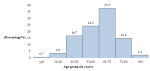
Characteristics of the study population: a total of 281 diabetic patients were included in the study. Patient ages ranged from 22 to 88 years, with a mean age of 60.4±11.2 years. The modal age group was 61-70 years (37.7% of patients) Figure 1. In the study population, there were 173 women (61.6%) and 108 men (38.4%), representing a female predominance with a sex ratio of 0.6. The majority of patients were housewives (31.3%), had a low economic status (49.8%) and were of Fon ethnicity (46.3%). Table 1, Table 1.1 among the patients, 73.0% had a personal medical history of high blood pressure (HBP), 30.2% had a history of surgery, and 16% consumed alcoholic beverages. Considering the risk factors associated with hepatitis C virus infection, 55.5% of patients were hospitalised, 23.8% had undergone scarification, 22.1% had received dental care, and 18.9% had a history of blood transfusion. Of the 281 patients enrolled, 218 (77.6%) were in good general health with a WHO performance status index of zero. Asthenia was the most common complaint (11.7% of patients). Physical signs included hepatomegaly and signs of portal hypertension, which were noted in only one patient.
Of the 281 patients, aspartate aminotransferase (AST) levels were available for 236 patients. Elevated aminotransferases were found in 18 patients, or 6.4% of cases. Among the 199 patients for whom the APRI score could be calculated, 95.5% had a score below 0.5. Regarding the circumstances of diabetes discovery, polyuro-polydipsic syndrome accounted for 45.2% and routine examination accounted for 38.4%. The majority of patients had had diabetes for more than 5 years (55.9%). The average HbA1c was 7.9±2.0. In fact, 74.2% of patients had uncontrolled diabetes (HbA1c greater than or equal to 6.5%). With regard to diabetes treatment, 80.8% of patients were on oral antidiabetic drugs (OADs), 8.5% were on insulin, and 4.6% were not receiving any treatment. Of the 281 patients, diabetic retinopathy was the most common complication identified in 32 patients (11.4%).
Prevalence of hepatitis C in diabetics: among the 281 diabetic patients included in the study, 5 were seropositive for anti-HCV antibodies, corresponding to a prevalence of 1.8%. In terms of molecular biology, of the five patients with anti-HCV antibodies, HCV RNA PCR was detectable in three (60% of patients tested anti-HCV+ and 1.1% of the total) and undetectable in the other two. The seroprevalence of HCV infection was 1.1% (3/281).
Factors associated with anti-HCV antibodies: age was significantly associated with anti-HCV antibodies (p=0.036). The frequency of anti-HCV antibodies (+) was higher in patients aged 70 years or older (4.9%) and lower in those under 70 years of age (0.9%). Similarly, hepatic cytolysis was significantly associated with anti-HCV antibodies. Indeed, AST levels were significantly associated with anti-HCV antibodies (p=0.007). Patients with AST levels above 40 IU were 9 times more likely to have anti-HCV antibodies (+) than those with levels below or equal to 40 IU (OR=9.0; p=0.021). Patients with ALT levels above 40 IU were 9.6 times more likely to be HCV antibody positive than those with levels below or equal to 40 IU (p=0.005).
In addition, the APRI score was associated with anti-HCV. Patients with an APRI score between 0.5 and 2 were 13.4 times more likely to be HCV antibody positive than those with a score below 0.5 (OR=13.4; p=0.003). In addition, patients with a history of surgery were 9 times more likely to have hepatitis C than those without. A history of surgery was significantly associated with HCV in our study (p=0.045).
Finally, patients on insulin therapy were 1.4 times more likely to have hepatitis C than those on ADO. Similarly, patients on ADO and insulin were three times more likely to have hepatitis C than those on ADO alone. The association between insulin therapy and HCV was statistically significant in this study (p=0.030) (Table 2). In multivariate analysis, only surgical history (p=0.045) and insulin therapy (p=0.030) were statistically associated with the presence of anti-HCV antibodies in diabetics (Table 3).
The mean age of the diabetic patients included in our study was 60.4±11.2 years, with extremes of 22 and 88 years. This result was comparable to that of Hadjer and Meryem [8] in Algeria in 2016, who reported a mean age of 61.13 years. However, it was slightly higher than those reported by Diarra et al. [9] in Mali in 2013, Ephraim et al. [10] in Ghana in 2014, and Merza et al. [11] in Iraq in 2020, which were 49.5 years, 58.34 years, and 54.38 years, respectively. The 51-60 and 61-70 age groups were the most represented in our study, with proportions of 24.2% and 37.7%, respectively. These findings were similar to those of Ali et al. [12] in 2012, who reported that 57.6% (175 out of 304 patients) were aged 40 years or older. Furthermore, Ndako et al. [13] in Ghana in 2014 found a predominance of subjects aged between 51 and 61 years (40%). This could be explained by the fact that type 2 diabetes is mainly a disease of adults and is most often diagnosed after the age of 40 years.
In our study population, a female predominance was observed, with 61.6% (n=173) and a sex ratio of 0.62. This result is similar to that of Kombi et al. [14] in Nigeria in 2009 and Greca et al. [15] in the Democratic Republic of Congo in 2018, who reported comparable sex ratios. This female predominance may be explained by the higher utilisation of healthcare services by women. In addition, diabetes mellitus has been reported to be more frequent among females in the general population according to Djrolo et al. in Benin [5]. In our study, five patients tested positive for anti-HCV antibodies, corresponding to a seroprevalence of 1.8%. HCV infection was confirmed by HCV RNA PCR in three patients (1.1% of the total study population).
This prevalence is similar to that reported in the general population in Benin (1.5%) [2], suggesting that HCV infection among diabetic patients in our setting is not higher than in the general population. However, several studies have reported higher prevalences. Kombi et al. [9] in the Democratic Republic of Congo reported a seroprevalence of 24.6%, Ali et al. [12] in Ethiopia reported 9%, and Diarra et al. [9] in Mali reported 10%. In contrast, lower prevalences were reported by Ndako et al. [13] in Ghana (0%) and Merza et al. [11] in Iraq (0.53%). These differences may be explained by variations in study design, sample size, and population characteristics. Among HCV antibody-positive patients, 60% (n=3) were aged over 70 years. Age was significantly associated with HCV infection (p=0.036), considering that a factor was regarded as statistically significant when p < 0.05. This result is consistent with that of Kombi et al. [14] in the Democratic Republic of Congo, who also found a significant association between age and HCV infection (p=0.002). This may reflect cumulative exposure to risk factors over time.
Among HCV-positive patients, 80% were female. However, the association between sex and HCV infection was not statistically significant (p > 0.05). A female predominance was also reported by Greca et al. [15] in Brazil, whereas Kombi et al. [9] reported a male predominance. In bivariate analysis, hepatic cytolysis (ASAT and ALAT elevation) and APRI score were significantly associated with HCV infection (p < 0.05), suggesting an association between HCV infection and liver injury. In multivariate analysis, only history of surgery (p=0.045) and insulin therapy (p=0.030) remained statistically associated with HCV infection, considering p < 0.05 as the threshold for statistical significance. The association with surgical history may reflect exposure to invasive procedures and potential nosocomial transmission. The association with insulin therapy may be related to longer disease duration or more intensive management of diabetes. These findings differ from those of Merza et al. [11], who did not find a significant association with surgical history.
It should be noted that these results must be interpreted with caution due to the small number of HCV-positive cases, which limits statistical power, as reflected by wide confidence intervals in multivariate analysis. Furthermore, several important investigations were not systematically available, including abdominal ultrasound, FibroScan, CAP score, lipid profile, and FIB-4 score. This constitutes a major limitation of the study, as it does not allow a comprehensive assessment of liver fibrosis and metabolic status. In particular, the FIB-4 score, which is recommended for non-invasive assessment of liver fibrosis in diabetic patients, could not be calculated. Finally, the cross-sectional design of this study does not allow causal relationships to be established between associated factors and HCV infection. Further large-scale studies, particularly case-control or cohort studies, are needed to confirm these associations.
This study found that viral hepatitis C remains fairly common among diabetics and slightly more common than in the general population. Factors associated with these infections included age, hepatic cytolysis, APRI score, surgical history, and insulin treatment. A larger study, ideally a case-control study, would be desirable to refine the results found. In light of these results, screening among diabetics should be systematic and preventive and curative measures should be implemented to reduce hepatitis C-related morbidity and mortality and contribute to the eradication of this scourge by 2030, as desired by the WHO.
What is known about this topic
- Diabetes and chronic liver disease are global public health problems;
- In Benin, the prevalence of diabetes mellitus was 25% among patients with HCV;
- Age, family history of diabetes, and hepatic cytolysis were the associated factors found.
What this study adds
- The present study found that anti-HCV antibodies remain fairly common among diabetics and slightly more so than in the general population in Benin;
- Factors associated with these infections included age, hepatic cytolysis, APRI score, surgical history, and insulin treatment.
The authors declare no competing interests.
Study design and development, data collection, analysis, interpretation, and manuscript writing: Aboudou Raïmi Kpossou and Hubert Alade Elija Olouwasegoun. Manuscript review: Martin Sokpon Comlan N'déhougbèa, Rodolph Koffi Vignon, Jean Séhonou, Annelie Kerekou Hode, Sossa Edmond Gbedo, Nicolas Kodjoh. Study guarantor: Aboudou Raïmi Kpossou. All the authors read and approved the final version of this manuscript.
The National Hepatitis Control Program for offering rapid diagnostic guidance tests for free screening of included patients.
Table 1: distribution of patients according to sociodemographic characteristics, Cotonou 2023 (N=281)
Table 1.1: distribution of patients according to sociodemographic characteristics, Cotonou 2023 (N=281)
Table 2: factors associated with anti-HCV antibodies in diabetics, Cotonou 2023 (bivariate analysis)
Table 3: factors associated with anti-HCV antibodies in diabetics, Cotonou 2023 (multivariate analysis)
Figure 1: distribution of patients by age group, Cotonou 2023 (N=281)
- Organisation Mondiale de la Santé. Hépatite C. OMS. 25 juillet 2025. Accessed Aug 13, 2025.
- Kpossou AR, Kouwakanou B, Sokpon CNM, Alassane KS, Bankolé MM, Ahouada C et al. Seroprevalence of hepatitis C virus antibodies and associated factors, based on voluntary screening in the general population in Benin in 2016. Pan Afr Med J. 2021 Sep 10;40:30. PubMed | Google Scholar
- World Health Organisation. Diabetes. WHO. 2024. Accessed Aug 13, 2025.
- Fédération Française des Diabétiques. Le diabète dans le monde. FFD. 2021. Accessed Aug 13, 2025.
- Djrolo F, Houinato D, Gbary A, Akoha R, Djigbénoudé O, Sègnon J. Prevalence of diabetes mellitus in the adult population at Cotonou, Benin. Médecine Mal Métabolique. 2012;6(2):167 9. Google Scholar
- World Health Organisation. Four health workers recover from Ebola in the Democratic Republic of the Congo. WHO. 2016. Accessed Aug 13, 2026.
- Petit JM. Characteristics of diabetes associated with liver disease. Metabolic Medicine. 2017; 11(8):682 6.
- Hadjer K, Meryem K. Frequency of hepatitis B and C in adult type 1 and 2 diabetics in Tlemcen. Algeria: Abou Bekr Belkaîd University, Faculty of Medicine. 2016;101.
- Diarra MT, Konaté A, Diakité Y, Doumbia Samaké K, Sow Coulibaly H, Kassambra Y et al. Hepatitis C virus infection in diabetic patients treated at the Gabriel Touré University Hospital and the Bamako Diabetes Centre (Mali). J Afr Hepato-Gastroenterology. 2013;7(4):188-191. Google Scholar
- Ephraim R, Nsiah P, Osakunor D, Adoba P, Sakyi S, Anto E. Seroprevalence of Hepatitis B and C Viral Infections among Type 2 Diabetics: A Cross-sectional Study in the Cape Coast Metropolis. Ann Med Health Sci Res. 2014 Sep;4(5):719-22. doi: 10.4103/2141-9248.141529. PubMed | Google Scholar
- Merza MA. Seroprevalence and risk factors of hepatitis B and C viruses among diabetes mellitus patients in Duhok province, Iraqi Kurdistan. J Family Med Prim Care. 2020 Feb 28;9(2):642-646. PubMed | Google Scholar
- Ali S, Abera S, Mihret A, Abebe T. Association of Hepatitis C Virus Infection with Type II Diabetes in Ethiopia: A Hospital-Based Case-Control Study. Interdiscip Perspect Infect Dis. 2012;2012:354656. PubMed | Google Scholar
- Ndako JA, Echeonwu GO, Shidali NN, Bichi IA, Paul GA, Onovoh E et al. Occurrence of hepatitis C virus infection in type 2 diabetic patients attending Plateau state specialist hospital Jos Nigeria. Virol J. 2009 Jul 8;6:98. PubMed | Google Scholar
- Kombi PK, Agasa SB, Mukonkole JPM, Bome LB, Bokele CA, Tshilumba CK. Seroprevalence of hepatitis B and C virus infections among diabetic patients in Kisangani (North-eastern Democratic Republic of Congo). Pan Afr Med J. 2018 Nov 2;31:160. PubMed | Google Scholar
- Greca LF, Pinto LC, Rados DR, Canani LH, Gross JL. Clinical features of patients with type 2 diabetes mellitus and hepatitis C infection. Braz J Med Biol Res. 2012 Mar;45(3):284-90. PubMed | Google Scholar
Search
This article authors
On Pubmed
On Google Scholar
Citation [Download]
Navigate this article
Similar articles in
Key words
Tables and figures

Article metrics
Map loading delayed...
Recently from the PAMJ




Authors´ services