Ovulatory cycle knowledge and its correlates among reproductive-age women in Rwanda: evidence from the 2019-2020 demographic and health survey
Winny Clemence Uwidutatse, Imran Oludare Morhason-Bello, Costly Aderibigbe-Saba, Samkeliso Gift Shongwe, Ronald Kooko
Corresponding author: Winny Clemence Uwidutatse, Reproductive Health Program, Pan African University Life and Earth Sciences Institute (including Health and Agriculture), University of Ibadan, Ibadan, Nigeria 
Received: 26 Apr 2026 - Accepted: 05 Jun 2026 - Published: 24 Jun 2026
Domain: Fertility medicine, Gynecology, Obstetrics and gynecology
Keywords: Family planning, fertility awareness, fertility rate, maternal health, unintended pregnancy
Funding: This study was supported by the African Union Commission (AU), Addis Ababa, Ethiopia, through the Pan African University Life and Earth Sciences Institute (including Health and Agriculture), Ibadan, Nigeria (Ref: PAULESI/REG/23/048). The funder had no role in the design of the study, data analysis, or manuscript preparation.
This article is published as part of the supplement Innovations and Challenges in Global Health: A Multidisciplinary Perspective, commissioned by Young Researchers and Elite Club.
©Winny Clemence Uwidutatse et al. Pan African Medical Journal (ISSN: 1937-8688). This is an Open Access article distributed under the terms of the Creative Commons Attribution International 4.0 License (https://creativecommons.org/licenses/by/4.0/), which permits unrestricted use, distribution, and reproduction in any medium, provided the original work is properly cited.
Cite this article: Winny Clemence Uwidutatse et al. Ovulatory cycle knowledge and its correlates among reproductive-age women in Rwanda: evidence from the 2019-2020 demographic and health survey. Pan African Medical Journal. 2026;54(1):11. [doi: 10.11604/pamj.supp.2026.54.1.52952]
Available online at: https://www.panafrican-med-journal.com//content/series/54/1/11/full
Research 
Ovulatory cycle knowledge and its correlates among reproductive-age women in Rwanda: evidence from the 2019-2020 demographic and health survey
Ovulatory cycle knowledge and its correlates among reproductive-age women in Rwanda: evidence from the 2019-2020 demographic and health survey
Winny Clemence Uwidutatse1,&,  Imran Oludare Morhason-Bello2,3, Costly Aderibigbe-Saba1, Samkeliso Gift Shongwe1, Ronald Kooko4
&Corresponding author
Introduction: knowledge of the ovulatory cycle is a key aspect of reproductive health, shaping fertility awareness, contraceptive use, and prevention of unintended pregnancies. In sub-Saharan Africa (SSA), there is limited knowledge on fertility awareness, with implications for family planning and maternal health outcomes. This study aimed to determine the correlates of ovulatory cycle knowledge among women of reproductive age in Rwanda.
Methods: we analysed a weighted sample of 14,503 women aged 15-49 years from the 2019-2020 Rwanda Demographic and Health Survey (RDHS). Logistic regression models were fitted to examine correlates of ovulatory cycle knowledge. Statistical significance was set at p < 0.05.
Results: the prevalence of correct ovulatory cycle knowledge among reproductive-age women in Rwanda was 16.6% (95% CI: 15.8 - 17.5). In the final multivariable logistic regression model, women aged 35-49 years (aOR = 2.15, 95% CI: 1.68-2.77), those with higher education (aOR = 9.58, 95% CI: 7.10-12.92-), employed women (aOR = 1.34, 95% CI: 1.18-1.53), those exposed to media (aOR = 1.57, 95% CI: 1.33-1.85), women using traditional contraceptive methods (aOR = 1.39, 95% CI: 1.08-1.79) and women residing in the Eastern province (aOR = 2.16, 95% CI: 1.80-2.60) had higher odds of correct ovulatory cycle knowledge.
Conclusion: correct ovulatory cycle knowledge among reproductive-age women in Rwanda remains low, influenced by several correlates. Strengthening fertility awareness education within family planning programs, expanding access to reproductive health services across the country, and integrating ovulatory cycle knowledge into school curricula and community-based interventions are critical to improve reproductive health literacy and empower women to make informed fertility and reproductive health decisions.

Ovulation in women of reproductive age is a natural physiological process and a key indicator of fertility. It refers to the rupture of a fully mature ovarian follicle, releasing the female gamete (i.e., ova or egg) into the fallopian tube for fertilisation [1]. Knowledge of this cycle is fundamental to fertility awareness and reproductive health, forming the basis of natural family planning methods (NFPMs) such as periodic abstinence and condom use on ovulation days, particularly in contexts where access to modern contraceptive methods is limited [2,3]. Beyond family planning, ovulatory knowledge assists in diagnosing certain medical conditions (i.e., Polycystic Ovary Syndrome (PCOS), endometriosis) [4,5], supports reproductive autonomy, and reduces the likelihood of unintended pregnancies and unsafe abortions [6], making it both a clinical and public health priority.
Despite its importance, ovulatory cycle knowledge remains limited in low and middle-income countries (LMICs). In sub-Saharan Africa (SSA), only 15.5% of women correctly identified their fertile period [7]. A cross-sectional study in Papua New Guinea found that just 22% of women of reproductive age had correct ovulatory cycle knowledge [8], similar studies conducted in Ethiopia [9], Kenya [10], and Sierra Leone [11] also revealed that only 23.6%, 38.1%, and 39.8% of women were knowledgeable about their ovulatory cycle, respectively. In Ghana, women lacking correct knowledge of the fertile period were almost twice as likely to experience unsafe abortions [12]. Incorrect knowledge of the ovulatory cycle has significant implications for reproductive health [8]. These findings highlight that limited fertility awareness contributes directly to adverse reproductive health outcomes, including unintended pregnancies and unsafe abortions, particularly in settings with poor access to modern contraceptives.
Rwanda has made notable progress in reproductive health, including increased contraceptive prevalence, comprehensive sexual education, and reduced fertility rates [13,14]. While modern contraceptives are available, uptake and continuation rates remain constrained by side effects, socio-cultural norms, and limited awareness of alternatives, resulting in persistent unmet need for contraception and high rates of unintended pregnancies [15,16]. In this context, knowledge of the ovulatory cycle becomes an important tool for women to plan conception or avoid unintended pregnancies, thereby improving maternal health outcomes. Given Rwanda's youthful population and ongoing challenges with early pregnancies among adolescents and young women [15], which contribute to high rates of unintended pregnancies, maternal mortality, school dropouts, and unsafe abortions [17,18], assessing fertility awareness is critical to complement modern contraceptive programs.
Studies conducted across SSA have shown that correct ovulatory cycle knowledge is significantly associated with various correlates. Women aged 30-49, those with higher educational levels [6], health insurance coverage [19], mobile phone ownership, use of traditional contraceptive methods [8], residing in urban areas, getting family planning counselling [9], and exposure to media [10] were associated with higher odds of correct ovulatory cycle knowledge. In Rwanda, reproductive health research has largely concentrated on contraceptive use [20-22], antenatal care services utilization [23,24], breast and cervical cancer [25], risky sexual behaviours [26], caesarean section [27], and teenage pregnancy [14]. However, studies investigating the correlates of ovulatory cycle knowledge in Rwanda remain limited. Therefore, this study aimed to determine the prevalence and correlates of ovulatory cycle knowledge among reproductive-age women in Rwanda using data from the 2019-2020 Rwanda Demographic and Health Survey (RDHS). The findings from this study aim to inform targeted interventions for strengthening family planning initiatives, improve reproductive health education, reduce unintended pregnancies, and improve overall reproductive health outcomes.

Study design: this was a cross-sectional study utilising nationally representative data from the 2019-2020 RDHS.
Study setting: the study was conducted in Rwanda, a landlocked country in East-Central Africa bordered by Uganda to the north, Tanzania to the east, Burundi to the south, and the Democratic Republic of Congo to the west, with an estimated population of 14 million people [28]. Rwanda is administratively divided into four provinces (i.e., Eastern, Northern, Western, and Southern), and the City of Kigali, each further subdivided into districts, sectors, cells, and villages [29].
Data source: data for this study were drawn from the 2019-2020 RDHS, a nationally representative survey that provides detailed information on demographic, health, and sexual and reproductive health indicators. We utilised the women's individual recode (IR) dataset, which includes responses from women aged 15-49 years. The DHS applies a two-stage stratified sampling design: in the first stage, Enumeration Areas (EAs) are selected within strata using probability proportional to size; in the second stage, households are systematically sampled from each selected EA. All DHS datasets used are publicly accessible from the DHS Program website.
Study population: after applying sampling weights to account for the complex survey design, the final analytic sample included 14,503 women aged 15-49 years with complete data on ovulatory cycle knowledge and selected explanatory variables. Women with missing data on the outcome and explanatory variables were excluded from the analysis.
Study variables
Outcome variable: the outcome variable in this study was ovulatory cycle knowledge, which was assessed using women's responses to a standard DHS question on the timing of the fertile period. Response options included: "during her period," "after the period ended," "middle of the cycle," "before the period begins," "at any time," "other," and "don't know." For analysis, a binary variable was created where women who reported the middle of the cycle were classified as having correct knowledge (coded = 1), while all other responses were categorised as incorrect knowledge (coded = 0). This operational definition has been widely used in previous studies [6,8,10].
Explanatory variables: explanatory variables were selected based on their availability in the DHS dataset and their established association with ovulatory cycle knowledge from previous studies [6,9,10]. These included: age group (15-19, 20-29, 30-39, 40-49 years), educational level (no education, primary, secondary, higher education), marital status (not married, married, cohabiting), employment status (employed, not employed) household wealth index (poor, middle, rich) religion (Catholic, Protestant, Adventist, Muslim, other), media exposure (no, yes), History of pregnancy loss (no, yes), fertility desire (yes, undecided, no), contraceptive use (non-user, traditional, modern), parity (zero, one birth, two and three births, four or more births), perceived distance to health facility (not a big problem, big problem), place of residence (urban, rural), province (Kigali City, Southern Province, Western Province, Northern Province, Eastern Province).
Statistical analysis: data was analysed using STATA version 17.0. Survey weights were applied to account for the complex sampling design of the DHS, ensuring nationally representative estimates and reliable standard errors. Multicollinearity among independent variables was assessed using the variance inflation factor (VIF), and no evidence of collinearity was observed. Descriptive statistics were performed, with categorical variables summarised as frequencies and percentages. A bivariate analysis was conducted using chi-square tests of independence at a 95% confidence interval. Variables with a p-value less than 0.10 in the bivariate analysis were considered eligible for inclusion in the multivariate analysis. A multivariable logistic regression model was fitted to estimate adjusted odds ratios (aORs) with 95% confidence intervals (CIs), and statistical significance was set at p < 0.05.
Ethical considerations: this study was a secondary analysis of the RDHS, utilising publicly available data from the DHS program; therefore, separate ethical approval was not required. The study drew on a large-scale national dataset that had already received approval from Macro International, the Rwandan National Institute of Statistics, and the National Ethics Review Board in Rwanda. Access to the dataset was granted through the DHS program's online application process.
Background characteristics of the study participants: this study analysed a weighted sample of 14,503 women of reproductive age in Rwanda. The majority of women were aged 35-49 years (32.6%; n = 4,726). Most participants had completed primary education (58.3%; n = 8,452) and nearly half of the respondents were not married (49.5%; n = 7,175). A majority of women were employed (73.2%; n = 10,619), and most belonged to rich households (43.7%; n = 6,333). In terms of religion, the majority identified as Protestant (47.5%; n = 6,890). Most participants reported media exposure (81.9%; n = 11,881). The majority had no history of pregnancy loss (87.6%; n = 12,711). Fertility desire was common, with 61.8% (n = 8,961) reporting a desire for children. Regarding contraceptive use, 61.5% (n = 8,914) were non-users, while only 3.4% (n = 492) used traditional methods. In terms of parity, 36.4% (n = 5,276) had no children. Most participants perceived distance to a health facility as not a big problem (78.9%; n = 11,436). The majority resided in rural areas (80.1%; n = 11,617). Geographically, most respondents came from the Eastern province (27.3%; n = 3,958), while the least came from Kigali city (14.8%; n = 2,142) (Table 1).
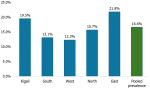
Prevalence of correct ovulatory cycle knowledge among reproductive-age women in Rwanda: the pooled prevalence of correct ovulatory cycle knowledge among reproductive-age women in Rwanda was 16.6% (95% CI: 15.8-17.5). The prevalence varied across provinces, with women in the Eastern province reporting the highest knowledge (21.8%, 95% CI: 20.2-23.5) and those in the Western province the lowest (12.3%, 95% CI: 11.1-13.6) (Figure 1).
Correlates of correct ovulatory cycle knowledge among reproductive-age women in Rwanda: as shown in Table 2, the adjusted logistic regression model identified several factors significantly associated with correct ovulatory cycle knowledge among reproductive-age women in Rwanda. For instance, women aged 20-24 years (aOR = 1.66, 95% CI: 1.38-2.00), 25-34 years (aOR = 1.93, 95% CI: 1.55-2.39), and 35-49 years (aOR = 2.15, 95% CI: 1.68-2.77) were associated with higher odds of correct ovulatory cycle knowledge compared to adolescents aged 15-19 years, holding other variables constant in the model. Compared to women with no formal education, those with primary education (aOR = 1.65, 95% CI: 1.33-2.06), secondary education (aOR = 4.36, 95% CI: 3.42-5.55), and higher education (aOR = 9.58, 95% CI: 7.10-12.92) were associated with higher odds of correct ovulatory cycle knowledge. Married women were also associated with higher odds compared to unmarried women (aOR = 1.24, 95% CI: 1.06-1.46). Employment status was significantly associated with correct ovulatory cycle knowledge, with employed women having higher odds compared to women who were not employed (aOR = 1.34, 95% CI: 1.18-1.53). In terms of wealth status, women from rich households were associated with higher odds of correct ovulatory cycle knowledge compared to those from poor households (aOR = 1.42, 95% CI: 1.24-1.63), holding other variables constant in the model. Women exposed to media had higher odds of correct ovulatory cycle knowledge compared to those not exposed (aOR = 1.57, 95% CI: 1.33-1.85). Regarding contraceptive use, women using traditional methods were associated with higher odds of correct ovulatory cycle knowledge compared to non-users (aOR = 1.39, 95% CI: 1.08-1.79). Geographical variations were also observed. Women residing in the Northern (aOR = 1.47, 95% CI: 1.20-1.79) and Eastern provinces (aOR = 2.16, 95% CI: 1.80-2.60) had higher odds of correct ovulatory cycle knowledge compared to those residing in Kigali, holding other variables constant in the model.
This study sought to estimate the pooled prevalence of ovulatory cycle knowledge and its correlates among reproductive-age women in Rwanda. The overall prevalence was 16.6% (95% CI: 15.8-17.5), which is notably lower than findings from other SSA countries, including Ethiopia (23.6%) [9], Kenya (38.1%) [10] and Ghana (42.3%) [6]. These variations in prevalence may be attributable to differences in cultural norms surrounding family planning, disparities in health care systems, and unequal access to reproductive health information among these countries.
In the adjusted logistic regression model, higher odds of correct ovulatory cycle knowledge were observed among women aged 20-24 years, 25-34 years, and 35-49 years, those with primary, secondary and higher education, married and employed women, women from rich households, those exposed to media, women using traditional contraceptive methods, and women residing in the Northern and Eastern provinces.
This study found that women aged 20-49 years had higher odds of correct ovulatory cycle knowledge. This finding is consistent with studies conducted in Ethiopia [30], and other African countries [31], suggesting that reproductive health knowledge improves with age. This may be explained by increased exposure to reproductive health information over time, including interactions with healthcare systems, peer networks, and life experiences such as marriage and childbearing. Older women are also more likely to have engaged with family planning services, which often include fertility education [32]. This finding underscores the need to target younger women with age-appropriate fertility education to improve early awareness.
Education was also associated with correct ovulatory cycle knowledge, with women who had secondary and higher education having higher odds. This finding aligns with previous studies from other SSA countries [33,34], showing that education enhances women's ability to access, understand, and utilise reproductive health information. Educated women are more likely to be exposed to sexual and reproductive health (SRH) information through formal curricula, media, and digital platforms, and are better equipped to interpret biological concepts such as the menstrual cycle [35]. This highlights the importance of promoting female education as a long-term strategy for improving reproductive health outcomes.
This study further revealed that married women had higher odds of correct ovulatory cycle knowledge. This may be explained by the fact that married women are more likely to access antenatal care during pregnancy, where counselling on fertility and reproductive health is routinely provided. Married women also tend to engage more frequently with family planning services, which emphasise understanding the ovulatory cycle as part of contraceptive counselling. In addition, marital communication often involves discussions about fertility, childbearing, and family planning, which can reinforce awareness and knowledge [36]. While this association highlights the role of marriage in shaping reproductive health knowledge, it also underscores a potential gap among unmarried women. Addressing this disparity requires broadening reproductive health education beyond marital and antenatal care contexts, ensuring that adolescents, unmarried women, and men also receive comprehensive fertility information.
Consistent with a study conducted in Haiti [37], being employed was found to be associated with higher odds of correct ovulatory cycle knowledge, which may be explained by the fact that economically empowered women often have greater access to health information and services. Employment can enhance women's autonomy, expand their social networks, and increase exposure to diverse information channels, all of which contribute to improved reproductive health knowledge [38]. Similarly, women from rich households demonstrated higher odds of correct ovulatory cycle knowledge, likely reflecting their better access to education, media, and healthcare services [19]. These findings underscore the importance of addressing socio-economic disparities in reproductive health education to ensure that women across different economic strata are equally equipped with the knowledge necessary for informed fertility and family planning decisions.
The finding that higher media exposure is associated with higher odds of correct ovulatory cycle knowledge is similar to a study conducted in Kenya [10], highlighting the role of mass media as a key channel for disseminating reproductive health information. Media platforms can influence knowledge by providing accurate information on fertility, contraception, and menstrual hygiene and health. This underscores the importance of leveraging media campaigns to improve fertility awareness and address misconceptions around reproductive health and fertility issues.
The use of traditional contraceptive methods was associated with higher odds of correct ovulatory cycle knowledge. This can be explained by the fact that traditional contraceptive methods such as the rhythm method rely directly on understanding the timing of ovulation [39]. Women using these methods may actively seek and receive information about their menstrual cycle to use these methods effectively.
Geographic disparities were also observed, with women residing in the Northern and Eastern provinces having higher odds of correct ovulatory cycle knowledge. These differences can be attributed to several reproductive health interventions targeted at rural provinces in Rwanda, where the government relies heavily on community health workers to deliver direct, personalised education on reproductive health. For instance, community health workers were trained in obstetrics, newborn care, family planning, HIV/STI prevention, and sexual and gender-based violence (SGBV) response, while peer educators and female mentors were equipped to deliver adolescent sexual and reproductive health information. Community leaders also received training to empower their communities to use family planning, antenatal care, and SRH services [40]. This finding underscores the need to address geographic inequalities in access to reproductive health information and services across the country.
Strengths and limitations: this study has several important strengths. Firstly, it utilized a weighted nationally representative RDHS data, ensuring that the findings are generalizable across the country. The large sample size enhanced statistical power and reliability. Another strength lies in the study's focus on ovulatory cycle knowledge, which is an underexplored area in reproductive health research. By examining this dimension, the study contributes new insights into fertility awareness, an aspect often overlooked in favor of contraceptive use in SSA. Despite these strengths, the study also has limitations. Its cross-sectional design makes it impossible to establish causality and temporality between correlates and outcome. The reliance on self-reported data introduces the risk of response bias and social desirability bias, particularly around sensitive reproductive health topics. Additionally, because the study relied on already available DHS data, it lacked socio-cultural variables such as norms, beliefs, and attitudes that could provide a deeper context for understanding variations in ovulatory cycle knowledge. This absence limits the ability to fully capture the cultural and social dynamics influencing ovulatory cycle knowledge in Rwanda.
This study found that correct ovulatory cycle knowledge among reproductive-age women in Rwanda remains low. Older age, higher education, marriage, employment, higher wealth status, media exposure, and use of traditional contraceptive methods were significantly associated with correct ovulatory cycle knowledge, with notable geographic disparities across the country. Therefore, there is a need to strengthen comprehensive sexuality education and fertility awareness programs, particularly targeting younger, less educated, and economically disadvantaged women. Policymakers and stakeholders, including the Rwanda Ministry of Health, should scale up targeted interventions that utilise mass media and community-based platforms to disseminate accurate reproductive health information. Additionally, efforts should focus on reducing geographic disparities by improving access to SRH services and information in underserved areas. Integrating fertility awareness education into routine healthcare services and school curricula will be critical to enhancing women's reproductive autonomy and improving overall reproductive health outcomes.
What is known about this topic
- Correct knowledge of the ovulatory cycle is essential for effective fertility awareness and family planning;
- Prevalence of correct knowledge of the ovulatory cycle varies across SSA, Ethiopia (23.6%), Kenya (38.1%), and Ghana (42.3%);
- Factors such as age, education, marital status, socio-economic status, and media exposure have been consistently linked to ovulatory cycle knowledge across SSA.
What this study adds
- Provides nationally representative evidence on ovulatory cycle knowledge among reproductive-age women in Rwanda, showing a prevalence of 16.6%;
- Identifies key correlates of correct knowledge, including older age (20-49 years), higher education, marriage, employment, wealth status, media exposure, and use of traditional contraceptive methods;
- Reveals geographic disparities, with women in the Northern and Eastern provinces demonstrating higher knowledge of the ovulatory cycle, underscoring the importance of addressing geographic inequalities to improve reproductive health outcomes.
The authors declare no competing interests.
Winny Clemence Uwidutatse and Costly Aderibigbe-Saba: conceptualisation. Winny Clemence Uwidutatse: data curation. Samkeliso Gift Shongwe: visualisation. Samkeliso Gift Shongwe and Kooko Ronald: formal analysis. Winny Clemence Uwidutatse and Samkeliso Gift Shongwe: writing the original draft. Costly Aderibigbe-Saba: writing and reviewing the manuscript. Imran Oludare Morhason-Bello and Kooko Ronald: review. Imran Oludare Morhason-Bello: supervision, editing of the manuscript. Kooko Ronald and Imran Oludare Morhason-Bello: validation of the manuscript. All authors read and approved the final version of the manuscript.
We gratefully acknowledge the Pan African University Life and Earth Sciences Institute (including Health and Agriculture), Ibadan, Nigeria, for supporting the conduct of this research. We also thank the DHS Program for granting access to the RDHS Survey datasets, and we extend our appreciation to the women who participated in the surveys.
Table 1: background and distribution of the study participants in Rwanda
Table 2: correlates of ovulatory cycle knowledge among reproductive-age women in Rwanda
Figure 1: prevalence of ovulatory cycle knowledge among reproductive-age women in Rwanda
- Holesh JE, Bass AN, Lord M. Physiology, Ovulation. StatPearls. 2023 May . PubMed | Google Scholar
- Manhart MD, Fehring RJ. The State of the Science of Natural Family Planning Fifty Years after Humane Vitae: A Report from NFP Scientists' Meeting Held at the US Conference of Catholic Bishops, April 4, 2018. Linacre Q. 2018 Nov 1;85(4):339-47. PubMed | Google Scholar
- Bassas RA, Alharbi MS, Harbi SS Al. Fertility Awareness-Based Methods for Family Planning: A Systematic Review. Cureus. 2025 Jun 17;17(6):e8623. PubMed | Google Scholar
- Roswell Ob/Gyn. Tracking Ovulation Accurately for Fertility and Cycle Health. Accessed 11th January 2026.
- Duane M, Stanford JB, Porucznik CA, Vigil P. Fertility Awareness-Based Methods for Women´s Health and Family Planning. Front Med (Lausanne). 2022 May 24;9:858977. PubMed | Google Scholar
- Lahole BK, Mare KU, Wada HT, Leyto SM, Balta AB. Individual and community-level factors associated with ovulatory cycle knowledge among women in Ghana: a multilevel analysis of recent demographic and health survey data. Contraception and Reproductive Medicine 2025 10:1. 2025 Feb 14;10(1):11. PubMed | Google Scholar
- Zegeye B, Adjei NK, Idriss-Wheeler D, Yaya S. Individual and community-level determinants of knowledge of ovulatory cycle among women of reproductive age in 29 African countries: a multilevel analysis. BMC Womens Health. 2022 Dec 1;22(1):394. PubMed | Google Scholar
- Maviso M, Potjepat G, Namosha E, Geregl N, Aines PZ, Vallely LM. Knowledge of the ovulatory cycle and its determinants among women of reproductive age in Papua New Guinea: Insights from a population-based study. PLoS One. 2025 May 1;20(5):e0324255. PubMed | Google Scholar
- Getahun MB, Nigatu AG. Knowledge of the Ovulatory Period and Associated Factors Among Reproductive Women in Ethiopia: A Population-Based Study Using the 2016 Ethiopian Demographic Health Survey. Int J Womens Health. 2020;12:701-7. PubMed | Google Scholar
- Fente BM, Asgedom YS, Asmare ZA, Kebede TN, Damtew BS, Workneh TW et al. Knowledge of fertility period among reproductive age women in Kenya: a multilevel analysis based on 2022 Kenyan demographic and health survey. Contraception and Reproductive Medicine 2024 9:1. 2024 May 24;9(1):27. PubMed | Google Scholar
- Ameyaw EK, Woytowich D, Gbagbo FY, Amoah PA. Assessing geographical variation in ovulatory cycle knowledge among women of reproductive age in Sierra Leone: Analysis of the 2019 Demographic and Health Survey. PLoS One. 2024 Apr 1;19(4):e0300239. PubMed | Google Scholar
- Boah M, Bordotsiah S, Kuurdong S. Predictors of Unsafe Induced Abortion among Women in Ghana. J Pregnancy. 2019;2019:9253650. PubMed | Google Scholar
- Corey J, Schwandt H, Boulware A, Herrera A, Hudler E, Imbabazi C et al. Family planning demand generation in Rwanda: Government efforts at the national and community level impact interpersonal communication and family norms. PLoS One. 2022 Apr 1;17(4):e0266520. PubMed | Google Scholar
- Nshutiyukuri C, Uwingabire F, Musabwasoni MGS, Rutayisire JB, Rutayisire R, Benimana I et al. Perceived factors contributing to teenage pregnancy and their perceived effects on teenage females health in eastern province of Rwanda. Women's Health. 2025 Jan 1;21:17455057251325044. PubMed | Google Scholar
- United Nation Population Fund (UNFPA) Rwanda. Family Planning. Accessed 16th January 2026.
- Hitayezu JBH, Uwamahoro R, Bazakare MLI, Nzeyimana Z, Kaberuka G, Mutijima V et al. Knowledge, attitudes, practice and factors associated with the prevalence of modern contraceptives use among women from historically marginalized community in Rwanda: a cross-sectional study. BMC Public Health. 2025 Dec 1;25(1):3922. PubMed | Google Scholar
- Ayalew HG, Liyew AM, Tessema ZT, Worku MG, Tesema GA, Alamneh TS et al. Prevalence and factors associated with unintended pregnancy among adolescent girls and young women in sub-Saharan Africa, a multilevel analysis. BMC Womens Health. 2022 Dec 1;22(1):464. PubMed | Google Scholar
- Ahinkorah BO. Socio-demographic determinants of pregnancy termination among adolescent girls and young women in selected high fertility countries in sub-Saharan Africa. BMC Pregnancy Childbirth. 2021 Sep 4;21(1):598. PubMed | Google Scholar
- Zegeye B, Idriss-Wheeler D, Oladimeji O, Yaya S. Exploring health insurance and knowledge of the ovulatory cycle: evidence from Demographic and Health Surveys of 29 countries in Sub-Saharan Africa. Reprod Health. 2023 Dec 1;20(1):129. PubMed | Google Scholar
- Jean de Dieu H, Lambert M. Predictors of contraceptive discontinuation in Rwanda: evidence from demographic and health survey 2019-20. Contracept Reprod Med. 2024 Dec 1;9(1):19. PubMed | Google Scholar
- Nisengwe S, Habtu M, Asingizwe D, Ntakirutimana T, Dodoo N, Woolway E et al. Perceived drivers of teenage pregnancies and barriers to utilization of contraceptive methods among adolescents in Rwanda: perspectives of adolescents and healthcare providers. Contracept Reprod Med. 2026 Dec 1;11(1):20. PubMed | Google Scholar
- Kalinda C, Phiri M, Chimpinde K, Ishimwe MCS, Simona SJ. Trends and socio-demographic components of modern contraceptive use among sexually active women in Rwanda: a multivariate decomposition analysis. Reprod Health. 2022 Dec 1;19(1):226. PubMed | Google Scholar
- Dusingizimana T, Ramilan T, Weber JL, Iversen PO, Mugabowindekwe M, Ahishakiye J et al. Predictors for achieving adequate antenatal care visits during pregnancy: a cross-sectional study in rural Northwest Rwanda. BMC Pregnancy Childbirth. 2023 Dec 1;23(1):69. PubMed | Google Scholar
- Twagirumukiza E, Bubanje V, Girimpundu R, Sebera E. Evolution and determinants of antenatal care services utilization among women of reproductive age in Rwanda: a scoping review. BMC Health Serv Res. 2024 Dec 1;24(1):1636. PubMed | Google Scholar
- Pace LE, Hagenimana M, Dusengimana JMV, Balinda JP, Benewe O, Rugema V et al. Implementation research: including breast examinations in a cervical cancer screening programme, Rwanda. Bull World Health Organ. 2023 Jul 1;101(7):478-486. PubMed | Google Scholar
- Ugwu NH, Odimegwu CO. Prevalence and neighbourhood determinants of early sexual debut and multiple sexual partnerships among young people in Rwanda, Ghana and South Africa. Afr J AIDS Res. 2024;23(1-2):41-59. PubMed | Google Scholar
- Kibe PM, Mbuthia GW, Shikuku DN, Akoth C, Oguta JO, Ng'ang'a L et al. Prevalence and factors associated with caesarean section in Rwanda: a trend analysis of Rwanda demographic and health survey 2000 to 2019-20. BMC Pregnancy Childbirth. 2022 Dec 1;22(1):410. PubMed | Google Scholar
- United Nation Population Fund (UNFPA). Rwanda Population 2025 - United Nations Population Fund. Accessed 18th February 2026.
- Ministry of Local Government R of R. Administrative structure. Accessed 8th February 2026.
- Dagnew B, Teshale AB, Dagne H, Diress M, Tesema GA, Dewau R et al. Individual and community-level determinants of knowledge of ovulatory cycle among women of childbearing age in Ethiopia: A multilevel analysis based on 2016 Ethiopian Demographic and Health Survey. PLoS One. 2021 Sep 1;16(9):e0254094. PubMed | Google Scholar
- Diress M, Belay DG, Seid MA, Eshetu HB, Kibret AA, Chilot D et al. Determinants of knowledge of the highest conception probability period among reproductive age women in Low-Income African countries: A multilevel analysis based on the recent Demographic and Health Survey. PLoS One. 2023 Jun 1;18(6):e0287164. PubMed | Google Scholar
- Owen A, Carlson K, Sparzak PB. Age-Related Fertility Decline. StatPearls. 2024 Feb 2.
- Sserwanja Q, Turimumahoro P, Nuwabaine L, Kamara K, Musaba MW. Association between exposure to family planning messages on different mass media channels and the utilization of modern contraceptives among young women in Sierra Leone: insights from the 2019 Sierra Leone Demographic Health Survey. BMC Womens Health. 2022 Dec 1;22(1):376. PubMed | Google Scholar
- Zegeye AF, Tamir TT, Mekonen EG, Workneh BS, Negash WD, Mekonnen CK. Individual and community-level determinants of knowledge about fertile periods among adolescent girls and young women (10-24 years) in Sub-Saharan Africa: A multilevel mixed effect analysis of a recent demographic and health survey. Heliyon. 2024 Mar 15;10(5):e26756. PubMed | Google Scholar
- Saha R, Paul P, Yaya S, Banke-Thomas A. Association between exposure to social media and knowledge of sexual and reproductive health among adolescent girls: evidence from the UDAYA survey in Bihar and Uttar Pradesh, India. Reproductive Health 2022 19:1. 2022 Aug 17;19(1):178. PubMed | Google Scholar
- Zelalem D, Worku A, Alemayehu T, Dessie Y. Association of Effective Spousal Family Planning Communication with Couples´ Modern Contraceptive Use in Harar, Eastern Ethiopia. Open Access J Contracept. 2021 Feb;12:45. PubMed | Google Scholar
- Jean Simon D, Jamali Y, Olorunsaiye CZ, Théodat JM. Knowledge of the ovulatory cycle and its determinants among women of childbearing age in Haiti: a population-based study using the 2016/2017 Haitian Demographic Health Survey. BMC Women's Health 2022 23:1. 2023 Jan 2;23(1):2. PubMed | Google Scholar
- Olwanda E, Opondo K, Oluoch D, Croke K, Maluni J, Jepkosgei J et al. Women's autonomy and maternal health decision making in Kenya: implications for service delivery reform - a qualitative study. BMC Womens Health. 2024 Dec 1;24(1):181. PubMed | Google Scholar
- Planned Parenthood. Fertility awareness. Accessed 9th March 2026.
- United Nation Population Fund (UNFPA) Rwanda. Strengthening Integrated HIV and Sexual and Reproductive Health Services. 2018.
Search
This article authors
On Pubmed
On Google Scholar
Citation [Download]
Navigate this article
Similar articles in
Key words
Tables and figures

This supplement
Article metrics
Recently from the PAMJ



Authors´ services