


PAMJ supplements
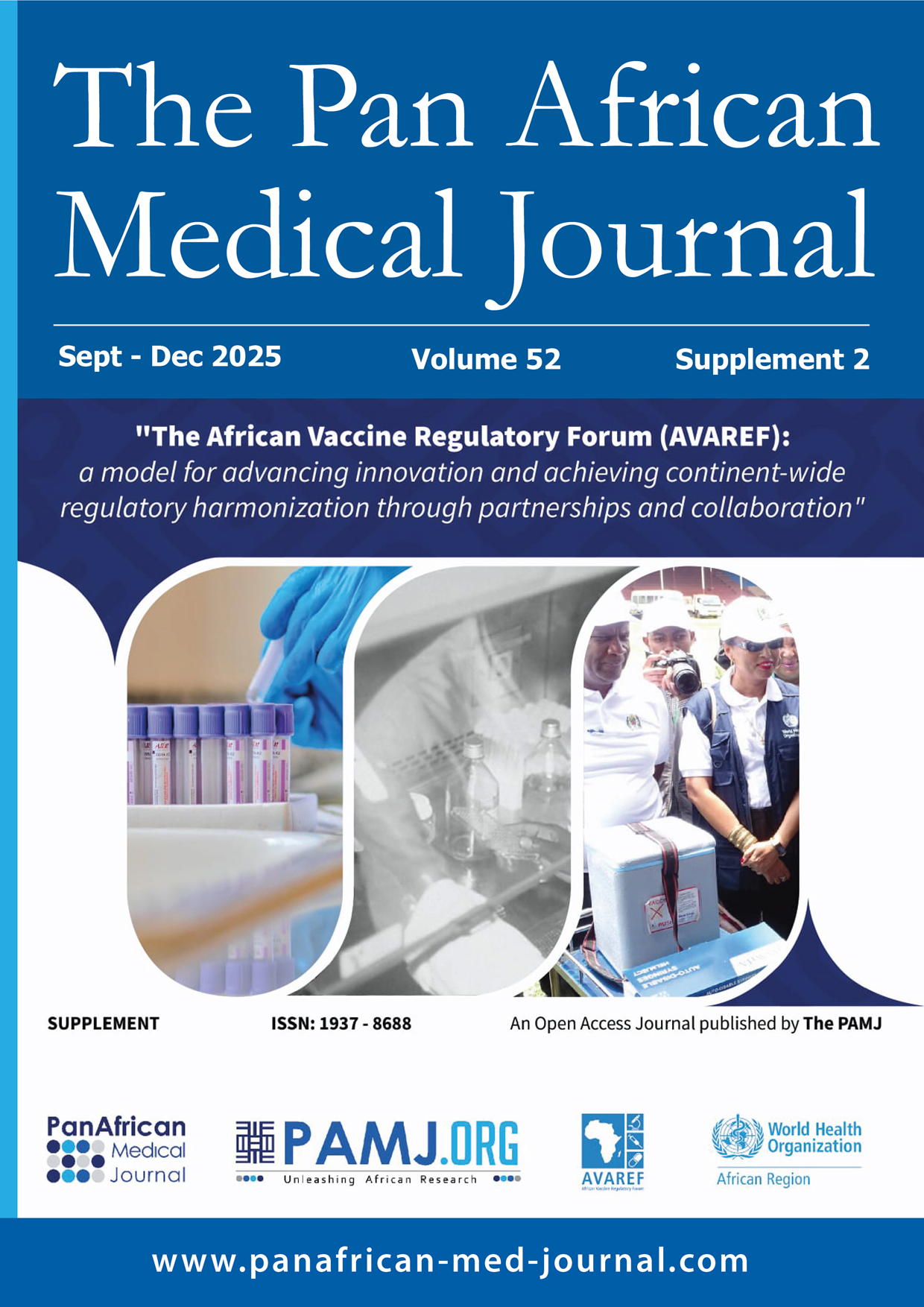
The African Vaccine Regulatory Forum (AVAREF): a model for advancing innovation and achieving continent-wide regulatory harmonization through partnerships and collaboration
AVAREF, a network of African national regulatory authorities and ethics committees, was established by WHO in 2006. The name reflects the group's origin: a joint review of a clinical trial application for a new group A meningococcal conjugate vaccine and the subsequent joint inspection of the vaccine's phase II trial. This review was successfully conducted with countries that had little prior experience in providing regulatory oversight for complex trials. Soon after launching, AVAREF's mandate expanded to enhance ethics and regulatory capacity, as well as harmonize regulatory processes for all types of medical products and devices in Africa. As a result of AVAREF's work, vaccines against meningitis, malaria, rotavirus, pneumococcal pneumonia, and Ebola have been developed and rapidly approved in Africa. AVAREF also played a key role in ensuring the swift regulatory review and decision to grant emergency use authorization (or otherwise) of COVID-19 vaccines in Africa. Now, AVAREF is slated to play a critical role in establishing a clinical trial oversight role for the new African Medicines Agency (AMA). In light of the numerous public health crises facing countries around the globe, the need for regulatory harmonization to speed people's access to lifesaving drugs is greater than ever. However, many low- and middle-income countries have struggled to find a model of regulatory harmonization they can begin implementing right away. The AVAREF model meets member states where they are, empowering them to achieve regulatory harmonization through voluntary partnerships and collaboration. This model can be implemented in any setting in which members would like to speed the development of and access to quality medical products to meet public health priorities. In the articles published in this supplement, we describe how AVAREF functions, its accomplishments, the challenges it has faced, the lessons learned since its launch in 2006, and its plans for the future. We present all this information within the greater context of the need for continental and global regulatory harmonization. We hope that this series, which includes authors from AVAREF leadership, the World Health Organization, the Bill & Melinda Gates Foundation, and participating African member states, will spark discussion of and interest in regulatory harmonization, and also give interested parties around the world the practical tools they need to maximize access to quality medical products. The titles included in this supplement include: Two decades of AVAREF: successes, lessons, and the path forward in the African Medicines Agency Era; Joint reviews and scientific advice: a deep dive into AVAREF's signature services; Harmonizing regulatory processes for clinical trials: the AVAREF toolkit and footprint; From meningitis to COVID-19 vaccines: an overview of AVAREF's contribution to research and development of priority vaccines from 2006 to 2022; Joint review for a phase 3 multicentre vaccine candidate against tuberculosis by the African Vaccine Regulatory Forum Secretariat; AVAREF: a gamechanger for vaccine and medicine regulatory harmonization in Africa and beyond; The African vaccine regulatory forum's role in research and development during public health emergencies: past, present, and future; Mpox vaccine and emergency use authorization: the role of AVAREF, WHO AFRO in accelerating access in Africa; The future of AVAREF and its role, resources, and opportunities in contributing to the success of the emerging African Medicines Agency (AMA).
Guest editors:
- Bartholomew Dicky Akanmori, World Health Organization Regional Office for Africa, Brazzaville (Congo)
- Chinwe Iwu-Jaja, World Health Organization Regional Office for Africa, Brazzaville (Congo)
Contact: Chinwe Iwu-Jaja, Vaccine Preventable Diseases Program, World Health Organization Regional Office for Africa, Brazzaville, Congo (chinwelolo@gmail.com)
Supplement booklet (PDF) not available
Table of contents

Two decades of AVAREF: successes, lessons, and the path forward in the African Medicines Agency Era (Editorial)
Benido Impouma, David Mukanga, Mohamed Yakub Janabi
Pan African Medical Journal. 28 December 2025. 52(2): 1
[PDF in process]

Joint reviews and scientific advice: a deep dive into AVAREF´s signature services (Essay)
Bartholomew Dicky Akanmori, Kwasi Nyarko, Diadié Maïga, Jacqueline Rogers, Charles Shey Wiysonge, Chinwe Iwu-Jaja
Pan African Medical Journal. 28 December 2025. 52(2): 2
[PDF in process]

Harmonizing regulatory processes for clinical trials: the AVAREF toolkit and footprint (Essay)
Bartholomew Dicky Akanmori, Chinwe Iwu-Jaja, Diadie Maiga, Jacqueline Rodgers, Rhanda Morenike Adechina, Charles Shey Wiysonge, Kwasi Nyarko
Pan African Medical Journal. 28 December 2025. 52(2): 3
[PDF in process]

From meningitis to COVID-19 vaccines: an overview of AVAREF´s contribution to research and development of priority vaccines from 2006 to 2022 (Essay)
Bartholomew Dicky Akanmori, Chinwe Iwu-Jaja, Diadié Maïga, Charles Shey Wiysonge, Kwasi Nyarko
Pan African Medical Journal. 28 December 2025. 52(2): 4
[PDF in process]
Joint review for a phase 3 multicentre vaccine candidate against tuberculosis by the African Vaccine Regulatory Forum Secretariat (Essay)
Chinwe Iwu-Jaja, Jacqueline Rodgers, Charles Shey Wiysonge, Kwasi Nyarko
Pan African Medical Journal. 28 December 2025. 52(2): 5
[PDF in process]

AVAREF: a gamechanger for vaccine and medicine regulatory harmonization in Africa and beyond (Essay)
Bartholomew Dicky Akanmori, Kwasi Nyarko, Diadié Maiga, Charles Shey Wiysonge, Chinwe Iwu-Jaja
Pan African Medical Journal. 28 December 2025. 52(2): 6
[PDF in process]

The African vaccine regulatory forum´s role in research and development during public health emergencies: past, present, and future (Essay)
Bartholomew Dicky Akanmori, Diadié Maïga, Chinwe Iwu-Jaja, Charles Shey Wiysonge, Jacqueline Rodgers, Kwasi Nyarko
Pan African Medical Journal. 28 December 2025. 52(2): 7
[PDF in process]

Mpox vaccine and emergency use authorization: the role of AVAREF, WHO AFRO in accelerating access in Africa (Commentary)
Chioma Stella Ejekam, Rhanda Adechina Adehan, Lynda Rey, Reena Doshi, Sheillah Nsasiirwe, Ajiri Atagbaza, Sidy Ndiaye, Samia Mohamed Badar, Kwasi Nyarko
Pan African Medical Journal. 29 December 2025. 52(2): 8
[PDF in process]

The future of AVAREF and its role, resources, and opportunities in contributing to the success of the emerging African Medicines Agency (AMA) (Essay)
Kwasi Nyarko, Chinwe Iwu-Jaja, Bartholomew Dicky Akanmori, Rhanda Morenike Adechina, Akpaka Kalu, Delese Mimi Darko, Benido Impouma
Pan African Medical Journal. 29 December 2025. 52(2): 9
[PDF in process]

| Articles published in PAMJ are Open Access and distributed under the terms of the Creative Commons Attribution 4.0 International (CC BY 4.0). |  |

The Pan African Medical Journal (ISSN: 1937-8688) is a subsidiary of the Pan African Medical Journal. The contents of this journal is intended exclusively for professionals in the medical, paramedical and public health and other health sectors.
Currently tracked by: DOAJ, AIM, Google Scholar, AJOL, EBSCO, Scopus, Embase, IC, HINARI, Global Health, PubMed Central, PubMed/Medline, ESCI
Physical address: "Kenya: 3rd Floor, Park Suite Building, Parkland Road, Nairobi. PoBox 38583-00100, tel: +254 (0)20-520-4356 | Cameroon: Immeuble TechnoPark Essos, Yaounde, PoBox: 10020 Yaounde, tel: +237 (0)24-309-5880"
PAMJ
Primary Health Care Practice Journal
African Journal of Health Economics, Systems and Policy
PAMJ Conference Management System

About PAMJ - Manuscript Hut™
The Manuscript Hut is a product of the PAMJ Center for Public health Research and Information.
Kenya: 3rd Floor, Park Suite Building, Parkland Road, Nairobi. PoBox 38583-00100, tel: +254 (0)20-520-4356
Cameroon: Immeuble TechnoPark Essos, Yaounde, PoBox: 10020 Yaounde, tel: +237 (0)24-309-5880
Uganda: African Field Epidemiology network,Wings B & C, Ground Floor, Lugogo House, Plot 42, Lugogo By-pass, Kampala
Copyright © - Pan African Medical Journal - CEPHRI. 2026
Haraka Publishing Platform - (MMS V.2.5). Release date Jan 2018 - Customized for The Pan African Medical Journal
For advertisers Contact the PAMJ sales service. Download our latest media-kit.
sales-service@panafrican-med-journal.com
 |
 |